Table of Contents >> Show >> Hide
- What “Secret World” Actually Means (Spoiler: It’s Not Just Bugs)
- Quick Setup: How to Find More “Pic-Worthy” Moments in Any Garden
- Gear & Settings That Make Backyard Macro Way Easier
- The 17 Pics: A Tour of My Garden’s Tiny Universe
- Pic #1: Dew Beads on a Spider Web (a.k.a. Nature’s Jewelry)
- Pic #2: A Jumping Spider Doing the “Head Tilt”
- Pic #3: Lady Beetle Larva on Patrol
- Pic #4: Aphids + Ants (an Unholy Alliance)
- Pic #5: Green Lacewing Larva (Tiny, Fast, and Not Here to Make Friends)
- Pic #6: A Native Bee Covered in Pollen
- Pic #7: Bee “Butt Wiggle” in a Flower (Poll_toggle caption: The Pollination Shuffle)
- Pic #8: Hoverfly Pretending to Be a Bee
- Pic #9: Parasitic Wasp “Pest Control in a Suit”
- Pic #10: A Caterpillar Mid-Munch
- Pic #11: “Soft Landing” Under a Tree (Leaf Litter as Habitat)
- Pic #12: A Praying Mantis Waiting Like a Patient Assassin
- Pic #13: Slug Trails at Sunrise (Shimmer Lines of Chaos)
- Pic #14: A Bird “Foraging Shot” Near Native Plants
- Pic #15: A Tiny Frog or Toad in the Shade
- Pic #16: Compost Close-Up (Decomposers at Work)
- Pic #17: The “Whole Scene” Macro (A Flower + Visitor + Story)
- How to Grow a Garden That Naturally Produces Better Photos
- Ethics: Photograph Like a Good Neighbor (Even If Your Neighbor Has Six Legs)
- Conclusion: Your Garden Isn’t SmallYou’re Just Looking From Too High Up
- Extra : Field Notes From Chasing the Secret World
I used to think my garden was just “plants doing plant things.” Then I crouched down, got unreasonably close to a leaf,
and realized I’m basically hosting a tiny, highly dramatic nature documentaryright next to the hose.
If you’ve ever wondered what’s happening in that “nobody cares” corner of your yard, welcome. You’re about to care a lot.
This post blends practical garden ecology with backyard macro photography tipsso you can capture the hidden action while
also making your garden healthier for pollinators, beneficial insects, birds, and all the little weirdos keeping the ecosystem running.
What “Secret World” Actually Means (Spoiler: It’s Not Just Bugs)
The “secret world” is the network of tiny interactions you don’t notice until you slow down: predator-and-prey drama on a tomato stem,
pollen grains like neon confetti, a spider web that looks like it was crocheted by a perfectionist, and the quiet work of insects that
protect your plants better than most sprays ever could.
The best part? You don’t need a rainforest expedition. You need curiosity, decent light, and the willingness to look like a very polite
gremlin kneeling in your mulch.
Quick Setup: How to Find More “Pic-Worthy” Moments in Any Garden
1) Time it like a wildlife photographer
Early morning is prime time: cooler temperatures slow many insects down, dew adds instant sparkle, and the light is softer.
After rain is another jackpotwater beads turn ordinary leaves into glass sculptures.
2) Look for layers, not lone subjects
Instead of hunting for “a bug,” hunt for relationships: ants tending aphids, bees working blooms, a bird stalking the lawn,
a lady beetle larva patrolling a stem like a tiny armored tank.
3) Make your garden more alive (and therefore more photogenic)
If your yard is all lawn and zero flowers, the “secret world” may be on a lunch break. Add native plants, let some leaves stay put,
and use pest control methods that don’t wipe out the helpful species along with the pests.
Gear & Settings That Make Backyard Macro Way Easier
You can shoot the secret world with a smartphone, a dedicated camera, or anything in between. The biggest upgrades are:
stability, light control, and enough magnification to show details your eyes can’t.
Simple gear options (choose your level of obsession)
- Phone + clip-on macro lens: the budget-friendly gateway to “why is pollen so fluffy?”
- Mirrorless/DSLR + macro lens: best detail and working distance for skittish subjects
- Extension tubes: cheaper than a macro lens, surprisingly effective
- Tripod or mini tripod: saves you from “blur caused by breathing like a human”
- Flash with diffuser: makes sharp macro shots possible in shade and wind
Settings that usually work (and won’t start a camera argument in the comments)
- Shutter speed: keep it fast if anything is moving (including plants in a breeze)
- Aperture: macro has shallow depth-of-field; stop down for more in focus, but watch for diffraction
- ISO: raise it if needed, but try to keep noise reasonable
- Focus: use manual focus or single-point AF; consider focus stacking for maximum sharpness
Pro tip: in macro photography, the subject is rarely the only thing moving. Wind + a flower stem = your autofocus crying quietly.
A diffuser, a steady hand, and patience will get you more keepers than pure luck.
The 17 Pics: A Tour of My Garden’s Tiny Universe
Below are 17 “photos” (with captions and what’s actually happening) to help you spot similar moments in your own yard.
Think of it as a field guideonly with more drama and fewer khaki shorts.
Pic #1: Dew Beads on a Spider Web (a.k.a. Nature’s Jewelry)
Dew outlines every thread, turning a web into a geometric masterpiece. Look early morning between shrubs, trellises, and fence corners.
The ecological plot twist: webs are pest control systemsquiet, efficient, and completely uninterested in your tomato problems until they’re interested.
Pic #2: A Jumping Spider Doing the “Head Tilt”
Jumping spiders are tiny predators with big “main character” energy. Photograph them at their eye level, and you’ll capture that curious stare.
They help control small pests and are surprisingly common on railings, garden furniture, and leaf edges.
Pic #3: Lady Beetle Larva on Patrol
Many people love adult lady beetles; fewer recognize their larvaespiky, alligator-ish, and extremely hungry. That’s good news:
lady beetle larvae are efficient predators of soft-bodied pests like aphids.
Pic #4: Aphids + Ants (an Unholy Alliance)
Ants may “farm” aphids for honeydew, protecting them from predators. The shot is fascinating because it shows a real ecological interaction.
If you’re dealing with aphids, controlling ants (sticky barriers, habitat tweaks) can reduce the aphid bodyguard effect without spraying everything.
Pic #5: Green Lacewing Larva (Tiny, Fast, and Not Here to Make Friends)
Lacewing larvae are sometimes nicknamed “aphid lions” for a reason. They prowl leaves and stems hunting pests.
If you see one, congratulationsyour garden hired a security guard without telling you.
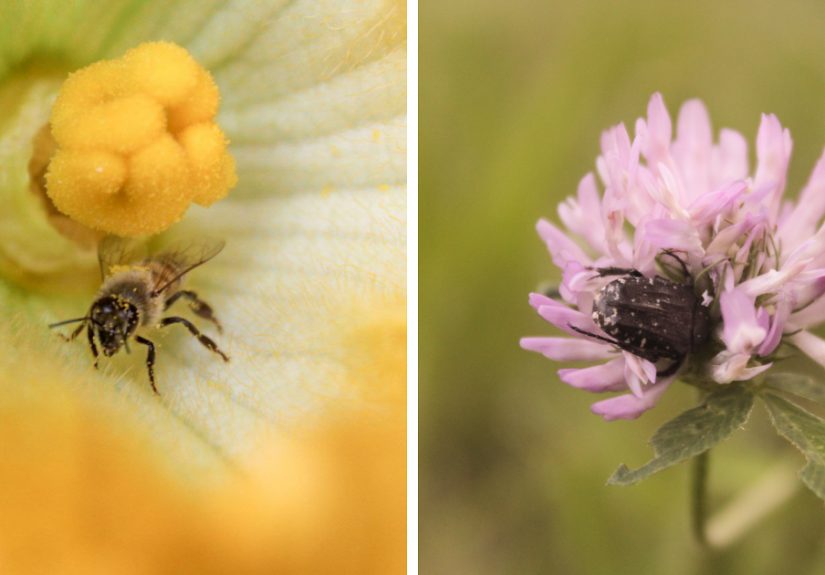
Pic #6: A Native Bee Covered in Pollen
Native bees come in many shapessome metallic, some fuzzy, some so small you’ll think they’re a flying crumb.
Photograph at flowers with lots of activity. A backyard with diverse blooms can support a surprising diversity of bees.
Pic #7: Bee “Butt Wiggle” in a Flower (Poll_toggle caption: The Pollination Shuffle)
This is the money shot: a bee collecting pollen and nectar. Freeze motion with a fast shutter speed, or use flash with diffusion.
The background story: pollinators support fruit set and seed productionyour garden’s future harvest depends on these visits.
Pic #8: Hoverfly Pretending to Be a Bee
Hoverflies can look bee-like but have different flight behavior and often big eyes. They’re pollinators, and some species’ larvae eat aphids.
Photograph them hovering near blossoms; they pause mid-air like tiny helicopters with better fashion sense.
Pic #9: Parasitic Wasp “Pest Control in a Suit”
Many parasitoid wasps are tiny and easy to overlook. They help by laying eggs in or on pest insects, which can reduce pest populations naturally.
A macro lens reveals their delicate wings and antennaelike a sci-fi character that accidentally wandered into your basil.
Pic #10: A Caterpillar Mid-Munch
Caterpillars are the “teenagers” of the insect world: they eat a lot and grow fast. They also become butterflies or moths,
and they’re an important food source for many birdsespecially when feeding chicks.
Pic #11: “Soft Landing” Under a Tree (Leaf Litter as Habitat)
Beneath trees and shrubs, leaf litter and groundcover create shelter for insects and other small creatures.
Photograph the forest-floor vibe: curled leaves, tiny fungi, decomposers, and the miniature “roads” of ants.
Pic #12: A Praying Mantis Waiting Like a Patient Assassin
Mantises are ambush predators. The trick is to focus on the eyes and let the background blur. If you spot one on a stem,
move slowlyyour sudden movements are basically a jump scare to a creature that already looks like a leaf with opinions.
Pic #13: Slug Trails at Sunrise (Shimmer Lines of Chaos)
You don’t have to love slugs to photograph them. Their trails in early light can be oddly beautiful.
If slugs are a problem, focus on habitat balance: reduce hiding spots right next to seedlings, use barriers, and encourage predators like ground beetles.
Pic #14: A Bird “Foraging Shot” Near Native Plants
Birds often hunt insects in native shrubs and trees. A bird-friendly yard tends to be rich in insect lifeespecially caterpillarsbecause
native plants and native insects evolved together.
Pic #15: A Tiny Frog or Toad in the Shade
If you have damp areas, leaf litter, or a small water feature, you may find amphibians tucked away.
Photograph without handling themmany amphibians have sensitive skin and don’t benefit from being picked up for a photo shoot.
Pic #16: Compost Close-Up (Decomposers at Work)
Compost is the underworld economy of the garden. Macro shots reveal springtails, pill bugs, fungi threads, and the rich texture of breaking-down leaves.
It’s not glamorous, but it’s where soil health happens.
Pic #17: The “Whole Scene” Macro (A Flower + Visitor + Story)
The most satisfying garden photos show context: a bloom, a pollinator, and a hint of habitat. Pull back slightly, include a second flower,
catch a wing reflectionthis is how a close-up becomes a narrative.
How to Grow a Garden That Naturally Produces Better Photos
If you want more wildlife moments, build habitat. A healthy garden typically provides four basics:
food, water, cover, and places for wildlife to raise young. When those needs are met, you’ll see more lifeand
you’ll have more to photograph than “one sad ant on a sidewalk.”
Plant native (your garden’s best upgrade)
Native plants support local food webs because many native insects can’t use non-native plants as effectively.
Translation: more native plants usually means more insects (especially caterpillars), and more insects means more birds and other wildlife.
Even one native tree or shrub can make your yard dramatically more active.
Use Integrated Pest Management instead of “spray and pray”
If you reach for pesticides as a first move, you may wipe out beneficial predators and pollinators along with pests.
IPM focuses on monitoring, prevention, and targeted actionlike choosing the least harmful method and timing treatments to reduce harm.
Go easy on pesticidesespecially around blooms
Many pesticide types can harm pollinators and beneficial insects, even when you’re not aiming at them.
If you truly must treat a pest issue, avoid spraying when plants are flowering and consider non-chemical approaches first.
Add “messy” microhabitats (tasteful mess, not apocalypse)
- Leaf litter under shrubs and trees for overwintering insects
- Stems and seed heads left standing for shelter and bird food
- Shallow water (a dish with stones) for safe drinking spots
- Mixed planting so something is blooming across seasons
Ethics: Photograph Like a Good Neighbor (Even If Your Neighbor Has Six Legs)
Great garden photography shouldn’t come at the expense of the garden. A few rules that keep you on the right side of nature:
- Don’t stage harm: no freezing insects, no “relocating” wildlife into danger for a shot.
- Avoid handling amphibians: photograph them where they are.
- Respect nests: give birds and other animals space, especially during breeding season.
- Watch for heat and dehydration: don’t trap insects in harsh sun while you fiddle with settings.
Your goal is a photo that tells the truth: this world is already interesting. You don’t need to “improve” it.
Conclusion: Your Garden Isn’t SmallYou’re Just Looking From Too High Up
Once you start paying attention, your garden becomes less “yard” and more “ecosystem.” The camera is just a tool that rewards curiosity:
you notice patterns, you learn who eats whom, and suddenly you’re rooting for a lacewing larva like it’s the underdog in a sports movie.
If you want more of these moments, don’t just chase photosgrow habitat. Plant native, reduce harsh chemicals, let the garden keep a little
wildness, and the secret world will show up on schedule. Probably right when you’re wearing flip-flops and carrying a watering can.
Extra : Field Notes From Chasing the Secret World
If you try this “secret world” project for a week, you’ll learn something unexpected: the garden doesn’t reward speed. It rewards
stillness. The first day I went out intending to capture 17 photos, I got maybe two keepers and a stiff neckbecause I treated
the garden like a checklist instead of a place. The second day, I did something radical: I sat down, shut up, and watched one patch of
flowers like it was going to confess its secrets. And it did.
Here’s what started happening once I slowed down. I noticed the “commute routes”: ants moving along the same invisible highways,
bees circling a bed before landing, and tiny spiders staking out the same corner of a leaf like they’d signed a lease. I learned
that motion is your enemy in macro, but it’s also your best storyteller. A breeze isn’t just a nuisanceit’s part of the scene. A flower
nodding in wind can turn a static photo into something that feels alive, especially if you let the background blur into a soft wash of color.
I also learned that the garden has shifts. Morning is for dew, slow-moving insects, and gentle light that makes everything look like it
has a skincare routine. Midday is chaos: bees at full speed, hoverflies darting like tiny drones, and harsh sun that forces you to choose
between drama and squinting. Evening is my favoritegolden light, calmer winds, and that “the day is cooling down” mood that encourages
creatures to emerge from hiding. If you can only shoot one window, pick early morning or late afternoon and you’ll instantly improve
sharpness, color, and the odds of catching behavior.
The biggest “aha” wasn’t technicalit was ecological. When I stopped treating bugs as random visitors and started treating them as
employees of a functioning system, everything made more sense. Aphids weren’t just “gross”; they were a food source that triggered a
response: lady beetles, lacewings, parasitoid wasps, and yes, ants trying to keep the buffet open. Birds weren’t just background decoration;
they were hunting where the insect life was richestoften near the native shrubs and trees. And the messiest spotsleaf litter, stems,
and the edges of the garden where I didn’t manicure everything into silencewere the places with the most stories.
If you’re doing this project, give yourself permission to fail a little. Macro photography is famous for producing many frames and fewer
keepers, because depth-of-field is thin and subjects move. Treat it like a treasure hunt. Celebrate the near-misses. Keep a tiny notebook
(or phone note) of what you see: “bees on the salvia at 8 a.m.,” “jumping spider on the fence at 5 p.m.,” “lady beetle larvae on the roses.”
After a week, you’ll realize you didn’t just collect photosyou learned your garden’s schedule. And once you know the schedule,
the secret world stops being secret. It becomes your neighborhood.