Table of Contents >> Show >> Hide
- What “poisonous” actually means (and why it’s confusing)
- Why poisonous mushrooms fool people
- The most dangerous mistakes in the U.S.
- Symptoms: what you feel and when you feel it matters
- What to do if someone might have eaten a poisonous mushroom
- What happens at the ER (so you’re not surprised)
- Prevention: the boring advice that keeps you alive
- Myth-busting: things people say right before they regret everything
- Bottom line
- Real-world experiences people report (and what they teach us)
Mushrooms are nature’s little flavor sponges: they soak up butter, garlic, and praise. Unfortunately, a small number also soak up your liver’s will to live.
Most mushrooms you see in grocery stores are perfectly safe. The trouble starts when “I like hiking” quietly turns into “I trust my eyeballs with toxicology.”
If you forage (or your toddler/pet does the foraging for you), knowing the basics of poisonous mushrooms can make the difference between a funny story and a very unfun hospital bracelet.
What “poisonous” actually means (and why it’s confusing)
“Poisonous mushroom” isn’t one single thing. It’s an umbrella term for many species that contain different toxins that act on different organs at different speeds.
Some cause a short, miserable bout of vomiting and diarrhea. Others can trigger seizures, hallucinations, kidney failure, or life-threatening liver injury.
And because mushrooms can look wildly different depending on age, weather, and where they pop up, even experienced people can get fooled.
Common toxin “families” (in plain English)
- Amatoxins (found in some Amanita, Galerina, and Lepiota): can cause severe liver damage and be fatal.
- Muscarine (some Inocybe and Clitocybe): causes “too much of everything” sweating, drooling, tearing, cramps.
- Gyromitrin (some “false morels”): can irritate the stomach and, in serious cases, affect the nervous system and liver.
- Orellanine (some Cortinarius): can damage kidneys and symptoms may be delayed.
- Ibotenic acid / muscimol (e.g., fly agaric types): can cause confusion, sedation, and odd behavior.
- GI irritants (many species): the “food poisoning” style of miserynausea, vomiting, diarrheasometimes intense.
Here’s the twist: your body doesn’t care how “beautiful” or “natural” a mushroom is. Your liver is not impressed by cottagecore.
Why poisonous mushrooms fool people
Wild mushrooms don’t come with warning labels. Many toxic species resemble edible ones closely enough that casual identification becomes a high-stakes guessing game.
People also fall into three classic traps:
- Look-alikes: “It looks like the photo” is not a safety plan.
- Foraging myths: Old-school “tests” (silver spoon, peeling caps, bugs eating it) are unreliable.
- Overconfidence: A few successful finds can create a false sense of masteryright before the mushroom “educates” you.
Quick reality check: cooking doesn’t magically detox mushrooms
Heat, drying, freezing, sautéing, grilling, “triple-rinsing,” or whispering apologies into the pan does not reliably neutralize many dangerous toxins.
Some toxins may be reduced by cooking in certain species, but many of the serious ones aren’t.
The most dangerous mistakes in the U.S.
The U.S. sees many mushroom exposures each year, most of them accidental or due to misidentification. A large portion involves children who taste mushrooms in yards or parks.
Severe poisonings are less common, but when they happen, they can be devastating.
1) Death cap and “destroying angel” types (the liver villains)
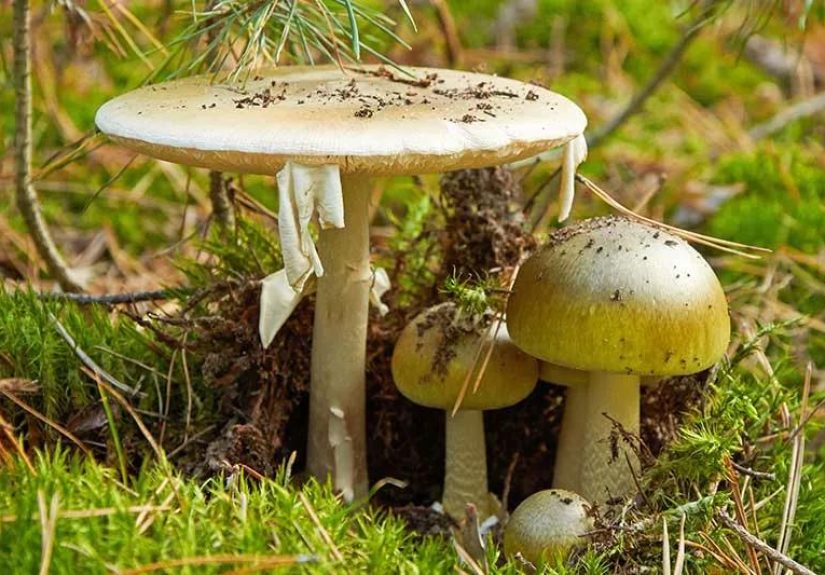
Some of the deadliest mushrooms belong to the Amanita group. The “death cap” is infamous because it can look harmless and even taste mild.
The danger is what happens later: the toxin can quietly injure the liver while the early stomach symptoms lull people into a false sense of relief.
2) Little brown mushrooms (the “LBM” problem)
Many small brown mushrooms look alike. Some are harmless. Some are not. A few contain amatoxins.
The point isn’t to fear every tiny brown mushroomit’s to respect that “tiny and boring” can still be medically dramatic.
3) Yard and lawn mushrooms (common doesn’t mean safe)
Suburban lawns can host mushrooms that cause significant GI upset and occasional severe reactions.
The riskiest scenario is when kids or pets treat the yard like a snack aisle.
Symptoms: what you feel and when you feel it matters
One of the most important clues in mushroom poisoning is the timeline. When symptoms start can hint at how serious the toxin might be.
It’s not perfect, but it’s usefulespecially for clinicians and poison specialists.
Fast onset (minutes to a few hours)
- Nausea, vomiting, abdominal cramps, diarrhea
- Sweating, drooling, watery eyes
- Blurred vision, tiny pupils
- Confusion, agitation, unusual behavior (depending on toxin)
Delayed onset (6+ hours after eating)
Delayed symptoms are a bigger red flag. Severe amatoxin poisoning often starts with GI symptoms that appear hours later, may improve, and then progress to
serious liver injury. This “feel better” phase is the medical version of the horror movie character saying, “It’s probably fine.”
Emergency warning signs
- Persistent vomiting or diarrhea (especially if you can’t keep fluids down)
- Severe weakness, confusion, fainting, seizures
- Yellowing of skin/eyes (jaundice), dark urine
- Bleeding or easy bruising
- Severe abdominal pain or worsening symptoms after seeming to improve
What to do if someone might have eaten a poisonous mushroom
Time matters. If there’s any chance someone ate a wild mushroom (or a mushroom of unknown identity), treat it like a real exposurebecause it is.
Do this right away
- Call Poison Control (in the U.S., the national Poison Help line connects you to your local poison center).
- If severe symptoms occur (trouble breathing, seizures, collapse, can’t wake up): call emergency services immediately.
- Save a sample of the mushroom (or leftovers) for identificationstore it safely in a paper bag if possible.
- Take photos: top, underside (gills/pores), stem, base, and where it was growing.
- Do not force vomiting unless a medical professional instructs you to.
If a child or pet had a “maybe bite,” don’t wait for symptoms. Poison specialists can help you decide what to do next.
What happens at the ER (so you’re not surprised)
Treatment depends on the suspected toxin, symptoms, and time since ingestion. Clinicians often focus on supportive care and monitoring:
- Fluids and electrolytes to address dehydration from vomiting/diarrhea.
- Labs to monitor liver and kidney function, clotting status, and overall condition.
- Activated charcoal may be considered in some cases, depending on timing and the clinical situation.
- Specialized therapies may be used for certain toxin patternsyour team may consult a poison center or toxicologist.
- Hospital admission for high-risk cases, especially when delayed symptoms suggest amatoxin exposure.
The big takeaway: don’t self-diagnose your way out of a dangerous timeline. If you suspect a toxic mushroom, get expert guidance early.
Prevention: the boring advice that keeps you alive
The safest way to avoid mushroom poisoning is simple: eat mushrooms from reputable commercial sources.
If you forage, do it like a serious hobbynot a vibe.
If you forage, follow these rules
- Never eat a wild mushroom unless an expert confirms the species. A confident friend is not the same as a qualified identifier.
- Use multiple identification methods (habitat, spore print, gills/pores/teeth, stem features, base, bruising, season).
- Don’t mix species in one bag. Cross-contamination and confusion are real.
- Don’t rely on apps alone. Photo-based tools can be wrong, and “probably” is not a food group.
- When in doubt, throw it out. Yes, it’s sad. So is liver failure.
For families: reduce yard risk
- Remove mushrooms from areas where children and pets play (use gloves if needed).
- Teach kids “don’t touch/eat mushrooms” the same way you teach “don’t eat random sidewalk candy.”
- Supervise outdoor play, especially after rain when mushrooms pop up.
Myth-busting: things people say right before they regret everything
“If animals/insects eat it, it’s safe for humans.”
Different species handle toxins differently. Some animals can nibble things that would make humans dangerously ill.
“I can tell by the color. Bright = bad, plain = safe.”
Toxic mushrooms can be plain-looking. Edible mushrooms can be colorful. Nature is not color-coding your dinner.
“Cooking/drying/freezing makes it safe.”
Many dangerous toxins are not reliably destroyed by common kitchen methods. Preparation is not a detox spell.
Bottom line
Most mushroom poisonings are preventable. The biggest risk is eating a wild mushroom that hasn’t been identified by an expertespecially because dangerous cases
can start like ordinary stomach flu and then turn serious later. If you suspect exposure, get poison-center guidance immediately and don’t wait for symptoms to “prove” it.
Mushrooms should add umami to your life, not plot twists.
Real-world experiences people report (and what they teach us)
The stories below are based on common patterns poison centers and emergency clinicians describebecause mushroom poisoning has a few recurring “greatest hits.”
Think of these as reality-based cautionary tales: not meant to scare you out of enjoying the outdoors, just to keep your confidence matched to your training.
Experience #1: The backyard “snack” that nobody saw coming
It often starts innocently: a parent turns their back for 30 seconds, and a curious toddler discovers a small mushroom near the fence line.
The child takes a bite (or just chews and spitskids are experimental chefs), and suddenly everyone’s playing the world’s least fun guessing game:
“Did they swallow?” “Was that a bite or a lick?” “Is the mushroom still there?” People freeze because the child looks finesmiling, energetic, possibly plotting
their next snack.
The lesson: waiting for symptoms is a bad strategy, especially with kids. Many parents who call poison control say they’re relieved the specialist doesn’t shame them.
Instead, they get calm, step-by-step guidance: what to watch for, whether to go in, and how to safely collect a sample. The win here is speed.
Even if it turns out the mushroom was low-risk, you traded uncertainty for expert advicean excellent deal.
Experience #2: The foraging “upgrade” from hobby to hazard
Another common storyline: someone has successfully foraged a few timesmaybe chanterelles, maybe morels, maybe something a friend swore was “easy.”
Confidence grows. The person reads a couple of guides, joins a social group, and starts thinking, “I’m basically a woodland sommelier.”
Then they find a cluster that looks right, smells mushroomy, and passes a few informal checks. Dinner happens. Everyone toasts.
Someone says, “This tastes amazing.” Nature says, “Interesting. Now watch this.”
A few hours later, nausea and vomiting kick in. The group assumes it’s mild food poisoninguntil someone mentions the mushrooms.
What experienced foragers often learn (sometimes the hard way) is that look-alikes aren’t theoretical. They’re common.
The best foragers treat identification like aviation: checklists, redundancy, and no improvising when the stakes are high.
Experience #3: The “I feel better!” phase that isn’t good news
One of the scariest patterns clinicians talk about is the delayed-toxin roller coaster. Someone eats a misidentified mushroom, then later develops severe GI symptoms.
After a rough night, the symptoms improve. The person thinks they’ve “gotten over it,” maybe drinks water, eats toast, and cancels the ER visit.
This is the moment where delayed-toxin poisonings can become dangerous: improvement in stomach symptoms does not always mean the body is fine.
People describe feeling shocked when they later become weak, confused, or jaundicedor when lab tests show serious liver injury.
The lesson: timelines matter. If symptoms begin many hours after eating wild mushrooms, or if there’s a “better” phase after intense GI illness, don’t treat it as a victory lap.
Treat it as a reason to get evaluated.
Experience #4: The “gifted mushrooms” problem
Sometimes the person who gets sick didn’t even forage. They were handed a bag of “fresh wild mushrooms” by a well-meaning neighbor or coworker.
The recipient feels awkward asking questions (“Are you sure these are safe?” feels rude), so they cook them and share with family.
If something goes wrong, it’s not just one patientit’s a whole dinner party.
The lesson: consent includes information. If you didn’t identify the mushroom yourself (or have it confirmed by an expert), you don’t truly know what it is.
It’s okay to politely decline. A simple “They look beautiful, but I only eat mushrooms from the store unless a local expert confirms them” is both kind and smart.
Real-world takeaway: mushroom poisoning isn’t about being recklessit’s often about being human. People get curious, social, hungry, or confident.
The safest path is boring but effective: eat commercially sourced mushrooms, and if you forage, do it with expert training and careful verification.