Table of Contents >> Show >> Hide
- Before You Start: Choose Your Tinting Style
- Supplies Checklist
- How to Tint Bottles and Jars: 13 Steps
- Step 1: Pick the Right Glass (and the Right Expectations)
- Step 2: Remove Labels Like a Patient Person
- Step 3: Wash and Dry Thoroughly
- Step 4: Degrease the Glass
- Step 5: Choose “Inside Tint” or “Outside Tint” (Don’t Mix Mid-Jar)
- Step 6: Mix Your Tint (Start Light)
- Step 7: Pour a Small Amount Into the Jar
- Step 8: Swirl Slowly to Coat the Inside
- Step 9: Drain the Excess (Gravity Does the Heavy Lifting)
- Step 10: Fix Streaks While It’s Still Wet
- Step 11: Let It Dry (Really Dry)
- Step 12: Cure for Durability (Follow the Product’s Rules)
- Step 13: Style Your Tinted Bottles and Jars
- Troubleshooting: When Your Jar Has Opinions
- Care and Longevity
- Conclusion: Tinting Glass Is Small Effort, Big Payoff
- Extra: Real-World Experience Tips (What You Learn After Tinting a Bunch of Jars)
If you’ve ever stared at an old pickle jar and thought, “You could be a chic sea-glass vase if you’d just try harder,” you’re in the right place. Tinting bottles and jars is one of those DIY wins that looks expensive, feels oddly therapeutic, and turns your recycling bin into home décor.
In this guide, you’ll learn how to tint glass bottles and jars in a way that looks translucent (not thick and paint-y), with options for different finishesglossy “vintage bottle” vibes, frosted “spa bathroom” vibes, and even subtly colored “I found this at a flea market in 1978” vibes.
We’ll cover the most reliable methods, the rookie mistakes that cause streaks and sticky jars, and a straightforward 13-step process you can follow even if your crafting résumé includes “glued my fingers together once.”
Before You Start: Choose Your Tinting Style
There isn’t one single “best” way to tint glassthere’s the best way for your jar’s future job in life. Here are the most common options:
Option A: Inside Tint (Translucent + Glossy)
This method coats the inside of the jar with a tinted, glue-like medium for a stained-glass look. It’s great for vases, pencil holders, and décor pieces that won’t be constantly washed.
Option B: Outside Tint (Frosted or Sea-Glass Look)
This method uses specialty glass sprays or paint on the outside for a matte/frosted finish. It’s ideal for candle holders, bathroom décor, and anything you want to look “etched” or softly diffused.
Option C: Glass Paint (More Durable, More “Painted”)
If you want durability (and you’re okay with a more opaque look), multi-surface enamel-style paints are a solid choice. These are often cured by air-drying or baking, depending on the product label.
Quick rule: If you want light to pass through and the glass to look “naturally colored,” start with Option A or B.
Supplies Checklist
For Inside Tint (Translucent Gloss)
- Clean glass bottles or jars (labels removed)
- Glossy clear craft sealer/adhesive (commonly used for decoupage-style crafts)
- Food coloring (liquid or gel)
- Small disposable cup or bowl for mixing
- Plastic spoon or craft stick
- Disposable gloves (optional, but helpful)
- Wax paper or parchment paper
- Rubbing alcohol + lint-free cloth/paper towel
For Outside Tint (Frosted/Sea Glass)
- Glass-safe frosted/sea-glass spray OR glass paint
- Painters tape (for clean edges or patterns)
- Drop cloth or cardboard box spray booth
- Mask (recommended for spraying)
Optional “Make It Look Fancy” Extras
- Jute twine, ribbon, or wire
- Stencils (letters, botanical shapes)
- LED fairy lights (for bottles)
- Faux greenery or dried flowers
How to Tint Bottles and Jars: 13 Steps
These steps focus on the most popular translucent look (inside tint) with built-in notes for spray/frosted finishes. Read through once before you startfuture-you will thank you.
-
Step 1: Pick the Right Glass (and the Right Expectations)
Clear glass shows tint beautifully. Textured glass hides streaks better. Very large jars take longer to coat evenly, so start with something medium-sized (mason-jar range) if it’s your first time.
Important: Tinted jars made with craft coatings are best for décornot for food storage, canning, or direct-contact drinkware unless you’re using a product specifically labeled for that purpose.
-
Step 2: Remove Labels Like a Patient Person
Soak jars in warm water with dish soap. Peel labels. For stubborn adhesive, try a little oil, then wash again. Any leftover glue will show up as weird “ghost patches” under your tint. And no one wants a haunted jar.
-
Step 3: Wash and Dry Thoroughly
Wash with warm soapy water, rinse well, and dry completely. Water droplets inside the jar can dilute your coating and cause uneven tint.
-
Step 4: Degrease the Glass
Wipe the outside and rim with rubbing alcohol to remove oils from hands and leftover residue. This step is small but mightylike spinach for your paint job.
-
Step 5: Choose “Inside Tint” or “Outside Tint” (Don’t Mix Mid-Jar)
Inside tint gives a translucent, glossy look. Outside tint can be frosted or matte. Decide now so your project doesn’t become an abstract art piece titled “Conflicting Decisions.”
If you’re using a spray product: plan to work outside or in a very well-ventilated space, and protect surrounding surfaces.
-
Step 6: Mix Your Tint (Start Light)
In a small cup, add a few spoonfuls of clear glossy craft coating. Add 2–5 drops of food coloring (or a tiny dot of gel color) and stir until smooth.
Color tip: You can always add more color, but you can’t un-blue something that looks like it belongs in a science lab.
Example mixes:
- Sea glass teal: 2 drops blue + 1 drop green
- Soft amber: 2 drops yellow + 1 drop red
- Blush: 1 drop red + 1 drop yellow, very diluted
-
Step 7: Pour a Small Amount Into the Jar
Pour enough tinted mixture to cover the bottom (usually a small puddle). You don’t need to fill the jarthis isn’t soup.
-
Step 8: Swirl Slowly to Coat the Inside
Rotate the jar so the mixture climbs the sides. Go slow and steady; fast swirling creates bubbles and streaks.
Pro move: Tilt and roll the jar like you’re coating a fancy dessert with chocolatecalm, controlled, and slightly smug.
-
Step 9: Drain the Excess (Gravity Does the Heavy Lifting)
Turn the jar upside down over parchment paper and let excess drip out. If you want, set it on a rack so air can circulate and drips don’t pool at the rim.
Let it drain until it stops “actively dripping.” A little slow ooze is normal.
-
Step 10: Fix Streaks While It’s Still Wet
Peek inside. If you see thick rivers, gently rotate the jar once or twice to redistribute before it sets. Don’t keep fiddling foreveroverworking the coating can make it cloudy.
-
Step 11: Let It Dry (Really Dry)
Place the jar upside down and let it dry at least overnight. Thicker coats may need longer. Humidity slows drying, and impatience speeds up disappointment.
If you want deeper color, plan for a second coat after the first is fully dry.
-
Step 12: Cure for Durability (Follow the Product’s Rules)
“Dry” and “cured” are different. Dry means it’s not tacky. Cured means it’s reached full hardness.
- Inside-tint décor jars: give them a generous cure time before heavy handling, especially in humid climates.
- Glass paints/enamels: some require air-curing for days or weeks; others allow heat-setting. Always follow the label for best durability.
- Spray frosted finishes: allow full cure time before heavy handling or clear-coating.
Safety note: If you heat-set painted glass, avoid sudden temperature changes. Let glass warm and cool gradually to reduce cracking risk.
-
Step 13: Style Your Tinted Bottles and Jars
Now the fun part. Try one of these:
- Mini vase: single stem + tinted jar = “I have my life together” energy.
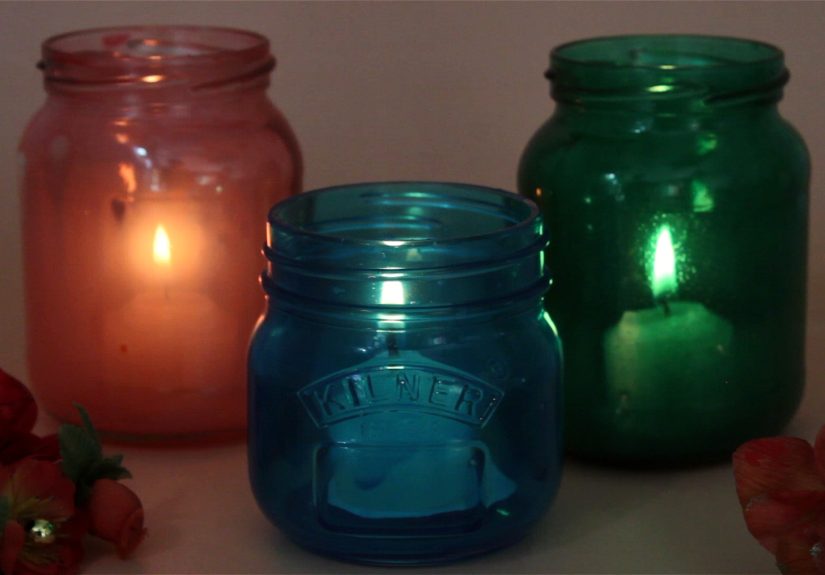
- Candle holder: use LED tealights for safer glow and less soot.
- Bathroom upgrade: cotton balls, Q-tips, or bath salts look instantly spa-like.
- Window décor: line up a few colors where sunlight hitsinstant rainbow bragging rights.
Troubleshooting: When Your Jar Has Opinions
Problem: Streaks or Drip Lines Inside
- Cause: Too much mixture, or it dried while pooling.
- Fix: Use less mixture, swirl more slowly, and drain longer upside down.
- Camouflage tip: Textured jars hide streaks better than perfectly smooth ones.
Problem: Sticky Finish That Never Seems to Cure
- Cause: Heavy coat, high humidity, or not enough curing time.
- Fix: Give it more time in a warm, dry spot. Next time, go with thinner coats.
Problem: Spray Finish Looks Speckled
- Cause: Spraying too far away, windy/dusty conditions, or thick coats.
- Fix: Apply multiple light coats, keep the can moving, and spray in better conditions.
Care and Longevity
If your tinted bottles and jars are strictly décor, caring for them is easy: dust gently and avoid soaking them. For anything that might get handled often:
- Hand wash only unless you used a paint specifically labeled as dishwasher safe and cured exactly as instructed.
- Avoid scrubbing the tinted areas. Use a soft cloth.
- Keep away from open flames if you used aerosol coatings or paints.
- Don’t microwave painted or coated glass unless the product explicitly says it’s safe (many are not).
Conclusion: Tinting Glass Is Small Effort, Big Payoff
Once you learn how to tint bottles and jars, you start seeing “potential vases” everywherepasta sauce jars, iced coffee bottles, that mysterious container from the back of the fridge (no judgment).
The secret is simple: prep well, tint lightly, drain patiently, and cure fully. Do that, and your finished glass will look intentionally vintagenot accidentally sticky. And that’s the dream.
Extra: Real-World Experience Tips (What You Learn After Tinting a Bunch of Jars)
Here’s the part most tutorials don’t say out loud: the first jar is usually a “learning jar.” Not a failuremore like a draft. Crafters often notice that tinting glass is less about fancy supplies and more about managing three sneaky variables: thickness, time, and temperature.
Thickness is the big one. The instinct is to pour in a lot of tinted mixture because it feels efficientlike “more paint = faster coverage.” But glass tinting behaves more like glazing a pastry than painting a wall. If the coating is too thick, it drains unevenly, forms drips, and can stay tacky longer than you’d expect. People who get the best results usually do a thinner coat, let it dry fully, then decide if they want a second pass for deeper color. The bonus: thin coats look more translucent and “real,” especially when light hits the glass.
Time is where patience pays rent. Many first-timers pick up a jar the next morning, admire it, then immediately try to rinse it “just a little.” That’s how you end up with fingerprints, cloudy patches, or a finish that starts to peel in spirit (and sometimes literally). A smart approach is to treat tinted jars like freshly painted nails: yes, they look dryno, they’re not ready for chaos. If you’re gifting these or using them for an event, start early so you can let them cure without stress.
Temperature and humidity matter more than expected. In humid weather, coatings can take longer to set and may look streakier mid-dry (which can be alarming if you enjoy calm). Many DIYers find their jars look dramatically better after a full cure periodwhat looked like uneven patches can visually soften as the coating levels and fully clears. If you’re spray tinting, conditions matter even more: wind can throw mist onto your surface, and humidity can mess with drying and texture. Choosing a calm, mild day (or a well-ventilated garage setup) often makes the difference between “smooth sea-glass” and “why does it look like dust settled into it.”
Color mixing gets easier after jar #3. Early on, people tend to overdo food coloring because it looks pale in the cup. But once it spreads across the glass, that color intensifies. A reliable habit is to start with a light tint, test on one jar, and keep notes. Seriouslynotes. Even a quick phone memo like “teal = 2 blue + 1 green” saves you from playing the world’s most boring guessing game later.
The best “experience hack” is choosing the right jar shape. Perfectly straight-sided jars show every drip line, while textured or slightly curved glass is more forgiving. If you want instant confidence, start with textured jars. If you want a crisp modern look, use smooth jarsbut commit to thinner coats and longer draining time.
Finally, crafters often say the most satisfying part isn’t just the finished lookit’s the moment you line up a few tinted bottles in sunlight and realize your trash just got a glow-up. That’s not just crafting. That’s a personal transformation arc… for your jars.