Table of Contents >> Show >> Hide
- What Is Beet Muhammara?
- Why This Beet Muhammara Recipe Works
- Ingredients for the Best Beet Muhammara
- How to Make Beet Muhammara
- Beet Muhammara Recipe Tips for Success
- What to Serve with Beet Muhammara
- How to Store Beet Muhammara
- Common Mistakes to Avoid
- Variations on Beet Muhammara
- Why People Fall in Love with Beet Muhammara
- Experience: What It Is Like to Make and Serve Beet Muhammara
- Final Thoughts
- SEO Tags
If hummus and a jewel-toned dinner party appetizer had a very glamorous cousin, it would be beet muhammara. This vibrant dip borrows the bold personality of traditional muhammara and gives it a ruby-red twist with roasted beets. The result is earthy, tangy, nutty, a little smoky, and so pretty it practically demands a spot in the center of the table. Frankly, it looks like it has its own publicist.
This beet muhammara recipe is built for real life and real appetites. It is fancy enough for a holiday spread, easy enough for a weekday snack board, and versatile enough to moonlight as a sandwich spread, grain bowl topper, or sauce for roasted vegetables. Even better, it can be made ahead, which means you get maximum flavor with minimum last-minute chaos. That is the kind of kitchen math we respect.
In this guide, you will learn what beet muhammara is, why it works so well, how to make it step by step, what to serve with it, how to store it, and how to tweak the flavor depending on your mood. If you love beet recipes, Middle Eastern-inspired dips, roasted vegetable spreads, or simply recipes that look wildly impressive with very manageable effort, you are in the right place.
What Is Beet Muhammara?
Traditional muhammara is a Middle Eastern dip most closely associated with Aleppo, Syria. It is usually made with roasted red peppers, walnuts, pomegranate molasses, olive oil, breadcrumbs, and spices such as cumin and Aleppo pepper. Beet muhammara keeps that rich, sweet-tart, nutty character but swaps in beets for at least part of the pepper base. The result is a dip that feels familiar and new at the same time.
The beets bring natural sweetness, an earthy backbone, and that dramatic magenta color that makes a plain cracker suddenly feel like it got dressed for a gala. Walnuts add body and a lightly bitter richness. Pomegranate molasses provides the signature tangy depth. Lemon brightens the whole thing, while spices keep it from tasting flat or overly sweet. A small amount of breadcrumbs helps absorb moisture and create that thick, scoopable texture that makes people hover near the bowl pretending they are “just tasting.”
Why This Beet Muhammara Recipe Works
Roasted beets taste sweeter and smoother
Some versions use raw beets, and those can be great if you want a sharper, fresher flavor. But roasted beets are more mellow, sweeter, and easier to blend into a silky spread. Roasting also softens their earthy edge, which is good news for people who like beets in theory but not always in practice.
Toasted walnuts build deeper flavor
Walnuts are the soul of muhammara. Toasting them for a few minutes wakes up their flavor, adds warmth, and keeps the dip from tasting one-note. It is a small step that makes a big difference, like putting on real shoes before a video call.
Pomegranate molasses adds the magic
This ingredient is sweet, tart, concentrated, and a little sticky. It is not there to turn the dip into dessert. It is there to create contrast. Without it, the dip can taste nice. With it, the dip tastes like it knows what it is doing.
Breadcrumbs give the dip structure
Traditional muhammara often includes breadcrumbs, and they do more than stretch the recipe. They absorb moisture from the beets and lemon juice, help the dip hold its shape, and create that spreadable texture that works beautifully with pita, vegetables, or toast.
Ingredients for the Best Beet Muhammara
- 2 medium beets, scrubbed
- 1 cup walnuts, toasted
- 1 small garlic clove
- 3 tablespoons pomegranate molasses
- 2 tablespoons fresh lemon juice
- 3 tablespoons extra-virgin olive oil, plus more for serving
- 1/4 cup plain breadcrumbs or panko
- 1 teaspoon ground cumin
- 1/2 teaspoon smoked paprika
- 1/2 teaspoon Aleppo pepper or 1/4 teaspoon red pepper flakes
- 3/4 teaspoon kosher salt, plus more to taste
- 1 to 2 tablespoons water, only if needed for blending
Optional toppings
- Extra toasted walnuts, chopped
- A drizzle of olive oil
- Chopped parsley or cilantro
- A pinch of Aleppo pepper or sumac
- Sesame seeds
How to Make Beet Muhammara
Step 1: Roast the beets
Heat your oven to 400 degrees Fahrenheit. Wrap each beet in foil and place them on a baking sheet. Roast for 45 to 60 minutes, or until a knife slides in easily. Smaller beets cook faster, larger ones may need more time. Let them cool enough to handle, then rub off the skins with paper towels or peel them with your hands if they are feeling cooperative for once.
Step 2: Toast the walnuts
Spread the walnuts on a baking sheet or dry skillet and toast until fragrant, about 5 to 8 minutes in a 350-degree oven or a few minutes on the stovetop over medium heat. Watch them closely. Walnuts go from wonderfully toasted to aggressively regrettable with shocking speed.
Step 3: Blend the dip
Add the peeled roasted beets, toasted walnuts, garlic, pomegranate molasses, lemon juice, olive oil, breadcrumbs, cumin, smoked paprika, Aleppo pepper, and salt to a food processor. Pulse several times, then blend until the mixture is mostly smooth but still has a little texture. Scrape down the sides as needed.
Step 4: Adjust the texture
If the dip looks too thick, add 1 tablespoon of water and blend again. If it seems too loose, add a spoonful more breadcrumbs and let it rest for a few minutes. Beet muhammara should be thick, creamy, and swoopable, not pourable. This is dip, not soup. We have standards.
Step 5: Taste and balance
Taste the dip and adjust. More lemon juice brightens it. More pomegranate molasses deepens the sweet-tart flavor. More salt sharpens everything. More Aleppo pepper adds warmth without overwhelming heat. Think of this step as the dip’s final personality check.
Step 6: Serve beautifully
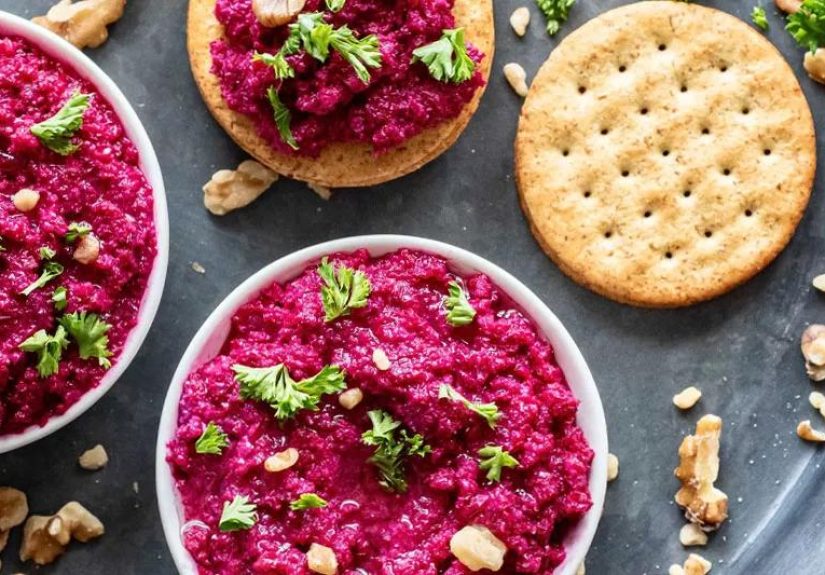
Spoon the beet muhammara onto a shallow plate or into a bowl. Swirl the top with the back of a spoon, drizzle with olive oil, and finish with chopped walnuts, herbs, and a pinch of spice. Suddenly you are the kind of person who serves dips with flourish. Congratulations.
Beet Muhammara Recipe Tips for Success
Use cooked beets that actually taste good
If your beets are watery or undercooked, the dip will taste dull. Roast them until truly tender so they blend smoothly and deliver concentrated flavor. Vacuum-packed cooked beets can work in a pinch, but roasted fresh beets usually give the best taste.
Do not skip the acid
Beets and walnuts are rich. Lemon juice and pomegranate molasses keep the dip lively. If your first bite tastes a little heavy, the answer is almost always acid, not more oil.
Start small with garlic
Raw garlic gets louder as the dip sits. One small clove is usually enough. If you want a gentler flavor, briefly roast the garlic along with the beets or let the finished dip chill before serving.
Let it rest before serving
This dip improves after a little time in the refrigerator. Give it at least 30 minutes if you can. The flavors settle in, the breadcrumbs hydrate, and the whole thing tastes more intentional.
What to Serve with Beet Muhammara
One of the best things about this beet muhammara recipe is how many ways you can serve it. On a mezze platter, it shines alongside warm pita, cucumber spears, carrots, radishes, olives, and feta. On a brunch table, it plays well with toasted sourdough, jammy eggs, and avocado. At dinner, try it under roasted carrots, grilled salmon, chicken skewers, or crispy cauliflower.
It also makes an excellent sandwich spread. Smear it inside wraps with greens and grilled vegetables. Spoon it into grain bowls with farro, chickpeas, and herbs. Use it as a base under roasted sweet potatoes. Add a dollop to a lunch plate and suddenly the leftovers feel planned instead of accidental.
If you are entertaining, serve it in a wide bowl with a generous drizzle of olive oil and plenty of texture on top. The contrast between the silky dip and crunchy walnuts is part of the charm. Also, people eat with their eyes first, and this dip shows up dressed like it knows the camera is on.
How to Store Beet Muhammara
Store beet muhammara in an airtight container in the refrigerator for up to 4 days. In many cases, it tastes even better on day two because the flavors have more time to mingle. If the dip firms up in the fridge, let it sit at room temperature for 15 to 20 minutes before serving and stir in a drizzle of olive oil if needed.
This is a terrific make-ahead dip for holidays, potlucks, or dinner parties. You can roast the beets a day in advance and make the full dip ahead as well. Just save the garnish for right before serving so it looks fresh and lively.
Common Mistakes to Avoid
Making it too sweet
Beets already bring sweetness. If you pile on too much pomegranate molasses without enough lemon and salt, the dip can lose its balance. Aim for bright and savory with a whisper of sweetness, not candy-adjacent.
Over-blending it into paste
You want creamy texture, but total smoothness can make the dip feel heavy. Leave a little walnut texture so every bite has character. Think polished, not baby food.
Under-seasoning
Beets can handle seasoning. Taste boldly. Salt, acid, and spice are what keep the dip lively. If it tastes flat, it probably needs one of those three.
Variations on Beet Muhammara
Beet and red pepper muhammara
Use one roasted beet and one roasted red bell pepper for a hybrid version. You get the sweetness and color of beet with some of the classic smoky pepper flavor of traditional muhammara.
Spicier beet muhammara
Add extra Aleppo pepper, a pinch of cayenne, or a small spoonful of harissa if you want more heat. This version is especially good with grilled meats and flatbread.
Gluten-free beet muhammara
Swap the breadcrumbs for gluten-free breadcrumbs or a few extra walnuts. The texture will be slightly different, but still delicious.
Herby beet muhammara
Blend in a small handful of cilantro or parsley for a greener, fresher finish. This works beautifully in spring and summer when you want the dip to feel extra lively.
Why People Fall in Love with Beet Muhammara
There is something very satisfying about serving a dip that feels both comforting and surprising. Beet muhammara checks both boxes. It is familiar enough to be crowd-friendly, but different enough to make people pause and ask, “Wait, what is this?” That question is always a good sign at a party.
The flavor is layered in a way that rewards repeat bites. First you taste sweetness from the beets, then the richness of walnuts, then a spark of acidity from lemon and pomegranate molasses, followed by the warm hum of cumin and pepper. It is not complicated in a fussy way. It is complicated in the best way, where a simple cracker suddenly feels like an event.
Experience: What It Is Like to Make and Serve Beet Muhammara
The first time you make beet muhammara, the color is what gets you. You open the food processor and there it is: vivid, dramatic, unapologetically magenta. It looks like something a restaurant would charge extra for simply because it is pretty. That alone is delightful. But what really makes the recipe memorable is the moment you taste it and realize it is not just pretty food. It has depth. It has personality. It tastes like a dip with opinions.
Roasting the beets fills the kitchen with that sweet, earthy aroma that feels cozy without being heavy. Toasting the walnuts adds another layer, warm and nutty, like your kitchen suddenly decided to become significantly more competent than usual. Then comes the blending stage, where the ingredients go from respectable to magical. The lemon and pomegranate molasses wake everything up. The cumin rounds it out. The olive oil makes it lush. The whole thing transforms from separate parts into one bold, balanced spread.
Serving it is its own little joy. Beet muhammara has a natural “center of the table” energy. Put it on a platter with warm pita and vegetables, and people immediately gravitate toward it. Some are drawn in by the color. Others are curious because it is not the same old hummus they have seen at every gathering since the beginning of social snacks. Someone will ask what is in it. Someone else will say they are not usually a beet person right before taking another scoop. This is one of those recipes that converts skeptics through flattery and persistence.
It is also an unexpectedly flexible dish emotionally speaking. On one day, it feels elegant enough for a dinner party. On another, it is just your lunch spread on toast with some greens and a boiled egg. It can be the thing you make when you want to impress friends, and it can be the thing you quietly eat from the fridge with crackers while standing in the kitchen. No judgment. In fact, strong support.
Another great part of the experience is that beet muhammara gets better as it sits. Day-two beet muhammara has composure. The flavors settle down and get to know each other. The garlic stops shouting. The walnuts mellow. The acidity integrates. It becomes smoother, rounder, and somehow more itself. There are not many dishes that improve while you do absolutely nothing, but this is one of them.
If you like cooking foods that feel creative without being complicated, this recipe is especially satisfying. It gives you a lot of visual payoff and a lot of flavor payoff, but the method is straightforward. Roast, toast, blend, taste, serve. That is not a bad formula for kitchen happiness. And when the bowl comes back scraped clean, which is very likely, you get the extra satisfaction of knowing the beautiful magenta dip was not just decoration. It was the star.
Final Thoughts
This beet muhammara recipe is everything a great dip should be: bold, easy, adaptable, and memorable. It delivers sweet roasted beet flavor, rich walnuts, tangy pomegranate molasses, bright lemon, and warm spices in one gorgeous bowl. Whether you serve it at a holiday gathering, spread it on sandwiches, or stash it in the fridge for snack emergencies, it earns its keep.
If your appetizer routine has been feeling a little sleepy, this is your wake-up call in magenta form. Make it once, and there is a very real chance it becomes your signature dip. At the very least, it will make your snack board look like it has excellent taste.