Table of Contents >> Show >> Hide
- Why These Papal Children Still Matter
- The List
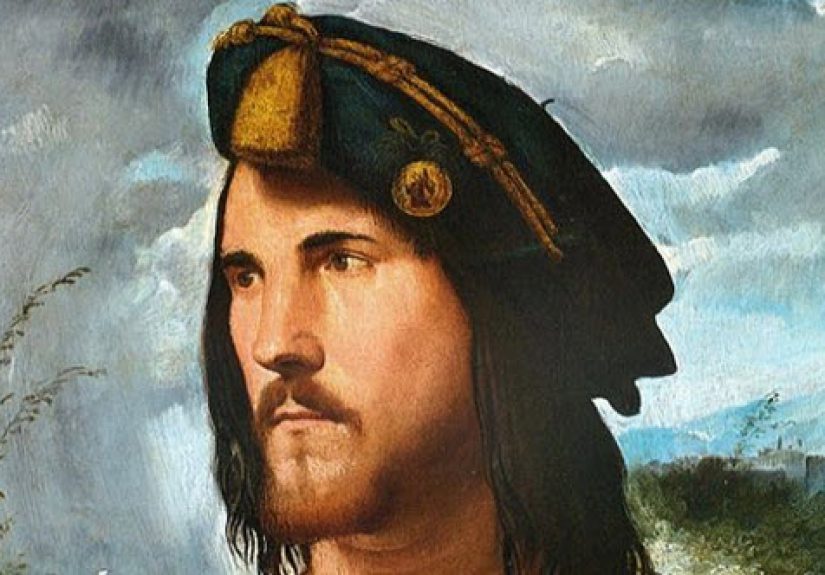
- 1. Cesare Borgia: The Son Who Became a Political Case Study
- 2. Lucrezia Borgia: The Woman Trapped Inside a Legend
- 3. Juan Borgia: The Golden Son with a Violent Ending
- 4. Jofré Borgia: The Younger Brother Everyone Underestimates
- 5. Franceschetto Cybo: The Son of Innocent VIII Who Married into the Medici
- 6. Teodorina Cybo: The Quiet Daughter of Innocent VIII
- 7. Pier Luigi Farnese: Paul III’s Son and a Walking Nepotism Alarm Bell
- 8. Costanza Farnese: The Daughter Who Helped Extend the Farnese Web
- 9. Felice della Rovere: Julius II’s Daughter Who Became a Force in Her Own Right
- 10. Giacomo Boncompagni: Gregory XIII’s Son and the End of an Era
- What Life Was Probably Like for the Children of Popes
- Final Thoughts
Historical note: In this article, “bastard” is used in the old legal-historical sense of a child born outside marriage. It is not used as a modern insult.
History loves a contradiction, and few contradictions are juicier than this one: men who rose to the highest office in Western Christianity sometimes also built very earthly family trees. If that sounds like the setup for an HBO series, congratulationsyou already understand why this corner of Renaissance and papal history remains catnip for readers, scholars, and people who enjoy a little scandal with their church architecture.
But the story is more complicated than the cheap version. Yes, some popes had children. Yes, some of those children were openly acknowledged. And yes, in the wild political world of late medieval and Renaissance Italy, they were often used as chess pieces in the family game of titles, marriages, and power. Still, the usual legends can be a mess of gossip, propaganda, and centuries of dramatic retelling. Behind the fireworks were real people who inherited privilege, danger, and reputations they didn’t always earn.
So let’s meet 10 of the most fascinating children born to popessome infamous, some overlooked, and all far more interesting than a one-line scandal summary.
Why These Papal Children Still Matter
The children of popes mattered because family mattered. In Renaissance Italy, power was rarely a solo performance. It was a family business with velvet robes, military contracts, arranged marriages, and occasional poison rumors drifting through the hallway like very bad incense. A pope who acknowledged a child could turn that child into a duke, marry them into another ruling house, or use them to strengthen alliances across Italy and Spain.
That does not mean every story we have is equally reliable. The Borgia family especially attracted a “black legend” that mixed fact with slander, and some of the most famous accusations have never been proved. Still, even after the rumor smoke clears, the surviving record is crowded with remarkable figuressoldiers, duchesses, negotiators, dynastic founders, and survivors of one of the weirdest forms of fame in European history: being the child of a pope everyone was definitely not supposed to be fathering children in the first place.
The List
1. Cesare Borgia: The Son Who Became a Political Case Study
If there were an award for “most likely to terrify Machiavelli and impress him at the same time,” Cesare Borgia would win by a landslide. The acknowledged son of Pope Alexander VI, Cesare began in the church and was made a cardinal while still young. Then, in a plot twist that screams Renaissance Italy, he moved from clerical office into military ambition and power politics.
Cesare was not merely the pope’s son lounging around in silk. He became a commander, carved out influence in central Italy, and turned himself into a symbol of ruthless statecraft. His career was one reason Alexander VI’s papacy looked less like a purely spiritual office and more like a family startup with cavalry. Later readers would remember Cesare as one of the clearest inspirations for the hard-edged style of rule discussed in The Prince.
What makes him fascinating is not just the ambition, though there was enough of that to power a small republic. It is the fact that he embodied the merger of church power, family strategy, and military force in one sharply dressed package. If the Renaissance had a warning label, Cesare would be printed on it.
2. Lucrezia Borgia: The Woman Trapped Inside a Legend
Lucrezia Borgia may be the most famous pope’s daughter in history, and also the most misunderstood. She was the daughter of Alexander VI and Vannozza Cattanei, and for centuries she was turned into a cartoon villain: poison rings, incest whispers, endless intrigue, the whole overcooked menu. Modern historians have spent a lot of time separating the documented Lucrezia from the theatrical one.
The real Lucrezia was absolutely part of high-stakes dynastic politics. Her marriages were arranged to serve Borgia interests, and she lived in a world where alliances shifted faster than wedding plans could be printed. But she was also more than a pawn. In Ferrara, she gained a degree of independence, became associated with court culture, and emerged as a patron and duchess rather than just a tabloid symbol in brocade.
Lucrezia fascinates because she shows how women in elite families could be used, underestimated, and yet still carve out genuine influence. History handed her a reputation with fangs. She deserves, at minimum, a better editor.
3. Juan Borgia: The Golden Son with a Violent Ending
Juan, or Giovanni Borgia, was another of Alexander VI’s recognized children and the family’s handsome political hope. He was made Duke of Gandía and married into Spanish nobility, which tells you exactly how Alexander thought: keep one eye on Italy, the other on Spain, and both hands on the family ladder.
Juan was pushed into military and dynastic prominence, but his story is remembered above all for its dark ending. He was murdered in 1497, and the crime became one of the enduring mysteries of the Borgia saga. Suspicion swirled everywhere. Naturally, because this was the Borgia family, rumor arrived before the body had probably finished floating downstream.
His death mattered politically and emotionally. Contemporary accounts suggest Alexander VI was devastated, and the murder changed the family balance in ways that opened more room for Cesare’s ascent. Juan is fascinating not because of a long record of achievement, but because his life and death reveal how fragile dynastic plans could be. In Renaissance politics, being the favored son did not come with a safety warranty.
4. Jofré Borgia: The Younger Brother Everyone Underestimates
Poor Jofré. History tends to introduce him like a supporting character and then rush off to chase Cesare and Lucrezia. But Jofré Borgia, the youngest of Alexander VI’s four acknowledged children by Vannozza, played a useful role in the family strategy. He was married to Sancha of Aragon, granddaughter of the king of Naples, because nothing says “family values” like a geopolitically convenient teenage marriage.
Jofré’s marriage tied the Borgias to Neapolitan interests and helped Alexander VI navigate the dangerous politics of southern Italy. That alone made him important. He may not dominate the imagination the way his siblings do, but he illustrates something essential about papal children: not all of them were intended to be stars. Some were meant to be connectors, alliances in human form, walking treaties with nice clothes.
His relative obscurity is actually part of what makes him interesting. He reminds us that famous families are built not only by their headline-makers, but by the quieter pieces moved into place behind the curtain.
5. Franceschetto Cybo: The Son of Innocent VIII Who Married into the Medici
Franceschetto Cybo, son of Pope Innocent VIII, sounds like the sort of Renaissance nobleman who would either found a durable dynasty or lose money in a deeply decorative way. In his case, history suggests a bit of both. Innocent VIII openly recognized Franceschetto, and the young man’s marriage to Maddalena de’ Medici linked the Cybo line to one of Italy’s most powerful families.
This was not a sentimental arrangement. It was political wiring. Through that marriage, papal nepotism and Medici ambition shook hands across the dinner table. The match helped bind Rome and Florence, and Franceschetto’s descendants remained woven into elite Italian networks.
What makes Franceschetto fascinating is that he shows how papal children could become dynastic bridges. He was not remembered mainly as a warrior or genius. He mattered because he sat at the intersection of church power, family advancement, and elite marriage strategy. In other words, he was a Renaissance son doing exactly what a powerful father expected: extending the brand.
6. Teodorina Cybo: The Quiet Daughter of Innocent VIII
Teodorina Cybo, Innocent VIII’s daughter, rarely gets the same attention as her brother Franceschetto, which is exactly why she deserves a closer look. Historical records usually treat her briefly: acknowledged, legitimized, married, and then folded into the architecture of noble family life. That sounds simple, but it was not small.
For a pope’s daughter, legitimacy and marriage were everything. Recognition meant status. Status meant protection, property, and access to alliances that could affect several families at once. Teodorina married Gerardo Usodimare, and through her children she extended the Cybo line into further aristocratic networks.
She is fascinating because she represents the many women history files under “miscellaneous” even when their marriages and descendants mattered politically. Teodorina’s story is a reminder that power does not always arrive carrying a sword or wearing a cardinal’s hat. Sometimes it arrives in the form of a daughter whose marriage quietly rearranges the social map.
7. Pier Luigi Farnese: Paul III’s Son and a Walking Nepotism Alarm Bell
Pope Paul III had children before taking priestly orders, and among them Pier Luigi Farnese became the most notorious. If Cesare Borgia was the action-thriller son, Pier Luigi was the son who made people mutter, “This is getting out of hand,” while still bowing politely at court.
His father eventually made him Duke of Parma and Piacenza, a spectacular example of papal nepotism turning bloodline into government. Pier Luigi had military experience, a fearsome reputation, and plenty of enemies. His rise was dramatic, and so was his fall: he was assassinated in 1547.
What makes him fascinating is the naked boldness of the whole enterprise. Paul III was also a reforming pope associated with the Council of Trent and the Counter-Reformation, yet his family policy could still look extremely old-school Renaissance. Pier Luigi’s career shows how reform and nepotism could coexist in one very complicated papacy. Human beings contain multitudes. Renaissance pontiffs apparently contained armies.
8. Costanza Farnese: The Daughter Who Helped Extend the Farnese Web
Costanza Farnese, daughter of the future Paul III, did not become a legend on the level of Lucrezia Borgia, but she was central to the Farnese family’s dynastic expansion. Born before her father became pope, Costanza married Bosio II Sforza, tying the Farnese name to yet another elite Italian house.
That marriage mattered because papal families did not think in one generation. They thought in networks. Sons could receive titles and offices, while daughters could cement alliances that made those offices useful. Costanza helped turn the Farnese from a powerful family into a deeply interconnected one.
She is fascinating precisely because she reveals the machinery of noble strategy. No thunder, no melodrama, no mysterious river murderjust the quieter but essential work of extending influence through marriage, descendants, and family placement. History books often chase explosions. Families, meanwhile, are built by paperwork, dowries, and awkward banquets.
9. Felice della Rovere: Julius II’s Daughter Who Became a Force in Her Own Right
Felice della Rovere, the illegitimate daughter of Pope Julius II, is one of the best examples of a pope’s child becoming a major political actor rather than merely a useful relative. Born to Cardinal Giuliano della Rovere before he became pope, Felice grew into one of the most powerful women of Renaissance Rome.
She married Gian Giordano Orsini, which alone placed her inside one of the great aristocratic systems of the city. But Felice did more than wear a fancy surname. Surviving scholarship links her to diplomacy, estate management, patronage, and broader political influence. She navigated court life, wealth, and family conflict with the kind of cool competence that usually earns men the title “statesman” and women the title “surprisingly formidable.”
Felice is fascinating because she blows up the stereotype of the pope’s daughter as decorative collateral. She was not just present near power. She used it.
10. Giacomo Boncompagni: Gregory XIII’s Son and the End of an Era
Giacomo Boncompagni, son of Gregory XIII, belongs to the later chapter of this story. Gregory is best remembered for the Gregorian calendar, which is a nice wholesome legacy until you remember he also had a son before taking holy orders. That son, Giacomo, was acknowledged and promoted within the machinery of papal government.
He became governor of Castel Sant’Angelo and gonfalonier of the Church, among other honors. In other words, Gregory XIII may have given the world a better calendar, but he still understood the classic papal pastime of helping the family. Giacomo also became a dynastic figure in his own right through titles, patronage, and marriage.
He fascinates because he feels like a historical hinge. Gregory XIII is often described as the last pope known to have left issue. That makes Giacomo not just another papal son, but one of the final prominent reminders of a long and very human contradiction in church history.
What Life Was Probably Like for the Children of Popes
If you try to imagine the daily experience of these children, one thing becomes obvious very quickly: they were privileged, but they were not free. Being the child of a pope could mean wealth, titles, education, beautiful palaces, excellent tutors, and a front-row seat to the most powerful court in Europe. It could also mean being treated like a diplomatic package with excellent tailoring.
First, there was the question of legitimacy. Acknowledgment by a powerful father could transform a life. A pope could open doors that would stay locked to almost everyone else. But acknowledgment also painted a target on a person’s back. Rivals saw these children as living proof of hypocrisy. Enemies mocked them, chroniclers exaggerated them, and hostile families used their birth status as both insult and political weapon. Imagine growing up knowing that half the city bowed to your household while the other half whispered about your existence as if you were a scandal in human form.
Second, these children lived inside permanent performance. Sons were expected to lead armies, hold titles, marry advantageously, or represent the family in politics. Daughters were expected to marry strategically, produce heirs, and reinforce alliances. Their value was often measured not by personal preference but by usefulness. Even the more glamorous lives must have carried a constant undertone of pressure. One bad marriage, one failed campaign, one murdered brother, and the whole family strategy could swing sideways.
Third, they grew up near danger. Renaissance Italy was not a polite museum with lute music in the background. It was a competitive political arena with conspiracies, vendettas, abrupt reversals, and enough shifting alliances to make anyone develop trust issues. A pope’s child might dine with princes one week and hear rumor of betrayal the next. The better the family did, the more enemies it created.
And yet there was also genuine opportunity. Some of these children became capable rulers, skilled estate managers, patrons of the arts, or sophisticated political operators. Lucrezia Borgia and Felice della Rovere, in particular, show that a pope’s daughter could move from being arranged to being influential. Others, like Cesare or Pier Luigi, turned inherited access into personal ambition on an epic scale.
So the experience was likely a strange cocktail: luxury mixed with scrutiny, affection mixed with utility, status mixed with vulnerability. These were not merely “scandalous children.” They were people raised under impossible symbolic weight. They inherited power, yesbut also the burden of proving they were more than proof that powerful men broke their own rules.
Final Thoughts
The children of popes fascinate us because they drag history down from marble pedestal to human scale. They remind us that institutions preach ideals, but people carry appetites, ambitions, loyalties, and blind spots right into those institutions. Some of these children were used. Some used the system back. Some became famous, some became footnotes, and some became both at once.
And that may be the real hook here. The story is not merely that popes had children. It is that those children went on to shape politics, art, diplomacy, dynastic marriage, and the public imagination for centuries. Not bad for people history often introduces with one raised eyebrow and a gasp.