Table of Contents >> Show >> Hide
- Before You Buy: How Dwarf Fruit Trees Stay Small (and Happy)
- The 11 Best Dwarf Fruit Trees for Small Yards
- 1) Dwarf Apple (Malus domestica)
- 2) Dwarf Pear (Pyrus communis / Pyrus pyrifolia)
- 3) Dwarf Peach (Patio/Genetic Dwarf Peaches)
- 4) Dwarf Nectarine (Miniature Nectarines)
- 5) Dwarf Sweet Cherry (Prunus avium on Dwarfing Rootstock)
- 6) Dwarf Plum (Plums on Size-Controlling Rootstock, or Naturally Smaller Types)
- 7) Dwarf Apricot (Prunus armeniaca, Managed Small)
- 8) Dwarf Fig (Ficus carica, Common Fig Types)
- 9) Dwarf Meyer Lemon (Citrus limon ‘Improved Meyer’)
- 10) Dwarf Lime (Key Lime, Bearss Lime, or Similar Compact Citrus)
- 11) Dwarf Pomegranate (Punica granatum ‘Nana’ and Other Compact Forms)
- Small-Yard Success Tips (So Your Trees Don’t Turn Into a Jungle)
- Conclusion: Your Tiny Yard Can Still Be a Fruit Factory
- Small-Yard Grower Experiences (the Good, the Messy, and the Delicious) Extra Notes
Big fruit dreams. Tiny yard reality. If your “backyard orchard” currently measures somewhere between “two patio chairs” and “a grill that hogs the sun,”
you’re still in business. Dwarf fruit trees are basically nature’s loophole: full-size flavor on a tree that won’t swallow your fence, your neighbor’s fence,
and (emotionally) your entire weekend.
The trick is knowing what “dwarf” actually means. Sometimes it’s a regular variety grafted onto a dwarfing rootstock. Sometimes it’s a naturally compact
(genetic) dwarf. And sometimes it’s an enthusiastic tree that can be kept smallif you prune like you mean it. Do it right and you get the holy grail
of small-space gardening: easy harvests (no ladder gymnastics), better air flow, and a mini-orchard vibe that makes your yard look like it has its life together.
Before You Buy: How Dwarf Fruit Trees Stay Small (and Happy)
1) Rootstock is the “size setting”
Most backyard fruit trees are grafted: the top (the variety you want to eat) is attached to a root system chosen for size control, disease tolerance,
anchoring, and how fast the tree bears fruit. If you want truly compact fruit trees, ask the nursery what rootstock the tree is onespecially for apples,
pears, and cherries.
2) Containers are totally fair game
Patio fruit trees aren’t a gimmick. A container can naturally limit root growth, which helps keep the canopy smaller. The trade-off is you become the tree’s
“automatic irrigation system,” because pots dry out faster than ground soil. Choose a container you can live with long-term (big enough, stable, and movable if needed).
3) Pollination can make or break your harvest
Some trees need a partner (or a compatible variety nearby) to set fruit. Others are self-fruitful and can go solo. Planning this up front saves you from the
classic small-yard tragedy: beautiful blossoms… zero fruit… and a confused gardener staring at the tree like it owes rent.
The 11 Best Dwarf Fruit Trees for Small Yards
1) Dwarf Apple (Malus domestica)
If dwarf fruit trees had a mascot, it would be the dwarf apple. Apples are extremely “size-customizable” thanks to rootstocks, and many dwarf apples can be
kept in the 8–10 foot range with reasonable pruning. They also tend to bear earlier than standard trees, which is basically instant gratification by orchard standards.
- Small-yard win: Easy harvesting and training (espalier, trellis, slender shapes).
- Variety ideas: For fewer disease headaches, consider scab-resistant types like Enterprise, Liberty, or GoldRush.
- Pro tip: Many apples need cross-pollinationplan for two compatible varieties or a nearby crabapple that blooms at the same time.
2) Dwarf Pear (Pyrus communis / Pyrus pyrifolia)
Pears are elegant, productive, and wildly underappreciated in small yards. The catch: true dwarf pears are often created using quince rootstock, which can reduce
tree size significantlybut may be less cold-hardy and can be more vulnerable to issues like fire blight in some regions. Translation: pears are amazing, but they like
you to read the instructions.
- Small-yard win: Upright growth habitgreat for narrow spaces when trained well.
- Pollination note: Many pears set best with a second variety that blooms at the same time.
- Pro tip: Ask your local extension or nursery what rootstocks perform well in your climate (cold tolerance matters).
3) Dwarf Peach (Patio/Genetic Dwarf Peaches)
Want peaches without committing to a tree that tries to become a landmark? Patio peaches exist, and they’re genuinely fun: spring blossoms, compact size, and
summer fruit that tastes like it was engineered to ruin grocery-store peaches for you forever. Many peach varieties are self-fruitful, which is great when your
yard has “one-tree energy.”
- Small-yard win: Naturally compact trees often around the 5–6 foot range, ideal for patios.
- Variety ideas: “Bonanza” (a popular patio peach) plus other miniature peach lines.
- Pro tip: Train peaches to an open-center (vase) shape for light, airflow, and manageable size.
4) Dwarf Nectarine (Miniature Nectarines)
Nectarines are basically peaches that decided fuzz was overrated. Miniature nectarines can stay impressively compact while still producing legit fruit.
The key is sunstone fruits are not subtle about their needs. Give them full sun, prune annually, and they’ll reward you with fruit that tastes like summer vacation.
- Small-yard win: Miniature nectarines can top out around 6 feet and still crop well.
- Variety idea: “Necta Zee” is often listed as a self-fruitful miniature nectarine with low chill needs.
- Pro tip: Thin fruit so branches don’t snap under the weight (your tree is small, not invincible).
5) Dwarf Sweet Cherry (Prunus avium on Dwarfing Rootstock)
Sweet cherries are famous for being large treesunless you harness dwarfing rootstocks. That’s where options like the Gisela series come in, helping keep trees
smaller and more manageable. In a small yard, that means fewer ladder theatrics and a better chance you’ll beat the birds to the harvest (no promises, thoughbirds are
professionals).
- Small-yard win: Dwarfing rootstocks can dramatically reduce tree size and increase precocity (earlier bearing).
- Pollination note: Many sweet cherries need cross-pollination, but some cultivars are self-fertilechoose carefully.
- Pro tip: Good drainage matters; some dwarfing cherry rootstocks dislike heavy or waterlogged soils.
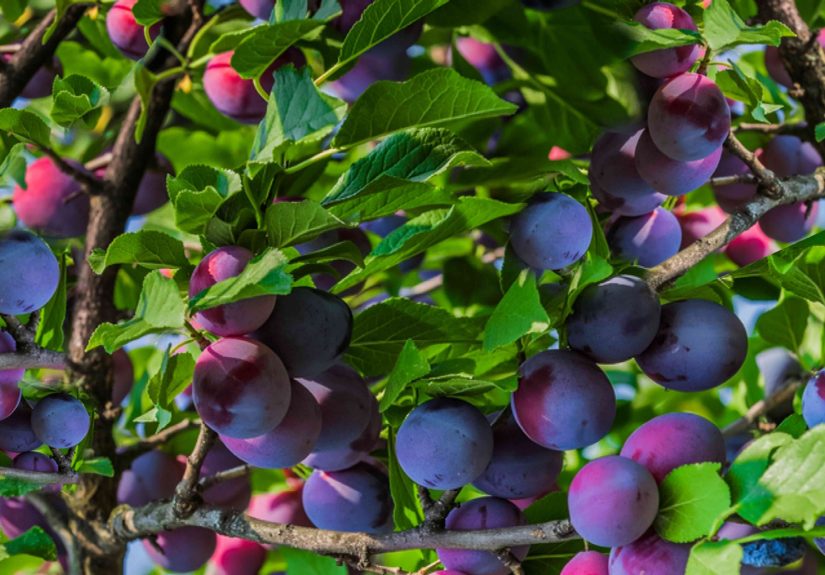
6) Dwarf Plum (Plums on Size-Controlling Rootstock, or Naturally Smaller Types)
Plums are the “easygoing friend” of the backyard orchard world: productive, flavorful, and often simpler than peaches. For small spaces, look for plums sold as
semi-dwarf/dwarf (often on specific rootstocks) and commit to annual pruning to keep them compact and sunlit. You’ll get blossoms in spring and juicy, snackable fruit in summer.
- Small-yard win: Plenty of plum varieties can be managed in compact forms with the right rootstock and pruning.
- Variety ideas: Common backyard picks include Santa Rosa–type plums and other widely adapted cultivars.
- Pro tip: Check pollination needssome plums are self-fruitful, others need a partner.
7) Dwarf Apricot (Prunus armeniaca, Managed Small)
Apricots are delicious, but they have a dramatic flaw: they bloom early, and late frosts can wipe out flowers. Still, in the right microclimate (or warmer regions),
a compact, well-pruned apricot can be a small-yard superstar. Train it like a peach (open vase) and keep it pruned for light penetration and manageable height.
- Small-yard win: Open-vase training keeps apricots accessible and productive.
- Reality check: Early bloom can mean inconsistent crops in frost-prone areas.
- Pro tip: Site selection mattersplant where cold air drains away and morning sun doesn’t force too-early blooming.
8) Dwarf Fig (Ficus carica, Common Fig Types)
Figs are one of the best “small-yard cheats” because they’re so willing to be kept small. Many common figs don’t require pollination to produce fruit, and they respond
well to pruning. In cooler climates, growing figs in containers is especially popular because you can protect them in winter (a.k.a. “tucking your fig into bed”).
- Small-yard win: Prune hard, keep it compact, still get fruit.
- Pollination note: Common figs are typically parthenocarpicno pollinator needed for fruit set.
- Pro tip: Give figs lots of sun in summer; they’re not here for “bright shade.”
9) Dwarf Meyer Lemon (Citrus limon ‘Improved Meyer’)
Dwarf citrus is the patio fruit tree category that makes people feel like wizard-gardeners. In many parts of the U.S., citrus needs container life so it can move indoors
for winter. With bright light (think 6+ hours), you can keep dwarf lemons in the 3–6 foot range and enjoy fragrant blossoms plus fruit that makes your kitchen smell like victory.
- Small-yard win: Container-friendly; easy to keep at “houseplant height.”
- Indoor tip: Bright light is non-negotiable; rotate the plant for even growth.
- Pro tip: Use a pot large enough for stabilitycitrus in tiny pots tips like it’s auditioning for slapstick comedy.
10) Dwarf Lime (Key Lime, Bearss Lime, or Similar Compact Citrus)
Limes are a great small-space flex because the tree is ornamental and useful. Many compact lime varieties do well in containers, and the fruit is a year-round “excuse”
to make tacos, lemonade, or the kind of guacamole that makes neighbors magically appear.
- Small-yard win: Excellent container citrus; can be moved for winter protection.
- Pot sizing tip: Start in a moderate pot and up-pot as it grows; many gardeners eventually settle into large patio tubs.
- Pro tip: Watch wateringtoo wet invites root issues, too dry causes leaf drop and dramatic citrus tantrums.
11) Dwarf Pomegranate (Punica granatum ‘Nana’ and Other Compact Forms)
If you want something different, dwarf pomegranate is a small-yard show-off in the best way. Compact forms like ‘Nana’ are often grown as ornamentals in containers,
with pretty blooms and a naturally small habit (often just a few feet tall). Even standard pomegranates can be trained and pruned to stay smaller, but ‘Nana’ is the
easy-button version for tight spaces.
- Small-yard win: Naturally compact; great for patios and entryways.
- Climate note: Best performance is usually in warmer zones; cold tolerance varies by type.
- Pro tip: Prune for shape and lightpomegranates can get twiggy if you ignore them.
Small-Yard Success Tips (So Your Trees Don’t Turn Into a Jungle)
Give them sun like you mean it
Most fruit trees want full sun to produce well. “Some sun” is for decorative shrubs. Fruit trees are hungry solar panels that turn light into pie ingredients.
If your yard has shade patterns, place your most sun-loving trees (peach, nectarine, citrus) in the brightest spot and reserve “tolerates a little less sun”
candidates (some figs, some pomegranates) for second-best locations.
Prune for size, structure, and sanity
Keeping fruit trees small is not a one-time haircutit’s a relationship. Annual pruning reduces tree size, improves airflow, and helps keep fruiting wood within reach.
Stone fruits often do best in open-center forms; apples and pears commonly use central leader systems. The goal is simple: a bright, open canopy that doesn’t make you fight branches.
Don’t plant the graft union too deep
For grafted trees on dwarfing rootstocks, planting depth matters. If the scion (top variety) forms its own roots because the graft union is buried, it can defeat the
dwarfing effect and you’ll end up with a surprise full-size tree. Keep the graft union above the soil line and save yourself a future “why is this tree enormous?” moment.
Containers: go big enough to avoid daily watering misery
For container fruit trees, bigger pots are usually easier to manage because they hold moisture longer and provide stability. Many extension guides suggest large volumes
for dwarf fruit trees (think in the range of large patio containers rather than cute tabletop pots). Use quality potting mix, ensure drainage, and plan for occasional root
maintenance as the tree matures.
Conclusion: Your Tiny Yard Can Still Be a Fruit Factory
A small yard doesn’t limit your harvestit just forces you to garden smarter. Choose the right dwarf or miniature fruit trees, match them to your climate and sun,
and prune with confidence. In return, you get fresh fruit, spring blossoms, and the smug joy of harvesting a lemon while standing on your own patio like it’s a private orchard.
Small-Yard Grower Experiences (the Good, the Messy, and the Delicious) Extra Notes
Here’s what small-yard gardeners consistently report after a season or two with dwarf fruit trees: the trees are the easy part. The habits are the real project.
The first big lesson is that “dwarf” doesn’t mean “no maintenance.” It means “maintenance you can do without a ladder and a life insurance policy.” People who thrive with
patio fruit trees usually do three things early: they pick a sunny spot, they commit to pruning, and they accept that watering is now a personality trait.
Container growers often describe the same arc: the first month is bliss (“Look at me, I’m basically a Mediterranean villa owner”), and then summer hits and the pot dries out
faster than a joke at a bad open-mic night. The win is simple: once gardeners move up to a larger container and add mulch on top of the potting mix, stress levels drop and
leaf drop happens less. A lot of people also learn to love wheeled plant caddiesbecause moving citrus indoors is fun exactly once, and after that it’s cardio you didn’t request.
Pollination stories are their own genre. Plenty of small-yard growers buy a single apple tree and then spend a year enjoying flowers and harvesting… air. The gardeners who
get fruit reliably either plant a second compatible variety, rely on a nearby crabapple, or choose self-fruitful options when available (figs and many peaches are popular
precisely because they’re less complicated on this front). The “aha” moment is realizing that a tiny yard orchard is more like a team sport than a solo hobbybees,
bloom timing, and compatible varieties all matter.
Pruning, meanwhile, turns out to be the great confidence builder. At first, new growers are terrified: one wrong cut and they imagine the tree filing a complaint.
But small-yard veterans will tell you: the real danger is not pruning. Unpruned trees tend to push fruiting wood upward, shade themselves out, and become harder to spray,
thin, and harvest. The people who get the best results keep a simple routine: winter pruning for structure, light summer touch-ups for height control, and consistent thinning
when branches set heavy crops. And yeseveryone has snapped a branch at least once by underestimating how heavy fruit gets. Consider it a rite of passage.
Finally, the most satisfying experience is variety “stacking.” Small-yard gardeners love having a mini spread of harvest windows: early apples plus late apples, a peach in summer,
a fig that gives repeat crops in warm climates, and citrus that hangs around like a delicious houseguest. The yard feels bigger because it’s doing moreblossoms in spring,
shade in summer, fruit in multiple seasons. And the funniest part? Once you successfully grow one dwarf fruit tree, your brain immediately starts plotting number two.
Welcome to the tiny-yard orchard club. There are no dues. Only pruning shears.