Table of Contents >> Show >> Hide
- First: what “Made in USA” actually means (and why it matters)
- The 13 American-made appliances worth knowing
- 1) KitchenAid Stand Mixer (countertop mixer)
- 2) Vitamix Blender (high-performance countertop blender)
- 3) Blendtec Blender (another powerhouse countertop blender)
- 4) BlueStar Range (pro-style range, customizable)
- 5) Wolf Cooking Appliances (ranges/cooktops)
- 6) Viking Ranges (pro-style ranges)
- 7) Sub-Zero Refrigerators (built-in refrigeration)
- 8) True Residential Refrigeration (luxury refrigerators with commercial DNA)
- 9) U-Line Undercounter Refrigeration & Ice (beverage centers, ice makers)
- 10) Cove Dishwasher (premium dishwashing)
- 11) Speed Queen Washer & Dryer (laundry built like a tank)
- 12) GE Appliances (major appliances with expanding U.S. production)
- 13) InSinkErator Garbage Disposal & Instant Hot Water (the unsung kitchen hero)
- How to choose the right American-made appliance for your home
- of real-world experiences and lessons from shopping “American-made”
- Conclusion
Buying a “Made in USA” appliance can feel like trying to order coffee with 12 customizations: the label sounds simple, but the details get… foamy.
Some products are truly built start-to-finish stateside. Others are assembled here with global parts. And some are “designed in the USA,” which is
basically the appliance version of saying, “I wrote the group project title page.”
Still, if you care about American manufacturingjobs, supply-chain resilience, service networks, and a certain satisfaction that your range wasn’t
shipped halfway around the globethere are plenty of legit options. Below is a practical, reality-based guide to 13 American-made (or American-assembled)
appliances across the kitchen and laundry spectrum, with notes on what each category does best, what to look for when shopping, and how to avoid getting
tricked by a flag sticker doing the most.
First: what “Made in USA” actually means (and why it matters)
In the U.S., an unqualified “Made in USA” claim has a high bar. The FTC’s standard is commonly summarized as “all or virtually all”
made in the United States. In plain English: you can’t slap “Made in USA” on something if the important parts (or most of the manufacturing cost)
come from elsewhere. That’s why you’ll often see careful language like “assembled in the USA”, “built in the USA with U.S. and globally
sourced components”, or “manufactured in the USA” (sometimes with fine print).
Why do you care? Because those words hint at what you’re really buying: local assembly lines, domestic quality control, shorter parts pipelines, and
sometimes (not always!) better long-term repair support. But the only way to be sure is to verify the specific model you’re considering.
How to verify “American-made” without becoming a detective
- Check the rating plate/serial label (often inside doors, behind drawers, or on the back panel). It may list country of origin.
- Read the listing language carefully: “Made,” “manufactured,” and “assembled” are not synonyms.
- Ask for the spec sheet from the manufacturer or dealermany include origin notes for certain lines.
- Expect variation by model. Even within one brand, different product families can come from different plants.
The 13 American-made appliances worth knowing
This list mixes major appliances (ranges, refrigerators, laundry) with countertop workhorses (mixers, blenders) and a couple of “unsexy but essential”
pieces that make daily life smoother. Think of it as the Avengers, but for your houseless spandex, more stainless.
1) KitchenAid Stand Mixer (countertop mixer)
The KitchenAid stand mixer is basically the national bird of wedding registries. Many models are assembled in Greenville, Ohio,
and the brand has long tied the stand mixer’s story to that location. If you want a U.S.-assembled countertop mixer that can knead dough without
sounding like it’s applying for workers’ comp, this is the classic pick.
Why it’s great: huge attachment ecosystem (pasta rollers, grinders, spiralizers), strong resale value, and the “hand-me-down factor”
(the dream scenario where your grandkids inherit it and complain that it “doesn’t have Bluetooth”).
Shopping tip: verify the exact model’s origin statement. Some listings specify “assembled in Greenville, OH,” but don’t assume every
colorway and series is identical.
2) Vitamix Blender (high-performance countertop blender)
Vitamix has a loyal following that borders on religious. Many units are tied to Cleveland, Ohio manufacturing/assembly references,
and the brand’s reputation is built on durabilitypowerful motors, repairability, and long warranties in many product lines.
Why it’s great: it’s not just “smoothies.” It’s nut butters, hot soups (from friction heat), purees, sauces, and “turn random produce
into something that looks like I meal-prepped on purpose.”
Real-life note: it’s loud. But so is progress.
3) Blendtec Blender (another powerhouse countertop blender)
Blendtec is frequently associated with being manufactured in Orem, Utah for various models. It’s the blender with the “Will It Blend?”
internet legacybecause apparently we all needed to see an iPhone meet its smoothie destiny.
Why it’s great: strong performance for thick blends, quick cleaning, and models with user-friendly presets.
Shopping tip: some product pages and listings include a direct Q&A stating U.S. manufacturinglook for that kind of explicit confirmation.
4) BlueStar Range (pro-style range, customizable)
If you like cooking with the intensity of a cooking show judge, BlueStar is a serious option. The company highlights that its products are
handcrafted in Pennsylvania, and BlueStar is known for high-BTU burners and deep customization (colors, trims, configurations).
Why it’s great: restaurant-like heat and a made-for-you vibe that can match a bold kitchen design instead of forcing you into “only stainless.”
Reality check: pro-style performance can mean more heat, more ventilation needs, and (sometimes) a learning curve. Power is fun, but it’s also a responsibility.
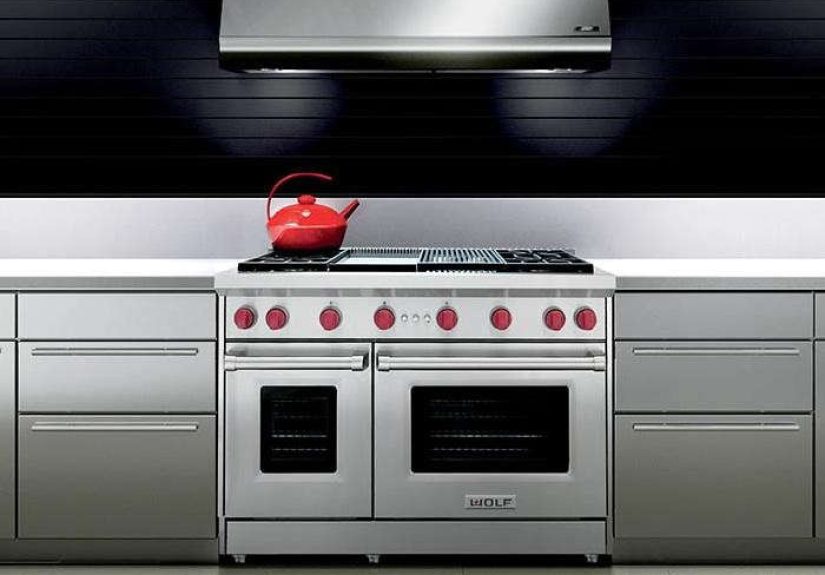
5) Wolf Cooking Appliances (ranges/cooktops)
Wolf’s residential appliances are widely described by the manufacturer as being manufactured in Fitchburg, Wisconsin. Wolf is often chosen for
steady temperature control, high-end build quality, and an ecosystem that pairs naturally with Sub-Zero refrigeration.
Why it’s great: precise simmering, strong burners, thoughtful safety and control features on many models, and a premium service network.
Shopping tip: if you cook often, prioritize the burner layout and oven configuration you’ll actually usenot the one that looks best in a showroom.
6) Viking Ranges (pro-style ranges)
Viking notes that the majority of its product line is proudly made in Greenwood, Mississippi. Viking has been part of the “pro-style at home”
conversation for decades, with models aimed at homeowners who want bold performance and a statement look.
Why it’s great: strong brand heritage in the category and a range of designs that can fit both traditional and modern kitchens.
Practical advice: pay attention to installation requirements and ventilation. A powerful range without proper ventilation is like buying a sports car and never leaving first gear.
7) Sub-Zero Refrigerators (built-in refrigeration)
Sub-Zero is a flagship name in luxury refrigeration. The company describes itself as Wisconsin-based with manufacturing facilities in
Wisconsin, Arizona, and Iowa. Sub-Zero’s brand identity is tied to food preservation, temperature stability, and long product lifecycles.
Why it’s great: built-in aesthetics (flush with cabinetry), strong preservation performance, and a reputation for longevity when properly maintained.
Reality check: it’s a premium buy. But if you’re already doing a custom kitchen build, the long-term value often comes from reliability and serviceability.
8) True Residential Refrigeration (luxury refrigerators with commercial DNA)
True’s roots are in commercial refrigeration, and True Residential leans into that “commercial DNA” story for the home. The brand emphasizes a commitment to
products manufactured in the USA and highlights robust cabinet construction and performance-driven design.
Why it’s great: bold color options, a heavy-duty feel, and a brand identity shaped by the demands of commercial cold storage.
Design note: if you want a fridge that looks like it belongs in a high-end kitchen but behaves like it belongs in a professional one, True is worth a look.
9) U-Line Undercounter Refrigeration & Ice (beverage centers, ice makers)
Undercounter refrigeration is one of those “you don’t need it… until you have it” upgrades. U-Line is known for beverage centers, wine storage, and ice machines,
and many retailers describe U-Line products as produced/manufactured in Milwaukee, Wisconsin.
Why it’s great: dedicated zones for drinks and entertaining, options for indoor/outdoor use, and a cleaner look than stacking cases of sparkling water in your main fridge.
Shopping tip: confirm whether the specific unit is rated for outdoor use. “It looks fine on a patio” is not a warranty category.
10) Cove Dishwasher (premium dishwashing)
Cove dishwashers come from the Sub-Zero Group family and are marketed by various dealers as made in the USA. Cove aims to compete in the premium
dishwasher segment with flexible interiors, strong drying performance, and a “built like it matters” approach.
Why it’s great: premium build, thoughtful rack design, and the advantage of a high-end appliance ecosystem (especially if your kitchen is already leaning Sub-Zero/Wolf).
Reality check: dishwashers live hard lives. Look for stainless interiors, good filtration, and a warranty you actually trust.
11) Speed Queen Washer & Dryer (laundry built like a tank)
Speed Queen is the rare laundry brand that openly flexes its long history in Ripon, Wisconsinand even claims it has never produced home laundry
equipment anywhere else. The brand’s reputation is built around durability and commercial-style construction.
Why it’s great: long-term reliability focus, straightforward controls on many models, and the vibe of a machine that expects to outlive your current laundry basket.
Shopping tip: consider whether you prefer classic top-load simplicity or modern front-load efficiency. “Best” depends on your priorities and laundry habits.
12) GE Appliances (major appliances with expanding U.S. production)
GE Appliances has publicly discussed major investments aimed at expanding U.S. manufacturing and shifting production of certain products to American facilities.
For shoppers, the big takeaway is that some GE appliances are made or assembled in the U.S., and the company has been moving more production stateside over time.
Why it’s great: broad availability, lots of price points, and a huge service footprintespecially helpful when you don’t want a three-week wait for a basic part.
Shopping tip: GE’s catalog is enormous. Always verify origin by specific model number, not just the brand badge on the door.
13) InSinkErator Garbage Disposal & Instant Hot Water (the unsung kitchen hero)
InSinkErator is a major name in garbage disposals and instant hot water dispensers, headquartered in Racine, Wisconsin. The brand also highlights
its manufacturing history there. If you’re doing a kitchen upgrade, this is one of the most practical “quality-of-life per dollar” improvements.
Why it’s great: quieter premium models, fast food-waste cleanup, and fewer trash odors doing that slow, haunting creep.
Reality check: a disposal is not a magic portal. Avoid fibrous foods and grease, and your pipes will stay on speaking terms with you.
How to choose the right American-made appliance for your home
Match the appliance to your actual life, not your fantasy life
The “right” choice is less about national pride and more about how you cook, clean, and live. If you bake weekly, the stand mixer matters. If you entertain,
undercounter refrigeration and ice become surprisingly essential. If you have kids, pets, or a mountain range of towels, laundry durability is the hill you’ll die on.
Budget for the hidden stuff
- Ventilation: pro-style ranges often need upgraded hoods and ducting.
- Electrical/gas readiness: dual-fuel ranges, built-ins, and premium dishwashers may require updates.
- Delivery/install: built-in refrigeration and heavy ranges can demand specialized delivery teams.
- Service access: ask who repairs it locally before you buy, not after it breaks during a dinner party.
Expect “made in USA” to be model-specific
Even brands with strong U.S. manufacturing footprints may have mixed sourcing across categories. The safest strategy is always:
choose the appliance you want, then confirm where that exact model is made or assembled.
of real-world experiences and lessons from shopping “American-made”
If you’ve never shopped for appliances with a “made in USA appliances” filter in your brain, here’s what usually happens: you start confident, you get
wildly optimistic, and then you realize every product description has the linguistic gymnastics of a politician answering a yes-or-no question.
That doesn’t mean the effort is pointlessit just means you need a strategy and a sense of humor.
The first “experience” most people have is the label whiplash. One page says “Made in the USA,” another says “Assembled in the USA,” and a third
says “Designed in the USA,” whichno shadesounds like your appliance was conceived in an American think tank and then immediately outsourced to the planet’s
largest mystery warehouse. The fix is simple: find the model number, then locate the most official source you can (manufacturer page, spec sheet, rating label).
If the origin still isn’t clear, ask a dealer to confirm in writing. You’re not being difficult; you’re being appropriately adult.
The next surprise is how much the buying experience differs by category. Countertop appliances (mixers, blenders) are usually easy: you can order,
unbox, and be making soup before you finish arguing with the cardboard. Big appliances are a different sport. A range or built-in refrigerator is a scheduling
puzzle involving delivery windows, installers, and that one doorway that suddenly looks a lot narrower than it did yesterday.
Then there’s the “I didn’t think about that” moment: infrastructure. Pro-style ranges can demand serious ventilation. A premium dishwasher might
benefit from a proper air gap setup depending on local code. Built-in refrigeration may need electrical placement that doesn’t fight with cabinetry plans.
The lesson: your appliance choice is only as good as the setup supporting it.
On the happiness side, people often report a very specific satisfaction with American-made or American-assembled appliances: service confidence.
When a product has a strong U.S. manufacturing base, parts logistics and service networks can feel less like a scavenger hunt. That doesn’t mean nothing ever breaks,
but it can mean fewer “we’ll have to special-order that from somewhere” conversations that end with you hand-washing dishes like it’s 1840.
Finally, there’s the long-game experience: living with it. High-performance appliances tend to reward you if you use them intentionally.
A serious blender gets used more when it’s on the counter and easy to clean. A stand mixer earns its keep when you embrace batch baking or weekly meal prep.
A laundry machine built for durability feels “boring” in the best way: it just works. And that’s the point. In the end, the best American-made appliance isn’t
the one with the loudest marketingit’s the one that quietly makes your daily life easier for years.