Table of Contents >> Show >> Hide
- How Retailer Clothing Recycling Programs Actually Work
- Before You Recycle: A Quick Prep Checklist (So You Don’t Lose Rewards)
- 14 Retailers (and Programs) That Recycle Clothes for Money and Rewards
- 1) The North Face Renewed Trade-In (Credit for Eligible Gear)
- 2) Universal Standard Reset, Recycle, Refresh (Coupon-Based Closet Reset)
- 3) H&M Garment Collecting (Rewards for Dropping Off Any Brand)
- 4) Carter’s KidCycle (Kids’ Clothing Recycling That Has Evolved)
- 5) J.Jill Gently Worn Clothing Drive (Donation + Store Incentives)
- 6) Levi’s SecondHand Trade-In (Credit for Your Denim Classics)
- 7) Madewell Denim Recycling (Instant Discount for Any Brand of Jeans)
- 8) DSW Shoe Donation + Loyalty Points (Soles4Souls Partnership)
- 9) Soma Bra Donation Rewards (Turn Unworn Bras Into Rewards)
- 10) Patagonia Trade In (Worn Wear Credit for Eligible Gear)
- 11) Gap ThredUp Clean Out (Earn Gap Credit for What Sells)
- 12) Reformation RefRecycling (Flat Credit Per Item) + Clean Out Kits
- 13) EILEEN FISHER Renew (Classic Take-Back With Consistent Rewards)
- 14) Planet Aid Donate Textiles for a Tax Receipt (A Different Kind of “Money”)
- How to Choose the Best Program for Your Closet (Quick Matchmaker)
- Common Mistakes That Shrink Your Rewards (Avoid These)
- Real-World Experiences: What It’s Like to Use These Programs (And How to Make It Worth It)
- Conclusion: Turn Closet Clutter Into Rewards Without the Chaos
Your closet is basically a museum of past versions of you: “I ran a 5K once,” “I was definitely a fedora person,”
and “Why did I own three nearly identical black tees?” The good news: those old clothes don’t have to end their
lives as landfill residents. The even better news: a surprising number of retailers will take them back and reward you
with store credit, coupons, loyalty points, or other perks for doing the right thing.
Clothing waste is a real problem in the U.S., and recycling rates for textiles are still low compared to how much we buy.
The U.S. Environmental Protection Agency reports a 2018 textile recycling rate of 14.7% (with 2.5 million tons recycled),
which tells you two things: (1) we have room to improve, and (2) your “don’t throw it away” instincts are valid.
This guide breaks down 14 retailers and programs that can turn your closet clean-out into real value, plus a practical
playbook for maximizing rewards without accidentally hauling your laundry basket to five different stores like it’s an
Olympic event.
How Retailer Clothing Recycling Programs Actually Work
Most “recycle your clothes” programs fall into three buckets. Knowing which bucket you’re dealing with helps you avoid
disappointment (and the classic “Wait, I carried this bag here for… a coupon that expires tomorrow?” moment).
1) Take-back + recycling (often accepts any brand)
You drop items in-store (sometimes by mail), and the brand routes them to reuse, resale, downcycling, or recycling partners.
Rewards typically come as a one-time coupon, loyalty perk, or discount.
2) Trade-in + resale (usually the brand’s own items)
You trade in eligible items, and the retailer resells them through a “pre-owned” channel. Rewards are usually store credit,
often based on item type and condition. This is the closest thing to “turning clothes into money” without starting an online
resale side hustle.
3) Partnered clean-out kits (ThredUp-style programs)
You send in a box/bag of gently used items, and the partner resells them. You get credit (sometimes boosted) for what sells.
This is great for “one-and-done” decluttering, less great if you want instant rewards.
Before You Recycle: A Quick Prep Checklist (So You Don’t Lose Rewards)
- Wash and dry everything. Most programs require items to be clean and dry (and your future self will thank you).
- Sort by category. Denim, bras, shoes, and brand-specific trade-ins often have separate rules.
- Empty pockets and remove personal items. This includes keys, receipts, and that one mysterious LEGO.
- Check membership requirements. Some rewards require joining a free loyalty program first.
- Read the fine print on limits. Monthly caps, per-transaction caps, and expiration dates are common.
Now, let’s get to the fun part: the retailers that will actually reward you for doing this.
14 Retailers (and Programs) That Recycle Clothes for Money and Rewards
1) The North Face Renewed Trade-In (Credit for Eligible Gear)
If you’ve got The North Face gear that’s still got trail life left in it, this is one of the most straightforward trade-in
programs available. Eligible items can earn you store credit in set tiers (often tied to item type/MSRP category).
- What you get: Credit for eligible trade-ins (commonly tiered, such as $10 / $30 / $50 depending on eligibility and item category).
- What they take: Your used The North Face gear (eligibility varies; items that can’t be renewed may still be accepted for recycling/donation).
- How it works: Trade in in-store or by mail via the Renewed trade-in process, then apply credit toward a future purchase.
- Pro tip: Watch for limited-time bonus offers (some periods add extra bonus credit for certain categories like outerwear).
Best for: Outerwear and gear you bought for “serious adventures” but mostly used to walk from the car to the coffee shop.
(Still counts. Still valid.)
2) Universal Standard Reset, Recycle, Refresh (Coupon-Based Closet Reset)
Universal Standard has run a well-known “Reset, Recycle, Refresh” concept where you purchase a bag, fill it with clothing,
send it back, and receive a coupon per item. Availability and terms can change because this has been offered in waves.
- What you get: Typically a coupon/reward per accepted item sent back (program details may be time-limited).
- What they take: Clothing (often broad acceptance, including non-Universal Standard items, depending on the program terms).
- How it works: Order the program bag, pack items, ship back, and receive rewards according to the campaign rules.
- Pro tip: If the program is live, maximize value by sending items you were going to donate anywaythen use the reward on wardrobe staples you’ll actually wear.
Best for: People who love a structured reset (and love a coupon almost as much as they love a good black tee).
3) H&M Garment Collecting (Rewards for Dropping Off Any Brand)
H&M has long promoted garment collection in-store, accepting unwanted textiles and clothing from any brand and in any condition.
Rewards commonly come via their membership perks.
- What you get: A member reward (commonly a percentage-off reward for dropping off a bag of textiles).
- What they take: Clothing and textiles from any brand, including items that are too worn to donate.
- How it works: Bring a bag to a participating store; you receive a reward tied to your member account/offer rules.
- Pro tip: Use this for “un-donatable” items (stained tees, worn socks) so you’re not putting guilt in a donation bin.
Best for: Mixed bags of textiles when you want a simple drop-off with a little “thank you” reward.
4) Carter’s KidCycle (Kids’ Clothing Recycling That Has Evolved)
Carter’s has operated KidCycle initiatives connected to clothing recycling, historically with partner logistics. The exact
format and rewards have changed over time, and availability can be limited or seasonal.
- What you get: Sometimes points/perks or participation incentives (but rewards and program structure can change).
- What they take: Typically kids’ clothing and textiles (program rules vary by current initiative).
- How it works: Depending on the current rollout, this may be in-store, event-based, or partner-based.
- Pro tip: If you’re doing a kids’ closet purge, check Carter’s current KidCycle details before you plan your drop-off route.
Best for: Parents cycling through sizes faster than your phone updates its operating system.
5) J.Jill Gently Worn Clothing Drive (Donation + Store Incentives)
J.Jill’s Compassion Fund has hosted gently worn clothing drives that give donated clothing a second life while supporting women in need.
These are often time-bound events, and the incentive details can vary by promotion period.
- What you get: Often a store discount or offer tied to donating during the drive window (varies by event).
- What they take: Gently worn clothing (usually during specific drive dates).
- How it works: Bring donations to participating locations during the event and receive the offer as described for that drive.
- Pro tip: If you already shop J.Jill, time your donation with your next wardrobe refresh so the incentive isn’t wasted.
Best for: Gently worn clothing that’s still donation-ready, plus shoppers who like a “do good, save a little” combo.
6) Levi’s SecondHand Trade-In (Credit for Your Denim Classics)
Levi’s has expanded into branded resale through SecondHand, which can include trade-in options for eligible items. If your jeans
still have structure and life (and your knees haven’t fully negotiated independence), trade-in can be an easy way to earn credit.
- What you get: Store credit/gift card value based on eligible items and trade-in rules.
- What they take: Typically eligible Levi’s items accepted by the program.
- How it works: Follow the trade-in flow through their resale/trade-in channel; receive credit if your items qualify.
- Pro tip: If your jeans are truly premium condition, compare trade-in convenience vs. resale value elsewhere. Convenience wins oftenbut not always.
Best for: Brand-name denim you’ve outgrown (emotionally or literally) and want to convert into future denim.
7) Madewell Denim Recycling (Instant Discount for Any Brand of Jeans)
This is the denim program many people love because it’s simple: bring in old jeans, get a discount on a new pair. Madewell has
promoted denim recycling in partnership with textile recycling initiatives and generally accepts jeans in any condition.
- What you get: A discount on a new pair of jeans (commonly a set dollar amount off).
- What they take: Old denim/jeans from any brand, even if worn out.
- How it works: Drop off denim in-store and receive the offer tied to the program.
- Pro tip: Stack your discount with seasonal sales if allowed by current termsthis is how people score “I can’t believe I paid that” jeans prices.
Best for: Denim-heavy households and anyone who treats jeans as a long-term relationship.
8) DSW Shoe Donation + Loyalty Points (Soles4Souls Partnership)
DSW makes it easy to donate new or gently worn shoes in-store, and loyalty members can earn points for participating.
This is a great option when shoes are still wearable and you want them to go somewhere useful.
- What you get: Loyalty points for donating (commonly awarded weekly; program rules apply).
- What they take: New or gently worn shoes.
- How it works: Donate in-store and receive points credited to your loyalty account.
- Pro tip: If you have a pile of “almost fine” shoes, set a recurring habit: donate once a week until the pile is gone and the points add up.
Best for: Shoes that are wearable but no longer “you,” plus anyone who enjoys the magical feeling of earning points while decluttering.
9) Soma Bra Donation Rewards (Turn Unworn Bras Into Rewards)
Bras are notoriously tricky to donate or recycle responsibly. Soma runs a bra donation initiative, and their rewards program can
include specific perks tied to bra donations (with limits).
- What you get: Rewards tied to bra donations (commonly a set reward value per donation, often capped monthly).
- What they take: New or gently used bras, plus guidance on what is donated vs. recycled through partners.
- How it works: Drop off bras at a Soma boutique; rewards apply according to the rewards program terms.
- Pro tip: Donate in months you know you’ll buy a new braso the reward doesn’t expire before you “get around to it.”
Best for: The “bra drawer audit” (you know, the one where you discover three bras that are technically bras but practically suggestions).
10) Patagonia Trade In (Worn Wear Credit for Eligible Gear)
Patagonia’s Worn Wear ecosystem is one of the most established branded resale ecosystems. If your Patagonia gear is eligible,
you can get trade-in credit after completing a quick eligibility/value check.
- What you get: Trade-in credit for eligible items (value varies; there may be an online processing/shipping fee deducted from credit depending on method).
- What they take: Eligible Patagonia clothing and gear.
- How it works: Use the trade-in quiz, then trade in online by mail or in-store (depending on current options).
- Pro tip: Patagonia trade-in is convenience-first. For high-demand items in excellent condition, consider whether direct resale might net more.
Best for: Technical gear you loved but no longer useand would rather see hiking again than living in a storage bin.
11) Gap ThredUp Clean Out (Earn Gap Credit for What Sells)
Gap’s partnership with ThredUp lets you send gently used clothes and accessories to be resold. Instead of cash, you earn Gap credit,
and some promotions add a payout boost.
- What you get: Gap credit based on what sells through your kit (and sometimes a bonus/payout boost during promo periods).
- What they take: Gently used clothing and accessories that fit partner resale criteria.
- How it works: Activate a kit, send items in, then receive credit based on consignment outcomes.
- Pro tip: Send in seasonally relevant items (e.g., coats before winter, dresses before spring events) to improve sell-through odds.
Best for: Big closet clean-outs when you want one box to rule them all and don’t mind waiting for items to sell.
12) Reformation RefRecycling (Flat Credit Per Item) + Clean Out Kits
Reformation offers a direct recycling credit program (flat credit per item) and also runs resale-based clean-out options through partners.
If you want predictable rewards fast, the flat-credit option is appealing.
- What you get: A flat credit per item for recycling (often capped per transaction), plus potential resale-based credit via clean-out kits.
- What they take: Clothing and shoes according to program rules; verify condition and category requirements.
- How it works: Drop off or send items to recycling partners for credit, or use a clean-out kit flow for resale-based credit.
- Pro tip: Use the flat-credit program for low-resale items (basic tees, fast-fashion pieces) and save your “nice stuff” for resale programs.
Best for: People who love predictable rewards and don’t want to play the “will it sell?” waiting game.
13) EILEEN FISHER Renew (Classic Take-Back With Consistent Rewards)
EILEEN FISHER Renew is one of the clearest brand take-back programs: bring back your EILEEN FISHER garments and receive a consistent
store credit amount per piece, regardless of condition.
- What you get: A flat store credit per EILEEN FISHER piece returned.
- What they take: EILEEN FISHER items in any condition (program rules apply), returned in-store or by mail to supported centers.
- How it works: Return items at participating stores (or follow mail-in directions) and receive Renew Rewards per item.
- Pro tip: If you have multiple pieces, batch your returns when you’re ready to buyso you can apply the credits efficiently.
Best for: Brand-loyal wardrobes and anyone who appreciates a simple, consistent reward structure.
14) Planet Aid Donate Textiles for a Tax Receipt (A Different Kind of “Money”)
Not every “reward” comes as a coupon. Donation programs like Planet Aid accept textiles via drop-off bins and provide donation receipts
that may be used for tax deduction purposes (always consult a tax professional for your situation). This can be a practical option for
mixed textilesespecially when you want a quick drop-off.
- What you get: A donation receipt for potential tax deduction purposes.
- What they take: Used clothing, shoes, and textiles (check local bin guidance; keep items bagged and dry).
- How it works: Drop off bagged donations in a Planet Aid bin, then request/generate a receipt through their process.
- Pro tip: If you’re doing year-end decluttering, keep a simple donation log (date, general item category, estimated value) for your records.
Best for: Big mixed donations and anyone who wants the simplest “drop-and-go” path with documentation.
How to Choose the Best Program for Your Closet (Quick Matchmaker)
- Best for worn-out textiles (any brand): H&M garment collection or similar take-back bins (great for “not donation-ready” items).
- Best for brand-specific outerwear credit: The North Face trade-in or Patagonia trade-in (gear-dependent eligibility).
- Best for denim: Madewell denim recycling (simple, direct discount).
- Best for shoes: DSW donation + points (wearable shoes with a loyalty perk).
- Best for bras: Soma donation program with rewards (especially if you’re already in the rewards ecosystem).
- Best “mail it once” clean-out: Gap x ThredUp (if you can wait for sell-through).
- Best predictable flat credit per item: Reformation’s recycling credit (subject to program limits).
A smart strategy is to do a two-pass sort: first, pull out anything with easy, high-certainty rewards (denim to Madewell, shoes to DSW,
bras to Soma). Then, take the remaining pile and choose one general outlet (H&M take-back or a donation bin program) so the rest
doesn’t linger in your trunk forever.
Common Mistakes That Shrink Your Rewards (Avoid These)
- Ignoring program limits. Many offers cap rewards per month or per transaction.
- Assuming “recycling” equals “cash.” Most programs pay in credit or coupons, not money.
- Sending the wrong stuff. “Any condition” is not the same as “wet, moldy, or unbagged.”
- Forgetting the expiration date. A coupon you don’t use is basically just a fancy receipt.
- Not checking eligibility first. Trade-in programs can reject items that don’t qualify for renewal/resale.
Real-World Experiences: What It’s Like to Use These Programs (And How to Make It Worth It)
Let’s talk about the part nobody advertises: the “experience layer.” Not the glossy sustainability photo with perfect linen bins,
but the real-life versionwhere you’re on your bedroom floor sorting socks like you’re defusing a bomb and whispering,
“How did I accumulate this many promotional t-shirts?”
The most common “win” experience is when you treat retailer programs like a rewards scavenger hunt with a plan. Picture this:
you do a Saturday closet clean-out and build three piles: Resell-worthy (great condition, desirable brands),
Reward-specific (denim, bras, shoes, brand trade-ins), and Recycling-only (stained, torn, or end-of-life).
The reward-specific pile is where you get the quick dopamine: drop old jeans at Madewell and walk out with a discount for the jeans
you were already thinking about buying. Donate shoes at DSW and see points pop into your account. Drop bras at Soma and get a reward
that makes your next purchase feel less painful. These moments are satisfying because the rules are clear and the payoff is immediate.
The “meh” experience usually happens when you go in blind. A lot of people expect every program to work like a bottle deposit:
you bring stuff, you get money, end of story. Retailer recycling doesn’t work that way. The rewards are often behavior nudges:
“Thanks for recyclinghere’s a coupon so you’ll come back.” If you’re not planning to buy anything soon, the reward can feel useless.
The fix is simple: only chase coupons you’ll actually use. If you don’t shop a brand, don’t let their coupon lure you into
buying something you didn’t want. That’s like “saving money” by purchasing a blender because it was 40% offwhen you don’t even like smoothies.
Mail-in resale kits can be the most emotionally confusing experience. On one hand, it’s magical: you purge a huge pile in one box and feel like
a minimalist icon. On the other hand, the timeline is slow. Items must be received, processed, listed, and soldand not everything sells.
The best way to enjoy this process is to treat any credit you earn as a bonus, not a paycheck. Send in items that are truly
“sitting and waiting,” not items you’re depending on to fund your next shopping spree. If you want guaranteed value, choose flat-credit programs
(like per-item recycling credits) when available, or use instant in-store incentives.
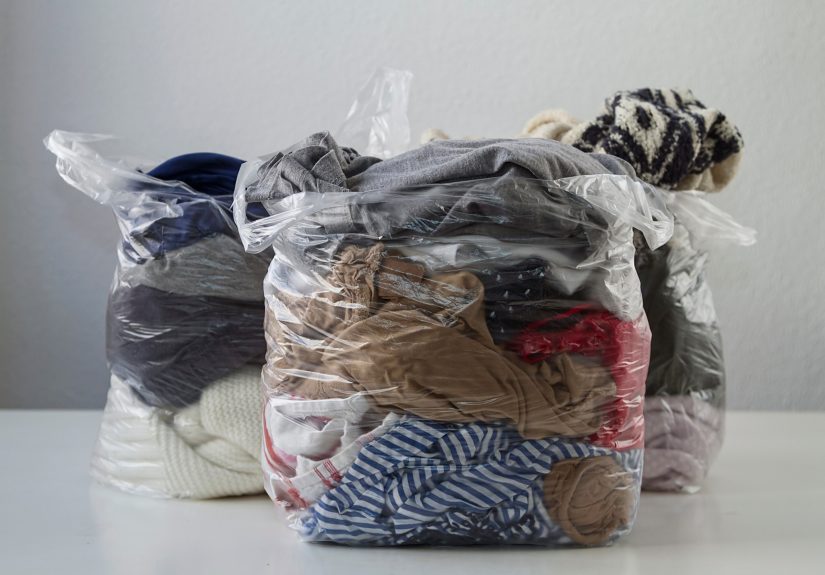
Another common “surprise” is how much cleanliness and prep matters. A take-back bin is not a laundry hamper. If your items are
wet, smelly, or contaminated, they can become unusablenot just for donation, but for recycling streams too. People often report that the easiest
successful drop-offs are the ones where everything is bagged, dry, and sorted. It also feels less awkward when you hand over a neat, sealed bag
instead of… a loosely assembled textile avalanche.
If you want the experience to feel rewarding (not like errands cosplay), here’s a practical, repeatable system:
- Step 1: Pick one “recycling day” per month. Put a small bin in your closet for “leaving the house soon” items.
- Step 2: Sort by reward. Denim, shoes, and bras go to their best-match retailer. Brand trade-ins go in a separate bag.
- Step 3: Track rewards immediately. Screenshot the offer, note the expiration date, and decide exactly what you’ll use it for.
- Step 4: Use rewards quickly and intentionally. Apply them to staples (jeans you’ll wear weekly, bras you actually need, outerwear that lasts).
- Step 5: Don’t let perfect be the enemy of done. If you can’t optimize every item, choose one general drop-off option for the rest.
The best “experience” takeaway is this: retailer recycling programs work best when you treat them as a closet maintenance habit,
not a once-a-decade purge. Small, regular drop-offs are easier, rewards are easier to use, and your home stops becoming a textile time capsule.
Plus, you’ll get to enjoy the rare adult thrill of looking at your closet and thinking, “Wow. I can actually see the floor.” That’s priceless.
(But also, yes, take the points.)