Table of Contents >> Show >> Hide
- Before You Pick Anything: 5 Bay-Window Realities That Matter
- 14 Window Treatments for Bay Windows (That Actually Enhance the Architecture)
- Individual Roman Shades (One per Section)
- Relaxed Roman Shades (Soft + Casual)
- Woven Wood (Bamboo) Shades
- Top-Down/Bottom-Up Shades
- Solar Roller Shades (Glare Control Without the Cave Effect)
- Blackout Roller Shades (Bedroom Bays, Solved)
- Layered Look: Sheers + Hidden Shades
- Full-Length Drapery on a Ceiling Track
- Bay-Specific Curtain Rods (With Corner Connectors)
- Stationary Side Panels (Frame the Bay, Don’t Fight It)
- Café Curtains (Cozy, Bright, and Surprisingly Practical)
- Plantation Shutters (Architectural and Clean)
- Wood or Faux Wood Blinds (Warmth + Slat Control)
- Cellular (Honeycomb) Shades for Comfort and Efficiency
- Valance or Cornice + Shades (The “Finished” Look)
- Quick Match Guide: Choose Like You’ve Done This Before
- Conclusion: Let the Bay Window Be the Main Character
- of Real-World Bay Window Experience (What People Usually Learn the Hard Way)
Bay windows are the architectural equivalent of a celebrity cameo: they show up, steal the scene, and suddenly your room looks 30% more interesting.
The downside? Dressing a bay window can feel like buying jeans onlinethree angles, five opinions, and somehow nothing fits the way you imagined.
The good news is that bay windows are incredibly forgiving once you match the right treatment to how you actually live: privacy needs, glare, heat, pets,
kids, and whether that bay is a cozy reading nook or the stage for your houseplants’ daily photoshoot.
Below are 14 window treatments that reliably flatter bay windows, plus practical tips for choosing hardware, getting proportions right, and avoiding the
most common “why does this look weird?” mistakes. You’ll find options ranging from tailored and modern to soft and traditional, including clever combos
that solve real-life issues like afternoon glare and street-facing privacywithout hiding the bay window’s best feature: its shape.
Before You Pick Anything: 5 Bay-Window Realities That Matter
1) A bay window is multiple windows pretending to be one
Most bays are three sections (a center window with two angled sides), but some are wider. That means you can treat each section individually
(shades/blinds/shutters per window) or unify them with one continuous treatment (drapery on a track or bay rod). The right answer depends on whether you
want a crisp, tailored look (individual) or a dramatic, cohesive frame (continuous).
2) Your mounting choice changes the vibe
Inside-mount treatments (installed within each window frame) read clean, architectural, and “built-in.” Outside-mount treatments (installed above or
beyond the frames) create softness, drama, and the illusion of larger windowsespecially if you mount higher and wider than the actual frame.
3) Furniture in the bay will vote on your behalf
If you have (or want) a bench, breakfast nook, or radiator cover in the bay, long curtains may get in the way. In those situations, think shades,
shutters, or café curtains. If the bay is open floor area and you want height, drapery becomes your best friend.
4) Light control is not one-size-fits-all
A bright east-facing bay might need glare control in the morning. A west-facing bay can turn your living room into a toaster oven by 4 p.m.
Figure out whether you need light filtering, room darkening, or full blackoutand whether you need that control every day or just occasionally.
(Translation: you might be a “sheer + hidden shade” person.)
5) Hardware is half the look
With bay windows, the hardware is not just functionalit’s visible, and it has to deal with angles. For drapery, consider bay-specific rods with corner
connectors or ceiling-mounted tracks that can follow the bay shape. And if you’re going for “designer proportions,” mount rods higher and extend them wider
so curtains frame the bay instead of blocking it.
14 Window Treatments for Bay Windows (That Actually Enhance the Architecture)
-
Individual Roman Shades (One per Section)
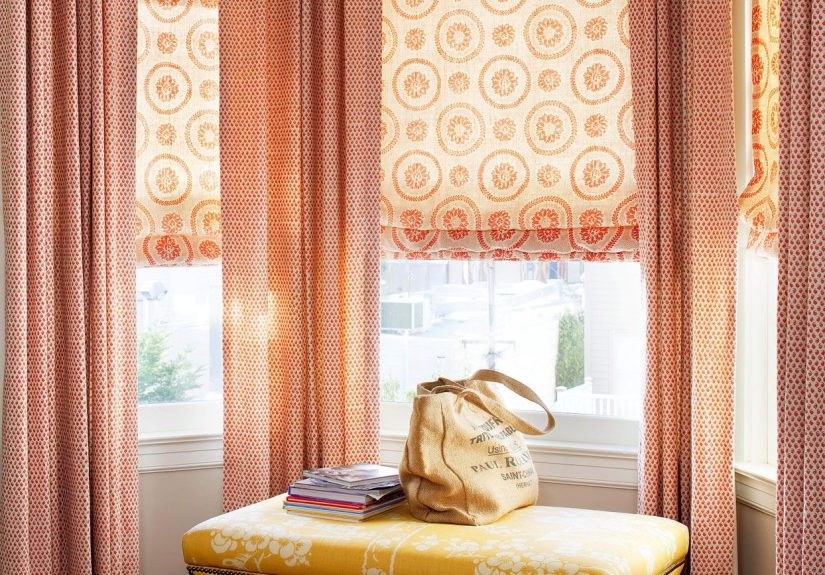
If you want a polished, custom look without wrestling long fabric around angles, individual Roman shades are a classic win. Each bay window section gets
its own shade, keeping the lines clean and the function simple.Best for: dining nooks, living rooms, home offices, bays with seating beneath.
Pro tip: Choose a mount style that sits neatly within each frame for a tailored “built-in” feel. Patterns work beautifully here because
the shade becomes a panel of art when lowered. -
Relaxed Roman Shades (Soft + Casual)
Relaxed Romans have that gentle curve at the bottom that says, “I’m put-together, but I also own comfy sweatpants.” They soften a bay window without
adding bulky layers, and they’re especially charming in kitchens and breakfast areas.Best for: cozy spaces, cottage and transitional styles, rooms that need warmth.
Pro tip: Light-filtering linen blends give privacy without making the bay feel boxed in.
-
Woven Wood (Bamboo) Shades
Woven wood shades add instant texture and a slightly coastal, organic vibe. They’re great when you want the bay window to feel like part of the room’s
décor, not an afterthought you covered because the sun was rude.Best for: living rooms, sunrooms, boho and coastal interiors, homes with lots of natural materials.
Pro tip: Consider a privacy liner if your bay faces the street. You can keep the texture but upgrade the coverage.
-
Top-Down/Bottom-Up Shades
These are the “have your cake and eat it too” option: you can lower the top for privacy while letting light in, or raise the bottom for view control.
In a bay window, that flexibility is goldespecially when neighbors are close or the bay sits at sidewalk level.Best for: street-facing bays, bathrooms with bay-style windows, homes where privacy changes by time of day.
Pro tip: Pair with a soft valance if you want the mechanism to disappear visually.
-
Solar Roller Shades (Glare Control Without the Cave Effect)
Solar shades are a smart solution when the bay window’s main issue is glare and heatnot necessarily privacy. They reduce harsh light while still
preserving the sense of view, which is kind of the whole point of having a bay window in the first place.Best for: home offices, TV rooms, west-facing living rooms, modern interiors.
Pro tip: Choose openness thoughtfully: more openness preserves view, less openness increases glare control.
-
Blackout Roller Shades (Bedroom Bays, Solved)
If your bay window lives in a bedroom, you already know: sunrise does not care about your sleep schedule. Blackout roller shades give you reliable
darkness with a clean lookand they’re especially practical when long drapes would puddle in high-traffic areas.Best for: bedrooms, nurseries, shift-worker sleep zones, guest rooms.
Pro tip: Add side channels or a snug outside mount if you’re serious about blocking light leaks.
-
Layered Look: Sheers + Hidden Shades
This is the “best of both worlds” approach designers love: a soft sheer layer for daytime glow, plus a discreet shade behind it for privacy at night.
In bays, layered treatments can make the window feel larger, more intentional, and more luxe without being fussy.Best for: living rooms, formal dining spaces, bays you want to highlight as a focal point.
Pro tip: Use a double rod or track system so each layer moves independently.
-
Full-Length Drapery on a Ceiling Track
If you want your bay window to look expensive (without needing it to actually be expensive), ceiling-mounted drapery is a power move. It draws the eye
up, frames the bay like a stage, and makes ceilings feel taller. Tracks can also follow angles more smoothly than standard rods in many setups.Best for: dramatic living rooms, formal spaces, tall ceilings, homes where you want softness and height.
Pro tip: Choose pinch pleats or ripple fold for a tailored, consistent look across the bay.
-
Bay-Specific Curtain Rods (With Corner Connectors)
Prefer a classic rod look? Bay window rod systems exist specifically for this shape, often using elbow connectors to turn corners. This helps drapery
follow the angles and makes the hardware look intentional instead of “we tried our best.”Best for: traditional or transitional rooms, anyone who wants visible hardware as part of the décor.
Pro tip: Extend the rod beyond the outer edges so curtains can stack off the glass and preserve light.
-
Stationary Side Panels (Frame the Bay, Don’t Fight It)
If you love the bay window’s light and view but still want softness, stationary panels are a low-maintenance compromise. They add height and texture
without needing to open and close around angles every day.Best for: bays with great views, rooms where you rarely need full privacy, “I want it pretty” projects.
Pro tip: Add an inside-mount shade for functional light control, and let the panels do the styling.
-
Café Curtains (Cozy, Bright, and Surprisingly Practical)
Café curtains cover the lower portion of the window, which is perfect for street-facing bays where you want privacy but still want the top half to
flood the room with light. They’re especially charming in kitchens and breakfast nooks.Best for: kitchens, casual dining areas, first-floor bays, cottage style homes.
Pro tip: Crisp cotton or linen keeps them from looking too “grandma’s doily era.” (Unless that’s the goal. No judgment.)
-
Plantation Shutters (Architectural and Clean)
Shutters look like they belong with the windowbecause they basically do. They’re structured, timeless, and excellent for privacy and light control.
In a bay, shutters emphasize the geometry and keep the overall look crisp.Best for: classic interiors, homes with lots of trim detail, bays where you want a built-in look.
Pro tip: Match the shutter finish to your trim for a seamless look, or go slightly contrasting for subtle definition.
-
Wood or Faux Wood Blinds (Warmth + Slat Control)
Blinds give you adjustable light and privacy without the fabric volume of curtains. Wood adds richness; faux wood is often more durable and budget
friendly. In a bay window, individual blinds per section keep operation straightforward.Best for: family rooms, rentals (depending on rules), spaces that need daily adjustability.
Pro tip: Consider a cloth tape ladder for a softer, more finished look.
-
Cellular (Honeycomb) Shades for Comfort and Efficiency
Bay windows can be drafty in winter and hot in summer. Cellular shades are popular for insulation because of their honeycomb structure, and they give a
neat, modern profile when mounted inside each window section.Best for: temperature-sensitive rooms, older homes, bedrooms, nurseries, energy-conscious households.
Pro tip: Light-filtering cellular shades keep rooms bright; room-darkening options work well for sleep spaces.
-
Valance or Cornice + Shades (The “Finished” Look)
If your bay window treatments feel a little “floating in space,” a valance or cornice can pull everything together. Use it to hide hardware, add color,
or echo architectural trim. Pair it with simple shades beneath for a balanced mix of style and function.Best for: traditional rooms, formal dining areas, anyone who wants a polished top edge.
Pro tip: Keep the top treatment proportionalbay windows already have visual presence, so you don’t need a towering valance unless you
want full-on period drama.
Quick Match Guide: Choose Like You’ve Done This Before
- Need privacy but want daylight? Top-down/bottom-up shades or café curtains.
- Need glare control for screens? Solar roller shades or light-filtering Romans.
- Need serious sleep? Blackout rollers or lined Romans.
- Want the bay to look taller and grander? Ceiling-track drapery or high-and-wide rods.
- Want a built-in, architectural feel? Shutters, inside-mount Romans, or cellular shades.
Conclusion: Let the Bay Window Be the Main Character
The best bay window treatment doesn’t “cover” the bayit collaborates with it. If you love clean lines, treat each section with Roman shades, cellular
shades, or blinds. If you want softness and drama, go for drapery on a track or bay rod, ideally mounted high to make the whole wall feel grander.
And if your bay is street-facing or sun-blasted, you don’t have to pick between beauty and function: layered treatments (sheers + shades) are the
grown-up answer that looks intentional day and night.
Start with how the room is used, then pick the treatment that solves your real-life problemsglare, privacy, heat, drafts, pet pawswhile showing off the
bay’s shape. Because that shape is the reason you fell for the house in the first place. (Or at least the reason you took 17 photos during the showing.)
of Real-World Bay Window Experience (What People Usually Learn the Hard Way)
In real homes, bay windows tend to reveal your habits. If you’re the kind of person who adjusts window coverings twice a day, you’ll love treatments with
quick controlthink roller shades, top-down/bottom-up shades, or blinds. If you’re the kind of person who wants it to look amazing and then never touch it
again, you’ll probably be happiest with stationary side panels paired with a discreet shade you only use when needed. This is not a personality test, but
it is suspiciously close.
Another common “experience lesson” is that bay windows exaggerate proportion issues. Curtains that look perfectly fine on a standard window can look skimpy
on a bay because there’s simply more glass and more wall area involved. Homeowners often fix this by adding fullness (more panels) and by extending the rod
or track beyond the outer edges so the fabric stacks off the glass. The result is more light during the day and a more luxe look at nightwithout the
feeling that the bay is wearing a tight sweater.
People also discover that the bay’s function should drive the fabric choice. In a breakfast nook, long drapes can get brushed, snagged, or vacuumed into
oblivionespecially if there’s a bench seat where everyone slides in and out. That’s where Romans or woven shades shine: they stay out of the way, still
look “decorated,” and don’t become a daily obstacle course. In a formal living room, though, drapery can be the exact right kind of drama, especially when
the bay window is the room’s focal point and you want softness to balance hard surfaces like wood floors or stone fireplaces.
One more thing homeowners mention a lot: bay windows can feel drafty. The treatment you choose can make a noticeable comfort difference, particularly in
older homes. Cellular shades are popular for that reason, and lined drapery can help, too. It’s not glamorous to talk about insulation at a dinner party,
but it is glamorous to not freeze while sitting in your cute bay window reading nook.
Finally, there’s the “I didn’t think about cleaning” moment. Bay windows collect dust like it’s their side hustleespecially if you have a ledge, seat, or
lots of trim. Simple shades are easier to maintain than layers of fabric, and shutters wipe down quickly. If you love the layered look, it helps to keep
one layer streamlined (like a roller shade) so you get depth without doubling your maintenance. The best bay window treatment is the one you’ll still like
after you’ve lived with it through a full year of sun, holidays, and at least one chaotic cleaning day.