Table of Contents >> Show >> Hide
- Why Leaves and Branches Should Not Be Treated Like Regular Trash
- 1. Compost Leaves and Small Yard Trimmings at Home
- 2. Turn Leaves and Branches Into Mulch or Wood Chips
- 3. Use Local Yard Waste Pickup or Drop-Off Programs
- What Not to Do With Leaves and Branches
- Which of the 3 Easy Ways Is Best for You?
- Real-World Experiences With Disposing of Leaves and Branches
- Conclusion
- SEO Tags
Leaves and branches have a sneaky talent: they look harmless one minute, then suddenly your yard resembles a woodland crime scene. One windy weekend, a few trimmed shrubs and a mountain of leaves can turn into a backyard mess that feels way bigger than it should. The good news? You do not need a complicated system, a degree in forestry, or a heroic amount of patience to deal with it.
When it comes to yard waste disposal, the smartest methods are usually the simplest ones. In most cases, the easiest options are to compost leaves and small trimmings, turn branches and leaves into mulch, or use your local yard waste pickup or drop-off program. These methods are practical, cleaner than tossing everything into random bags, and much better for your yard than pretending the pile will somehow vanish on its own by Tuesday.
In this guide, we will walk through three easy ways to dispose of leaves and branches, when each one works best, what mistakes to avoid, and how to choose the method that fits your yard, schedule, and tolerance for weekend chores. Spoiler: there is a path here for everyone, including people who own exactly one rake and a heroic amount of denial.
Why Leaves and Branches Should Not Be Treated Like Regular Trash
Before jumping into the three methods, it helps to understand why yard debris deserves its own game plan. Leaves, grass clippings, twigs, and branches are organic materials. That means they can break down, improve soil, protect garden beds, and even reduce how much waste gets hauled away from your home. In plain English: your yard waste is not useless. It is just unemployed.
That matters because bagging everything and sending it away is often the least efficient option. It takes more labor, takes up space, and misses the chance to recycle nutrients back into your landscape. Even better, many branches and leaves can be handled right on your property with basic tools like a mower, a compost bin, or a chipper rental.
So instead of asking, “How do I get rid of this stuff?” the better question is, “What is the easiest useful thing I can do with it?” That mindset makes leaf disposal and branch cleanup much less annoying.
1. Compost Leaves and Small Yard Trimmings at Home
The first easy option is also one of the best long-term solutions: backyard composting. If most of your mess is made up of leaves, soft plant stems, grass clippings, and small twigs, composting is an excellent way to turn a nuisance into something your garden will actually love.
Why composting works so well
Leaves are rich in carbon, which makes them a classic “brown” ingredient for compost. Grass clippings and fresh green plant material add nitrogen, which helps the pile heat up and break down faster. Together, they create the kind of balance that compost microbes appreciate very much, even if they never send thank-you notes.
Once the pile breaks down, you get compost that can be mixed into flower beds, vegetable gardens, or around shrubs and trees. That means you are not just solving a cleanup problem. You are also improving soil texture, moisture retention, and garden health.
How to compost leaves and branches the easy way
Keep it simple. Start a pile or use a basic compost bin. Add shredded leaves, grass clippings, and soft yard trimmings in layers or mixed together. If you have thin branches or small twigs, chop or shred them first so they break down faster. Woody material takes much longer to compost if it goes in whole.
A good beginner rhythm looks like this:
- Add a layer of dry leaves.
- Add a thinner layer of fresh green material, such as grass clippings or plant trimmings.
- Keep the pile moist like a wrung-out sponge, not swampy.
- Turn it occasionally to add oxygen and speed decomposition.
If your pile smells bad, it is usually too wet or too heavy on green material. If it just sits there like a lazy roommate, it probably needs more nitrogen, more moisture, or smaller pieces.
Best materials for composting
Composting is ideal for:
- Dry fall leaves
- Grass clippings
- Garden plant debris
- Small twigs and chopped soft stems
- Shredded shrub trimmings
It is less ideal for thick branches, very large woody pieces, or piles of material you need gone immediately. Composting is smart, but it is still biology, not magic.
Common composting mistakes
The biggest mistake is adding large branches and expecting them to disappear in a month. They will not. Thick wood breaks down slowly, so cut it small, chip it, or use another method for those pieces. Another common problem is composting only leaves. Leaves alone can eventually break down, but they often do it on a very leisurely schedule. Mixing in greens speeds things up.
For homeowners with garden beds, though, composting is one of the easiest and most rewarding ways to handle leaf disposal and small branch cleanup.
2. Turn Leaves and Branches Into Mulch or Wood Chips
If composting feels too slow, mulching is your friend. This is often the fastest way to deal with a lot of leaves and branches without hauling them anywhere. Instead of “disposing” of them in the traditional sense, you process them into a useful material that stays in your landscape.
Mulching leaves is easier than most people think
For leaves, the easiest move is often to shred them with a lawn mower. A mulching mower is ideal, but a regular mower can usually do the job with a few passes. Once shredded, leaves take up far less space and can be spread over beds, around trees, or even mulched into the lawn in moderate amounts.
Shredded leaves make a surprisingly good mulch. They help hold moisture, reduce weeds, soften temperature swings in the soil, and gradually break down. In other words, they are doing landscaping work while you sit inside pretending you “finished the yard” two hours ago.
What to do with branches
Branches are a little different. Small branches and prunings can be run through a chipper or shredder and then used as wood chip mulch on pathways, around trees, or in planting beds. If you do seasonal pruning or storm cleanup, chipping branches can save a lot of hauling and reduce pile size dramatically.
If you do not own a chipper, you still have options. Many people rent one for a day, hire a tree service for larger jobs, or use municipal brush processing programs. Another simple option is to set aside straighter, dry pieces for firewood or kindling if that fits your home and local rules.
Where mulch works best
Use shredded leaves or wood chips in places like:
- Flower beds
- Vegetable garden paths
- Around shrubs and trees
- Naturalized areas of the yard
- Walking paths or play areas made from chipped wood
Just do not pile mulch against the trunk of a tree like a tiny volcano. That can hold too much moisture against the bark and create problems. Keep mulch pulled back slightly from trunks and stems.
When mulching is the best choice
This method is especially good when you want a fast, low-fuss solution. It is ideal for homeowners with lots of fall leaves, routine pruning debris, or a landscape that can actually use mulch. It is also perfect for people who like the idea of composting but do not enjoy waiting for nature to complete a 12-step transformation program.
3. Use Local Yard Waste Pickup or Drop-Off Programs
Sometimes the easiest method is to let your city, county, or hauler handle it. If you do not want to compost, do not need mulch, or have more debris than your yard can absorb, yard waste collection is often the simplest path.
How yard waste programs usually work
Many communities offer curbside pickup, seasonal leaf collection, brush pickup, or dedicated drop-off sites for yard debris. In a lot of places, leaves go in paper yard waste bags or approved containers, while branches need to be cut down to a manageable length and tied into bundles.
The exact rules vary, but the pattern is pretty consistent. Municipal programs usually want yard waste separated from regular trash, kept free of plastic bags, and prepared in a way that workers and equipment can safely handle. That means this is not the time to create a 90-pound bundle of branches bound together with pure optimism.
How to prepare leaves and branches for pickup
Check your local rules first, but in general:
- Bag leaves in paper yard waste bags or place them in approved containers.
- Do not use plastic bags unless your local program specifically allows them.
- Cut branches into shorter lengths.
- Tie brush into neat bundles with twine.
- Keep dirt, rocks, and trash out of the pile.
If your area has a drop-off site, this can be a great option for bigger cleanup days. Load the truck, make one trip, and enjoy that deeply satisfying moment when the yard suddenly looks like a place where responsible adults live.
When pickup or drop-off makes the most sense
This method is best when:
- You have too much debris to compost or mulch at home.
- You live in a neighborhood with regular yard waste service.
- You need branches gone quickly after pruning or storm damage.
- You do not want to buy or rent special equipment.
It is also the easiest option for homeowners who are short on space. Not everyone has room for a compost area or mulch storage pile, and that is fine. Local yard waste disposal programs exist for exactly that reason.
What Not to Do With Leaves and Branches
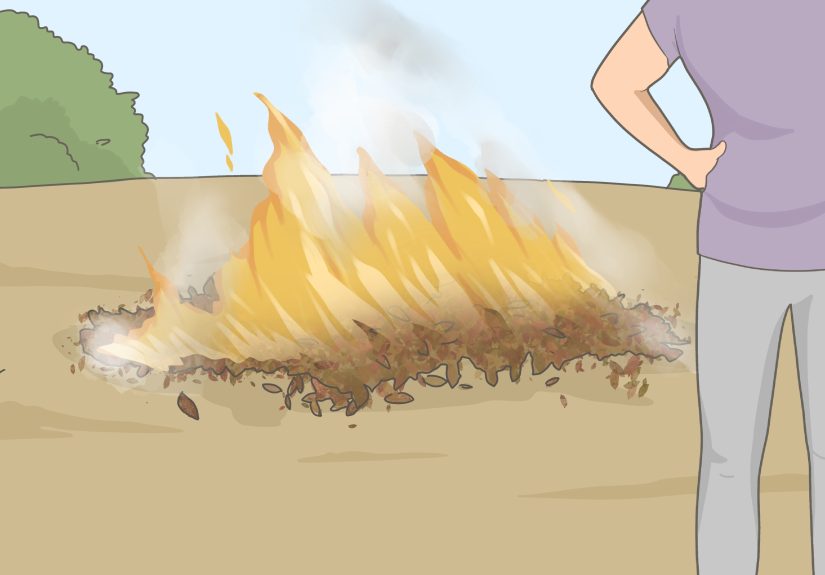
Let us save you a headache: do not assume the fastest-looking method is the smartest one. Burning yard waste may be restricted, prohibited, or heavily regulated depending on where you live. Even in places where some outdoor burning is allowed, there are often strict rules about permits, setbacks, time of day, weather conditions, and what can be burned.
That means burning is not one of the “easy ways” in this article. It is too inconsistent, too dependent on local rules, and too likely to become a bigger hassle than expected. Likewise, do not dump leaves or branches in vacant lots, ditches, wooded edges, or behind the shed where they become “future you’s problem.” Future you has suffered enough.
Which of the 3 Easy Ways Is Best for You?
If you want the shortest answer, here it is:
- Choose composting if you want to improve your soil and mostly have leaves, grass, and small trimmings.
- Choose mulching or chipping if you want a quick, useful solution and have beds, paths, or trees that can use the material.
- Choose curbside pickup or drop-off if you have a large volume, limited time, or no interest in doing yard-waste DIY.
For many homeowners, the best answer is actually a combination. Compost the leaves, chip the branches, and use municipal pickup for whatever is left. That hybrid approach keeps your yard cleaner, reduces waste, and makes the whole process feel far less dramatic.
Real-World Experiences With Disposing of Leaves and Branches
One of the funniest things about yard cleanup is how every homeowner starts with a “simple weekend project” and ends up learning a life lesson next to a growing pile of branches. A lot of people discover the best disposal method only after trying the worst one first.
A common experience goes like this: someone rakes a huge pile of leaves, stuffs them into flimsy bags, and realizes halfway through that the job has become an upper-body workout with poor emotional support. The bags tear, the wind shows up with villain energy, and suddenly leaves are back on the lawn like they never left. That is often the moment people switch to mulching with a mower and wonder why they did not do that in the first place.
Another typical experience happens after pruning shrubs or trimming small trees. The branches look manageable on the ground, but once you try to move them, they turn into a pokey, tangled octopus. Homeowners who go through this once usually become big fans of cutting branches into shorter sections right away. Some start bundling them for curbside pickup, while others rent a chipper for a day and turn the mess into neat mulch for paths and beds. What seemed like junk suddenly becomes landscaping material, which is a pretty satisfying plot twist.
Composting also tends to convert skeptics. At first, a compost pile can look like a fancy way to keep a second pile in your yard. But after a season or two, many gardeners notice their beds look better, hold moisture longer, and need fewer store-bought soil products. That is usually when composting stops feeling like a chore and starts feeling like a quiet little victory.
People with smaller yards often have the most practical approach of all. They do not overthink it. They mulch what they can, bag what they must, and drop off the rest. No ceremony. No dramatic speeches. Just efficient cleanup and a cleaner yard by dinner.
There is also the storm-cleanup version of this story. After a windy day, homeowners can end up with far more branches than expected. In those situations, the easiest lesson is that not every piece has to be handled the same way. Small twigs might be composted, medium branches chipped, and large limbs hauled through a local collection program. Breaking the pile into categories makes the whole job feel much less overwhelming.
The biggest shared experience, though, is this: once people stop treating leaves and branches like plain trash, yard cleanup gets easier. A pile of leaves becomes future compost or mulch. A stack of branches becomes wood chips, bundled brush, or a quick haul to a drop-off site. The yard looks better, the cleanup goes faster, and there is less temptation to create a mystery pile in the corner and call it a “habitat feature.”
In other words, the best method is usually the one that matches your space, your tools, and your patience level. The easy way is not always the same for every yard, but it is almost always smarter than bagging everything blindly and hoping for the best.
Conclusion
Disposing of leaves and branches does not have to become a full-season saga. The three easiest solutions are also the most practical: compost what can break down into rich soil, mulch or chip what can protect beds and paths, and use local yard waste collection when you simply need the pile gone. Each method works, each one saves you from treating organic material like useless trash, and all three can make yard cleanup feel far less painful.
The trick is not finding one perfect answer for every branch and leaf. It is choosing the easiest useful answer for the kind of debris in front of you. Once you do that, the whole job gets faster, cheaper, and a lot less annoying.