Table of Contents >> Show >> Hide
- First, a 20-second sanity check: what you’re actually protecting
- Way #1: The Everyday “Wash, Dry, Oil” Method (the one you’ll use 90% of the time)
- Way #2: The “Salt + Steam” Method for Stuck-On Food (a gentle rescue mission)
- Way #3: The Rust Reset (aka “Don’t Panic, It’s Fixable” Deep Clean)
- Cast Iron Cleaning Myths (politely escorted out of the kitchen)
- What NOT to do when cleaning a cast iron skillet
- Quick troubleshooting guide (because life happens)
- A quick note about enameled cast iron
- Conclusion: Keep it simple, keep it dry, keep it cooking
- Bonus: of Real-World Cast Iron Cleaning Experiences (So You Don’t Have to Learn the Hard Way)
- 1) The “I’ll soak it for just a minute” incident
- 2) The sticky-oil mystery (a.k.a. “Why does this feel like flypaper?”)
- 3) The sugar-sauce burn (teriyaki, barbecue, maple… all delicious, all sneaky)
- 4) The “I cooked tomatoes in my baby-seasoned pan and now it tastes metallic” moment
- 5) The camping skillet cleanup (aka “there is no sink, only vibes”)
Learning how to clean a cast iron skillet shouldn’t feel like you’re joining a secret society with rules whispered only at midnight.
Cast iron is tough, forgiving, and (despite the legends) not powered by ancient kitchen spirits that vanish at the first sight of dish soap.
The real goal is simple: remove food, avoid rust, and protect the seasoningthe dark, smooth layer that makes cast iron act almost nonstick.
Below are three practical, battle-tested methods for cast iron skillet cleaningfrom everyday cleanups to stuck-on disasters to the
“why does my pan look like it was found in a shipwreck?” situation. I’ll also show you exactly when to use soap, when to skip it, and how to keep your skillet
ready for steaks, cornbread, and those brag-worthy “slidey eggs.”
First, a 20-second sanity check: what you’re actually protecting
Seasoning isn’t a spice blend. It’s oil that’s been heated until it bonds to the iron, forming a hard protective coating.
When you clean cast iron, you’re trying to remove food without stripping that coatingwhile also keeping water from hanging around long enough to start rust.
The good news: modern cleaning methods are simpler than the myths. The bad news: your dishwasher is still not invited to this party.
Way #1: The Everyday “Wash, Dry, Oil” Method (the one you’ll use 90% of the time)
If your skillet just cooked bacon, burgers, sautéed veggies, or pancakes, this is your go-to routine.
It’s fast, it’s safe for seasoning, and it keeps your pan from turning into a rusty paperweight.
Think of it as basic skincare for cookware: cleanse, dry, moisturizeno 12-step routine required.
Best for
- Normal meals with light residue
- Greasy pans (yes, including bacon)
- Daily maintenance and long-term cast iron care
What you need
- Warm water
- A stiff brush, non-scratch sponge, or a chainmail scrubber
- Mild dish soap (optional, but totally allowed)
- A towel or lint-free cloth
- A neutral oil (canola, vegetable, grapeseed, etc.)
Step-by-step
-
Wash (warm water + light scrub).
Rinse the skillet and scrub with a stiff brush or non-scratch sponge. If the pan is greasy, add a small amount of mild dish soap.
Soap doesn’t automatically erase seasoningespecially when used briefly and rinsed. -
Dry immediately.
Towel-dry thoroughly. Then, for bonus insurance, put the pan over a burner for 1–2 minutes to evaporate any sneaky moisture.
Cast iron’s biggest enemy isn’t soapit’s being left wet. -
Oil lightly (like, “barely there” lightly).
Add a few drops of oil and rub it over the cooking surface (and if you want to be extra responsible, the outside too).
Wipe until the pan looks almost dry. If it looks shiny and greasy, you used too much.
Pro tips for everyday cast iron skillet cleaning
- Clean it while it’s still warm (not scorching). Warm residue releases easier than cold, cement-like residue.
-
Chainmail scrubbers are great for stubborn bits, but don’t grind like you’re sanding a deck.
You’re cleaning, not auditioning for a home renovation show. -
If your pan gets sticky later: it usually means too much oil was left behind without being heated enough to bond.
The fix is simple: wash, dry, then apply a thinner oil coat and heat briefly.
Way #2: The “Salt + Steam” Method for Stuck-On Food (a gentle rescue mission)
This method is for the moments when your skillet looks fine until you discover
a layer of stuck-on bits that refuse to leavelike they signed a lease.
Salt acts as a safe abrasive, and steam (or simmering water) loosens the stubborn stuff without going nuclear on your seasoning.
Best for
- Burned-on drippings
- Sticky marinades or sugary sauces that caramelized too enthusiastically
- Egg residue, cheese melt-off, or “oops I got distracted” dinners
What you need
- Coarse kosher salt or coarse sea salt
- Warm water
- A pan scraper, wooden spatula, or brush
- Mild dish soap (optional)
- Towel + a touch of oil
Step-by-step (choose your level of drama)
-
Start with a scrape.
Use a pan scraper or spatula to lift anything loose. This reduces how much scrubbing you’ll need later. -
Steam it loose (the easy button).
Add a small splash of water and simmer for a few minutes. As the water heats, it loosens stuck-on food.
Carefully pour it out and let the pan cool just enough to handle safely. -
Salt scrub (the seasoning-friendly exfoliation).
Sprinkle 1–2 tablespoons of coarse salt into the pan. Add a few drops of warm water to form a paste.
Scrub with a sponge, brush, or folded paper towel. The salt does the heavy lifting without shredding your seasoning. -
Rinse, then wash (optional soap).
Rinse out the salt. If the pan was oily or had strong odors (hello, fish), use a small amount of mild dish soap.
Rinse well. -
Dry + light oil.
Dry thoroughly and apply a whisper-thin oil coat. Heat for a minute if you want that “ready for next time” finish.
Common stuck-on mess examples (and what to do)
- BBQ chicken glaze burned on: simmer water first, then salt scrub. Don’t attack it dry unless you enjoy unnecessary suffering.
- Egg residue: warm water + brush usually works; salt paste if needed.
- Cheese “crust”: steam method first. Cheese is basically edible glue when it cools.
Way #3: The Rust Reset (aka “Don’t Panic, It’s Fixable” Deep Clean)
Rust happens when cast iron stays wet, gets put in the dishwasher (moment of silence), or sits in a humid spot like it’s on vacation in a rainforest.
The key is to remove rust, stop the moisture problem, and rebuild seasoning. This method also works when your pan looks dull, patchy,
or starts making food taste faintly metallic.
Best for
- Visible rust spots or orange-brown residue
- A pan that was accidentally soaked or air-dried
- Patchy seasoning, dull surface, or recurring sticking
What you need
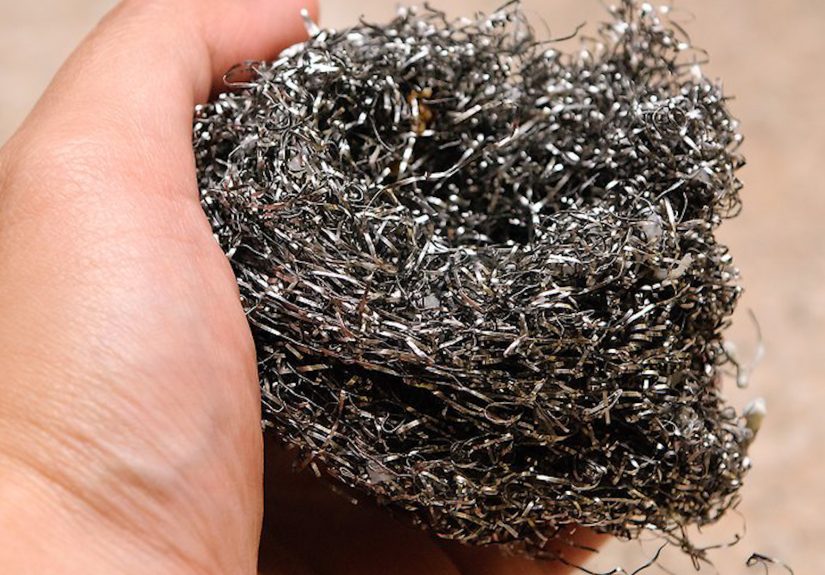
- Steel wool, a rust eraser, or a scouring pad (for rust only)
- Warm water + mild dish soap
- Optional: white vinegar + water (for heavier rust)
- Neutral oil
- Oven + aluminum foil (to catch drips)
Step-by-step
-
Scour the rust.
Scrub the rusted areas with a rust eraser or steel wool, then wash the skillet in warm, soapy water.
Yes, soap is encouraged hereyou’re resetting the surface. -
If rust is heavy: vinegar soak (short and supervised).
Mix equal parts white vinegar and water. For heavy rust, let it sit briefly (think minutes, not “I’ll check tomorrow”).
Scrub with a brush. Don’t let vinegar linger too longacid is great at eating rust, but it can also start attacking the iron if overdone. -
Rinse and dry like your skillet depends on it (because it does).
Towel-dry immediately, then warm the pan on the stove for a couple of minutes to drive off moisture. -
Re-season (thin oil + hot oven).
Rub a very thin coat of neutral oil over the entire skillet (inside, outside, handle).
Wipe off excess until it feels almost drytoo much oil creates a sticky mess.
Place the pan upside down in a hot oven (with foil on a lower rack to catch drips) and bake about an hour.
Let it cool in the oven.
How to know you did it right
- Your skillet should look darker and more even after seasoning.
- It should feel drynot stickywhen cool.
- A little smoke during seasoning is normal; the oil is bonding to the metal.
Cast Iron Cleaning Myths (politely escorted out of the kitchen)
Myth: “Soap ruins cast iron.”
The “never soap” rule mostly comes from older soaps that contained lye. Modern mild dish soap, used in small amounts and rinsed promptly,
won’t magically erase a well-built seasoning layer. The bigger risk is soaking or leaving the pan wet.
Myth: “You must baby cast iron like it’s fragile.”
Cast iron is durable. The goal isn’t to treat it like a rare antiquejust keep it clean, dry, and lightly oiled.
If you mess up, you can usually fix it with a quick cleaning and reseasoning.
Myth: “More oil = better seasoning.”
Seasoning is built from many thin layers, not one thick coat. Too much oil tends to pool, turn sticky, and attract dust like a magnet.
What NOT to do when cleaning a cast iron skillet
- Don’t soak it. Water sitting in the pan is the fast lane to rust.
- Don’t put it in the dishwasher. Long moisture exposure + harsh action = stripped seasoning and rust risk.
- Don’t air-dry. Towel-dry, then heat briefly to finish the job.
- Don’t use vinegar/lemon routinely. Acid can weaken seasoning; save it for rust treatment and keep it short.
- Don’t store it damp or tightly sealed. Moisture trapped under a lid is basically a rust invitation.
Quick troubleshooting guide (because life happens)
If food keeps sticking
- Try the salt + steam method after cooking.
- Cook with a bit more fat while seasoning improves.
- Do a quick oven seasoning cycle (thin oil, bake, cool).
If the pan looks dull or gray
- It may need a refresh coat of oil and heat.
- Check your drying routinedullness often shows up after repeated moisture exposure.
If it’s sticky
- Wash with warm water and a little soap, dry, then apply a much thinner oil layer.
- Heat briefly on the stove or do a short oven cycle to bond the oil.
A quick note about enameled cast iron
This article is about traditional (bare) cast iron. If your cookware is enameled (shiny, often colorful), the rules change:
you generally don’t need to season it, and you should avoid abrasive tools that can scratch enamel.
If you’re not sure which one you have, check the cooking surface: bare cast iron is matte and dark; enamel is glossy and glass-like.
Conclusion: Keep it simple, keep it dry, keep it cooking
The best way to clean cast iron isn’t complicatedit’s consistent.
Use the everyday wash-dry-oil routine for regular meals, pull out salt + steam for stubborn bits, and do a rust reset only when needed.
If you remember nothing else, remember this:
clean it, dry it, and give it a light oiling. Your skillet will outlive your trendiest appliances and probably your current favorite spatula.
Bonus: of Real-World Cast Iron Cleaning Experiences (So You Don’t Have to Learn the Hard Way)
Most cast iron problems don’t start with “I used soap.” They start with normal human behavior:
you cooked, you ate, you got busy, and the skillet sat there looking innocentlike it wasn’t quietly plotting rust.
Here are a few common cast iron “episodes” home cooks run into, plus what actually works when the credits roll.
1) The “I’ll soak it for just a minute” incident
This is how cast iron turns into a rust rumor. You rinse the pan, fill it with water to “deal with later,” and suddenly later becomes tomorrow.
Cast iron doesn’t love that. If you’ve done it, don’t spiral: dump the water, scrub with warm soapy water, dry immediately, and heat the pan
for a minute or two to drive off moisture. If you see orange spots, do a light rust scrub and re-season.
The skillet is not madjust disappointed (and slightly oxidized).
2) The sticky-oil mystery (a.k.a. “Why does this feel like flypaper?”)
Sticky cast iron usually comes from “helpful” over-oiling. It’s a wholesome mistake:
you want to protect the pan, so you leave a thicker oil layer. But oil that isn’t heated enough to bond can turn tacky.
The fix is refreshingly unglamorous: wash it, dry it, then apply a thin coat of oil and heat it briefly.
Seasoning is built like patienceone thin layer at a time.
3) The sugar-sauce burn (teriyaki, barbecue, maple… all delicious, all sneaky)
Sugar caramelizes and then transforms into something that could repair potholes.
If you scrape aggressively while it’s cold, you’ll work harder than necessary and risk roughing up seasoning.
Instead, use the steam method: simmer a splash of water for a few minutes, scrape gently, then finish with a salt scrub.
Your goal is to remove the burnt sugar without turning your skillet into a DIY sanding project.
4) The “I cooked tomatoes in my baby-seasoned pan and now it tastes metallic” moment
Acidic foods can be rough on newer or weaker seasoning. If your pan is well-seasoned, it can handle short tomato cooks,
but long simmers may pull flavor and leave the surface looking patchy.
If that happens, go back to basics: wash, dry, oil lightly, and do an oven seasoning cycle.
Then cook a few fatty foods (bacon, fried potatoes, chicken thighs) to rebuild the nonstick vibe naturally.
5) The camping skillet cleanup (aka “there is no sink, only vibes”)
When you’re outside, you can still keep cast iron happy:
wipe out the pan, use a little warm water if you have it, scrub with salt if necessary, then dry over the fire or camp stove.
A tiny bit of oil rubbed in before packing it away prevents rust on the ride home.
The skillet doesn’t need luxuryit needs dryness and a light protective coat.
The theme across all these experiences is the same: cast iron isn’t fragileit’s honest.
Treat moisture like an enemy, use abrasives strategically, and don’t fear a little soap when it makes your life easier.
Do that, and your skillet will reward you with better browning, better crusts, and the smug satisfaction of owning a pan that basically becomes family lore.