Table of Contents >> Show >> Hide
- Before You Do Anything, Ask One Question: Is the Fish Dead or Alive?
- 1. Place a Dead Fish in the Trash
- 2. Bury the Fish or Use Pet Aftercare Services
- 3. Rehome or Surrender a Live Fish You Can’t Keep
- What You Should Never Do
- A Quick Word on Cleaning the Tank Afterward
- Final Thoughts
- Experiences and Lessons People Learn the Hard Way
Note: This article covers safe disposal of dead aquarium fish and responsible rehoming of live fish. It does not include euthanasia instructions.
If you searched for “3 ways to dispose of aquarium fish,” chances are you are dealing with one of two very different situations: a fish has died, or you have a live fish you can no longer keep. Those are not the same problem, and they absolutely should not have the same solution. One calls for respectful disposal. The other calls for responsible rehoming. What they do have in common is one giant, flashing, neon rule: do not flush the fish and do not release it into a pond, stream, lake, or river.
That may sound obvious, but aquarium owners do it more often than you would think. Sometimes the idea comes from panic. Sometimes it comes from movies. Sometimes it comes from the very human hope that “maybe it will be happier outside.” Unfortunately, released pet fish can become invasive, spread disease, compete with native wildlife, and create a mess far bigger than one awkward goldfish funeral. Even flushing a dead fish is a bad move, because it can create sewer problems and is discouraged by utilities for sanitation reasons.
So let’s do this the sane way, the clean way, and the way that does not turn your household plumbing into a watery crime scene. Below are the three best ways to dispose of aquarium fish, depending on whether the fish has died or is still alive.
Before You Do Anything, Ask One Question: Is the Fish Dead or Alive?
Yes, this sounds painfully obvious, but it matters. If the fish is dead, you are choosing a body-disposal method. If the fish is alive, you are not really “disposing” of it at all. You are rehoming or surrendering it. That distinction matters ethically, practically, and sometimes legally.
If the fish is dead, remove it from the tank promptly. Leaving it in the aquarium can foul the water and stress or harm the remaining fish. If the fish is alive but you cannot keep it, skip ahead to Way #3 and start making calls before you start having second thoughts and naming it “Temporary Larry.” Fish with names are harder to part with. Science has not formally confirmed this, but your heart already has.
1. Place a Dead Fish in the Trash
Why this is the easiest option for most households
For many aquarium owners, the simplest and most practical method is to place the dead fish in the household trash. It is not glamorous. There is no tiny ceremony. No one plays a violin. But it is sanitary, quick, and, in many places, the most straightforward choice.
The best way to do it is simple: use a net or gloves to remove the fish, wrap it in a paper towel or place it in a small sealed bag, then put that inside your garbage. If you want to be extra careful about odor or leaks, double-bag it. Then wash your hands and any tools that touched the fish. That is the whole process. Nothing dramatic. Nothing theatrical. Just clean and done.
This method makes the most sense when the fish was small, the death was unexpected, and you want a practical solution that does not require a backyard shovel session or a search for a pet crematorium that will not laugh when you say, “Yes, it is a betta, but he had tremendous presence.”
When trash disposal is the best fit
- You live in an apartment or do not have private outdoor space.
- You need the simplest sanitary option.
- You are dealing with a very small fish.
- You do not want to risk improper home burial.
What not to do
Do not flush the fish. The toilet is not a respectful burial at sea. It is also not a magic portal back to nature. A flushed fish can contribute to sewer issues, and utilities routinely warn residents not to put dead fish down the toilet. Also avoid tossing the body outdoors, where other animals may find it. That is not “letting nature take its course.” That is starting an unpleasant side plot in your yard.
2. Bury the Fish or Use Pet Aftercare Services
Home burial can be fine, but check local rules first
If your fish mattered to you, and for many people it absolutely did, burial may feel more respectful than the trash. That is understandable. Fish are often underestimated as pets, but anybody who has kept one for years knows they are not just decorative confetti with fins. Some greet you at feeding time. Some are weirdly nosy. Some have better routines than most adults.
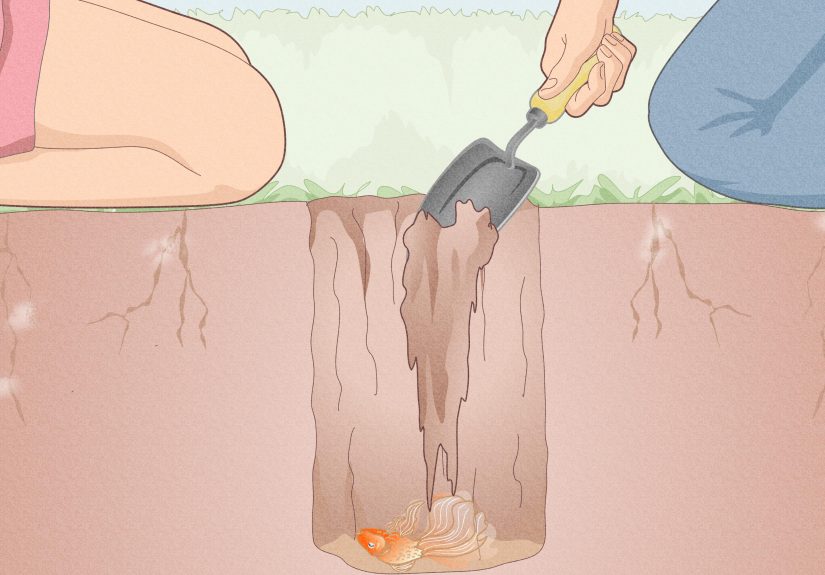
Home burial can be a reasonable option if local laws allow it. In the United States, pet-burial rules vary by location. In general, burying a pet on your own property may be allowed, while burying it on public land, in parks, or in shared green space is usually not acceptable. If you want to bury your fish at home, choose a private location and make sure the site will not be easily disturbed by pets or wildlife.
You can place the fish in a small box, biodegradable container, or wrapped cloth before burial. Many owners use a small flowerpot, a corner of the garden, or a shaded spot near a plant that can act as a quiet marker. That is not silly. That is called being a person with feelings.
When cremation or veterinary aftercare makes sense
For larger, long-lived, or especially beloved aquarium fish, cremation or pet aftercare services may feel like the right choice. It is more common for dogs and cats, of course, but many veterinarians and pet aftercare providers can advise on options for smaller companion animals too. If you want ashes returned, ask whether private cremation is available. If you simply want respectful handling, a vet clinic may be able to guide you toward local services.
This option is not for everyone, and it does cost more. But if you kept a fish for years, or if it was part of a meaningful project with a child, a classroom, or your own daily routine, a more formal goodbye can help. There is no law that says grief must be proportional to body weight.
Burial works best when
- You have legal access to private property.
- You want a more personal or ceremonial goodbye.
- You are not in a rush and can do it properly.
- You prefer a memorial option over household trash.
3. Rehome or Surrender a Live Fish You Can’t Keep
This is the right “disposal” method for a fish that is still alive
If the fish is alive, the goal is not disposal in the literal sense. The goal is placement. Maybe the fish outgrew its tank. Maybe you inherited it. Maybe your kid lost interest, which is how approximately half of all family pets become “Mom’s project.” Maybe you bought a species that looked cute at two inches and now behaves like a wet linebacker. Whatever the reason, the responsible move is to find the fish another home.
Start with the place where you bought it. Some pet stores will accept unwanted fish back, especially if the fish is healthy and you call first. The “call first” part matters. Do not show up at the counter with a bucket and hope for the best like you are surrendering a tiny, silent criminal.
Next, check local aquarium clubs, fish rescues, hobbyist groups, or social media communities dedicated to aquariums. These groups often know exactly who has room for a cichlid, pleco, goldfish, angelfish, or mystery fish with a questionable attitude. You can also ask schools, nursing homes, community centers, or science centers that maintain aquariums. Some organizations will take fish for display or education, provided the species is suitable and healthy.
How to make rehoming go smoothly
Be honest about the fish. Share the species, approximate size, temperament, diet, tank mates, and any recent health issues. If the fish has been aggressive, say so. If it has ich, say so. If it eats every shrimp in sight like a tiny aquatic mob boss, absolutely say so.
The more information you provide, the more likely the fish will land in a compatible setup. Rehoming is not just about getting the fish out of your house. It is about keeping it from bouncing from tank to tank like an underwater couch nobody wanted.
Never release a live fish outdoors
This point deserves its own spotlight. Do not release aquarium fish into a local pond, creek, drainage canal, lake, or river. Do not do it “just this once.” Do not do it because the fish “deserves freedom.” Do not do it because it is only one fish. Released pet fish can survive, reproduce, spread disease, and become invasive. In some areas, release is also illegal.
And while we are here: do not dump aquarium plants or tank water into natural waterways either. Aquarium contents can carry hitchhikers, parasites, snails, eggs, plant fragments, or other organisms you did not mean to introduce. Nature does not need surprise guests from Aisle 7 of the pet store.
What You Should Never Do
- Never flush a live or dead fish.
- Never release aquarium fish into public waters.
- Never dump aquarium plants or water into ponds, lakes, streams, or storm drains.
- Never abandon a fish outside in a bowl, bucket, or yard.
- Never drop off a live fish at a store or rescue without permission.
Those “never” rules are the difference between solving a household problem and creating an environmental one. It is not just about the fish you can see. It is about the pathogens, eggs, parasites, plant fragments, and ecological chaos you cannot.
A Quick Word on Cleaning the Tank Afterward
After removing a dead fish, keep an eye on the tank. One fish dying of old age is sad. Multiple fish acting sick is a warning sign. Test the water, remove decaying material, and monitor the remaining fish closely. If you suspect disease, isolate sick fish when possible and speak with an aquatic veterinarian or a knowledgeable fish specialist before guessing your way through a medicine cabinet full of half-used aquarium treatments.
If you are rehoming a live fish, send it out with accurate care information and transport it in a fish-safe bag or container. The handoff should be calm, clean, and planned. A live fish should not be moved the way you move old holiday decorations.
Final Thoughts
There are really only three responsible ways to handle aquarium fish when you can no longer keep them or when they have died: place a dead fish in the trash, bury it or use pet aftercare services, or rehome a live fish through a store, rescue, or hobbyist network. That is the list. The toilet is not on it. The nearest pond is not on it. “Maybe it will figure things out” is definitely not on it.
If you remember nothing else, remember this: dead fish need respectful disposal, live fish need responsible placement, and local ecosystems do not need your aquarium’s surprise cast members. Handle the moment with a little care, a little common sense, and a total refusal to let cartoon logic guide real-world pet decisions.
Experiences and Lessons People Learn the Hard Way
One of the strangest things about aquarium keeping is how quickly a fish can become part of your daily routine without anyone outside your home realizing it. You feed it every morning. You notice when it acts differently. You rearrange the tank and secretly wait for approval from a creature with no eyebrows. Then one day the fish dies, or the setup stops making sense, and suddenly you are standing in your kitchen holding a net and realizing nobody ever taught you what comes next.
A lot of people admit the first bad idea that pops into their head is flushing the fish. Not because they are careless, but because it seems fast, private, and oddly traditional. Then they stop, thankfully, and realize that a toilet is not a respectful exit and definitely not an environmental plan. That pause matters. The better choice is almost always the less dramatic one: a sealed bag and the trash for a dead fish, or a phone call and a rehoming search for a live one.
Another common experience is surprise. People buy a small pleco, goldfish, or cichlid thinking it will stay adorable and manageable forever. Then the fish grows, gets territorial, or requires a tank upgrade that feels more like furnishing a studio apartment than keeping a pet. By the time the owner types “how to dispose of aquarium fish” into a search bar, what they often really mean is, “How do I fix this without doing something awful?” That is why rehoming matters so much. A fish that no longer fits your tank may fit perfectly in someone else’s.
Fish keepers also talk about guilt. Sometimes it shows up after a fish dies unexpectedly. Sometimes it arrives when they realize they were given bad advice at the pet store. Sometimes it hits when they need to surrender a fish they genuinely like. But guilt is not useful unless it turns into better decisions. Responsible disposal is better than panic. Responsible rehoming is better than denial. Calling a rescue is better than pretending the problem will solve itself. It rarely does. Fish are not known for packing their own bags.
Then there is the emotional side people do not always mention out loud. A child may cry over a betta that only lived a few months. An adult may feel ridiculous for grieving a fish and then grieve anyway. Someone may bury a little tetra under a flowerpot and feel silly for five seconds before realizing that care is never silly. The practical step matters, but so does the tone you bring to it. Respect goes a long way, even when the pet in question was six inches long and extremely rude to every snail in the aquarium.
The best lesson from experienced aquarium owners is simple: decide in advance what you will do if a fish dies or if you can no longer keep it. Know whether your local pet store accepts surrenders. Know where your local aquarium club hangs out. Know that trash disposal for a dead fish is okay, that home burial may be an option if local laws allow it, and that releasing a fish outdoors is never the heroic ending people imagine. The less you improvise in the moment, the more likely you are to make a clean, humane, and environmentally responsible choice.