Table of Contents >> Show >> Hide
- Start With Flow: The Layout Tweaks That Make Everything Feel Bigger
- Storage That Works Harder Than Your Group Chat
- Swap lower cabinets for deep drawers
- Install a pull-out pantry (even a skinny one)
- Use toe-kick drawers for “flat stuff” storage
- Create an appliance garage to reclaim your countertops
- Add vertical dividers for trays and cutting boards
- Upgrade the under-sink zone with pull-outs
- Build a charging drawer (yes, it’s worth it)
- Use “point-of-use” storage to stop the shuffle
- Surfaces and Finishes: Big Visual Change Without Big Chaos
- Choose countertops based on your habits, not someone else’s Pinterest board
- Upgrade your backsplash to a “wipe-friendly” hero
- Refresh cabinets before replacing them
- Change cabinet hardware for an instant style reset
- Pick flooring for comfort, cleanup, and slip resistance
- Install a workstation sink to multiply your prep space
- Lighting and Power: The Upgrades That Make Your Kitchen Feel Expensive
- Appliances, Air, and Smart Upgrades That Pay You Back
- Style, Comfort, and Longevity: Make It Feel Like Your Kitchen
- Real-World Experiences That Make Kitchen Changes Stick (Extra ~)
- Conclusion
If your kitchen feels like a crowded airport terminal (but with more onions), you don’t need a full
demolition to make it better. You need a smarter plan. A “revolutionized” kitchen isn’t just prettierit’s
easier to cook in, easier to clean, and way less likely to turn into a countertop junk museum.
Below are 32 practical, high-impact kitchen remodel ideassome are weekend upgrades, some are “call a pro”
moves, and all are designed to improve flow, storage, comfort, and style. Pick a handful, combine them
strategically, and watch your kitchen space start behaving like it actually likes you.
Start With Flow: The Layout Tweaks That Make Everything Feel Bigger
-
Track your “kitchen commute” for one week
Before buying anything, observe the pain points: Where do you bump into people? Where do you set down
groceries? Where do you chop? A quick “day-in-the-life” map reveals whether your biggest issue is storage,
lighting, traffic, or a layout that makes you walk a 5K just to drain pasta. -
Design by zones, not vibes
Modern kitchens work best when they’re organized into zones: prep, cooking, cleaning, storage, serving,
and snack/coffee. This reduces collisions when multiple people are in the kitchen (and yes, that includes
the person who appears only when the cheese drawer opens). -
Protect your work area from “drive-through traffic”
Keep the main walking path out of the primary cooking zone. If people constantly cut between the sink and
stove, your kitchen isn’t a kitchenit’s a shortcut. A simple island shift, peninsula redesign, or relocating
trash can stop the parade. -
Right-size your work aisles for real life
Tight aisles feel dramatic until you open the dishwasher and trap yourself like a cartoon character. A good
benchmark is ~42 inches for one cook and ~48 inches for two cooks between counters and appliances. If you’re
planning an island, measure twice, then measure again while someone pretends to unload groceries. -
Give yourself “landing zones” where you need them most
A kitchen that functions well has clear drop spots near key areasespecially the refrigerator, sink, and cooktop.
Think: a dedicated space to set a grocery bag, a cutting board, or a hot pan without playing “countertop Jenga.” -
Add a prep station even if you can’t add square footage
No room for a full island? Create a movable prep cart with a butcher-block top, hooks for tools, and shelves for
bowls. Roll it where you need it, tuck it away when you don’t. Small kitchen upgrade, huge sanity boost.
Storage That Works Harder Than Your Group Chat
-
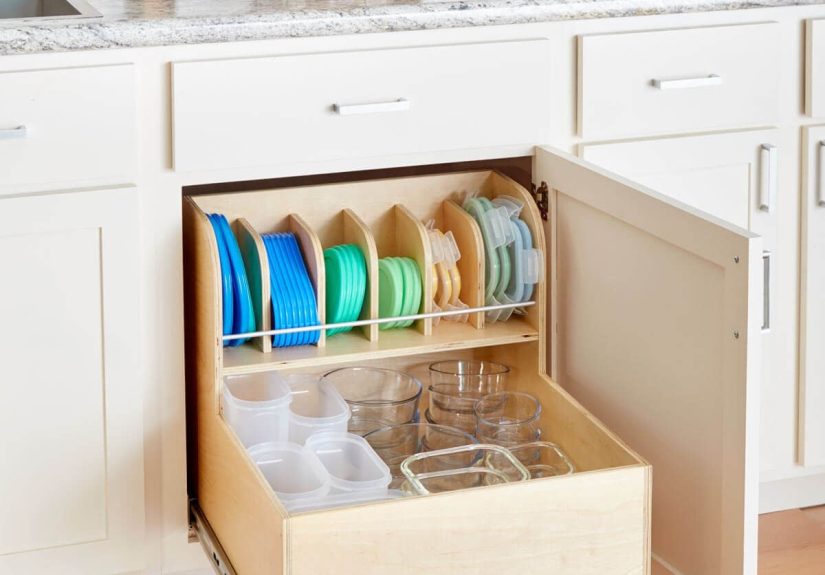
Swap lower cabinets for deep drawers
Deep drawers are the “why didn’t we do this sooner?” move. Pots, pans, small appliances, mixing bowlseverything
becomes easier to see and reach. Add dividers and you’ll stop collecting three half-open bags of rice like it’s a hobby. -
Install a pull-out pantry (even a skinny one)
Pull-out pantry columns turn awkward gaps into vertical storage gold. You’ll see every item at once, which means fewer
duplicates and fewer “surprise, we already had paprika” moments. -
Use toe-kick drawers for “flat stuff” storage
The space under base cabinets is often wasted. Toe-kick drawers are perfect for baking sheets, placemats, pet supplies,
or the giant serving platter you only remember exists on Thanksgiving morning. -
Create an appliance garage to reclaim your countertops
If your counters are crowded with a toaster, blender, coffee maker, and air fryer, an appliance garage hides the clutter
while keeping things easy to access. Bonus: your kitchen instantly looks calmerlike it went on a spa weekend. -
Add vertical dividers for trays and cutting boards
Store baking sheets, muffin tins, and cutting boards upright near the oven or prep zone. This prevents noisy stacking,
reduces scratches, and eliminates the “metal avalanche” whenever you pull one thing out. -
Upgrade the under-sink zone with pull-outs
Under-sink storage doesn’t have to be a chaotic cave. Use pull-out drawers or slide-out caddies designed around plumbing.
Separate dish soap, dishwasher pods, and cleaning supplies so nothing becomes a sticky chemistry experiment. -
Build a charging drawer (yes, it’s worth it)
A hidden charging drawer keeps phones, tablets, and random cords off the counter. It also makes your kitchen feel more
“smart kitchen,” less “tech yard sale.” -
Use “point-of-use” storage to stop the shuffle
Put items where you actually use them: spices and oils near the cooktop, knives and cutting boards near prep, mugs by the
coffee station, lunch gear near the fridge. The goal is fewer steps and fewer cabinet doors opened like you’re searching for a secret passage.
Surfaces and Finishes: Big Visual Change Without Big Chaos
-
Choose countertops based on your habits, not someone else’s Pinterest board
If you cook daily, prioritize durability and easy maintenance. Many homeowners love quartz for its low upkeep and stain resistance,
but it’s not invincibleuse trivets and treat it kindly around heat. If you’re a “set a hot pan anywhere” person, plan accordingly. -
Upgrade your backsplash to a “wipe-friendly” hero
A backsplash should be beautiful and easy to clean. Large-format tile (fewer grout lines), sealed grout, or slab-style backsplashes
can reduce maintenance. Your future self will thank you the next time tomato sauce goes airborne. -
Refresh cabinets before replacing them
Cabinet refacing, repainting, or new doors can deliver a kitchen makeover vibe at a fraction of full replacement cost. Pair it with
soft-close hinges and slides for that “luxury kitchen” feelingeven if your kitchen is technically a hardworking realist. -
Change cabinet hardware for an instant style reset
New pulls and knobs are one of the fastest kitchen renovation ideas with outsized impact. Mixed finishes (like brass + black) can look
intentional and modern, and textured or colorful hardware adds personality without committing to a full color overhaul. -
Pick flooring for comfort, cleanup, and slip resistance
Kitchens punish floors. Choose something that handles spills and foot traffic: quality LVP, tile, or sealed wood. Add a cushioned runner
where you stand most (sink/prep zone) to reduce fatigueyour knees are not interested in being “aesthetic.” -
Install a workstation sink to multiply your prep space
A sink with built-in accessories (cutting board, colander, drying rack) turns the sink area into a compact prep line. It’s especially
helpful in smaller kitchens where every inch of counter matters.
Lighting and Power: The Upgrades That Make Your Kitchen Feel Expensive
-
Use layered lighting: ambient + task + accent
One ceiling light isn’t a lighting planit’s a cry for help. Layered lighting improves function and mood: ambient for overall brightness,
task lighting where you work, and accent lighting for depth and “wow.” This is one of the most underrated ways to revolutionize a kitchen space. -
Add under-cabinet lighting (your countertops deserve it)
Under-cabinet LED strips or puck lights reduce shadows while prepping and cooking. They also make late-night snack missions safer, quieter,
and slightly more sophisticated than turning on stadium-level overhead lights. -
Hang pendants at the right height
For islands and peninsulas, a common guideline is to hang pendants so the bottom sits roughly 30–36 inches above the countertop.
That keeps sightlines open while providing useful light for chopping, homework, and “let’s eat standing up again” dinners. -
Modernize outlets where you actually use appliances
Add outlets in smart spots (islands, coffee zone, inside drawers with proper products) so you’re not running cords across walkways.
Dimmer switches also help you shift from “meal prep mode” to “cozy evening mode” without changing a single cabinet.
Appliances, Air, and Smart Upgrades That Pay You Back
-
Consider induction cooking for speed, safety, and efficiency
Induction can heat quickly and tends to be more energy-efficient than conventional electricand dramatically more efficient than gas.
It also keeps the cooktop surface cooler around the pan, which many families appreciate for day-to-day safety and cleanup. -
Upgrade to an efficient dishwasher (and let it do its job)
A modern efficient dishwasher can save serious water compared with handwashing, and it frees up time you can spend doing something
other than staring into a sink like it personally betrayed you. Look for strong cleaning performance, quiet ratings, and smart rack layouts. -
Take ventilation seriouslyyour kitchen air matters
A good range hood improves comfort and helps control grease and odors. Many homeowners land in the “hundreds of CFM” range depending on
cooking style and cooktop power. If you cook often (or love high-heat searing), upgrade ventilation and consider ducted options when possible.
For high airflow setups, local codes and make-up air requirements can come into playworth discussing with a pro. -
Create an organized waste and recycling center
Build a pull-out cabinet for trash, recycling, and compost with labeled bins. Put it near prep and cleanup zones so scraps and packaging
don’t migrate across the kitchen like they’re trying to start a new life. -
Build a beverage station to reduce traffic
A coffee/tea station (or a “kids can grab water without bumping into the stove” station) is a layout cheat code. Add mugs, a drawer for
tea bags, a small appliance garage, and a water pitcher spot. Suddenly the kitchen works for multiple people at once.
Style, Comfort, and Longevity: Make It Feel Like Your Kitchen
-
Add seating that doesn’t sabotage movement
If you’re adding stools, keep clearance behind seats so people can pass without doing the awkward sideways shuffle. Comfortable seating turns
the kitchen into a true gathering spotbut only if it doesn’t block the dishwasher like it’s guarding a treasure chest. -
Mix open and closed storage for a balanced look
Open shelves can lighten a space and show off beautiful dishes, but too many become visual clutter. Use them for items you truly love and use.
Keep the rest behind doors so your kitchen looks stylednot like it’s mid-move. -
Future-proof with small accessibility upgrades
Think long-term comfort: easy-grip pulls, good lighting, slip-resistant flooring, and clear pathways. Even simple changeslike stronger task
lighting and higher-contrast hardwarecan improve everyday usability and help your kitchen stay functional for years.
Real-World Experiences That Make Kitchen Changes Stick (Extra ~)
People often expect a kitchen transformation to feel like a dramatic “before-and-after” TV reveal. In real life, the biggest changes usually show up
in the smallest moments: how quickly dinner comes together on a Tuesday, how calm the counters look after breakfast, how easy it is to unload the
dishwasher without getting trapped behind an open door.
One common experience: homeowners realize that “more storage” isn’t the same as “better storage.” A kitchen can have plenty of cabinets and still feel
chaotic if items aren’t placed where they’re used. When people switch to point-of-use storagespices near the cooktop, meal-prep tools near the main
counter, lunch containers close to the fridgecooking becomes smoother almost immediately. It’s not magic. It’s just fewer steps, fewer interruptions,
and less searching. (Also: fewer duplicates. Nobody needs five half-empty cinnamon jars. Nobody.)
Another frequent lesson is that lighting changes behavior. With brighter task lighting, people naturally keep prep areas cleaner because they can actually
see what’s happening. Under-cabinet lighting, in particular, tends to become the “why didn’t we do this years ago” upgrade. It improves safety when chopping,
makes cleanup more thorough, and creates a softer glow at night so the kitchen feels welcoming instead of fluorescent and judgmental.
Storage upgrades also tend to reduce stress in surprising ways. Appliance garages, for example, aren’t just about hiding stuffthey’re about making it easier
to reset the kitchen. People report that when counters have a “home base” for coffee gear, toaster, blender, or air fryer, the kitchen looks tidy faster.
That’s huge because a clean-looking kitchen encourages better routines: wiping down after cooking, keeping a clear prep space, and not letting the counter
become a permanent parking lot for mail and mystery items.
Material choices come with their own real-life learning curve. Many households love low-maintenance surfaces, but they also learn quickly where the limits are.
A countertop that resists stains still benefits from cutting boards, and heat-resistant doesn’t mean “hot pan anywhere.” In practice, a couple of trivets placed
strategically near the cooktop becomes part of the kitchen system. It’s a small habit, but it protects your investment and avoids that sinking feeling when
something gets damaged by one rushed moment.
Finally, kitchens that truly feel “revolutionized” usually solve one invisible problem: congestion. A beverage station, a snack drawer, or a dedicated landing
zone for backpacks and groceries can keep people from crowding the main cooking area. Families often say this is the upgrade that makes the kitchen feel calmer
during busy timesmornings, after school, parties, holidaysbecause the kitchen becomes a set of coordinated mini-areas instead of one high-traffic bottleneck.
The result is a space that looks good in photos, yesbut more importantly, it works beautifully when life is happening at full volume.
Conclusion
To revolutionize your kitchen space, start with how you live: fix the flow, create zones, and upgrade storage where it matters most. Then layer in lighting,
surfaces, and appliances that support your routines. The best kitchen makeover isn’t the one that wins the internetit’s the one that makes your day easier
every single time you open a drawer.