Table of Contents >> Show >> Hide
- Why These Bedroom Eyesores Matter More Than You Think
- 1. Swap Out Matching Bedroom Sets
- 2. Swap Out Painted or Wallpapered Accent Walls
- 3. Swap Out Heavy, Overstyled Bedding
- 4. Swap Out Low Beds and Underpowered Headboards
- How to Make These Swaps Without Redoing the Entire Room
- Conclusion
- Experiences and Real-World Lessons From Bedroom Refreshes
Your bedroom is supposed to feel like a retreat. Not a furniture showroom from 2007. Not a bargain-bin bedding explosion. And definitely not the place where one lonely accent wall is still trying to convince everyone it is “making a statement.”
According to designers, the biggest bedroom eyesores are rarely dramatic. They are the everyday choices that slowly make the room feel dated, cluttered, flat, or oddly impersonal. The good news is that you do not need a full renovation to fix them. In many cases, a smarter swap, better proportions, and a little editing can make the room feel calmer, more current, and much more expensive.
If your sleep space feels off but you cannot quite explain why, there is a good chance one of these four design mistakes is the culprit. From matching bedroom sets to heavy bedding that looks like it weighs more than your emotional baggage, here are the bedroom eyesores designers say you should swap out right away.
Why These Bedroom Eyesores Matter More Than You Think
A well-designed bedroom is not just about looks. It shapes how the space feels when you wake up, wind down, read, rest, or hide from the world for 20 blessed minutes. The best bedrooms feel layered, comfortable, personal, and visually balanced. The worst ones tend to feel either too stiff or too chaotic.
That is why designers pay so much attention to proportion, texture, and flow. When furniture is too matchy, bedding is too fussy, or the bed itself looks undersized, the whole room loses that easy, collected charm. The goal is not perfection. It is a bedroom that looks intentional, relaxed, and like an actual adult lives there.
1. Swap Out Matching Bedroom Sets
Why designers are over them
For years, buying a matching bedroom set felt like the easiest way to decorate. Bed frame, dresser, mirror, and nightstands all in one finish, one style, one very committed relationship. Convenient? Sure. Inspiring? Not so much.
Designers increasingly say matching bedroom furniture makes a room feel flat and overly staged. Instead of looking collected over time, the room can read like it was ordered in one click and never questioned again. That sameness also removes contrast, which is what gives a bedroom depth and personality.
Bedrooms today look fresher when they mix materials, tones, and silhouettes. That does not mean your room should look like a yard sale with pillows. It means a simple upholstered bed can pair beautifully with wood nightstands, or a vintage dresser can soften a newer, cleaner-lined bed frame. The mix adds character without chaos.
What to swap in instead
Break up the set. Start with the easiest move: replace the nightstands or dresser before you change everything else. You can keep one or two original pieces, but add variety in shape, finish, or texture. Think walnut with painted wood, brass accents with linen, or one curved piece to balance a room full of straight lines.
If you are nervous about mixing, give yourself one unifying element. That could be color temperature, similar hardware, or a repeated fabric tone. This keeps the room cohesive without making it look like every piece came with the same instruction manual.
Best designer-approved alternatives
- An upholstered or wood bed paired with non-matching nightstands
- A vintage or thrifted dresser mixed with newer lighting
- Painted wood furniture softened with woven, linen, or matte finishes
- Accent pieces that feel collected rather than copied and pasted
2. Swap Out Painted or Wallpapered Accent Walls
Why the one-wall trick feels dated now
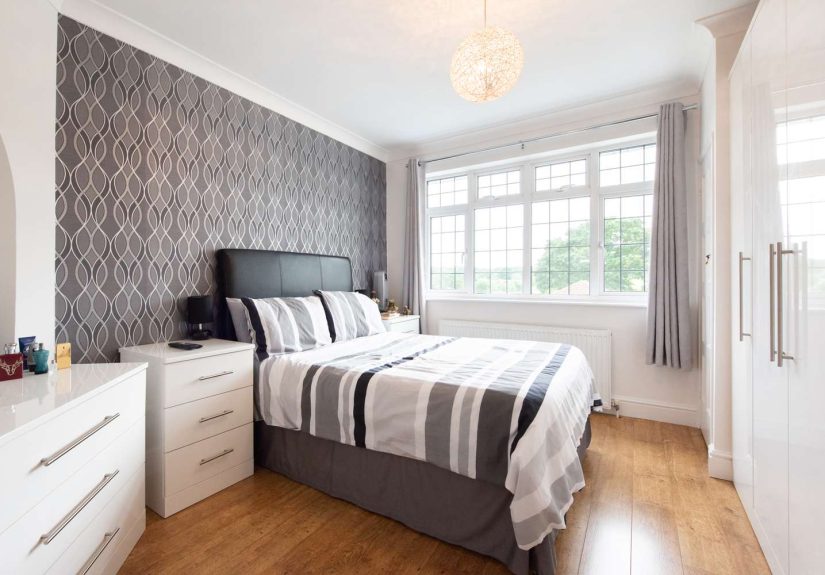
Once upon a time, the accent wall was the star of every makeover show. One wall got wallpaper or a bold paint color, and the other three were told to stay quiet and support the drama. But designers now say that approach often looks incomplete, especially in bedrooms.
The issue is not color or wallpaper itself. It is the hesitation. A single accent wall can make the room feel chopped up, like the design idea stopped halfway through lunch. In a bedroom, where the goal is comfort and visual softness, that stop-and-start effect can make the space feel less immersive and less polished.
Wallpaper, especially, tends to look better when it wraps the room and creates a cozy, enveloping effect. And if wallpaper is not your thing, designers say a full-room paint color usually feels more intentional than one lonely “feature wall” trying to carry the entire mood.
What to swap in instead
Commit to the room. If you love wallpaper, use it on all four walls or at least create a treatment that feels architectural and complete. If you love color, paint the whole room in a shade you actually enjoy living with. Bedrooms can handle deeper, moodier, or more nuanced colors than many people think.
You can also bring in contrast without relying on a painted rectangle behind the bed. Use drapery, bedding, art, a textured headboard, or even a painted ceiling for interest. Those choices often feel more elevated and less like a decorating trend that never fully left the group chat.
Smart alternatives that still add personality
- Full-room wallpaper in a subtle pattern
- Soft, earthy paint colors on all four walls
- A contrasting ceiling color for a designer touch
- Layered textiles and art instead of a single bold wall
3. Swap Out Heavy, Overstyled Bedding
Why your bed may be the biggest visual offender
The bed is the centerpiece of the room, so when the bedding looks dated, the whole bedroom suffers. Designers often call out heavy comforters, bed-in-a-bag sets, excessive pillow piles, shiny synthetic fabrics, and old-fashioned bed skirts as instant style killers.
Here is the problem with overstyled bedding: it tries too hard. When a bed is overloaded with shiny fabrics, matching patterns, and six decorative pillows that have to be removed like a tiny evening workout, the room starts to feel fussy instead of restful. Bedrooms are supposed to exhale. Some bedding setups look like they are holding their breath.
Today’s more modern bedroom style leans toward softer texture, lighter layering, and a more relaxed finish. Crisp sheets, a quilt or coverlet, a duvet or blanket, and maybe one lumbar pillow or a few well-chosen shams usually do the job. The bed should look inviting, not like it is auditioning for a department store catalog from 2004.
What to swap in instead
Choose bedding with texture instead of shine. Linen, cotton, washed percale, matelassé, and soft woven layers tend to look more current and feel better in daily life. Build the bed gradually rather than buying one pre-matched set that locks you into a pattern and color story forever.
Keep the palette simple, then layer in interest through texture, stitching, or one accent tone. And edit the pillows. A bed should be beautiful, but it should also remain usable by regular humans who do not want to wrestle with decorative cushions before brushing their teeth.
Easy upgrades that make a big difference
- Matte cotton or linen sheets instead of shiny polyester blends
- A quilt or coverlet layered with one blanket and one throw
- Two to three decorative pillows instead of a mountain range
- Tailored bedding that looks relaxed, not overproduced
4. Swap Out Low Beds and Underpowered Headboards
Why scale matters in a bedroom
If the bed is the star of the room, it should not look shy about being there. Designers say low beds, undersized headboards, and visually weak bed frames often make a bedroom feel unfinished. When the bed lacks presence, the room can feel awkwardly empty, even if every other piece is technically fine.
This is especially true in primary bedrooms, where the bed needs to anchor the space. A low-profile bed can work in the right setting, but in many homes it ends up making the room feel squat, bland, or disconnected from the architecture. The same goes for headboards that are too short, too narrow, or too plain for the size of the room.
A stronger bed silhouette creates balance. It helps the room feel grounded and gives the eye a focal point. Designers often favor taller upholstered headboards, more substantial bed frames, or beds that visually connect with the room through side tables, lighting, and wall treatments.
What to swap in instead
Look for a bed that suits the scale of the room. In many spaces, that means a taller headboard, a frame with more visual weight, or a bed that feels more integrated into the overall design. Upholstered headboards are especially popular because they add softness, comfort, and height without feeling bulky.
If replacing the whole bed is not in the budget, start by adding a larger headboard, changing the nightstands to better proportions, or using taller lamps and art above the bed. The goal is to make the bed feel anchored, not like it wandered into the room five minutes ago and is still trying to find its mark.
Better choices for a more polished room
- Taller upholstered headboards with clean lines
- Bed frames that visually anchor the room
- Nightstands and lamps scaled to the bed height
- Layered art, drapery, or wall color that supports the bed as a focal point
How to Make These Swaps Without Redoing the Entire Room
The beauty of these updates is that they do not require a total bedroom demolition. You can modernize the space in stages. Replace the bedding first. Then paint the walls. Then switch the nightstands. Then upgrade the bed when your budget allows. Small changes often create the biggest visual relief because they fix the things your eye notices first.
It also helps to edit before you buy. Remove extra pillows. Clear clutter from the nightstands. Take down anything that feels generic or too small for the wall. Better bedroom design is not always about adding more. Often, it is about removing the pieces that are making the room feel stale.
And while these four eyesores are the headline offenders, designers also repeatedly point to lighting and window treatments as quiet game-changers. A better lamp, fuller drapery, or curtains hung high and wide can instantly support the bigger swaps and make the room feel finished.
Conclusion
If your bedroom feels dated, do not panic and do not throw everything into the parking lot. Start with the swaps that matter most. Break up matching furniture. Retire the halfway-there accent wall. Simplify heavy bedding. And give your bed the scale it deserves.
The most beautiful bedrooms today are not overly themed, overstuffed, or trying to prove anything. They feel comfortable, layered, intentional, and personal. In other words, they look like someone with taste lives there, not a furniture bundle and a bed-in-a-bag set.
Make those four changes, and your bedroom can go from tired to timeless faster than you can say, “Why did I ever own nine decorative pillows?”
Experiences and Real-World Lessons From Bedroom Refreshes
One of the most common experiences homeowners talk about after updating a bedroom is how much calmer the room feels once the matching furniture is broken up. A full set may seem safe when you buy it, but many people realize later that the room feels stiff, almost like a hotel that forgot to add any personality. Swapping just the nightstands or adding a vintage dresser often changes the mood immediately. The room starts to feel more layered, more personal, and less like it came straight from a catalog page.
Another frequent experience involves accent walls. People often choose one because it feels less risky than committing to a whole room color or wallpaper pattern. But after living with it for a while, they notice the same thing designers do: the wall looks isolated rather than intentional. Once they repaint all four walls or use wallpaper more fully, the bedroom suddenly feels finished. Many describe the difference as surprisingly emotional. Instead of a room with one “cool wall,” it becomes a full environment that actually supports rest.
Bedding changes also tend to deliver instant gratification. This is where people often see the fastest payoff for the least money. Replacing shiny comforters, bed skirts, and overly matched sets with simple cotton or linen layers can make a bedroom look fresher in a single afternoon. Homeowners often say the bed not only looks better, but becomes easier to make every morning. That matters. When a bedroom is simpler to maintain, it is more likely to stay attractive instead of sliding back into visual chaos by Thursday.
Then there is the bed itself. People do not always realize how much a low headboard or undersized frame affects the room until they replace it. A taller upholstered headboard or more substantial frame often changes the entire balance of the space. Suddenly the room has a focal point. Lamps look better. Art placement makes more sense. Even the walls seem more intentional. It is one of those upgrades that can make everything else in the room look more expensive, even when nothing else changed.
Perhaps the biggest lesson from these experiences is that better bedroom design is rarely about chasing trends. It is about comfort, proportion, texture, and editing. The rooms that age best are the ones that feel collected and livable. They are not overloaded with gimmicks. They are not trying too hard. They simply make you want to walk in, exhale, and stay a while. That is the real goal, and it is exactly why these four swaps are worth making now.