Table of Contents >> Show >> Hide
- Why GIFs Still Work So Well on Facebook
- Way 1: Use Facebook’s Built-In GIF Picker
- Way 2: Paste a GIF Link Into Your Facebook Post
- Way 3: Share a GIF Directly From GIPHY to Facebook
- Way 4: Upload a Saved GIF or Convert It to MP4
- Bonus: Other Places GIFs Work on Facebook
- Common Problems When Posting GIFs to Facebook
- Best Practices for Posting GIFs on Facebook
- Conclusion
- Real-World Experiences With Posting GIFs to Facebook
- SEO Tags
Sometimes words are not enough. Sometimes you need a dramatic eye-roll, a tiny dancing dog, or that one reaction GIF that says, “I saw your message and I have chosen chaos.” That is where Facebook GIFs come in.
If you have ever tried posting one and ended up with a sad still image, a weird preview, or a link that looks like it forgot its job, you are not alone. Facebook supports GIFs, but the platform does not always make the process feel obvious. Depending on what you are posting, where you are posting it, and whether the GIF lives on your phone or on a site like GIPHY, the steps can be slightly different.
This guide breaks down 4 ways to post a GIF to Facebook so you can choose the one that fits your situation. We will also cover common problems, practical tips, and what tends to work best in the real world. Whether you want to spice up a personal post, share a reaction in a group, or upload your own custom animation for a brand page, there is a method that will get the job done without making you argue with your screen.
Why GIFs Still Work So Well on Facebook
GIFs are basically the internet’s version of body language. They are short, visual, quick to understand, and excellent at adding tone to a message. On Facebook, that matters because the feed moves fast. A solid GIF can stop the scroll, land a joke, soften a sales message, or make a simple announcement feel more alive.
They also work because they do not ask much from your audience. A video can feel like homework. A paragraph can feel like a speech. A good GIF says the same thing in two seconds and goes home victorious. For brands, creators, and regular humans posting about lunch, weekend plans, or the emotional damage caused by Monday mornings, that efficiency is gold.
The trick is knowing which posting method matches your goal. Are you grabbing something from Facebook’s built-in library? Sharing a GIF from GIPHY? Using a saved file you made yourself? Each route has its own sweet spot.
Way 1: Use Facebook’s Built-In GIF Picker
The easiest method for most people
If your goal is simplefind a funny, trendy, or reaction-based animation and post it quicklyFacebook’s built-in GIF picker is usually the easiest option. This is the low-drama route, which is exactly what most of us need from social media at least once a day.
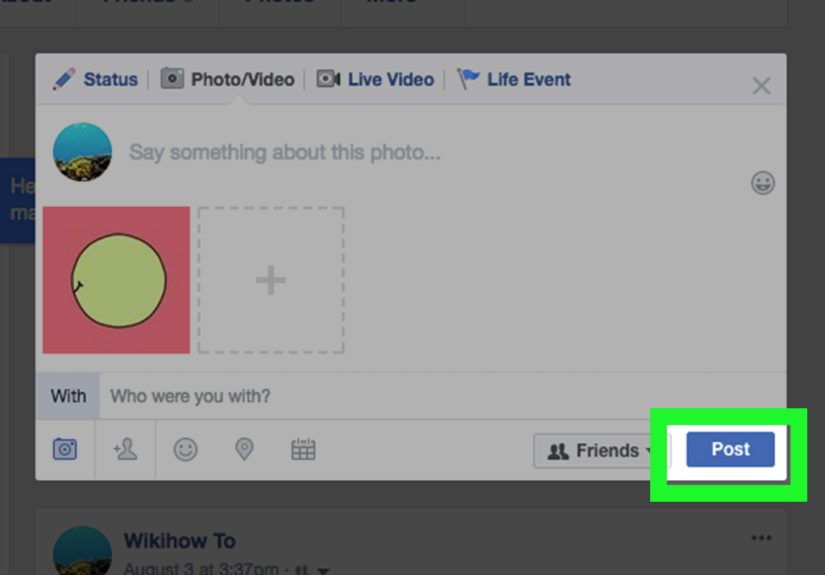
On desktop, start a new post from your feed or profile. If you do not immediately see the GIF option, click the three-dot menu to reveal more posting tools. On mobile, tap into the “What’s on your mind?” composer and look for the GIF option there. Once you open the GIF panel, search by keyword or browse the trending choices. Pick the one you want, add your caption, and publish.
This method is great for reaction posts, mood updates, holidays, sports chatter, and anything else where you do not need a custom file. It is fast, native to Facebook, and usually less glitchy than trying to force a random file into the composer and hoping for the best.
Best use cases: reaction posts, casual status updates, humorous commentary, and low-effort content that still gets attention.
Why people like it: you do not have to leave Facebook, download a file, or worry about whether the animation will play properly once the post goes live.
One smart tip: pair the GIF with a short caption instead of posting it by itself. A line like “My face when the meeting could have been an email” gives context and makes the post feel intentional instead of random internet confetti.
Way 2: Paste a GIF Link Into Your Facebook Post
The classic link-sharing workaround that still works
If you find a GIF on a hosting site, you can often post it to Facebook by copying the GIF link and pasting it into your post composer. Facebook usually detects the link, generates a preview, and displays the animation once the post is published.
This approach is especially useful when Facebook’s built-in GIF search does not have the exact animation you want. Maybe you are looking for a niche pop-culture moment, a custom branded reaction, or a very specific “I am smiling but also suing internally” vibe. A hosted GIF link can solve that.
Here is the basic flow:
Find the GIF on a platform like GIPHY, copy the shareable link, paste it into your Facebook post, wait for Facebook to load the preview, then add your text and publish. In many cases, the animation will not look especially exciting in the composer, but it should play correctly after the post is live.
This method can feel a little old-school, but it is still handy because it gives you access to a wider universe of GIFs than Facebook’s built-in library. It also works well when you want to share a GIF that already has cultural context, like a trending reaction clip that people recognize instantly.
Best use cases: niche reaction GIFs, viral moments, branded GIFs, and posts where you found the perfect animation outside Facebook.
Watch out for this: if the preview looks off, do not panic immediately. Facebook previews can be awkward in the composer. Publish first, then check the live post. If it still looks wrong, try the direct GIPHY share method or the MP4 fallback discussed below.
Way 3: Share a GIF Directly From GIPHY to Facebook
The shortcut when you do not want to babysit links
GIPHY is one of the easiest ways to move a GIF from “found it” to “posted it” without a bunch of copying, pasting, or fiddling with previews. If you are using GIPHY on desktop or mobile, look for the Facebook share option on the GIF’s detail page. In many cases, GIPHY will hand the file off to Facebook in a cleaner, more reliable way than a manual link paste.
This is especially useful for people who live on GIF search sites and would rather not keep bouncing between apps like a caffeinated pinball. You find the GIF, tap the Facebook option, add your text, and post.
The direct-share route is also handy if you are trying to move fast. Maybe a game just ended, a celebrity made a chaotic red carpet entrance, or your group chat has emotionally promoted you to “official GIF responder.” GIPHY can shave off a few steps when timing matters.
Best use cases: trending reactions, entertainment content, live-event chatter, and quick social posting from your phone.
Why it works well: the workflow is built for sharing. Instead of forcing Facebook to interpret a random external link, you are using a tool designed to send the content directly into the post flow.
Pro move: if you are a brand or creator, search GIPHY for simple, clean, readable loops. Tiny text and overstuffed visuals can look messy in the Facebook feed, especially on mobile.
Way 4: Upload a Saved GIF or Convert It to MP4
The best choice for custom GIFs and original content
If you made the GIF yourself, downloaded one you want to reuse, or need more control over the final post, this is the method to know. In some Facebook workflows, you can save the GIF to your device and upload it through the normal Photo/Video post option. That is useful when the content is yours and you do not want to depend on a third-party share link.
This route is great for creators, marketers, meme pages, and small businesses. If you made a product teaser, a looping tutorial, a before-and-after animation, or a custom joke for your community, uploading the file yourself keeps the process cleaner and more professional.
That said, Facebook can handle motion content differently depending on the interface you are using. If the GIF does not animate properly, looks soft, or behaves like a cranky still image, convert it to MP4 and upload that version instead. In practical terms, MP4 is often the “fine, I’ll do it myself” solution when a GIF refuses to cooperate.
Why does this help? Because Facebook increasingly treats uploaded motion media through its video tools, and the platform has been moving toward a more unified video publishing flow. An MP4 gives you more control, tends to be more compatible, and is often easier to repurpose across posts, reels, ads, and other social placements.
Best use cases: custom branded animations, creator content, business posts, product reveals, tutorials, and polished social assets.
When to choose MP4 over GIF: when the GIF looks blurry, refuses to animate, needs trimming, or is part of a more strategic content plan.
Simple rule: if you found the GIF online, share or link it. If you made it yourself and want control, upload itor turn it into an MP4 and post that instead.
Bonus: Other Places GIFs Work on Facebook
GIFs in comments
Facebook also supports GIFs in comments, which is great news for anyone whose personality is 40% opinions and 60% reaction memes. When commenting on a supported post, look for the GIF button beside the comment field. Search for the animation you want, select it, and it posts as a comment.
If you want to include both text and a GIF in a comment, type your text first and then add the GIF. If you choose the GIF first, Facebook may post the animation immediately, which is efficient but not always emotionally complete.
GIFs in Facebook groups
Groups also support GIF posting, which makes sense because groups are where Facebook gets wonderfully specific. There is a group for local gardening, vintage toys, sourdough starters, niche TV theories, and at least seven variations of “people who are tired.” GIFs work well there because community posts are often conversational, light, and reaction-heavy.
If you manage a group, GIFs can also help keep posts feeling less stiff. A welcome post, weekly discussion prompt, or event reminder often lands better with a little motion than with a plain block of text.
Common Problems When Posting GIFs to Facebook
My GIF posted as a still image
This usually means the posting flow treated your file like a standard image instead of animated media. Try one of three fixes: use Facebook’s built-in GIF picker, share directly from GIPHY, or convert the file to MP4 and upload that instead.
The preview looks broken before I publish
Sometimes Facebook previews do not accurately represent the final live post. Give the platform a moment to load the media, then publish and check the live result. If it still looks odd, use a different method instead of fighting the same broken preview for twenty more minutes out of pure principle.
The GIF looks blurry
Small text, too many visual details, and low-resolution source files can make a GIF look rough in the feed. Start with a cleaner source file, keep the message visually simple, and consider MP4 if clarity matters more than the technical purity of the format.
The GIF is funny, but the post flopped
That is a content issue, not a format issue. The right GIF still needs context. Give people a reason to react, comment, or share. A clever caption, a relatable setup, or a timely reference makes the difference between “nice” and “I am sending this to three friends immediately.”
Best Practices for Posting GIFs on Facebook
Choose a GIF that communicates one clear emotion or idea. The more instantly understandable it is, the better it tends to perform.
Keep the caption tight. Facebook is not the place for a novel attached to a six-second loop of someone dropping a sandwich.
Use GIFs to support your message, not replace it. If you are posting for business, product education, community engagement, or events, the animation should help the point land faster.
Think mobile first. Most people will see your post on a phone, so tiny text and cluttered visuals are your enemies.
Use motion strategically. Not every post needs a GIF. When everything moves, nothing stands out. Save GIFs for posts where they actually improve tone, humor, or clarity.
Conclusion
If you want the fastest option, use Facebook’s built-in GIF picker. If you found the perfect animation elsewhere, paste the GIF link into your post. If you want a smoother shortcut, share directly from GIPHY. And if you are working with your own custom file, upload it yourselfor convert it to MP4 when you need more reliable playback and cleaner control.
In other words, there is no single best way to post a GIF to Facebook. There is only the best method for your post. The good news is that once you know these four options, you can stop guessing, start posting, and finally let that dramatic raccoon do the communication work it was born to do.
Real-World Experiences With Posting GIFs to Facebook
In everyday use, the built-in GIF picker is usually the winner for regular people posting from a personal account. It is fast, it is already inside Facebook, and it does not require you to think too hard. That matters because most people are not trying to run a media workflow when they post. They are trying to react to a friend’s engagement, a football game, a weather disaster, or the fact that their coffee machine has once again chosen violence. In those moments, speed beats perfection. A searchable GIF library inside the post composer feels easy, and easy usually wins.
Where things get interesting is when people want a specific GIF. This happens all the time with pop-culture moments, fandom jokes, and niche internet humor. Facebook’s built-in search is fine, but it does not always surface the exact animation a user has in mind. That is when people leave the app, find the right loop on GIPHY, and either paste the link or use the direct share option. In practice, this is a common move for users who care more about the perfect reaction than the fastest one. And honestly, that is relatable. If you have already committed to the bit, you might as well post the right GIF.
For small businesses and creators, the experience is a little different. They often want to post custom motion graphics, short product loops, mini tutorials, or promotional visuals that feel more branded than random. In that situation, the saved-file route makes more sense. But it also tends to be where users discover Facebook’s little quirks. Sometimes the GIF looks fine. Sometimes it behaves like a static image. Sometimes it uploads, but the quality looks like it got dragged through 2012. That is why many marketers quietly switch to MP4. It is not always as cute as a pure GIF workflow, but it is more dependable and easier to manage across a broader content plan.
Community managers also tend to use GIFs differently from everyday users. In Facebook groups, GIFs are often less about “look at this animation” and more about signaling tone. A moderator might use one in a welcome thread to make the group feel friendly. A local business might use one in a weekly promo post to keep it from feeling too stiff. A hobby group might use them in discussion posts because reactions help members engage without writing an essay. In these cases, the GIF is not the content. It is the icebreaker.
The most practical lesson from real-world use is simple: do not get attached to only one method. Facebook is a living platform, which is a polite way of saying it changes things and sometimes acts weird. The people who post GIFs successfully over and over are not necessarily more technical. They just know when to switch methods. If the built-in picker works, great. If not, try GIPHY. If the link preview is stubborn, upload the saved file. If the saved file gets moody, convert it to MP4 and move on with your life. That flexibility is what keeps the process from becoming a tiny, unnecessary tragedy.