Table of Contents >> Show >> Hide
The ocean is beautiful, dramatic, and occasionally rude. One minute it is serving postcard views and soft, sparkly waves. The next minute it is reminding everyone on the beach that it is not a swimming pool with better marketing. That is exactly why “unexpected ocean moments” fascinate people so much. They mix beauty, power, mystery, and just enough chaos to make your brain whisper, “Nope, I do not love that.”
This guide dives into 50 very real ocean moments that might freak you out, whether you are a beachgoer, boater, surfer, diver, or someone who already suspects the deep sea is running a side business in nightmare fuel. From rogue waves and rip currents to glowing surf and ghostly creatures, these strange ocean phenomena prove that the sea is equal parts science, spectacle, and emotional damage.
Why the Ocean Feels So Unsettling
Part of the ocean’s power comes from how quickly it changes. Calm water can hide a rip current. A silent night can suddenly glow blue. A perfectly normal shoreline can flood on a sunny day. And the deeper you go, the more the ocean starts looking less like Earth and more like an alien planet that forgot to file a change-of-address form.
That blend of unpredictability and wonder is what makes creepy ocean experiences so memorable. You are not just looking at water. You are watching weather, geology, biology, chemistry, and gravity throw a live performance with no rehearsal and no refund policy.
50 Unexpected Ocean Moments That Might Freak You Out
Sudden Surface Surprises
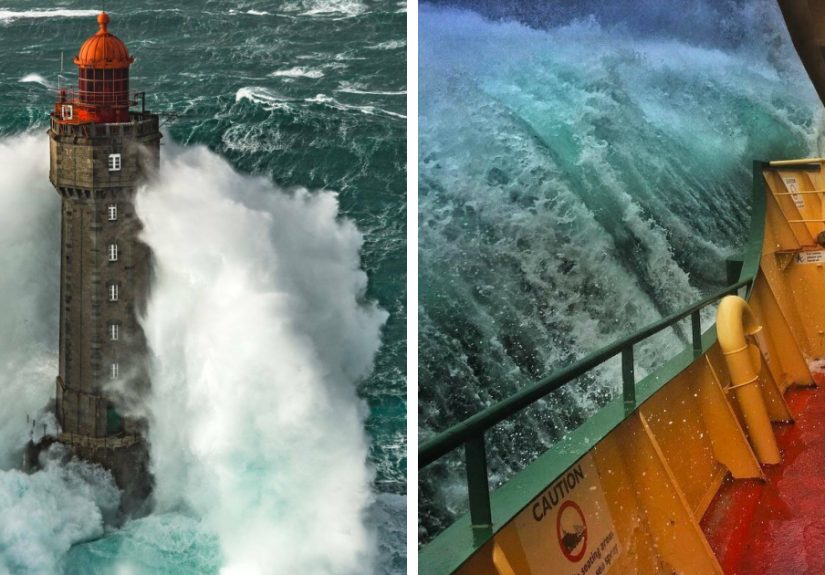
- A rogue wave rising out of nowhere. These rare giants can tower over the surrounding sea and look like a moving wall of water, which is a great way to ruin everyone’s confidence at once.
- A sneaker wave on an otherwise quiet beach. The shoreline looks calm, people relax, and then one oversized wave suddenly rushes far up the sand like it has a personal grudge.
- A rip current on a pretty, sunny day. Rip currents do not need storm clouds or cinematic music. They can form in nice weather and pull swimmers away from shore fast enough to spark instant panic.
- Shorebreak that body-slams instead of splashes. When waves break directly on the shore, even a small one can fold you like a beach chair and remind you that sand is not as soft as advertised.
- Cold water appearing out of nowhere. Upwelling can bring deep, cold water to the surface so suddenly that one step feels tropical and the next feels like the ocean borrowed a freezer.
- Dense sea fog swallowing the horizon. One minute you can see boats, cliffs, and sky. The next minute the ocean looks like it deleted the world beyond thirty feet.
- A waterspout spinning over open water. It looks like the ocean has grown a tornado and decided that was a reasonable personality choice for the day.
- A harbor suddenly surging without a classic storm. Meteorological conditions can produce meteotsunami-like surges that make docks, boats, and marinas feel strangely unstable and very unfriendly.
- The sea pulling back in an eerie way. Before some tsunamis, water can recede unusually far, exposing parts of the seafloor that should definitely not be introducing themselves.
- Storm swell arriving before the storm does. The sky may still look decent, but the sea already knows the weather is coming and starts acting like an agitated bouncer.
When the Coast Turns Against You
- Drift logs suddenly rolling. Large logs near the surfline can be lifted and moved by powerful waves, which is terrifying when you remember those things are basically water-powered battering rams.
- A sandbar walk turning into a trap. At low tide, a route can seem easy and harmless. Then the water returns and your casual beach stroll becomes a negotiation with timing and geography.
- Sunny-day flooding during king tides. There is something deeply unsettling about coastal streets flooding when the weather looks innocent and the sun is doing its best cheerful face.
- Water pouring around a jetty or pier. Structures can intensify currents, and the ocean loves using man-made edges to create very bad surprise physics.
- Calm-looking water with hidden force. Some of the most dangerous beach conditions do not look dramatic at all, which might be the ocean’s most unsettling talent.
- Waves rebounding off rocks and cliffs. Water can reflect, collide, and surge unpredictably near hard shorelines, turning a scenic spot into a place where you suddenly reconsider your footing.
- Foam blowing across the beach like sea-cappuccino gone wrong. Sea foam can pile up in a weirdly apocalyptic way, making the coast look like a detergent commercial directed by a horror producer.
- A sudden drop in visibility from the marine layer. Coastal fog and low cloud can move in so fast that the beach feels like it got wrapped in a gray blanket against its will.
- Large surf where the water still looks inviting. The ocean is excellent at selling danger with attractive packaging: sunlight, blue water, and waves strong enough to rearrange your plans.
- A shoreline that gets cut off behind you. Tides are patient. They do not need to chase you; they just quietly take away the path home and wait for you to notice.
Glowing, Murky, and Weirdly Alive
- Waves glowing electric blue at night. Bioluminescence is beautiful, but watching every splash light up like underwater lightning can still make the ocean feel suspiciously enchanted.
- Your paddle or footsteps leaving a glowing trail. When the water lights up behind your movement, it feels like the sea is tracking you in real time.
- The ocean turning red, rust, green, or brown. Harmful algal blooms are not always red, but any ocean that suddenly changes color looks like it is trying to communicate bad news.
- A red tide that irritates your throat before you even see it. Some blooms release toxins that can affect marine life and make beach air feel scratchy, which is not the breezy seaside mood anyone ordered.
- Jellyfish appearing by the hundreds. A jelly bloom can turn clear water into a floating field of stings, wobbles, and immediate second thoughts.
- Comb jellies flashing with rainbow-like colors. They are delicate and stunning, but there is still something unsettling about glowing gelatin drifting past like tiny haunted ornaments.
- Fish exploding out of the water. When schools of fish leap in all directions, it usually means something larger and hungrier is below them. Helpful? Yes. Comforting? Absolutely not.
- Birds diving in a frenzy over a bait ball. It looks chaotic from above because it is chaotic below. Predators, prey, and panic are all happening at once.
- Water that feels strangely empty. In low-oxygen “dead zone” areas, marine life can flee or die off, creating an eerie sense that the ocean has gone oddly quiet.
- A night sea that is dark until one touch wakes it up. Few things are weirder than black water suddenly sparkling because your hand, board, or hull disturbed microscopic life.
Creatures That Make the Ocean Feel Alien
- A huge shadow passing under you. Even if it turns out to be a harmless ray or a curious fish, your nervous system does not wait for a species ID.
- A whale surfacing beside a small boat. Whales are magnificent, but when several tons of animal arrive next to you with almost no warning, “awe” and “terror” become roommates.
- A seal or sea lion popping up nearby. Their faces can look weirdly human for half a second, which is all it takes to launch your soul into low orbit.
- A jelly tentacle brushing your leg. The sensation is usually immediate and unforgettable, like the ocean tapped you on the shoulder with a live wire.
- Transparent creatures showing off their insides. Midwater animals can be nearly invisible, with organs, guts, and glowing parts visible through clear bodies that do not seem entirely legal.
- A giant siphonophore drifting like living rope. These colonial animals can look endless, glowing, and deeply unreasonable, like nature tried to build a chandelier out of nerves.
- An anglerfish lure floating in the dark. The famous light is clever biology, but it still feels like the ocean invented its own jump-scare lantern.
- A vampire squid releasing glowing mucus. Instead of normal panic behavior, it deploys a cloud of bioluminescent distraction, because apparently plain old ink was not dramatic enough.
- A barreleye-style fish with a transparent head. Deep-sea adaptations are smart and fascinating, yet some of them look exactly like creatures designed to star in your least restful dream.
- Ghost-shark vibes from deep-sea relatives of sharks and rays. Chimaera-like animals and other deep-sea fish often have the kind of face that says, “I live where sunlight does not, and I am thriving.”
Deep-Sea and Planet-Scale Nightmares
- Marine snow falling through the water column. It sounds festive, but it is mostly dead organic material and debris drifting downward like a slow-motion underwater blizzard.
- A whale fall on the seafloor. One giant carcass can create an entire deep-sea feeding community, which is scientifically amazing and emotionally a lot to process before lunch.
- Bone-eating worms doing cleanup duty. Some creatures specialize in breaking down whale bones, because the deep ocean never misses a chance to be both efficient and creepy.
- Methane bubbles leaking from the seabed. Cold seeps can release streams of gas that rise through the water like the planet itself is exhaling through cracks.
- Hydrothermal vents blasting hot, mineral-rich fluid. Black smokers look like chimneys on the ocean floor, except the chimney is underwater and still somehow more dramatic than your entire weather app.
- An underwater avalanche in a submarine canyon. Turbidity currents can race down canyons with huge force, carrying sediment, burying equipment, and proving that even the seafloor is not always stable.
- The mysterious “Bloop” sounding like a monster movie. It turned out to be ice-related cracking, not a sea beast, but the fact that the ocean can casually make noises like that is not exactly soothing.
- An undersea earthquake you barely notice at first. The deep ocean can absorb a lot of drama quietly, right up until that disturbance starts moving energy across a basin.
- Lava meeting seawater near an ocean entry. Volcanic activity at the coast can create steam plumes, unstable new land, and a general atmosphere of “let’s admire this from much farther away.”
- Remembering how much of the ocean is still unexplored. Sometimes the freakiest ocean moment is not something you see. It is realizing how much is still down there, unbothered, unmapped, and definitely not asking for permission.
What These Ocean Moments Feel Like in Real Life
Reading about scary ocean phenomena is one thing. Experiencing them is another. The ocean rarely announces itself with a giant flashing sign that says, “Hello, I am about to become memorable.” Instead, the strange stuff usually starts with a small detail that feels just a little off. Maybe the water gets colder around your knees for no obvious reason. Maybe the beach goes quiet except for one wave that sounds bigger than all the rest. Maybe the fog arrives so fast that the horizon disappears, and suddenly the world feels smaller and much stranger.
Nighttime ocean experiences are especially effective at rearranging your nerves. A calm paddle under dark skies can feel peaceful until the water starts glowing around your kayak. Bioluminescence is scientifically wonderful, but emotionally it can feel like you just disturbed a sleeping galaxy. Every drip from a paddle, every swirl near the hull, every fish darting below can leave a ribbon of blue light. It is gorgeous, yes. It is also the kind of gorgeous that makes you whisper instead of talk.
Beach experiences can shift just as quickly. People tend to associate danger with dramatic storms, but many of the creepiest moments happen when conditions look harmless. A rip current does not need thunder. A sneaker wave does not need a villain speech. A king tide does not wait for a hurricane soundtrack. That is why the ocean can feel so psychologically intense: it does not always look dangerous when it is dangerous. Your eyes say “vacation,” while the physics say, “Let us review your choices.”
Then there are the creature encounters, which can be either magical or mildly life-altering, depending on your tolerance for large shadows and unexpected eyeballs. Seeing a whale breach in the distance is bucket-list material. Having one surface nearby is a different genre entirely. The same goes for a seal popping up next to a dock, a ray gliding underneath you, or a bloom of jellies turning clear water into a floating obstacle course. None of these moments need to be violent to feel intense. The ocean’s wildlife often freaks people out simply because it appears so suddenly and moves with total confidence, like you are the visitor and everybody knows it.
The deepest ocean moments are stranger still because they challenge the way people imagine life itself. Marine snow, whale falls, methane seeps, and hydrothermal vents are not just fun facts for marine science lovers. They are reminders that entire ecosystems thrive in darkness, under pressure, in places that seem impossible. That idea is thrilling, but it can also be unsettling. We like environments we understand. The deep ocean politely declines to provide that service.
In the end, that is why stories about weird things in the ocean keep pulling people back in. These moments frighten us a little because they expose how powerful, active, and alive the sea really is. But they also keep us fascinated because every freaky wave, glowing tide, and alien-looking creature is proof that the ocean is still one of the most extraordinary places on Earth. Terrifying? Occasionally. Worth learning about? Absolutely.
Final Thoughts
If you came here hoping the sea would seem less weird, that may not have worked out. But if you wanted a deeper understanding of unexpected ocean moments, creepy ocean experiences, and the science behind strange ocean phenomena, then mission accomplished. The ocean is not trying to scare you on purpose. It just happens to be vast, dynamic, and full of creatures and forces that do not care whether humans find them comforting.
Respect it, learn from it, and maybe do yourself a favor: the next time you are standing on a beach, do not turn your back on the water for too long. The ocean loves a dramatic entrance.