Table of Contents >> Show >> Hide
- Why Guinness Works So Well in Cooking
- 1. Classic Beef & Guinness Stew
- 2. Rich Guinness Beef Chili
- 3. Guinness Shepherd’s Pie
- 4. Guinness Mac and Cheese with Irish Cheddar
- 5. No-Fuss Guinness Brown Bread
- 6. Fudgy Guinness Chocolate Cake
- 7. Gooey Guinness Brownies
- Putting It All Together: Building a Guinness-Themed Menu
- Experiences: What Cooking With Guinness Really Feels Like
Guinness isn’t just for sipping on St. Patrick’s Day while you debate whether or not you can pull off a green sweater.
This dark, malty Irish stout is also one of the most versatile ingredients you can keep in your kitchen. Its roasted barley,
subtle coffee notes, and gentle bitterness make savory dishes richer and desserts extra fudgy. Many classic Irish recipes
lean on Guinness for body and depth, from slow-cooked stews to quick brown breads and chocolate cakes.
Below are seven of the best Guinness recipes that let you cook with beer in a way that actually makes sense: comforting mains,
cozy carbs, and over-the-top desserts. We’ll walk through how each recipe works, why Guinness is the secret weapon, and how to
adapt the dishes for your own kitchen.
Why Guinness Works So Well in Cooking
Guinness is a dry Irish stout with roasted barley, caramelized malt flavors, and just enough bitterness to keep things from
tasting too sweet. When you simmer it in stews, chilis, gravies, or dessert batters, a few magical things happen:
- Depth and umami: In beef stews and shepherd’s pie, stout adds a savory, almost soy-sauce-like depth that makes the gravy taste slow-cooked and complex.
- Bitterness that balances richness: Dishes like mac and cheese and chocolate cake need something to cut through fat; stout’s bitterness keeps them from feeling heavy.
- Moisture and tenderness: In bread, cake, and brownies, Guinness brings moisture and a tender crumb while enhancing the cocoa flavor.
- Flavor concentrates as it cooks: Many bakers reduce Guinness on the stove before adding it to cake or brownie batter to intensify the flavor without adding too much liquid.
The alcohol mostly cooks off in long-simmered dishes, leaving you with flavor rather than buzz. Shorter-cooked desserts might
keep a trace, but it’s usually minimal once baked.
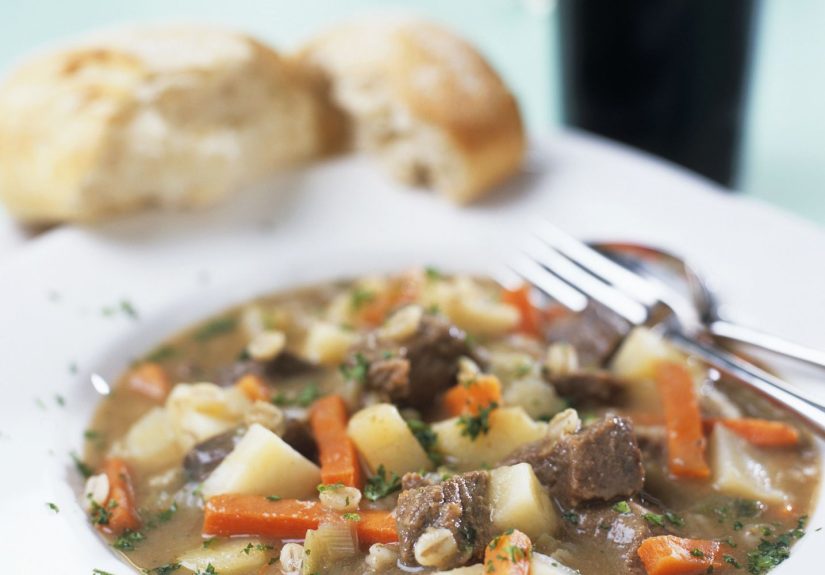
1. Classic Beef & Guinness Stew
If you only make one Guinness recipe, make it a beef and Guinness stew. This dish shows off everything stout can do:
it turns tough chuck into fall-apart beef, turns simple carrots and onions into something luxurious, and creates a sauce
so good you’ll be chasing it around the bowl with bread.
How it works
Most traditional versions start with searing cubes of chuck steak, then cooking onions, carrots, and sometimes celery
in the fat. Tomato paste, beef stock, herbs like thyme and bay, and a generous pour of Guinness simmer together for a
couple of hours until the beef is tender and the sauce is glossy and thick.
Flavor tips
- Use a well-marbled cut such as chuck or brisket; the long simmer melts the fat and pairs beautifully with the stout.
- Brown the meat in batches so you don’t steam it; those browned bits are flavor gold.
- Add a small square of dark chocolate right at the end to echo the roasted malt and round out the sauce.
Serve over mashed potatoes, with crusty Guinness bread, or just in a big bowl with a spoon and no witnesses.
2. Rich Guinness Beef Chili
Chili may not be traditionally Irish, but Guinness fits right into a hearty pot of beef, beans, tomatoes, and spices.
Modern recipes often swap part of the broth for stout, using it to deepen the flavor without making the chili taste like beer.
How it works
Start by browning ground beef (or a mix of beef and pork) with onions, peppers, and garlic. Add chili powder, cumin,
oregano, and a little cayenne, then stir in tomatoes, beans, and about a cup of Guinness. Let it simmer until the liquid
reduces and thickens.
Flavor tips
- Use a dry stout like Guinness Draught, not a sweeter flavored stout, so the chili doesn’t turn sugary.
- Add a square of dark chocolate or a spoonful of cocoa powder for a mole-style complexity.
- Guinness chili is even better the next dayperfect for meal prep, game day, or a big St. Patrick’s Day spread.
Top with cheddar, scallions, and sour cream, and you’ve got comfort food with just enough Irish flair.
3. Guinness Shepherd’s Pie
Shepherd’s pie is already peak cozy: saucy ground meat topped with a blanket of mashed potatoes. Adding Guinness to
the filling turns the gravy into something you’d expect from a good Irish pubdeep, meaty, and just a tiny bit bitter
in the best way.
How it works
Classic versions use ground lamb; cottage pie uses beef. Either way, you sauté onions, carrots, and garlic, then brown
the meat and stir in tomato paste. Replace part of the stock with Guinness, add thyme, rosemary, and Worcestershire sauce,
and simmer until thick. Spoon into a baking dish, top with mashed potatoes, and bake until golden and bubbling.
Flavor tips
- Don’t overdo the beeraround 1/2 to 3/4 cup is plenty for a standard 9×9 pan.
- Let the Guinness cook with the vegetables for a few minutes before adding stock; this cooks off sharp alcohol notes.
- Use extra-creamy, buttery mashed potatoes to contrast the darker, richer filling.
It’s the kind of one-pan dinner that makes you feel like you’re in a tiny stone cottage somewhere on the Irish coast
instead of standing in your kitchen in sweatpants.
4. Guinness Mac and Cheese with Irish Cheddar
Think of Guinness mac and cheese as comfort food with a passport stamp. Recipes from American and Irish-inspired
cooks often pair Guinness with sharp Irish cheddar for a sauce that’s creamy, tangy, and just slightly bitter in a way
that keeps you coming back for “just one more” spoonful.
How it works
You’ll build a classic cheese sauce: butter and flour cooked into a roux, whisked with milk to form a béchamel, then
loaded with shredded cheddar (and sometimes Gruyère or mozzarella). A splash of Guinness and a bit of Dijon mustard
sharpen the flavor and echo the nuttiness of the cheese.
Flavor tips
- Choose a strong, aged Irish cheddar so the cheese flavor holds its own against the beer.
- Cook the pasta just to al dente; it will soften more in the oven.
- Top with buttery panko breadcrumbs and bake until the edges are bubbling and the top is crisp.
It’s a perfect side dish for corned beef or roast chickenor just a main course you eat straight from the skillet.
5. No-Fuss Guinness Brown Bread
Guinness brown bread is the fast track to freshly baked bread without dealing with yeast, kneading, or emotional
commitment. Many traditional-style recipes combine wholemeal (whole wheat) flour, oats, baking soda, buttermilk,
and Guinness into a quick batter that bakes into a dense, hearty loaf.
How it works
Instead of yeast, the bread relies on baking soda reacting with the acidity of buttermilk and stout. Oats and wholemeal flour
bring a nutty chew, while a touch of molasses or brown sugar rounds out the bitterness from the beer.
Flavor tips
- Don’t overmix the batter; stir just until there are no large dry pockets of flour.
- Let the loaf cool slightly before slicing so it doesn’t crumble.
- Serve warm with salted butter, aged cheddar, or alongside that beef and Guinness stew for maximum Irish energy.
This bread is also fantastic toasted the next day with jam or honey, where the malty stout flavor really shines.
6. Fudgy Guinness Chocolate Cake
Guinness chocolate cake is a modern classica rich, dark cake that uses stout to make cocoa taste deeper and more complex.
Many well-loved recipes reduce the beer on the stove first, then mix it into a batter that bakes up moist and intense,
often finished with a cream cheese or Irish cream frosting.
How it works
The stout’s bitterness emphasizes the chocolate and balances the sugar, while the carbonation and liquid keep the crumb
soft. Sour cream or buttermilk often joins the party to add tang and additional moisture, resulting in a cake that tastes
like grown-up chocolate in the best way.
Flavor tips
- Reduce the Guinness by about half over low heat to concentrate flavor without drowning the batter.
- Use high-quality cocoa powder; the beer will highlight both the good and the bad.
- Frost with cream cheese or Irish cream buttercream to mimic the creamy “head” on a pint of stout.
This is the kind of cake that shows up at St. Patrick’s Day parties and then mysteriously “needs testing” the next morning
with coffee.
7. Gooey Guinness Brownies
If cake is not your thing (who are you, but okay), Guinness brownies are the other legendary dessert in the stout baking world.
Popular versions use reduced Guinness in the batter and sometimes in a frosting or ganache, creating brownies that are
fudgy, slightly boozy, and deeply chocolatey.
How it works
Guinness is simmered down, then mixed with melted butter and chocolate. Eggs, sugar, cocoa, and flour follow, forming a thick,
glossy batter. The beer adds moisture and echoes the roasted notes of the cocoa, making everything taste more intense.
Flavor tips
- Don’t overbake; you want the center just set with a slight wobble for peak fudginess.
- Add espresso powder to emphasize the chocolate without making the brownies taste like coffee.
- Top with a Guinness-infused ganache or Irish cream frosting if you want maximum “wow” with minimal effort.
These brownies freeze well, but let’s be honest: they rarely last long enough to see the inside of a freezer.
Putting It All Together: Building a Guinness-Themed Menu
With these seven recipes, you can build an entire menu around Guinness: brown bread and stew as the centerpiece,
mac and cheese or shepherd’s pie as hearty mains, chili for casual nights, and a one-two punch of chocolate cake and
brownies for dessert. You’re basically hosting a mini food festival in honor of a stout.
The key is balance. If your main is very rich and heavy on stout, pair it with something lighter and fresher on the sidesimple greens, roasted vegetables, or a crunchy slaw. And don’t forget to serve plenty of water and maybe a few non-alcoholic options alongside all that beer-infused glory.
Experiences: What Cooking With Guinness Really Feels Like
Cooking with Guinness has a very specific “feel” that you don’t fully understand until you’ve done it a few times.
The first time you crack open a can for a recipe, there’s always a tiny internal battle: “Do I really want to pour this
into a pot instead of my glass?” The good news is that most recipes use only part of the can, so the cook usually gets a
taste too. That’s just efficient resource management.
Many home cooks start with beef and Guinness stew because it’s the most forgiving. You brown some meat, add vegetables,
pour in beer and stock, and let time do the heavy lifting. The house fills with the smell of roasted malt and slowly
caramelizing onions. You stir the pot once in a while, mostly to feel productive, and you start to get why so many Irish
families consider this kind of dish a cold-weather ritual. It’s almost impossible not to hover over the stove with a spoon,
checking “for seasoning” approximately every five minutes.
Then there’s the first time you bake with Guinness. Many people are skeptical: “Beer in cake batter?” But once you actually
measure it out, reduce it a bit, and whisk it into cocoa and sugar, you can smell the logic. The kitchen smells like
a chocolate shop that moved into a brewery. The batter turns a dramatic dark brown, and when the cake emerges from the oven,
it has that slightly sticky, fudgy top that signals you’re in for something special. When you slice into it and see the
moist crumb, it’s hard not to mentally start planning all the birthdays and holidays you’ll be “volunteering” to bring dessert.
Guinness mac and cheese is another “aha” moment. At first, adding stout to a cream sauce sounds like a recipe for disaster.
But after you whisk it in and let the sauce simmer for a few minutes, the harsh alcohol edge melts away, leaving a subtle
flavor that makes the cheese taste sharper and more interesting. The first time you serve it, people may not immediately guess
there’s beer in itthey just know it tastes like grown-up mac and cheese. Once you tell them, they usually go back for seconds
on principle.
Hosting a Guinness-themed dinner can turn into a tradition all by itself. Maybe you start with St. Patrick’s Day: a pot of
Guinness stew, a pan of shepherd’s pie, warm brown bread on the table, and a chocolate cake waiting in the wings. Over time,
your guests start requesting specific dishes“You’re making that Guinness chili again this year, right?”and what began as an
experiment with beer in the pan becomes part of your personal kitchen story.
Perhaps the most surprising part of cooking with Guinness is discovering how adaptable it is. Once you’re comfortable, you
start splashing a bit into caramelized onion gravy, whisking it into barbecue sauce, or adding a spoonful of stout reduction
to chocolate frosting. You begin to think less of Guinness as “just a drink” and more as a pantry staple, like good stock
or high-quality cocoa. Each recipe becomes a small experiment in balance: how much beer is enough to make things interesting
without shouting over the other ingredients.
In the end, cooking with Guinness is about more than flavor. It’s about ritualthe sound of the can opening, the moment of
pouring, the patience of slow simmering, and the satisfaction of feeding people something both comforting and a little bit
unexpected. Whether you’re simmering a stew on a cold Sunday or sneaking a brownie straight from the pan at midnight, these
Guinness recipes have a way of turning simple meals into stories you’ll remember.