Table of Contents >> Show >> Hide
- When SAT Scores Are Released (and Why Your Friend Got Theirs First)
- How to Check Your SAT Score Online (Step-by-Step)
- Troubleshooting: “My SAT Score Isn’t Showing”
- What Your SAT Score Report Actually Includes
- How to Evaluate Your SAT Results (Without Spiraling)
- What’s a “Good” SAT Score? (Spoiler: It’s Not a Universal Number)
- Should You Retake the SAT? A Decision Checklist
- Sending SAT Scores (and Making Colleges See the Best Version of You)
- If You Think Your Score Is Wrong: What You Can Actually Do
- Conclusion: Turn Your SAT Score Into a Plan
- Real-World Experiences: What Checking SAT Scores Actually Feels Like (and What Students Learn)
The SAT score release day is basically a national holiday for anyone who has ever refreshed a webpage like it owes them money. One minute you’re calmly “just checking,” and the next you’re negotiating with the universe: “If my score is above a 1300, I will become a better person. I will recycle. I will stop doomscrolling.”
Whether you’re checking scores for the first time or you’re a seasoned “retake veteran,” this guide walks you through how to find your SAT score, decode what you’re seeing, and actually evaluate your results like a strategistnot a stressed-out raccoon in a trench coat.
When SAT Scores Are Released (and Why Your Friend Got Theirs First)
SAT score releases aren’t always a single “everyone at noon” moment. Scores can roll out in waves on the release date. Translation: your friend may text you “I GOT MY SCORE!!!” while your account is still showing the emotional equivalent of a loading bar.
Typical release windows
- Weekend SAT: often released a couple of weeks after test day (sometimes a bit longer depending on the administration).
- School Day SAT: typically released after the school testing window ends (timing varies by district and window).
The best move: don’t guess. Check the official score release schedule for your test date, then plan your score-checking ritual accordingly (coffee, deep breathing, and a strict “no comparing until I see my own score” policy).
How to Check Your SAT Score Online (Step-by-Step)
If you took the SAT, your official scores live in your College Board account. Here’s the cleanest path to them.
Step 1: Sign in to your College Board account
- Go to the Student Score Reports portal.
- Sign in using the same account you used to register (or the account connected to your testing profile).
Step 2: Find your SAT score report
Once you’re in, you’ll typically see a score summary. Click into your SAT administration and look for options like “See Score Details” to explore the full breakdown (more on what that includes in a minute).
Step 3: Download your official PDF (“Your Scores”)
Your online portal usually includes a downloadable PDF score report. Save it. Email it to yourself. Print it if you’re the kind of person who likes proof you survived.
Step 4 (Optional): Check the BigFuture School app or ask your counselor
If you tested in school and provided a mobile number on test day, you may be able to view scores through the BigFuture School app. You can also request a copy through your school or counselor if needed.
Troubleshooting: “My SAT Score Isn’t Showing”
Before you assume your score vanished into the same dimension as missing socks, run through these common issues:
1) You’re in the wrong account
Many students accidentally create a second College Board account (sometimes with a different email, different spelling of a name, or a different birthday). If you registered with one account but are checking another, your scores will play hide-and-seek.
2) Your score is pending
On release day, scores can appear at different times. If your portal says “pending” or you don’t see the score yet, it may still be processing. Try again later the same day.
3) Your personal info doesn’t match
If the name, date of birth, or other identifying info on test day doesn’t match the account you’re using, scores can be delayed from posting. This is especially common if you used a nickname during registration or your school uploaded info differently.
4) There’s a hold
Sometimes the score report can show messaging that indicates a delay or hold. In that case, follow the instructions provided in your account and contact Customer Service if you need clarity.
What Your SAT Score Report Actually Includes
Your SAT score report is more than a single number. It’s a dashboard of where you’re strong, where you’re shaky, and where you can pick up points quickly.
Your main scores
- Total score: 400–1600
- Section scores: Reading & Writing (RW) 200–800, Math 200–800
Your total score is simply RW + Math. That’s it. No secret sauce. No interpretive dance. If you got a 620 RW and a 580 Math, your total is 1200.
Score ranges (your “this could vary next time” zone)
The SAT also reports a score rangea reminder that testing is measurement, not magic. Your skills are real, but any single test day can swing a bit based on sleep, nerves, and whether your brain decided to forget what a “comma splice” is for fun.
Percentiles (how you compare)
Percentiles answer a different question than “Is this good?” They answer: “Compared to other students, where do I land?” A 70th percentile score means you scored as well as or better than about 70% of the comparison group.
Benchmarks (college readiness signals)
Benchmarks are College Board’s way of estimating whether you’re on track for success in entry-level, credit-bearing college courses. You’ll see benchmark indicators at the section level, not just for the total.
Skill-level insights (where your points are hiding)
The newer digital SAT reporting tends to focus on skill/domain performance. You’ll often see a breakdown across content domains (for RW and Math) and guidance on skills to strengthen. This is the part of your score report that can actually change your life (or at least your next practice plan).
How to Evaluate Your SAT Results (Without Spiraling)
Evaluating your SAT score isn’t about judging yourself. It’s about deciding what the score does for your goals: admissions, scholarships, course placement, or just proving to your cousin that you can outscore them (peacefully, of course).
Step 1: Define what “good” means for you
- If you’re applying test-optional: your score is only valuable if it strengthens your application.
- If you want merit aid: your score might matter a lotsome scholarship cutoffs are score-sensitive.
- If you’re targeting selective schools: you’ll likely want to be competitive within that school’s typical score range.
Step 2: Compare your score to your target schools (the “middle 50%” method)
Most colleges publish a typical score range for admitted studentsoften the 25th–75th percentile range. A practical strategy is to aim for the upper end of that range at your top-choice schools, especially if other parts of your application need balance.
Example: If a college’s middle 50% SAT range is 1280–1450 and you scored 1420, you’re sitting comfortably in the upper half. That’s not a guarantee of admission (nothing is), but it’s a strong data point.
Step 3: Diagnose section balance (because a “fine” total score can hide a problem)
Two students can have the same 1300 and be in totally different situations:
- Student A: 700 Math / 600 RW → strong for STEM-heavy majors, may want RW growth for writing-intensive schools.
- Student B: 650 RW / 650 Math → balanced profile, maybe easier to improve either section with targeted practice.
Step 4: Use benchmarks as a reality check
Benchmarks can help you interpret whether your section scores suggest readiness for typical college coursework. Even if you don’t love labels, they’re useful signalsespecially if you’re deciding whether a retake is worth it.
Step 5: Read the skill breakdown like a coach
If your report shows you’re consistently weaker in specific RW domains (like grammar/conventions or craft/structure), or specific Math domains (like algebra or advanced math), that’s your training plan. The goal isn’t “study everything.” The goal is “study the few things that move the score fastest.”
What’s a “Good” SAT Score? (Spoiler: It’s Not a Universal Number)
People love asking for a single “good SAT score” like there’s a SAT Score Supreme Court that hands down rulings. In reality, a “good score” depends on contextespecially your school list and scholarship goals.
Still want a quick framework? Here you go.
- Above average: generally around or above the national average reported by College Board in recent annual reporting.
- Competitive for many solid colleges: often in the 1200–1400 zone (varies widely by school).
- Highly competitive: typically 1400+ for many selective programs.
- Top tier: 1500+ is often competitive for the most selective institutions (but still not an automatic ticket).
The healthiest way to use these ranges is as a starting pointthen confirm what matters for the colleges you actually want.
Should You Retake the SAT? A Decision Checklist
Retaking can be smart… or it can be an expensive hobby disguised as “being proactive.” Use this checklist.
Retake is usually worth it if:
- Your score is below the typical range for your target schools and you have time to prep.
- One section is dragging you down and you know exactly what to fix.
- You’re close to a scholarship threshold or a target percentile.
- Your practice tests are consistently higher than your official score (by a meaningful margin).
Retake might not be worth it if:
- Your score already sits near the 75th percentile for your target schools and your time is better spent on essays, grades, or activities.
- You’re plateaued and don’t have a new prep plan (same inputs usually = same outputs).
- You’re applying test-optional and your score wouldn’t help your application.
Sending SAT Scores (and Making Colleges See the Best Version of You)
Checking your score is step one. Step two is deciding whetherand whereto send it.
Free score sends
If you registered for a weekend SAT, you can usually designate up to four institutions for free score reports within a specific deadline window after test day. After the free window closes, sending scores typically costs a fee.
Score choice vs. “send everything”
Many colleges allow you to send scores from the test dates you choose (so you can highlight your best sitting). Some colleges may request all scores. Always check the testing policy for each schoolespecially if you’re strategically retaking.
Superscoring (the “best of both days” advantage)
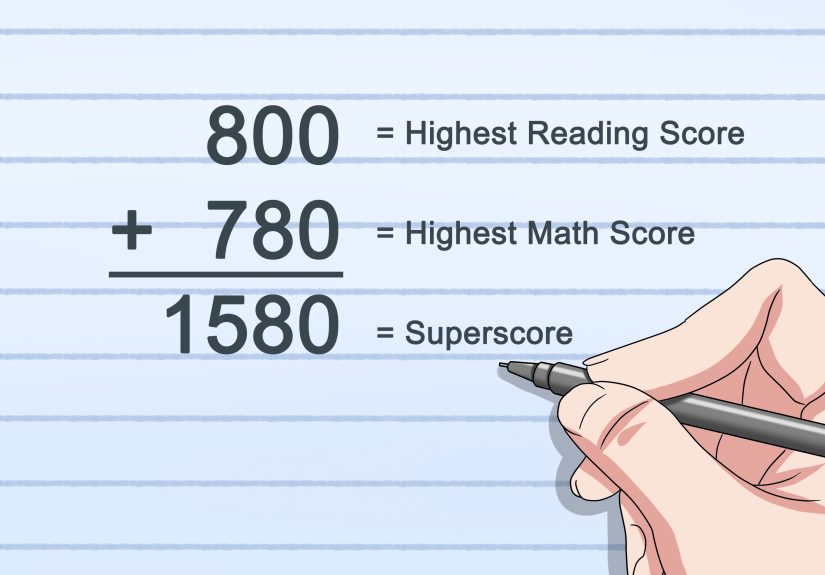
Lots of colleges superscore the SAT, meaning they’ll consider your highest RW across all test dates and your highest Math across all test dates, then combine them. If your scores are lopsided across sittings, superscoring can be a big win.
If You Think Your Score Is Wrong: What You Can Actually Do
First: take a breath. Then do the practical stuff:
- Check your score report messaging for any holds or incomplete submission notes.
- Confirm your personal details match exactly (name, birthdate, school info where applicable).
- Contact Customer Service if something looks truly off.
College Board offers score verification services via Customer Service. Note that verification for the old paper-and-pencil SAT is no longer available, so if you’re looking into verification questions today, the best step is to contact Customer Service and ask what options apply to your specific test.
Conclusion: Turn Your SAT Score Into a Plan
Your SAT score is informationnot identity. Once you’ve checked it, the real power move is using it: compare it to your target schools, look at section balance, study the skill breakdown, and decide whether to retake with a smarter plan. One number doesn’t define you, but it can help you build a strategy.
Real-World Experiences: What Checking SAT Scores Actually Feels Like (and What Students Learn)
Below are common “SAT score day” experiences students frequently describeplus the practical lesson each one teaches. If any of these feel uncomfortably familiar, congratulations: you are extremely normal.
1) The 6:00 a.m. Refresh Marathon
Some students wake up early on score release day, sign in, and start refreshing like they’re trying to summon their score through sheer willpower. The portal loads, then loads again, then politely suggests “try later.” Panic rises. A friend posts a screenshot. You consider learning a trade. Lesson: score releases can be staggered. If your score isn’t there yet, it’s not a secret punishment for that one question you guessed on. Set two check-in times (morning and evening), then go live your life in between.
2) The “My Total Is Fine, But…” Moment
Another student sees a total score they’re happy withsay a 1280then notices a 540 in Math and realizes their intended major is engineering. Suddenly the total score feels like a group project where one teammate didn’t do their part. Lesson: section scores matter. Evaluate your score based on your goals. For a STEM-heavy path, Math strength can be especially important. A targeted Math plan (timed problem sets, error logs, focused domain practice) can move the needle faster than vague “more studying.”
3) The “I Improved… Why Doesn’t It Feel Like It?” Trap
Some students jump from 1180 to 1240 and still feel disappointed because they were aiming for 1300+. They improved, but emotionally it feels like losing because the goal line is still ahead. Lesson: improvement is data. A 60-point jump is meaningful progress, especially if it came from consistent prep. Look at where the points came from. If RW rose but Math didn’t, that’s not failureit’s direction.
4) The Score Plateau (a.k.a. “Why Am I Stuck at 1200?”)
Students often describe hitting the same score twice and feeling cursed. In reality, plateaus usually mean your prep has become too general. You’re practicing, but not fixing the specific reasons you miss questions. Lesson: you break plateaus with diagnosis, not volume. Use your score report insights and practice analytics to identify patterns: timing issues, specific content gaps, or repeatable error types (like misreading graphs or falling for “almost correct” answer choices).
5) The Retake That Finally “Clicks”
Many students who eventually hit their target score describe one key shift: they stop treating practice as a performance and start treating it as research. They review misses, write down why they missed them, and drill the exact skill againslowly at first, then under time. Lesson: the SAT rewards skill-building and pattern recognition. When your prep becomes intentional, your score often follows. And even when it doesn’t jump immediately, your confidence and consistency usually dowhich matters on test day more than people admit.
If you take nothing else from these stories, take this: checking your SAT score is a moment. Evaluating your SAT score is a process. And that processdone calmly and strategicallyputs you in control.