Table of Contents >> Show >> Hide
- Why This Copenhagen Family Kitchen Feels So Fresh
- The Kitchen Design Details That Make the Room Work
- A Family Kitchen That Is Actually Built for Family Life
- What Frederik and Caroline’s Kitchen Says About Copenhagen Style
- Lessons American Homeowners Can Borrow from This Kitchen
- Why This Kitchen Resonates Beyond Design Trends
- Experience the Mood: What a Kitchen Like This Feels Like in Real Life
- Conclusion
Some kitchens are built for show. You know the type: spotless counters, intimidating marble, and a vibe that says, “Please admire me from six feet away and do not even think about frying onions in here.” Then there are kitchens like the one shared by chef Frederik Bille Brahe and model-designer Caroline Brasch Nielsen in Copenhagen. This one does not just look good in photographs. It works. It lives. It hosts. It feeds. It lets kids run through it without the room having a full-blown identity crisis.
That balance is what makes this family kitchen so compelling. It sits inside a centuries-old Copenhagen home, yet the kitchen itself feels distinctly modern: clean lines, bold cabinet fronts, thin stainless surfaces, bright light, and just enough playfulness to keep the room from drifting into museum territory. In other words, it is a perfect example of why Scandinavian interiors continue to fascinate American readers. They are not cold. They are edited. They are not empty. They are intentional. And in the best cases, like this one, they are deeply human.
Frederik’s culinary world already carries a reputation for refined simplicity, especially through Copenhagen favorites like Atelier September and Apollo Bar. Caroline’s work in fashion and design brings another layer of visual instinct to the mix. Put those two sensibilities in one room, add family life, and you get a kitchen that feels equal parts studio, canteen, and warm domestic headquarters. It is stylish, yes, but not in a “look but don’t touch” way. It is stylish in the far more difficult way: the kind that survives breakfast, snack raids, dinner prep, guests, and toy-related chaos.
Why This Copenhagen Family Kitchen Feels So Fresh
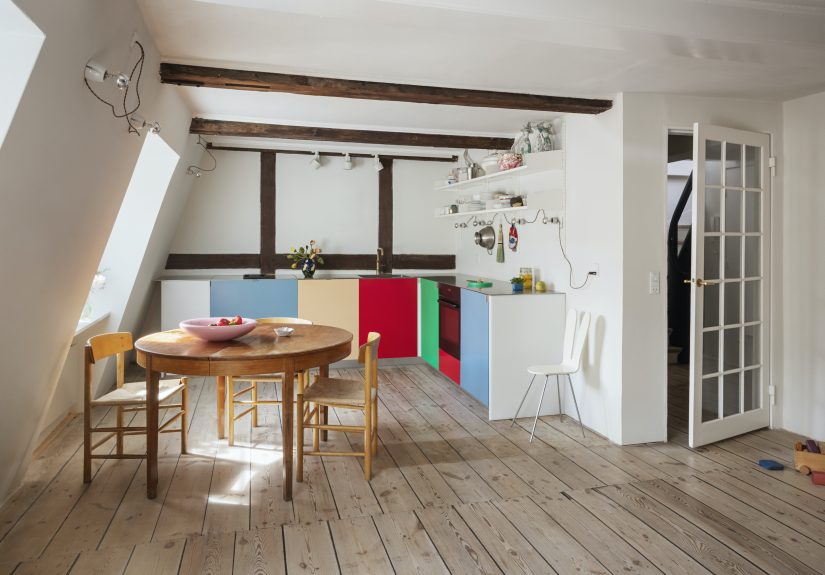
The first thing that stands out is the contrast between the home’s history and the kitchen’s crisp, contemporary energy. The apartment occupies the top floor of a 17th-century house, but the kitchen does not lean into faux-rustic nostalgia or performative old-world charm. Instead, it goes the opposite direction. The room embraces modern cabinet fronts, streamlined hardware, open breathing room, and surfaces that feel practical enough for daily cooking. That contrast is exactly what gives the kitchen its spark.
Rather than trying to mimic the age of the building, the design lets the old architecture do its own job while the kitchen does another. The result is tension in the best sense. Historic shell, modern core. Character up high, utility down low. It is the decorating equivalent of wearing vintage trousers with a razor-sharp white shirt: suddenly both pieces look even better.
This approach aligns with a larger Scandinavian principle that American design media keeps returning to: combine old and new instead of forcing a room to live entirely in one era. A kitchen gains warmth when contemporary function is allowed to sit beside patina, age, and irregularity. That is part of the magic here. The room does not erase the past, but it also refuses to become trapped by it.
The Kitchen Design Details That Make the Room Work
Colorful Reform fronts with an artful edge
At the center of the design are cabinet fronts from Reform’s Match collection by Muller Van Severen, fitted over IKEA components. That combination says a lot about modern European kitchen thinking. The framework is sensible and efficient. The visible layer is expressive. Instead of treating cabinetry as background filler, the design makes it part of the room’s personality.
The fronts bring in color with discipline. This is not rainbow chaos or trend-chasing for the sake of social media applause. It is a controlled use of strong surfaces that makes the kitchen feel artistic without becoming theatrical. Think less “look at me” and more “I just happen to be extremely well dressed while making toast.”
There is also a democratic appeal to this choice. The use of upgraded fronts over familiar cabinet systems reflects a broader trend in kitchen design: people want custom character without the full custom headache. Beauty matters, but so does practicality. That balance feels especially right for a family kitchen, where every design flourish has to earn its keep.
Stainless steel that means business
One of the smartest features in the room is the thin stainless-steel countertop. Stainless steel has long been beloved in professional kitchens for a reason: it is durable, hygienic, easy to wipe down, and refreshingly unfussy. In a domestic setting, though, it can sometimes feel clinical. Not here.
In this kitchen, the steel adds a clean, almost architectural crispness that plays beautifully against the warmth of the older building and the more playful cabinet colors. It tells you this is a room meant for actual cooking, not just decorative lemons arranged with suspicious precision. For a chef’s home, that honesty matters. The countertop choice quietly signals that utility is not the enemy of style. In fact, utility is the style.
A brass faucet and lighting that soften the edges
To keep the room from feeling too hard-lined, the details do some subtle emotional work. A patinated brass faucet warms up the sink area, while simple porcelain light fixtures and reflective bulbs create visual interest without cluttering the ceiling line. These moves matter. Scandinavian kitchens often succeed because they understand restraint, but restraint without texture can become dull fast. This room avoids that trap by using a few carefully chosen materials to add softness, glow, and depth.
The lighting is especially worth noting. Good kitchens are not only about storage and prep space. They are also about atmosphere. You want enough light to chop herbs without losing a finger, but you also want a room where people will linger after the meal. The fixtures here contribute to that in a quiet, almost understated way. Nothing screams for attention, yet everything helps the room feel complete.
A Family Kitchen That Is Actually Built for Family Life
What gives this Copenhagen kitchen staying power is not just its design vocabulary. It is the way the room supports everyday life. This is an eat-in kitchen, and that matters. American design experts have increasingly emphasized that kitchens work best when they are shaped around behavior, not just aesthetics. People want zones. They want seating. They want sight lines that let the cook stay connected to the rest of the room. They want a place where meals blur into conversation, homework, coffee, snacks, and the occasional emotional support cookie.
That philosophy is visible here. The kitchen is not isolated from the human action of the home. It invites participation. In fact, one of the loveliest ideas associated with the space is that the couple’s children can dance and play in the middle of the room while cooking happens around them. That tells you almost everything you need to know. This kitchen is not designed to exclude family life. It is designed to absorb it.
That is also why the room feels more timeless than trend-driven. Truly lasting kitchens are not the ones with the flashiest stone or the most aggressive hardware. They are the ones that understand rhythm. Morning coffee. A quick breakfast. A child asking for milk at the exact moment you sit down. Friends dropping by. Dinner stretching later than planned. A room that can handle those shifts without losing its elegance is a room that will age well.
What Frederik and Caroline’s Kitchen Says About Copenhagen Style
Copenhagen has become shorthand for a certain kind of modern lifestyle fantasy, and to be fair, the city does make it look easy. It blends old buildings, contemporary design, serious food culture, and a relaxed sense of beauty that never seems too polished to breathe. Frederik and Caroline’s kitchen captures that mix perfectly.
There is fashion in the room, but it is not fussy. There is culinary credibility, but it is not pretentious. There is design intelligence, but it does not lecture you about itself. That combination is why Copenhagen interiors continue to travel so well internationally. They suggest that beauty can be integrated into ordinary life rather than staged for special occasions only.
The kitchen also reflects a broader Copenhagen instinct for crossing creative disciplines. Food, fashion, interiors, art, and hospitality are all in conversation here. Frederik’s restaurants are known for their visual clarity and atmosphere, while Caroline’s design eye brings ease, color, and style literacy. You can feel that shared language in the room. The kitchen is not merely decorated. It is composed.
Lessons American Homeowners Can Borrow from This Kitchen
1. Let one bold element carry the room
You do not need twelve statement pieces battling for custody of the room. In this kitchen, the cabinet fronts do much of the visual heavy lifting. Once you have one strong move, the rest can stay calm. That is a far more effective strategy than trying to make the faucet, backsplash, stools, pendants, and fruit bowl all audition for lead roles at the same time.
2. Mix hard-working materials with warm details
Stainless steel, simple cabinetry, and efficient layouts can feel inviting when paired with the right lighting, seating, wood tones, or brass accents. Function does not have to read as sterile. In fact, the best kitchens often become more beautiful because their materials are honest about what they do.
3. Respect the architecture without copying it
If you live in an older home, you do not need to force your kitchen into a fake historical costume. Sometimes the smartest move is contrast. A modern kitchen inside an older shell can highlight the beauty of both. The past gets room to breathe, and the present gets room to function.
4. Design around movement, not perfection
Family kitchens need circulation. People should be able to cook, snack, lean, pass through, and gather without creating a traffic jam worthy of a group chat complaint. The most appealing thing about this Copenhagen kitchen may be how naturally it seems to hold movement. That is not accidental. Good layouts rarely are.
5. Make the kitchen a social room again
Eat-in kitchens, breakfast corners, casual chairs, and open sight lines all matter because they turn a kitchen into a place people want to stay. A room that supports both cooking and hanging out will almost always feel richer than one designed purely for visual effect.
Why This Kitchen Resonates Beyond Design Trends
Plenty of beautiful kitchens pass through the internet every week, most of them accompanied by captions that imply your life would improve dramatically if you just installed fluted oak and bought a $600 bowl. But Frederik and Caroline’s kitchen lands differently because it feels believable. Elevated, yes. Aspirational, absolutely. But still believable.
You can imagine coffee here. You can imagine pasta water boiling over here. You can imagine flowers on the table, a child spinning in socks, somebody cutting bread, somebody else reaching for a glass, and no one panicking because the room was designed to be used. That lived-in credibility is what transforms the kitchen from pretty to memorable.
In the end, this Copenhagen family kitchen is not great because it is expensive-looking, nor because it belongs to stylish people, though neither detail hurts. It is great because it understands a truth many homes forget: the kitchen is not just where meals happen. It is where family life becomes visible. In this one, every design choice seems to support that idea.
Experience the Mood: What a Kitchen Like This Feels Like in Real Life
Imagine walking into this kitchen early in the morning, before the city is fully awake. The light is pale and gentle, the kind of Scandinavian daylight that seems to arrive quietly instead of barging in. The stainless counter is cool to the touch. A kettle starts humming. Someone is slicing bread while coffee begins to fill the room with that magical smell that can make even the sleepiest person look emotionally available.
What is striking is not only how good the kitchen looks, but how calm it feels. The lines are clean, so your eyes can rest. The colors are lively, but not chaotic. Nothing appears overdone. There is no decorative shouting. The room gives you enough beauty to enjoy and enough order to think clearly. It is the kind of kitchen that makes simple rituals feel important. Suddenly, frying eggs feels like a small creative act instead of a weekday survival tactic.
By midday, the mood changes. The kitchen becomes more social, more elastic. A child drifts in for a snack. Someone leans against the counter while talking. Another person sits nearby with a laptop or a newspaper or maybe just a second coffee because some days require ambition. This is where the room’s intelligence really shows. It does not force everyone into one stiff pattern of use. It bends. It lets people enter and leave naturally. It can hold motion without feeling messy.
At dinner, the room becomes something else again. The stainless steel now feels theatrical in the best possible way, catching reflections from the lighting and the movement of hands, plates, and glassware. You can imagine Frederik cooking something that looks effortless and tastes annoyingly perfect. You can imagine Caroline bringing that instinctive sense of ease that makes a room feel hosted rather than managed. Nothing about the kitchen suggests formality, but everything suggests care.
That is probably the most appealing thing about the space. It does not separate aesthetics from experience. In many homes, design happens first and living happens around it. Here, the two seem woven together. The room is photogenic because it is well designed, but it is meaningful because it appears to support real human habits: cooking, talking, wandering in half-distracted, tasting something from a spoon, wiping a counter, laughing in the middle of a task, starting again tomorrow.
And maybe that is why this kitchen lingers in the mind. It is not simply a stylish Copenhagen interior. It is a reminder that the best kitchens do more than impress. They welcome. They organize family life without flattening it. They allow beauty to exist in the middle of routine. In a world full of rooms that are desperate to be admired, this one seems content to be loved. Honestly, that may be the chicest design decision of all.
Conclusion
Chef Frederik Bille Brahe and model-designer Caroline Brasch Nielsen’s Copenhagen family kitchen succeeds because it combines three things that rarely appear in equal measure: personality, practicality, and warmth. Set inside a historic home but unapologetically modern in expression, the room proves that a family kitchen can be visually bold without becoming impractical, minimal without becoming cold, and stylish without becoming exhausting.
For readers looking for real kitchen inspiration, that may be the most valuable takeaway. You do not need to copy every finish or order the same cabinet fronts from across the Atlantic to learn from this space. What you can borrow is the mindset: honor how a room is used, choose materials that work hard, leave space for people to gather, and let beauty support daily life instead of competing with it. That is what makes this Copenhagen kitchen memorable. It is not just designed well. It is designed wisely.