Table of Contents >> Show >> Hide
- Why a Thoughtful Music Room Matters
- 17 Music Room Ideas for a Beautiful, Functional Creative Space
- 1. Create Zones for Playing, Listening, and Storage
- 2. Start with a Rug That Softens the Room
- 3. Use Layered Lighting Instead of One Sad Ceiling Fixture
- 4. Mount Instruments on the Wall Like Functional Art
- 5. Build in Closed Storage for the Visual Noise
- 6. Add Acoustic Panels That Actually Match the Decor
- 7. Treat the First Reflection Points
- 8. Make Seating Comfortable Enough for Long Sessions
- 9. Use a Neutral Base and Let Music Gear Be the Personality
- 10. Add a Listening Corner for Pure Enjoyment
- 11. Turn Awkward Small Spaces into Music Nooks
- 12. Bring in Plants for Texture and Calm
- 13. Choose Furniture That Pulls Double Duty
- 14. Make the Room Sound Better Before You Buy More Gear
- 15. Use Wall Art That Feeds the Mood
- 16. Consider Sound Isolation if You Practice Loudly
- 17. Leave Open Space for Movement and Creativity
- How to Pull the Whole Music Room Together
- Final Thoughts on Music Room Ideas
- Extended Experience: What It Feels Like to Live With a Music Room Every Day
- SEO Tags
If your idea of interior design starts with “Where do I put the guitar?” and ends with “Can this room make me feel like a genius before coffee?”, welcome home. A great music room is not just a place to stash instruments and hope inspiration drops by unannounced. It is a creative zone, a practice retreat, a listening lounge, and sometimes a tiny therapy session with better acoustics.
The best music room ideas blend style with function. You want a room that looks good, sounds good, and does not make you trip over a keyboard stand on your way to enlightenment. Whether you have a spare bedroom, a basement corner, a converted attic, or a glorified closet with ambition, the right setup can help you practice longer, record smarter, and enjoy music more deeply.
Below are 17 music room ideas designed to inspire musicians, hobbyists, vinyl lovers, and anyone who believes a room should occasionally make them feel like the main character in an indie film soundtrack.
Why a Thoughtful Music Room Matters
A music room works best when it supports the way you actually use it. Some people need a calm, focused practice room. Others want a hybrid space for writing, recording, teaching, or listening. The magic happens when the room reflects your routine: comfortable seating, smart storage, controlled sound, and enough personality to keep the creative energy alive.
That means your music room should not be designed like a showroom that says, “Please admire this tambourine from a distance.” It should invite you in. It should make playing easier, not harder. And yes, it should be attractive enough that you want to spend time there, even when you are not hitting the perfect note.
17 Music Room Ideas for a Beautiful, Functional Creative Space
1. Create Zones for Playing, Listening, and Storage
One of the smartest music room ideas is to divide the room by purpose. Give one area to active music-making, another to focused listening, and another to storage. This makes even a small room feel organized and intentional. A keyboard in one corner, a chair and speakers in another, and shelves for records or sheet music nearby can make the space feel like it has its life together, even if you do not.
2. Start with a Rug That Softens the Room
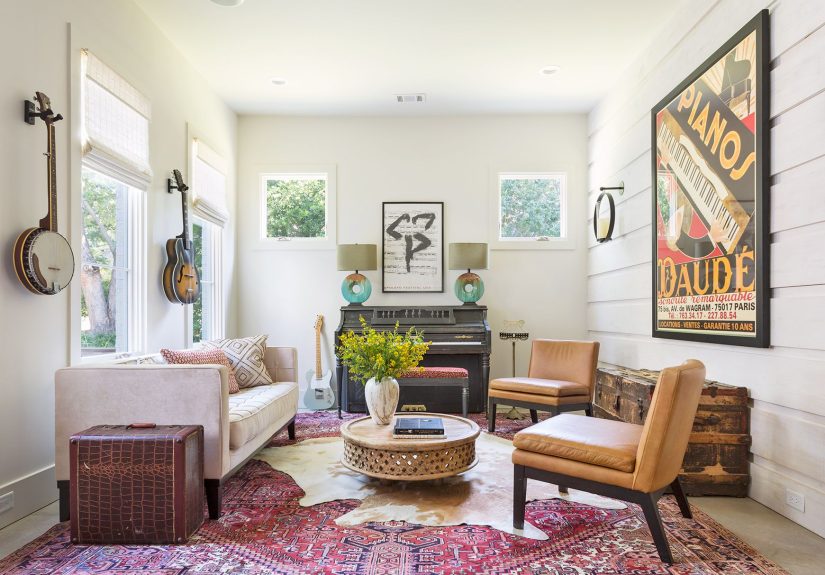
A large area rug does more than make the room feel cozy. It also helps soften sound reflections from hard floors, which is useful if your room has wood, tile, or laminate underfoot. In practical terms, that means less harsh bounce and a warmer, calmer feel. In emotional terms, it means your music room stops sounding like a spoon dropped in a soup pot.
3. Use Layered Lighting Instead of One Sad Ceiling Fixture
Lighting can completely change how a music room feels. A mix of overhead lighting, task lamps, and warm accent lighting works better than a single bright bulb that makes the room feel like an interrogation scene. Add a floor lamp near a reading chair, a desk lamp near your keyboard or mixing area, and softer ambient lighting for evening listening sessions. Creative work likes options.
4. Mount Instruments on the Wall Like Functional Art
Guitars, violins, and even brass instruments can double as decor when displayed properly. Wall-mounted instrument storage keeps pieces accessible while adding instant personality. It also solves the classic problem of putting your guitar “somewhere safe” and then somehow not playing it for three weeks. When instruments are visible, they invite use. And they look great doing it.
5. Build in Closed Storage for the Visual Noise
Cables, pedals, tuners, picks, microphones, sheet music, adapters, spare strings, random notebooks, and the mystery charger nobody can identify all need a home. Use cabinets, drawers, baskets, or built-ins to keep clutter in check. Open shelving is great for records or books, but closed storage is what keeps a creative room from looking like a tiny music store exploded.
6. Add Acoustic Panels That Actually Match the Decor
Acoustic treatment is one of the most practical upgrades for a home music room, especially if you record, mix, teach, or practice often. The good news is that acoustic panels no longer have to look like the room lost a fight with industrial foam. Fabric-wrapped panels, neutral-toned treatments, or panels arranged as part of a wall design can improve clarity while still looking polished and residential.
7. Treat the First Reflection Points
If your room includes studio monitors or a serious listening setup, pay attention to first reflection points on the side walls and ceiling. That is where sound bounces early and can muddy what you hear. A little treatment in the right locations can make the room sound more focused and balanced. Translation: your mixes stop lying to you, and your favorite album stops sounding weird for no reason.
8. Make Seating Comfortable Enough for Long Sessions
A stylish chair is nice. A chair you can sit in for two hours without questioning your life choices is better. Choose supportive seating for playing, listening, or writing. A small sofa, lounge chair, piano bench with padding, or ergonomic desk chair can all work depending on how you use the room. Comfort supports creativity. Also, lower back pain is a terrible collaborator.
9. Use a Neutral Base and Let Music Gear Be the Personality
Some of the best music room ideas start with calm walls, simple furniture, and natural textures. A neutral base lets your instruments, records, books, and art stand out without overwhelming the room. White, soft gray, warm beige, muted green, or pale blue can all help a space feel grounded. Then you can bring in visual rhythm through wood tones, leather, brass, or bold album art.
10. Add a Listening Corner for Pure Enjoyment
Not every music room needs to be about performance or production. Sometimes the best idea is a dedicated listening corner with a comfortable chair, excellent speakers or headphones, and a small table for coffee, notes, or your current vinyl obsession. This turns the room into a retreat, not just a workspace. You do not always have to make music in the room. Sometimes you just need to let it hit you properly.
11. Turn Awkward Small Spaces into Music Nooks
That unused corner, wide hallway landing, under-stairs alcove, or spare closet can become a compact music nook with the right planning. Add a slim desk, a stool, wall hooks, and a shelf or two. Small spaces thrive when every inch works hard. A tiny music room can still feel inspiring if it is tidy, purposeful, and not trying to be ten different rooms at once.
12. Bring in Plants for Texture and Calm
Plants make almost every room feel more alive, and a music room is no exception. They soften hard edges, add organic texture, and make the space feel less technical. A leafy floor plant, small potted herbs on a window ledge, or a trailing plant on shelving can balance out all the gear. Just avoid placing one where it can mysteriously topple onto your keyboard during your most emotional bridge.
13. Choose Furniture That Pulls Double Duty
If space is limited, multi-functional furniture is your best friend. Think storage benches, ottomans with hidden compartments, a console that stores records and doubles as a display surface, or a desk that works for writing music and managing email. This approach is especially helpful in bonus rooms or shared spaces, where your music room has to coexist peacefully with real life.
14. Make the Room Sound Better Before You Buy More Gear
This is the least flashy advice and maybe the most useful. Before upgrading speakers, microphones, or software, improve the room itself. Add rugs, curtains, bookshelves, acoustic panels, bass traps, or upholstered furniture where needed. A well-treated room helps you hear more clearly, play more comfortably, and make smarter decisions. New gear is fun. A room that stops sabotaging your sound is even better.
15. Use Wall Art That Feeds the Mood
Music room decor should do more than fill blank walls. Frame concert posters, lyric prints, album covers, vintage sheet music, or personal photos from performances. The goal is not to create a themed restaurant called “Jazz Hands Bistro.” It is to build an environment that reminds you why you love music in the first place. Personal inspiration is good design.
16. Consider Sound Isolation if You Practice Loudly
If drums, amplified instruments, or vocal sessions are part of the routine, think beyond acoustic treatment and into sound isolation. Seal gaps around doors and windows, use heavier curtains, add dense materials where possible, and consider a solid-core door. If you are planning a renovation, that is the moment to think about more serious soundproofing strategies. Your neighbors may never write you a thank-you note, but tension levels should improve.
17. Leave Open Space for Movement and Creativity
Not every square foot needs furniture. Open floor space matters, especially if you teach, rehearse, stretch before playing, or simply think better when you can pace dramatically like a songwriter in a music video. A room packed wall-to-wall with objects can feel visually busy and mentally crowded. Give the room some breathing room. Creativity likes elbow space.
How to Pull the Whole Music Room Together
The best home music room ideas are rarely about one big dramatic feature. They come together through a handful of smart decisions: better lighting, easier storage, fewer reflections, more comfort, and a style that feels personal instead of generic. You do not need a celebrity studio budget to make a room feel intentional. You just need to decide what the room is for and design around that purpose.
If your space is mostly for practice, prioritize accessibility and comfort. If it is for recording, treat the room and organize your workflow. If it is for listening, invest in placement, mood, and seating. If it is all three, welcome to the club. Most of us are trying to create a room that can hold discipline, play, and a little artistic chaos at the same time.
Final Thoughts on Music Room Ideas
A great music room should feel like an invitation. It should tell you to sit down, pick something up, press play, try a new chord, revisit an old melody, or just listen more closely. The room does not have to be huge. It does not have to be expensive. It does have to work for you.
Whether you lean toward a cozy listening lounge, a sleek home studio, a family music room, or a small creative nook, the goal is the same: build a space that makes music easier to enjoy and harder to ignore. Because when a room supports your creative side, showing up becomes a lot simpler. And that, frankly, is half the battle.
Extended Experience: What It Feels Like to Live With a Music Room Every Day
There is something different about a home when it has a dedicated music room. Even on ordinary days, the space changes the rhythm of life. You walk past it in the morning and think, “I have ten minutes. I could play one song.” You head in during the afternoon slump and put on a record instead of scrolling aimlessly. Late at night, the room becomes a soft landing spot where the lights are low, the speakers are warm, and the rest of the house finally goes quiet.
That daily experience is what makes these music room ideas matter. The room becomes more than a design project. It turns into a habit machine for creativity. When your guitar is on the wall instead of in a case under the bed, you play more. When the bench is comfortable and the lamp is in the right spot, you stay longer. When your sheet music is organized and your headphones are easy to grab, the friction disappears. Inspiration still has its dramatic moments, but it also becomes a little more practical. It shows up because the room makes it easy.
A well-designed music room also changes how people gather. Friends stop by and naturally drift toward it. Kids get curious. Guests start flipping through records. Someone sits at the keyboard “just for a second,” and suddenly there is an informal singalong happening next to a houseplant and a stack of jazz albums. It is one of the rare rooms in a home that can be deeply personal and quietly social at the same time.
There is also a private emotional side to it. A music room can become the place where you think through hard days, celebrate good ones, and reconnect with parts of yourself that everyday responsibilities tend to bury. Playing an instrument in a room that feels calm and supportive is different from practicing in a cluttered corner while standing next to unfolded laundry. One feels like interruption. The other feels like intention.
Over time, the room develops its own memory. The rug remembers where the stool always lands. The shelf holds old notebooks with unfinished lyrics that still might become something. The chair by the window becomes the place where you first heard an album that changed your whole week. These details sound small, but they are exactly what turn a room from useful into meaningful.
That is why the best music room is not necessarily the most expensive or the most photogenic. It is the one that gets used. The one that feels welcoming on a busy Tuesday. The one that helps you focus, unwind, experiment, and occasionally pretend you are about to perform for a sold-out crowd when really you are just trying to nail the bridge without waking the dog. A good music room supports the art. A great one supports the artist too.