Table of Contents >> Show >> Hide
- Meet the Great Blue Hole: A Gorgeous Sinkhole With a Serious Memory
- How Can a Sinkhole Track Storms? Welcome to Paleotempestology
- The Big Breakthrough: A 5,700-Year Caribbean Storm Record
- So What’s Driving the Long-Term Increase? The Sky’s Conveyor Belt (Plus the Ocean’s Mood Swings)
- Why “The Weather Is Only Getting Worse” Feels True Right Now
- What the Great Blue Hole Adds That Satellites Can’t
- Specific Examples: What a Storm Layer Represents (Without the Doom)
- What Can Communities Do With This Information?
- Experiences From the Storm Archive: What This Topic Feels Like in Real Life (Bonus)
- Conclusion
If you’ve ever wished the ocean came with a “receipt” for all the chaos it’s financed, good news: it kept one.
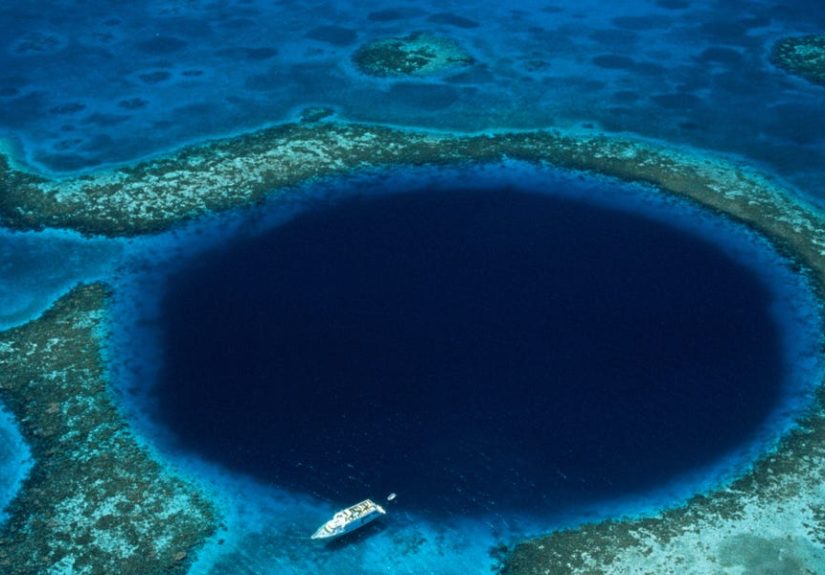
Not in a dusty filing cabinet, but in a deep, circular sinkhole off Belizeso dark from above it looks like someone
dropped a blueberry into turquoise frosting.
This place is the Great Blue Hole, and beneath its postcard vibes is a surprisingly nerdy superpower:
it records big storms in sediment, year after year, layer after layer. Scientists recently pulled a long core from
the bottom and used it like a time machinereconstructing tropical cyclone activity back about 5,700 years.
The headline takeaway isn’t subtle: storms in this region show a long-term rise, and modern warming threatens to push
things into territory the ancient record rarely (or never) saw.
In other words, the Great Blue Hole is like Mother Nature’s storm diaryexcept the pages are mud, the ink is sand,
and the plot keeps escalating.
Meet the Great Blue Hole: A Gorgeous Sinkhole With a Serious Memory
The Great Blue Hole sits near the center of Lighthouse Reef Atoll, roughly 80 kilometers (50 miles)
off Belize’s mainland. From space, the ring of reef glows light and shallow, while the hole itself looks almost
inkybecause it plunges steeply into deeper water.
Geologically, it’s a flooded limestone cave systemformed when sea levels were lower during ice-age conditions,
then drowned as oceans rose. Today it’s roughly 300 meters (~1,000 feet) across and drops to
more than 120 meters (~400 feet) deep. The bottom is dim, low-oxygen, and generally unfriendly for
lots of marine lifegreat for preserving sediments, not so great for hosting a bustling underwater block party.
The “dark ocean pit” label isn’t hype. The hole’s depth and low circulation help create calmer conditions at the
bottomexactly the kind of environment where tiny particles can settle and stay put for a very long time.
How Can a Sinkhole Track Storms? Welcome to Paleotempestology
Here’s the trick: most days, the Great Blue Hole collects fine, quiet sedimentlike a slow snowfall of mud and
microscopic bits. But when a strong tropical cyclone passes close enough, it changes the rules.
Storms Leave “Event Layers” (AKA Nature’s Highlight Reel)
A powerful storm brings waves, surge, and energetic currents that can shove coarser materialsand,
shell fragments, reef debrisinto places that normally only see fine particles. In a deep, steep-walled “sediment trap”
like a blue hole, that coarse pulse settles into a distinct layer. Scientists call these storm deposits
event beds or event layers.
Think of it like this: on calm days, the Blue Hole is saving quietly in the background. During a storm, it hits
“record” in 4K.
Why Blue Holes Are Such Good Archives
- They’re deep and protected: steep walls reduce mixing from normal waves and currents.
- They trap what falls in: once sediment settles, it tends to stay.
- They can preserve clear layers: calm conditions allow storm layers to stand out like bold text.
- They can be dated: organic fragments and microfossils help scientists build a timeline.
Woods Hole Oceanographic Institution has described blue holes as nearly ideal sediment traps for reconstructing
hurricane histories across centuries to millennia, precisely because they preserve undisturbed layers that mark
major events.
The Big Breakthrough: A 5,700-Year Caribbean Storm Record
Modern hurricane monitoring is excellentbut short. Reliable satellite-era records cover only a few decades,
and even older historical documents can be incomplete or regionally patchy. That’s a problem when you’re trying to
answer a question as big as: “What’s normal hurricane variability, really?”
A recent study in Science Advances tackled this by extracting a 30-meter-long sediment core
from the Great Blue Hole and analyzing it at high resolution. The researchers identified hundreds of distinct
event layers and used them to reconstruct tropical cyclone frequency across the last 5,700 years.
What They Found in Plain English
-
Storminess increased over the long term in the southwestern Caribbean across the Holocene (the last
~11,700 years), with patterns that line up with large-scale shifts in climate. -
Shorter-term ups and downs appear on top of that long trendmatching known climate intervals and
ocean-atmosphere patterns. -
A modern “extra push” is suggested by the authors’ 21st-century extrapolation, pointing toward an
unprecedented increase tied to Industrial Age warming.
The headline isn’t “everywhere will get the same number of storms.” In fact, blue-hole research across the wider
Atlantic shows strong regionality: some places see quiet stretches while others see bursts of activity.
That’s why one long, continuous archive in a key region matters so muchit helps separate local quirks from bigger
climate drivers.
So What’s Driving the Long-Term Increase? The Sky’s Conveyor Belt (Plus the Ocean’s Mood Swings)
Over thousands of years, Earth’s climate is shaped by slow-moving forcessome literally astronomical. One major
player in the tropics is the Intertropical Convergence Zone (ITCZ), the band of rising air and heavy
rainfall near the equator where trade winds meet. Its average position shifts with long-term climate patterns.
The Great Blue Hole record suggests that an orbitally driven shift in the ITCZ helped produce the
long-term storminess trend in the southwestern Caribbean. On top of that, the study describes shorter-term variations
that match Holocene climate intervals and sea-surface temperature anomaliesmeaning the ocean doesn’t just provide the
fuel; it also helps write the schedule.
Translation: the storm record isn’t random. It reflects big climate “setups” that can make storms more or less likely
to form, intensify, or pass through a particular corridor.
Why “The Weather Is Only Getting Worse” Feels True Right Now
Now we leave the slow-motion planetarium and return to the modern world, where greenhouse gases are turning the ocean
into a more energetic storm engine.
Warmer Water, Wetter Air: The Two-Ingredient Recipe for Bigger Impacts
Tropical cyclones draw energy from warm ocean water. As sea-surface temperatures rise, the atmosphere can hold more
moisture, which supports heavier rainfall. NOAA’s Geophysical Fluid Dynamics Laboratory (GFDL) summarizes the state of
science this way: tropical cyclone rainfall rates are projected to increase with warming, and
intensities are projected to increase on average (medium to high confidence), with an increased share
of very intense storms.
Even if the total number of storms doesn’t clearly rise everywhere, the storms that do form can carry more water and
more potential for damage.
Rapid Intensification: The “No Time to Breathe” Problem
One of the scariest operational challenges is when a storm strengthens fast near land. GFDL notes that
rapid intensification is projected to increase as warming continues. That matters because communities
don’t prepare in “wind-speed theory.” They prepare in real timebased on forecasts, evacuation logistics, and how many
hours they have before conditions deteriorate.
Storm Surge Gets a Boost From Sea Level Rise
Storm surge is the abnormal rise of water pushed toward shore by storm winds. As sea level rises, surge rides on a
higher baseline, meaning flooding can reach farther inland. NOAA educational resources emphasize how surge drives
coastal flooding, and NOAA climate materials highlight that higher sea level increases coastal risk during storms.
Put bluntly: even a “similar” storm in the future may flood differently than its historical cousin because the ocean
is starting from a higher step.
What the Great Blue Hole Adds That Satellites Can’t
If you only look at recent decades, it’s hard to tell whether an uptick is a new normal or just a noisy streak.
The Great Blue Hole record expands the baseline dramaticallyextending beyond the limits of instrumental monitoring,
historical documentation, and many other storm reconstructions.
That longer view helps in three practical ways:
-
Risk planning: Infrastructure, insurance models, and building standards depend on “return periods”
(how often a certain kind of event happens). A few decades can mislead; millennia can recalibrate. -
Regional forecasting insight: Blue hole archives show that hurricane activity can shift geographically.
That matters for places like Belize, the Yucatán, and the western Caribbean that sit near important storm corridors. -
Climate attribution context: If the modern trajectory looks unusual compared to the long archive,
that strengthens the argument that human-driven warming is pushing the system beyond typical natural variability.
Specific Examples: What a Storm Layer Represents (Without the Doom)
A single “event layer” in the Blue Hole core can represent a tropical cyclone passing close enough to generate the
wave energy and currents needed to move coarse debris into the sinkhole. Multiply that by hundreds of layers and you
get something like a long-running storm playlistsome eras playing the hits on repeat, others going quiet for a while.
Blue hole research in the broader Atlantic has documented periods where major storms were dramatically more frequent
in some regions than they are today, underscoring that hurricane hazard is not static even without modern warming.
That historical variability is exactly why the new, long Caribbean archive is so valuable: it puts current changes in
a much larger frame.
What Can Communities Do With This Information?
The point of a 5,700-year storm archive isn’t to win trivia night. It’s to make better decisions in a world where the
atmosphere and oceans are changing fast.
Practical Moves That Don’t Require a Supercomputer
- Update flood maps and surge assumptions to reflect sea level rise and worst-case surge scenarios.
- Invest in resilient infrastructure: drainage, seawalls where appropriate, natural buffers like mangroves and reefs.
- Strengthen early-warning communication, especially for rapid intensification scenarios.
- Plan for rainfall extremes, not just wind categoriesbecause “water is the new headline.”
The ocean has kept notes for millennia. We don’t get to ignore them just because the handwriting is made of sand.
Experiences From the Storm Archive: What This Topic Feels Like in Real Life (Bonus)
Reading about a “5,700-year storm record” is one thing. Standing near the idea of itwhether you’re a diver, a field
scientist, or someone who lives where storms can change the rules overnighthits differently.
1) The Diver’s View: A Blue Circle That Turns Into a Vertical Night
People who visit the Great Blue Hole often describe the moment of arrival as surreal: shallow, bright water suddenly
interrupted by a dark, almost perfectly circular void. On the surface, it’s calm enough to feel like a tricklike the
ocean is pretending to be ordinary. But as you descend (or even just watch from a boat), the light fades fast, and
the geometry becomes the story: sheer walls, deeper blue, and the sense that you’re hovering over a place that doesn’t
“behave” like the rest of the reef.
What makes the experience eerie isn’t monsters or movie nonsense. It’s scale and contrast. The surrounding reef is
all color and movement; the hole is shadowy and still. Even without seeing the bottom, you can feel why sediments
settle there so neatly. It’s not just a tourist stopit’s a natural container, like a giant glass beaker built into
the seafloor.
2) The Field Scientist’s View: Mud, Math, and MacGyver Logistics
For researchers, the “experience” is less cinematic and more intensely practicalboats, gear, weather windows, and the
constant question: will the core come up intact? Blue-hole coring has been described as part science expedition, part
improvisational engineering. Teams use long coring tubes, careful positioning, and steady hands to collect sediments
without scrambling the layers they came for.
There’s a particular thrill in the first clean look at a core section. It’s not dramatic in the Hollywood sense;
it’s dramatic in the “this line might be a hurricane from a thousand years ago” sense. Field crews have to think in
millimetersbecause a thin band of coarse grains might be the difference between “routine year” and “extreme event.”
In that moment, a storm becomes something you can point to. Not a headline. Not a satellite loop. A physical layer.
3) The Coastal Resident’s View: The Soundtrack of Preparation
Then there’s the human experiencepeople living along Caribbean coasts where hurricane season isn’t an abstract
forecast category; it’s a calendar reality. Preparation has its own routine soundtrack: battery checks, water storage,
last-minute plywood runs, neighbors comparing notes, phone alerts that arrive when you’re trying to pretend it’s a
normal day. Even when a storm misses, the emotional cost of readiness adds up. You spend energy preparing for the
version of the storm you can’t afford to underestimate.
This is where the “storms are getting worse” message becomes less about climate charts and more about time. If rapid
intensification becomes more common, people have fewer hours to shift from “monitoring” to “moving.” If rainfall rates
rise, flooding can become the main hazard even when wind isn’t the headline. And if sea level continues to rise, the
same coastal street that used to flood once in a while might flood more oftenturning rare disruption into recurring
friction.
The value of the Great Blue Hole story, for everyday life, is that it connects the immediate to the ancient. It says:
storms have always been part of this region’s climate systembut the system has modes, patterns, and thresholds. And
right now, we’re leaning on the accelerator.
Conclusion
The Great Blue Hole is stunning from above, but its most important feature is invisible: a layered storm archive that
stretches back 5,700 years. That record shows long-term changes tied to shifting climate patternsand it warns that
modern warming could amplify cyclone risks in ways that stand out even against millennia of natural variability.
The ocean has been quietly tracking the weather for ages. The only question is whether we’ll use that knowledge to
prepare smarterbefore the next layer gets written.