Table of Contents >> Show >> Hide
- What Defines a Modern Ski House in the Alps?
- Architecture Built for Snow, Slope, and Sun
- Interior Design: Warm Minimalism With Alpine Soul
- The Ski Room: Small Space, Big Responsibility
- Bedrooms Designed for Recovery
- The Spa Factor: Wellness Comes Home
- Sustainability in Modern Alpine Design
- Kitchen and Dining: The Social Engine
- Windows, Views, and the Art of Framing Nature
- How to Decorate a Modern Alpine Ski House
- Modern Ski House Layout Ideas
- Common Mistakes to Avoid
- Experiences Related to A Modern Ski House in the Alps
- Conclusion
Some houses politely sit on a mountain. A modern ski house in the Alps does something more impressive: it negotiates with snow, slope, sunlight, wind, wet boots, and the occasional guest who thinks “ski-in/ski-out” means launching directly into the living room. Today’s Alpine home is no longer just a postcard chalet with carved balconies, gingham curtains, and enough pine paneling to make a forest nervous. It is smarter, warmer, more efficient, and more open to the breathtaking drama outside its windows.
A modern Alpine ski house blends contemporary architecture with mountain practicality. It uses natural materials like timber, stone, wool, and leather, but it pairs them with high-performance glass, radiant heating, energy-efficient insulation, minimalist interiors, and flexible spaces built for both adventure and recovery. The best examples feel luxurious without shouting. They are calm, grounded, and quietly spectacularlike someone wearing designer snow boots but pretending they just “found them somewhere.”
Whether located in the French Alps, Swiss Alps, Italian Dolomites, or Austrian Tyrol, a modern ski house must answer the same essential question: how do you create a home that feels elegant in summer, cozy in winter, and functional when six people arrive at once carrying skis, helmets, gloves, goggles, luggage, and emotional opinions about fondue?
What Defines a Modern Ski House in the Alps?
A modern ski house in the Alps is not simply a luxury chalet with new furniture. It is a carefully planned mountain residence that responds to climate, topography, lifestyle, and local tradition. Alpine architecture has always been shaped by survival: steep roofs shed snow, stone bases resist harsh weather, and timber structures provide warmth. Modern design keeps these lessons but updates them for contemporary living.
Traditional Roots, Contemporary Lines
The classic Alpine chalet is famous for its sloping roof, broad eaves, exposed wood, and compact form. Modern ski house design often preserves these recognizable features but simplifies the silhouette. Decorative carvings give way to clean lines. Small windows become expansive glass walls. Dark interiors are replaced by bright, open rooms that frame mountain views like living landscape paintings.
This balance matters. A house that ignores Alpine tradition can feel oddly imported, like a glass office building wearing snowshoes. But a home that copies the past too literally may miss the comfort, performance, and elegance expected today. The strongest modern Alpine houses sit comfortably between the two: respectful of local identity, but not trapped in nostalgia.
Materials That Belong to the Mountain
The most successful modern ski houses use materials that feel connected to the land. Stone is often used for foundations, fireplaces, retaining walls, and lower levels. Timber brings warmth to ceilings, floors, walls, and built-in furniture. Concrete may appear in polished floors, structural walls, or spa areas, adding durability and a sleek contemporary edge.
Glass is another defining material. Floor-to-ceiling windows capture views of peaks, valleys, forests, and ski slopes. In older chalets, small windows helped conserve heat. Today, advanced glazing makes large openings more practical, allowing homeowners to enjoy natural light without turning the living room into an expensive refrigerator.
Architecture Built for Snow, Slope, and Sun
Designing a modern ski house in the Alps begins with the site. Mountain land is rarely flat, weather is rarely gentle, and access can be complicated. Architects must think about snow loads, avalanche zones, drainage, solar orientation, wind exposure, privacy, and views. In other words, the mountain gets a voteand it is not shy.
Steep Roofs and Snow Management
In the Alps, a roof is not just a roof. It is a snow-management system with architectural charm. Steeply pitched roofs help shed snow, while broad eaves protect walls, windows, and outdoor walkways. In modern designs, rooflines may be simplified, exaggerated, or extended to create covered terraces and sheltered entrances.
Snow guards, heated gutters, careful drainage, and durable roofing materials are essential. A beautiful ski house should not require a rescue mission every time the weather forecast says “light accumulation” and the mountain replies with three feet of enthusiasm.
Orientation and Natural Light
Modern Alpine homes are often designed to maximize sunlight. South-facing glass can help warm interiors during winter, while overhangs and shading prevent overheating in summer. Large windows are positioned not only for views but also for mood. Morning light in a breakfast nook, sunset over a terrace, and soft afternoon glow in a reading corner can completely change how a home feels.
Because winter days can be short, natural light is a luxury as valuable as marble countertops. A well-designed ski house uses skylights, clerestory windows, open staircases, and double-height spaces to move light deep into the interior.
Interior Design: Warm Minimalism With Alpine Soul
The interior of a modern ski house in the Alps should feel calm, tactile, and inviting. The current direction in Alpine interior design leans toward warm minimalism: fewer decorative details, better materials, softer lighting, and rooms that feel spacious without becoming cold.
The Living Room as the Heart of the House
Every ski house needs a great living room. This is where frozen fingers thaw, stories get exaggerated, and someone inevitably claims they “almost went pro” after surviving a blue run. In modern Alpine homes, the living area is usually open-plan, combining lounge, dining, and kitchen spaces under a dramatic timber ceiling or beside a large fireplace.
A central fireplace remains a classic feature, but the design may be sleek and sculptural rather than rustic. Stone surrounds, suspended metal fireboxes, or minimalist built-in hearths can all work beautifully. Seating is typically generous: deep sofas, low lounge chairs, upholstered benches, and soft throws create a space that encourages people to stay awhile.
Natural Textures and a Quiet Color Palette
Modern ski house interiors often use a palette inspired by the landscape: snow white, warm beige, charcoal, stone gray, deep brown, forest green, and muted blue. These colors keep the focus on the view while making the rooms feel restful.
Texture does the heavy lifting. Wool rugs, boucle chairs, linen curtains, leather stools, brushed oak, raw stone, matte metal, and handmade ceramics add depth without clutter. The goal is not to decorate every surface. The goal is to make the home feel layered, comfortable, and quietly expensivethe interior design equivalent of speaking softly while wearing a very good coat.
The Ski Room: Small Space, Big Responsibility
No modern ski house is complete without a well-designed ski room or boot room. This space may not appear on glossy magazine covers as often as the living room, but anyone who has wrestled with wet boots in a hallway knows it deserves applause.
Storage That Saves Sanity
A good ski room includes racks for skis and snowboards, heated boot dryers, glove warmers, helmet shelves, benches, hooks, waterproof flooring, and excellent ventilation. Each guest should have a dedicated cubby or locker. Otherwise, by day three, the room will resemble a sporting goods store after a small avalanche.
Durable materials are key. Stone tile, rubber flooring, concrete, stainless steel, and moisture-resistant wood perform well. Built-in drains and easy-clean surfaces make the space practical after snowy days. In luxury homes, the ski room may connect directly to the slope, garage, spa, or elevator, turning arrival and departure into a smooth ritual.
Bedrooms Designed for Recovery
After a day on Alpine slopes, bedrooms need to feel restorative. Modern ski house bedrooms usually prioritize softness, quiet, and views. The design is simple but not bare: upholstered headboards, warm wood walls, layered bedding, blackout curtains, and soft bedside lighting.
Guest Suites With Hotel-Level Comfort
Because ski houses are often shared with family and friends, guest rooms matter. Ensuite bathrooms, smart storage, comfortable mattresses, and thoughtful lighting make a big difference. Bunk rooms are also popular, especially for children and teenagers. A modern bunk room can be playful without feeling like summer camp forgot its season.
In larger Alpine homes, bedrooms may be arranged in separate zones to give different generations privacy. Parents, grandparents, teenagers, and guests can enjoy the same house without hearing every conversation, movie, or midnight snack expedition.
The Spa Factor: Wellness Comes Home
Modern Alpine living has embraced wellness in a big way. A ski house in the Alps may include a sauna, steam room, indoor pool, hot tub, massage room, cold plunge, yoga studio, or fitness area. This is partly about luxury, but it is also practical. Skiing is fun, but it is not exactly gentle on the body. After a long day, a sauna can feel less like an amenity and more like a peace treaty with your knees.
Indoor-Outdoor Relaxation
Outdoor hot tubs and terraces are especially appealing in mountain homes. Sitting in warm water while snow falls around you is one of those experiences that makes people suddenly understand why humans invented architecture. Covered terraces, fire pits, and wind-protected seating areas extend the use of outdoor spaces beyond summer.
Wellness spaces should be easy to maintain, resistant to moisture, and connected logically to changing areas. Natural stone, cedar, glass, and indirect lighting create a calm spa atmosphere that feels appropriate to the setting.
Sustainability in Modern Alpine Design
A modern ski house in the Alps should be beautiful, but it should also be responsible. Mountain environments are sensitive, and energy performance matters in cold climates. Sustainable design is no longer a bonus feature; it is part of good architecture.
Energy Efficiency and Smart Systems
High-performance insulation, triple-glazed windows, airtight construction, heat recovery ventilation, and efficient heating systems can dramatically improve comfort while reducing energy use. Radiant floor heating is common because it distributes warmth evenly and feels wonderful underfoot after skiing.
Smart home systems can control lighting, heating, security, shading, and ventilation. In a ski house used seasonally, remote monitoring is especially useful. Owners can warm the home before arrival, check energy use, and protect pipes during freezing weather. The house becomes not only stylish but also sensiblewhich is the architectural version of remembering to pack both sunglasses and thermal socks.
Local and Durable Materials
Using locally sourced stone, timber, and craftsmanship can reduce environmental impact while strengthening the home’s sense of place. Durable materials also matter because Alpine conditions are tough. A finish that looks good for one winter but gives up by spring is not a design victory.
Many modern mountain homes also consider long-term flexibility. Rooms that can adapt over time, furniture that can be repaired, and systems that can be upgraded help extend the life of the house.
Kitchen and Dining: The Social Engine
The kitchen in a modern ski house needs to handle everything from quiet coffee before first lifts to lively dinners after a full day outside. Open kitchens are common because they keep the cook connected to the group. Large islands, durable countertops, hidden storage, and professional-grade appliances make entertaining easier.
Designing for Après-Ski
Après-ski is not just a meal; it is a mood. The dining area should feel relaxed, generous, and comfortable. Long wooden tables, built-in banquettes, pendant lighting, and nearby fireplaces create a warm atmosphere. A wine room or bar area can add sophistication, while a coffee station may be the most beloved feature in the entire house by 7 a.m.
The best Alpine dining rooms frame the view without making the space feel like a showroom. People should feel free to laugh loudly, pass bread across the table, and debate tomorrow’s ski route with dramatic hand gestures.
Windows, Views, and the Art of Framing Nature
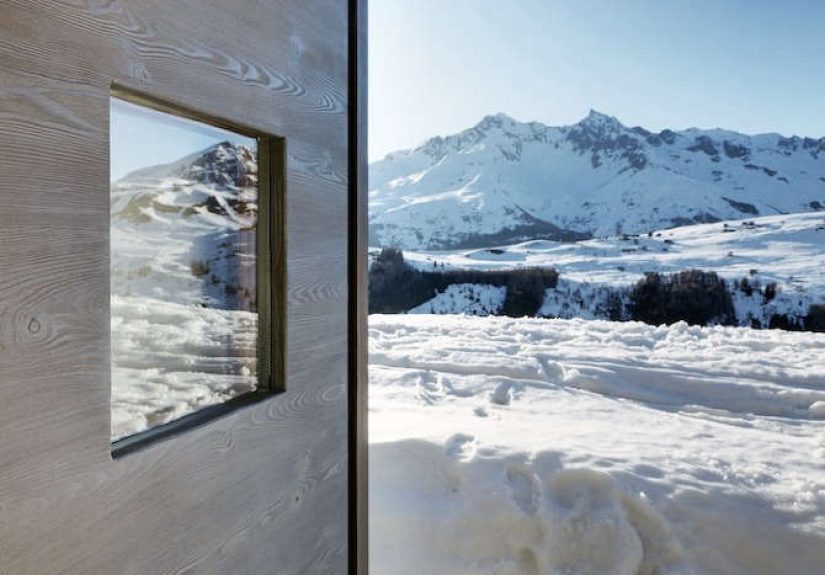
In a modern ski house in the Alps, windows are not just openings. They are compositions. Architects use glass to frame peaks, forests, villages, and changing weather. A narrow window might capture a church steeple in the valley. A full glass wall might open toward a dramatic mountain range. A small window beside a bathtub might turn an ordinary soak into a private cinema of falling snow.
Balancing Openness and Privacy
Large windows are beautiful, but privacy still matters. Clever design uses orientation, landscape, deep overhangs, screens, curtains, and changes in floor level to protect intimate spaces. In ski villages where houses sit close together, this balance is especially important. Nobody wants their breakfast routine to become local entertainment.
How to Decorate a Modern Alpine Ski House
Decorating a modern ski house requires restraint. The mountain already provides drama, so the interior does not need to shout. Avoid turning every room into a themed lodge full of antlers, plaid, and signs that say “Let It Snow.” One or two playful touches are charming. Thirty-seven are a cry for help.
Choose Statement Pieces Carefully
A sculptural light fixture, a vintage ski poster, a carved wooden bench, or a dramatic stone fireplace can become a focal point. Art works best when it connects to the landscape, local culture, or the owner’s personality. Contemporary paintings, black-and-white photography, woven wall hangings, and handmade ceramics all suit modern Alpine interiors.
Layer Lighting for Atmosphere
Lighting is crucial in a ski house. Use a mix of ambient, task, and accent lighting. Recessed ceiling lights provide general illumination, while wall sconces, table lamps, pendant lights, and LED strips create mood. Warm light is usually more flattering than cool light in mountain interiors. After all, nobody comes back from skiing hoping to relax under lighting that feels like a dental clinic.
Modern Ski House Layout Ideas
A successful layout separates active, social, and quiet zones. The entry level often includes the garage, ski room, laundry, and storage. The main level typically holds the living room, dining area, kitchen, and terrace. Bedrooms may sit above or in a quieter wing. Wellness spaces are often placed on a lower level for privacy and thermal stability.
Essential Rooms to Include
For a full-featured modern Alpine home, consider including a mudroom, ski room, open-plan living area, chef’s kitchen, pantry, guest suites, bunk room, laundry room, sauna, media room, home office, terrace, and equipment storage. A fireplace is nearly mandatory, not by law, but by emotional necessity.
Common Mistakes to Avoid
Even beautiful ski houses can fail if they ignore practical needs. One common mistake is underestimating storage. Ski gear is bulky, wet, and strangely talented at multiplying. Another mistake is choosing delicate materials in high-traffic areas. Snow, salt, boots, pets, and children will quickly reveal whether a design was made for real life or only for photographs.
Poor lighting, insufficient ventilation, awkward circulation, and lack of sound control can also reduce comfort. Open-plan living is wonderful, but acoustics matter when ten people are talking, a movie is playing, and someone is blending smoothies with the confidence of a construction crew.
Experiences Related to A Modern Ski House in the Alps
Staying in a modern ski house in the Alps is less about simply having a roof over your head and more about experiencing the rhythm of mountain life with comfort built into every step. The day often begins before the slopes are busy. Outside, the village may still be quiet, with snow resting on rooftops and the first light touching the peaks. Inside, the house slowly wakes up: radiant floors are warm, coffee is brewing, and the ski room is ready with dry boots instead of yesterday’s damp little tragedies.
One of the greatest pleasures is the transition between indoors and outdoors. In an ordinary vacation rental, preparing to ski can feel like organizing a small expedition. In a well-designed modern ski house, the process is effortless. Jackets hang where they should, gloves are warm, helmets are easy to find, and skis are stored close to the exit. The home supports the adventure rather than complicating it. That detail may not sound glamorous, but after a few snowy mornings, it feels like luxury wearing a practical hat.
The return is even better. You step inside with red cheeks, tired legs, and possibly a heroic story about a slope that was “definitely steeper in real life.” The boot room absorbs the mess. The living room offers a fire, soft seating, and a view that makes everyone pause for a second before checking their phone. This is where the architecture earns its keep. The glass walls, timber ceiling, and stone fireplace are not just design features; they shape the emotional experience of coming home from the mountain.
Meals also become memorable. A modern Alpine kitchen invites people to gather without crowding the cook. Someone opens wine. Someone cuts bread. Someone claims to be helping while mostly eating cheese. The dining table becomes the center of the evening, surrounded by stories, laughter, and the kind of appetite only cold air and physical activity can create. The house does not need to be formal. Its beauty comes from making ordinary rituals feel richer.
Then there is the spa experience. A sauna after skiing feels almost magical. Muscles relax, conversation slows, and the cold outside becomes part of the pleasure rather than a problem. If the house has an outdoor hot tub, the contrast between steam and snow can become the highlight of the trip. It is peaceful, cinematic, and slightly ridiculous in the best possible waylike being in a luxury travel advertisement, except your hair is frozen in an unexpected direction.
In summer, the same house changes personality. Terraces replace fireplaces as the favorite gathering spot. Hiking boots take the place of ski boots. The large windows frame green slopes instead of white ones. A good modern ski house is not a seasonal prop; it is a year-round retreat. It supports skiing, hiking, reading, cooking, resting, and doing absolutely nothing with impressive commitment.
The deepest experience of a modern ski house in the Alps is the feeling of being protected but not separated from nature. You hear the wind, watch the clouds move across the peaks, and see snow fall in silence, but you remain warm, comfortable, and connected to the people around you. That balancebetween exposure and shelter, adventure and rest, tradition and modernityis what makes Alpine design so powerful.
Conclusion
A modern ski house in the Alps is more than a stylish mountain getaway. It is a thoughtful response to landscape, climate, comfort, and culture. The best designs combine traditional Alpine wisdom with contemporary architecture, using timber, stone, glass, efficient systems, and warm interiors to create a home that feels both luxurious and deeply grounded.
From the ski room to the spa, from panoramic windows to cozy bedrooms, every detail should serve real mountain living. Beauty matters, of course, but performance matters just as much. A ski house must handle snow, gear, guests, changing seasons, and the universal human need to sit by a fire after doing something athletic enough to justify dessert.
When designed well, a modern Alpine ski house becomes a place of contrast: crisp air outside, warmth inside; rugged mountains beyond, soft textures within; old chalet traditions reimagined for modern life. It is architecture with a sense of place, a sense of comfort, and just enough drama to make every snowfall feel like an event.
Note: This article is written in original American English for web publication and is based on real modern Alpine architecture, ski chalet design principles, and contemporary mountain-home trends.