Table of Contents >> Show >> Hide
- What Is a Relay-Based Pseudorandom Number Generator?
- Why Use Relays When Microcontrollers Exist?
- How the Relay-Based Generator Works
- Pseudorandom vs. Truly Random: The Important Difference
- Why LFSRs Are So Popular in PRNG Demonstrations
- Design Considerations for a Relay-Based PRNG
- Testing the Output: How Random Is “Random-Looking”?
- Real-World Uses and Practical Limits
- Example: A 16-Bit Relay LFSR Concept
- Why This Project Still Matters
- Hands-On Experiences With a Relay-Based Pseudorandom Number Generator
- Conclusion
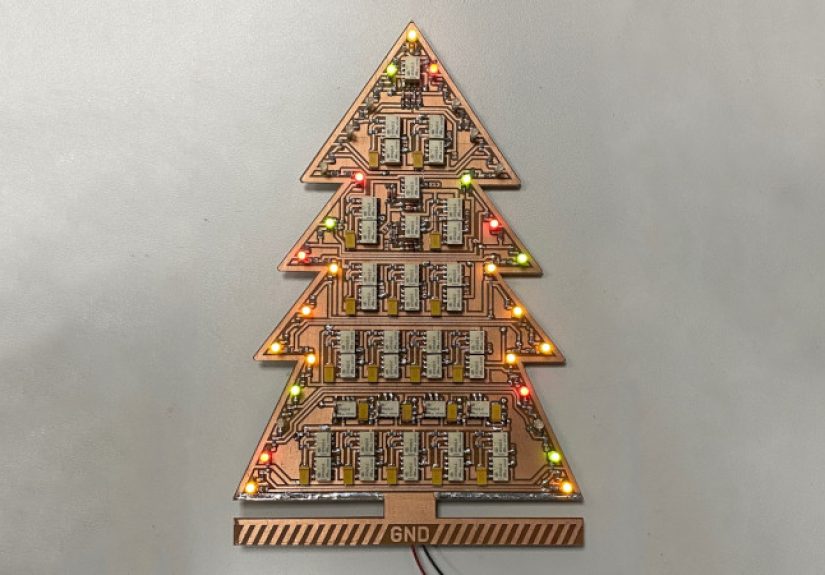
A relay-based pseudorandom number generator sounds like something a time-traveling engineer would build after misplacing a microcontroller. It clicks, blinks, hums, and proudly reminds us that “randomness” does not always need to arrive wrapped in silicon and hidden inside a black-box chip. Sometimes it can be built from relays, copper traces, LEDs, and a stubborn love for visible logic.
At its core, a relay-based pseudorandom number generator is an electromechanical version of a digital circuit that produces a sequence of numbers that appears random. The important word is “appears.” A pseudorandom number generator, or PRNG, is deterministic. Give it the same starting state, called a seed, and it will produce the same sequence every time. That may sound like cheating, but in computing, repeatable randomness is not a bug. It is often the whole point.
In modern software, PRNGs power simulations, games, procedural graphics, testing tools, sampling systems, and cryptographic components. In a relay-based design, the same mathematical idea is made physical. Instead of invisible transistors switching at impossible speeds, you get small mechanical switches opening and closing with delightful confidence. It is randomness you can hear. And yes, it has a tiny orchestra section.
What Is a Relay-Based Pseudorandom Number Generator?
A relay-based pseudorandom number generator is usually built around a simple but powerful circuit pattern called a linear feedback shift register, commonly shortened to LFSR. An LFSR stores a row of binary values, or bits. On every clock step, the bits shift over by one position, and a new bit is calculated from selected existing bits. Those selected bit positions are called taps.
The feedback bit is commonly produced with an XOR operation. XOR is a logic rule that outputs 1 when its two inputs are different and 0 when they are the same. In semiconductor electronics, XOR can be built from logic gates. In a relay-based pseudorandom number generator, the logic is implemented with relays. Each relay acts like a physically moving switch that represents a logical decision.
The result is a stream of bit patterns. To a casual observer, the LEDs may appear to flash in no obvious order. Under the hood, however, the machine is following a strict deterministic path. It is less like rolling dice and more like a very well-trained tap dancer: unpredictable-looking from the balcony, but absolutely following choreography.
Why Use Relays When Microcontrollers Exist?
A fair question. We live in a world where a tiny microcontroller can generate pseudorandom numbers faster than a relay can finish saying “click.” Software-based PRNGs are compact, cheap, power-efficient, and easy to update. So why build one with relays?
The answer is education, visibility, and charm. Relays make logic tangible. You can watch the state of the system change. You can hear every transition. You can trace the circuit with your eyes and understand how a new bit is born from previous bits. For students, hobbyists, and hardware enthusiasts, that physicality is priceless.
A relay-based PRNG also connects modern computing with early computing history. Before integrated circuits became ordinary, relays were used in telephone exchanges, control systems, calculators, and early computers. They are slow compared with transistors, but they demonstrate digital logic beautifully. A relay does not hide its personality. It announces every state change like it has just solved a crossword puzzle.
How the Relay-Based Generator Works
1. The Seed Starts the Sequence
Every PRNG needs an initial state. In an LFSR, that state is the set of bits loaded into the register before the generator begins running. This starting value is called the seed. If the seed is repeated, the same sequence will return. That repeatability is useful when debugging a circuit, recreating a test, or demonstrating how deterministic randomness works.
A key warning: an all-zero seed is often a trap in a basic XOR-based LFSR. If every bit starts at 0, the feedback calculation may keep producing 0 forever. The machine then becomes less of a pseudorandom generator and more of a very committed night-light. Good LFSR designs avoid invalid seed states.
2. Bits Shift Through the Register
Each clock pulse causes the stored bits to move one position. In a relay design, the clock can be manual, timed, or generated by another circuit. With every pulse, relays change state, and LEDs may show the current pattern. This makes the internal state visible in a way that software rarely does.
Imagine a 16-bit LFSR. It contains 16 positions, each holding either 0 or 1. After each clock cycle, the bits shift, one bit exits, and a new bit enters based on the feedback rule. If the chosen taps form a maximal-length configuration, the LFSR can cycle through 65,535 nonzero states before repeating. That is because a 16-bit register has 216 possible states, and the all-zero state is excluded in this common design.
3. Feedback Creates the Pattern
The “random-looking” behavior comes from feedback. Selected bits are combined, usually with XOR logic, and the result becomes the next input bit. Although the rule is simple, the output pattern can look surprisingly scrambled. This is why LFSRs have been used in test-pattern generation, simple scrambling circuits, communication systems, and embedded demonstrations.
The trick is choosing the taps carefully. Poor tap selection can create short, repetitive cycles. Stronger tap choices produce longer periods and better statistical behavior. In a relay-based pseudorandom number generator, those taps are not just lines of code. They are wires, contacts, and actual logic paths you can inspect.
Pseudorandom vs. Truly Random: The Important Difference
A relay-based PRNG should not be confused with a true random number generator, or TRNG. A PRNG uses an algorithm. A TRNG measures an unpredictable physical process, such as thermal noise, radioactive decay, atmospheric noise, oscillator jitter, or chaotic motion. Contact bounce in mechanical switches and relays can sometimes be studied as a noisy physical phenomenon, but that is different from a deterministic relay LFSR.
In a relay-based LFSR, the relays are not creating true randomness. They are physically implementing deterministic logic. The sequence may look random, but anyone who knows the seed and feedback taps can predict the next value. For learning, art, display, retro computing, and demonstrations, that is perfectly fine. For generating encryption keys, it is absolutely not enough.
Cryptographic systems require unpredictability. A cryptographically secure pseudorandom number generator must resist prediction even when attackers have partial knowledge of previous outputs. Modern cryptographic DRBGs use approved hash functions, block ciphers, entropy sources, reseeding strategies, and validation practices. A relay-based LFSR is fun, elegant, and wonderfully clicky, but it is not a replacement for a security-grade random bit generator.
Why LFSRs Are So Popular in PRNG Demonstrations
LFSRs hit a sweet spot between simplicity and surprising behavior. They are easy to build, easy to explain, and efficient in hardware. In software, an LFSR can often be implemented with only bit shifts and XOR operations. In hardware, it can be built from flip-flops and logic gates. In a relay version, it can be built from devices that visibly open and close.
This makes the LFSR an ideal teaching tool. It introduces several important ideas at once: state, feedback, determinism, periods, binary arithmetic, bitwise logic, and statistical appearance. It also shows why “looks random” is not the same as “is safe.” That lesson alone is worth the price of a handful of relays.
LFSRs also demonstrate how small rules can create complex-looking behavior. This is a recurring theme in computing. Cellular automata, procedural generation, hash functions, and simulations all show how deterministic systems can produce outputs that feel rich, surprising, or chaotic. The relay-based PRNG puts that idea on a circuit board and gives it a soundtrack.
Design Considerations for a Relay-Based PRNG
Relay Selection
Relays vary in coil voltage, contact rating, switching speed, durability, and physical size. For a decorative or educational PRNG, low-voltage relays are often easier and safer to work with. The switching speed does not need to be high; in fact, slow switching is part of the appeal. Nobody builds a relay PRNG because they want silence and efficiency. That would be like buying a typewriter and complaining that it has keys.
Power and Protection
Relay coils are inductive loads. When a relay turns off, the collapsing magnetic field can produce voltage spikes. Practical relay circuits often use flyback diodes or similar protection components to prevent those spikes from damaging other parts of the circuit. Even a playful project deserves electrical manners.
Clocking the Circuit
The generator needs a clock signal to advance the sequence. A slow oscillator can make the LED pattern easy to watch. A push-button clock can turn the system into a hands-on teaching device. A faster clock can create a lively blinking display, though relays have mechanical limits and should not be driven beyond their practical switching rate.
LED Output
LEDs make the internal state visible. Each bit can be connected to an LED, turning the PRNG into a live binary display. The pattern of lights becomes the user interface. It is simple, readable, and oddly hypnotic. A good LED layout can turn a technical circuit into desk art.
Testing the Output: How Random Is “Random-Looking”?
Testing a pseudorandom generator requires more than staring at blinking lights and saying, “Seems chaotic enough.” Statistical tests can examine whether a sequence has unusual bias, repeated patterns, unexpected runs, or other suspicious behavior. Common checks include frequency tests, runs tests, autocorrelation checks, and spectral-style analysis.
However, statistical tests have limits. Passing a test suite does not automatically make a generator secure. A simple LFSR can produce sequences with decent-looking distribution properties while still being predictable. In cryptography, predictability is the monster under the bed. It does not matter how nicely the monster organizes its spreadsheet.
For an educational relay-based PRNG, testing is still valuable. It helps builders compare tap choices, measure period length, and understand bias. For example, a builder could record the output bits, load them into a small script, and check the balance of ones and zeros. They could also measure how long the sequence runs before repeating. That turns a beautiful gadget into a complete learning experiment.
Real-World Uses and Practical Limits
A relay-based pseudorandom number generator is best understood as a demonstration device. It can be used in classrooms, workshops, maker spaces, electronics clubs, retro-computing exhibits, and engineering portfolios. It is excellent for showing how binary state machines work. It can also serve as a blinking ornament, conversation starter, or “yes, I built this because I could” masterpiece.
Its limits are equally important. Relays are slow, noisy, power-hungry compared with integrated circuits, and subject to mechanical wear. Contact bounce can complicate digital signals unless the circuit is designed carefully. The generated sequence is deterministic and predictable if the design is known. For serious simulation, modern software PRNGs are faster. For security, modern cryptographic random systems are the right tool.
Still, calling it “impractical” misses the point. A glass museum case full of gears may not outperform a smartphone, but it can teach you something the phone hides. A relay-based PRNG is the same kind of object. It slows computation down to human speed. It lets the invisible become visible.
Example: A 16-Bit Relay LFSR Concept
Consider a 16-bit relay-based LFSR with LEDs showing each bit. The builder chooses a nonzero seed, such as 1011 0010 1100 0101. On every clock pulse, the relays shift the stored state. Selected taps are combined through relay-based XOR logic, and the result enters the first bit position. The last bit may be read as the output, or the entire 16-bit state may be interpreted as a pseudorandom number.
If the taps are chosen well, the system may pass through a long sequence of nonzero states before repeating. The LEDs seem to dance unpredictably. Yet if someone writes down the seed and tap positions, the whole performance can be predicted from beginning to end. This is the central paradox of pseudorandomness: it can look like chance while being pure machinery.
Why This Project Still Matters
The relay-based pseudorandom number generator matters because it teaches abstraction by removing abstraction. In software, a random function may look like a single line of code. In a relay build, every bit of state has a home. Every feedback path is physical. Every transition is announced by a click.
This kind of project also encourages better engineering instincts. It makes builders ask useful questions: What is a seed? What happens if the seed is zero? Why do tap positions matter? How do we know the period? Why is a statistically pleasant sequence not necessarily secure? What is the difference between entropy and deterministic expansion?
Those questions are not limited to hobby circuits. They show up in software engineering, cybersecurity, embedded systems, data science, and simulation work. A relay PRNG may look old-fashioned, but the concepts behind it are still current. The relays are vintage. The lesson is not.
Hands-On Experiences With a Relay-Based Pseudorandom Number Generator
Working with a relay-based pseudorandom number generator feels different from working with a software PRNG. The first surprise is the rhythm. In code, a million pseudorandom values can appear before your coffee has cooled. With relays, every step has weight. The machine clicks, pauses, lights up, and moves again. That slowness is not a weakness during learning; it is the feature that makes the logic understandable.
The most satisfying moment comes when the first complete sequence begins to run. At first, the circuit may seem like a stubborn box of tiny mechanical opinions. One relay refuses to switch cleanly. One LED is wired backward. One connection looks correct until you discover it has the electrical personality of a wet noodle. Then, after patient testing, the clock advances and the LEDs begin shifting in a pattern that looks alive. Suddenly, the theory stops being a diagram and becomes an object.
Debugging the circuit teaches patience quickly. A software bug might hide in a variable name or a missing semicolon. A relay bug can hide in a contact, a coil polarity assumption, a loose jumper, or a timing issue. Contact bounce can create multiple transitions where you expected one. Power spikes from relay coils can cause nearby logic to misbehave unless protection is included. The experience gently reminds you that real hardware is not a perfect Boolean fantasyland. It has springs, inertia, resistance, heat, and attitude.
One useful practice is to slow the clock dramatically during early testing. A manual push-button clock or very slow oscillator makes it easier to compare each state against the expected LFSR sequence. Write down the seed, predict the next few states, and then watch the relays perform the calculation. When the lights match the prediction, it feels like teaching a mechanical insect to count.
Another valuable experience is experimenting with different tap positions. Some tap combinations produce disappointing short cycles. Others create long, lively sequences. This hands-on trial helps explain why PRNG design is not just “throw XOR at some bits and hope for jazz.” The structure matters. The period matters. The output behavior matters. Once you have seen a poor tap selection repeat too soon, the phrase “maximal-length LFSR” becomes much more meaningful.
The final lesson is humility. A relay-based PRNG is captivating, but it is not magic. It is predictable, mechanical, and limited. That is precisely why it is such a good teacher. It shows how randomness can be simulated, how deterministic systems can appear chaotic, and why security-grade randomness demands stricter design. It also looks fantastic on a desk, especially in a dim room, where the LEDs blink and the relays click like a tiny cybernetic cricket choir.
Conclusion
A relay-based pseudorandom number generator is more than a quirky electronics project. It is a hands-on lesson in digital logic, state machines, feedback, determinism, and the difference between randomness and randomness theater. By using relays to implement an LFSR, the project turns abstract computer science into something visible, audible, and memorable.
It will not replace modern cryptographic random number generators. It will not win a speed contest against a microcontroller. It may not even be welcome in a quiet library. But as a teaching tool, maker project, retro-computing tribute, and beautifully noisy demonstration of pseudorandom behavior, it is hard to beat. Sometimes the best way to understand modern technology is to rebuild it the old-fashioned way and let it click at you until the lesson lands.
Note: This article is based on real principles from digital logic, LFSR design, relay behavior, entropy-source guidance, and randomness-testing practices. It is written for educational publishing and should not be interpreted as instructions for building a cryptographic security device.