Table of Contents >> Show >> Hide
- What a psoriasis flare really is
- Imagine the flare happening in slow motion
- A head-to-toe look at how flares show up
- Why the whole body can feel involved
- The most common flare triggers, decoded
- What a flare feels like from the inside
- How doctors calm the fire down
- How to track a flare like a pro
- When a flare needs prompt medical attention
- Living through psoriasis flares: real-world experiences people often describe
- Conclusion
Psoriasis is famous for what it does on the outside: thick plaques, stubborn scale, surprise confetti on your black shirt, and an itch that seems to arrive precisely when you are trying to act normal in public. But a psoriasis flare does not begin at the skin’s surface. It starts much deeper, with an immune system that gets a little too enthusiastic and a body that accidentally hits the inflammation gas pedal.
This visual guide walks through what a psoriasis flare looks like inside the body, from the first immune-system misfire to the visible changes on skin, nails, and sometimes joints. Think of it as a backstage tour. The skin gets top billing, sure, but the crew behind the curtain includes immune cells, inflammatory messengers, genetics, triggers, and sometimes other body systems that join the drama uninvited.
What a psoriasis flare really is
A psoriasis flare is a period when symptoms get worse or suddenly become more active. For some people, that means a few small plaques that itch like crazy. For others, it can mean widespread redness, painful cracking, scalp shedding, nail changes, or aching joints. The exact pattern varies, but the basic story is the same: the immune system becomes overactive, inflammation rises, and skin cells start multiplying much faster than they should.
Normally, skin cells grow, mature, and shed on a fairly relaxed schedule. During a flare, that timeline speeds up dramatically. Instead of quietly cycling along, the skin starts behaving like it has had six espressos and a motivational speech. New cells pile up before older ones can shed, which helps create the thick, scaly plaques psoriasis is known for.
Imagine the flare happening in slow motion
Step 1: A trigger flips the switch
Psoriasis has strong ties to genetics, but genes usually are not the whole story. Many flares are set off by triggers. Common ones include stress, skin injury, infections, certain medications, smoking, heavy alcohol use, and cold, dry weather. Sometimes the trigger is obvious. Sometimes it is more like your body saying, “Good luck guessing.”
One person’s flare may follow a strep infection. Another person notices plaques after a sunburn, scraped knee, or stressful month that felt like it lasted three fiscal quarters. This is why psoriasis management often involves detective work as much as treatment.
Step 2: Immune cells send the wrong message
Inside the body, psoriasis behaves like an inflammatory chain reaction. Immune cells release chemical messengers called cytokines. You do not need to memorize the cast list, but a few names matter because they help explain modern treatment: TNF, IL-17, and IL-23. These molecules help drive inflammation and tell skin cells to grow faster than normal.
If you like metaphors, picture a fire alarm system that keeps going off even though there is no real fire. The immune system sends repeated distress signals, other immune cells join in, and the skin becomes the place where the false alarm turns visible.
Step 3: Skin cells start speed-running their life cycle
Once the inflammatory signals ramp up, skin cells multiply too quickly. Instead of maturing and shedding in an orderly way, they stack up. That buildup creates thickened patches, scale, and inflammation. Blood vessels in the area may also become more active, which helps explain the redness or deeper discoloration that many people notice during a flare.
On lighter skin, plaques often look pink or red with silvery scale. On darker skin, they may appear violet, brown, grayish, or deeper than the surrounding skin tone. Same condition, different color palette, equally rude.
A head-to-toe look at how flares show up
Scalp: the snowfall nobody asked for
Scalp psoriasis can range from mild flaking to thick, stubborn plaques that extend beyond the hairline. During a flare, the scalp may feel itchy, tight, sore, or painfully dry. Scratching can worsen irritation, and visible flaking can make people feel self-conscious long before anyone says a word. The emotional burden here is real, especially because the scalp is hard to ignore and even harder to style around.
Elbows, knees, lower back, and trunk: classic plaque territory
These are the greatest hits of plaque psoriasis. Flares often show up as raised, well-defined patches covered with scale. The plaques may burn, sting, itch, crack, or bleed. If the skin splits, everyday movements like bending, walking, or getting dressed can become weirdly dramatic for something that began with “just skin.”
Skin folds: where friction joins the party
Psoriasis can also appear in places like the underarms, groin, buttocks, and under the breasts. In these areas, scale may be less obvious because moisture and friction change how lesions look. Instead, the skin may appear smooth, shiny, inflamed, and very uncomfortable. Sweat and rubbing can make these flares especially stubborn.
Hands and feet: small surface area, big impact
When psoriasis affects the palms or soles, a flare can disrupt daily life in outsized ways. The skin may thicken, crack, and become painful enough to affect walking, exercise, writing, typing, cooking, or literally opening a jar without inventing new vocabulary. Because hands and feet are under constant use, healing can feel slower and flares can be extra frustrating.
Nails: tiny clues with a surprisingly loud message
Psoriasis can affect fingernails and toenails too. During a flare, nails may develop pitting, roughness, crumbling, discoloration, or lifting from the nail bed. These changes are not just cosmetic. Nail psoriasis can be uncomfortable, difficult to manage, and sometimes a clue that joint symptoms deserve attention.
Joints: when the flare goes beyond the skin
For some people, psoriasis does not stop with plaques. Up to about 3 in 10 people with psoriasis may develop psoriatic arthritis, which can cause joint pain, stiffness, swelling, and tenderness where tendons attach to bone. Fingers and toes may swell. Morning stiffness may hang around like an unwanted guest. If left untreated, inflammation in the joints can lead to damage over time, which is why new joint symptoms should not be shrugged off as “maybe I slept weird.”
Why the whole body can feel involved
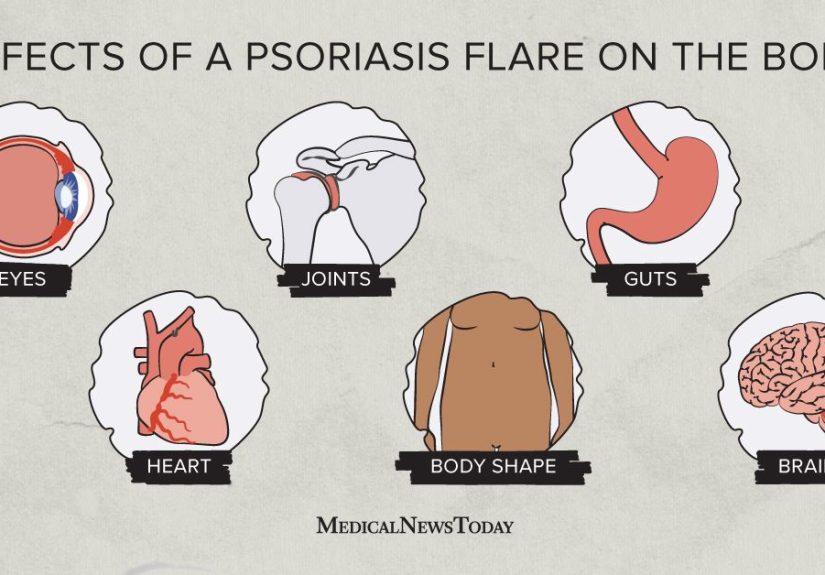
Psoriasis is often described as a skin disease, but it is better understood as a systemic inflammatory condition with visible skin symptoms. In plain English: the skin is where you notice it, but the inflammatory process is not always limited to the skin.
That matters because psoriasis has been associated with other health concerns, including psoriatic arthritis, cardiovascular disease, metabolic syndrome, obesity, diabetes, and mental health challenges such as anxiety and depression. This does not mean every person with psoriasis will develop these issues. It does mean psoriasis deserves real medical attention, not the old-fashioned shrug reserved for “dry skin” and minor annoyances.
The most common flare triggers, decoded
Stress
Stress is one of the most common triggers. It can help start a flare, and the flare itself can create more stress, which is a very unhelpful loop. Many people notice symptoms worsening during emotionally intense periods, poor sleep, burnout, or major life changes.
Infections
Illness, especially infections such as strep throat, can trigger psoriasis or make it worse. Guttate psoriasis is especially known for showing up after an infection, often as many small, drop-like spots.
Skin injury
Cuts, scrapes, bug bites, tattoos, sunburn, and other skin trauma can sometimes trigger lesions in the injured area. This is one reason gentle skin care matters more than people think.
Medications
Certain medications can worsen psoriasis in some people. If a flare seems to line up suspiciously well with a new prescription, that is a conversation for a clinician, not a reason to stop medication on your own like a medically creative raccoon.
Smoking, alcohol, and weather
Smoking and heavy alcohol use can worsen inflammation and may make psoriasis harder to control. Cold, dry weather can also be rough on already irritated skin. Too little sun may be a problem for some people, while too much sun, especially sunburn, can trigger a flare in others. Psoriasis loves nuance almost as much as it loves inconvenience.
What a flare feels like from the inside
Not every symptom is visible. During a flare, many people describe itching that hijacks concentration, soreness that makes clothing feel offensive, fatigue that seems disproportionate, and sleep disruption from nighttime discomfort. Add embarrassment, frustration, and the mental load of explaining “No, it is not contagious” for the 700th time, and it becomes clear why psoriasis affects quality of life so deeply.
Flares can also create a strange mismatch between how you look and how you feel. A person may appear mostly fine to others while silently negotiating itch, pain, stiffness, and self-consciousness all day. That invisible load deserves more respect than it usually gets.
How doctors calm the fire down
Treatment depends on the type of psoriasis, where it appears, how severe it is, and whether joints are involved. Mild flares may be treated with topical medications such as corticosteroids, vitamin D analogs, or other prescription creams and ointments. Scalp, nail, genital, or palm and sole psoriasis may need more targeted strategies because those areas are famously high-maintenance.
For more extensive or stubborn disease, doctors may recommend phototherapy, oral or injectable systemic medications, or biologics. Biologics are especially important in modern psoriasis care because they can target specific immune pathways, including TNF, IL-17, and IL-23. In other words, instead of throwing a blanket over the whole immune system, they can quiet some of the loudest parts of the inflammatory conversation.
No treatment is one-size-fits-all. What works beautifully for one person may do very little for another. This is why long-term psoriasis care often involves adjustment, monitoring, patience, and the occasional dramatic sigh in a dermatologist’s office.
How to track a flare like a pro
If psoriasis feels unpredictable, keeping a simple flare log can help. Write down when symptoms worsen, where they appear, how severe they feel, and what was happening around that time. Note illnesses, stress, new medications, skin injuries, alcohol intake, smoking, weather changes, and any joint pain or nail changes. Patterns may take time to appear, but once they do, they can be incredibly useful.
A good symptom log turns vague memories like “I think winter hates me” into actionable information you can bring to a medical appointment.
When a flare needs prompt medical attention
Reach out to a healthcare professional if you develop new or worsening joint pain, swollen fingers or toes, severe widespread redness, pus-filled bumps, fever, signs of skin infection, rapidly worsening symptoms, or emotional distress that is becoming hard to manage. Psoriasis can sometimes move beyond nuisance territory into “please do not wait on this” territory.
Living through psoriasis flares: real-world experiences people often describe
Many people say the hardest part of psoriasis is not just the plaque itself. It is the timing. Flares love to show up before weddings, interviews, beach trips, first dates, family photos, and any event where you were hoping to feel casually confident for once. Someone may go from stable skin to a visible flare in what feels like no time, and the emotional whiplash can be intense.
One common experience is the “silent negotiation” with clothing. People talk about choosing long sleeves in hot weather, skipping dark colors because of scale, avoiding certain shoes when foot psoriasis cracks, or styling hair around scalp plaques like they are solving a tiny architectural problem every morning. The routine can be exhausting, especially because it repeats day after day.
Another experience people describe is the weird loneliness of having a condition everyone can see but not everyone understands. A stranger may stare at a plaque on an elbow. A coworker may assume it is contagious. A well-meaning friend may recommend a random lotion with the confidence of a late-night infomercial. Meanwhile, the person actually living with psoriasis is juggling itch, discomfort, and the internal math of whether correcting people is worth the energy.
Sleep disruption comes up often too. Itching tends to feel louder at night, and soreness or cracking can make it hard to settle in. Then comes the next day, when poor sleep lowers stress tolerance, stress raises the chance of a flare, and the cycle starts acting like it owns the place. This is one reason psoriasis can affect mood and daily functioning more than outsiders realize.
People with joint symptoms often describe a second layer of frustration. Skin plaques may be the visible part, but stiffness, swelling, and fatigue can be the symptoms that really interfere with life. A person may look “better” on the outside while feeling much worse physically. That disconnect can make it harder to explain why they are struggling.
Still, many people also describe something hopeful: once they understand their triggers, find the right treatment, and stop blaming themselves for every flare, psoriasis becomes more manageable. Not perfect, not magically cured, but manageable. They learn which products help, which habits support their skin, when to call the doctor, and how to separate a flare from their identity. That shift matters. Psoriasis may take up space in the body, but it does not get to take over the whole person.
Conclusion
A psoriasis flare may show up on the skin, but it begins with immune activity inside the body. Triggers flip the switch, inflammatory messengers ramp up, skin cells multiply too quickly, and symptoms appear where the body is most vulnerable. Sometimes the flare stays on the skin. Sometimes it reaches the nails, joints, mood, sleep, and overall quality of life.
The good news is that understanding what is happening inside the body makes psoriasis feel a lot less mysterious. And when something is less mysterious, it is usually easier to manage. With the right medical care, trigger awareness, and a realistic plan, many people can reduce flares, calm inflammation, and reclaim a lot of comfort that psoriasis tries very hard to steal.