Table of Contents >> Show >> Hide
- Meet the BelugaXL: A Whale-Shaped Workhorse (Not a Passenger Jet)
- Why Airbus Needed a Bigger Beluga
- BelugaXL Specs at a Glance
- What Makes It “One of the Biggest Planes in the World” (and Why “Biggest” Is Complicated)
- Inside the Bulge: Cargo Bay, Door, and Loading Tricks
- From A330 to BelugaXL: The Engineering Remix
- How the BelugaXL Fits in Airbus’ “Flying Factory” Network
- BelugaXL vs. BelugaST: What Actually Changed?
- BelugaXL in the Biggest Planes Conversation: Quick Comparisons
- Fast FAQs: BelugaXL Questions People Actually Google
- Conclusion: A Giant Plane With a Small Smile (and a Big Job)
- of Experiences Related to the BelugaXL (The Human Side of a Giant Flying Whale)
If you’ve ever looked at a plane and thought, “Nice… but what if it had the body shape of a very determined whale,”
congratulations: you’re spiritually ready for the Airbus BelugaXL. It’s the aircraft equivalent of a moving van that
went to engineering school, graduated with honors, and then got a cheerful smile painted on its face.
In the “biggest planes in the world” conversation, the BelugaXL is a fun plot twist. It’s not built to carry hundreds
of passengers to Orlando. It’s built to haul other airplaneswings, fuselage sections, and oversized partsbecause
building jets across multiple countries is basically a group project, and somebody has to bring the poster board.
Meet the BelugaXL: A Whale-Shaped Workhorse (Not a Passenger Jet)
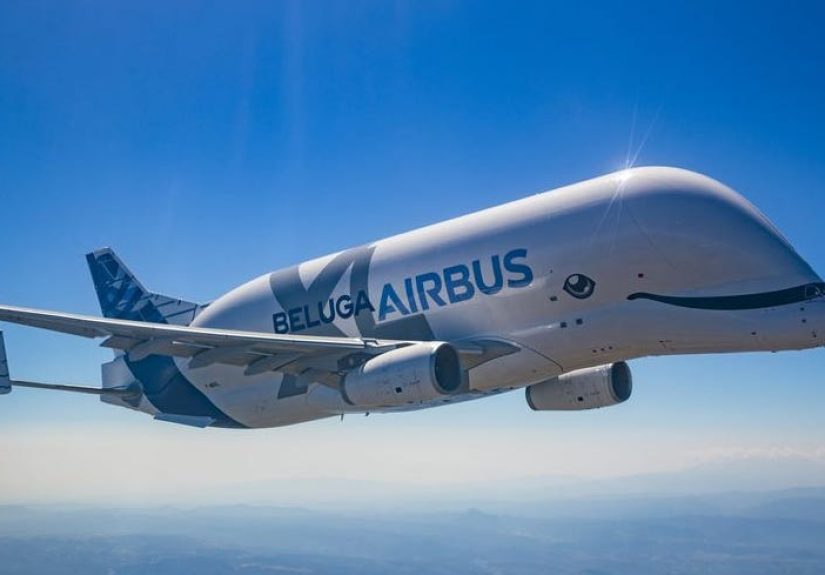
The BelugaXL (Airbus designation A330-700L / A330-743L) is an outsize cargo aircraft created for one main job:
transporting giant aircraft components between Airbus production sites. Airbus builds major parts in different
locationswings here, fuselage sections therethen assembles everything at final assembly lines. That sounds elegant
until you remember wings are, inconveniently, wing-sized.
So instead of trying to shove an A350 wing onto a regular freight plane like it’s an oversized couch in a studio
apartment, Airbus uses a specialized transporter with a massive cargo bay cross-section. The BelugaXL is the “XL”
because Airbus already had the BelugaST (based on the A300-600), and demand grew. When production ramps up,
logistics has two options: get creative, or get bigger. Airbus chose “bigger,” which is usually the fun option.
Why Airbus Needed a Bigger Beluga
Airbus launched the BelugaXL program to support higher production ratesespecially the A350 programand to add
internal transport capacity. In manufacturing terms, this aircraft is a flying conveyor belt. When the cadence of
assembly increases, the penalty for late deliveries gets painfully real, painfully fast.
Ships and trucks still move some components, but aircraft have a huge advantage: speed, schedule control, and fewer
“surprise” delays due to roads, borders, and weather along ground routes. The BelugaXL is essentially Airbus saying,
“We’d like our supply chain to have wings… and also a forehead.”
BelugaXL Specs at a Glance
Let’s talk numbersthe part of the article where aviation nerds lean forward and everyone else pretends they weren’t
curious. Here are the key BelugaXL specs commonly cited by Airbus and industry coverage (values can vary slightly by
configuration and reporting source).
Core dimensions and performance
| Spec | BelugaXL (A330-700L) | Why it matters |
|---|---|---|
| Overall length | 63.1 m (about 207 ft) | Long enough to look like it’s carrying momentum as a lifestyle choice. |
| Wingspan | 60.3 m (about 198 ft) | Big wings help lift big volumephysics remains undefeated. |
| Height | 18.9 m (about 62 ft) | Yes, it’s tall. No, it won’t fit in your neighborhood hangar. |
| Fuselage diameter (max) | 8.8 m (about 29 ft) | This is where the “Beluga” silhouette comes from. |
| Engines | 2 × Rolls-Royce Trent 700 | Proven widebody powerplants adapted for this very unique mission. |
| Max takeoff weight (typical) | About 227 tonnes | Heavy-duty structure to carry heavy-duty payloads and fuel. |
| Maximum payload (reported) | Roughly 50–53 tonnes (about 110,000–117,000 lb) | More payload than the BelugaST, with dramatically more usable volume. |
| Range at max payload (reported) | About 2,200 nm (around 4,000 km) | Optimized for frequent hops between production sites. |
| Main cargo-compartment volume (reported) | ~2,209 m³ (~78,000 ft³) | Volume is the real superpower: wings are bulky more than heavy. |
| Courier seats | 4 | Because sometimes people need to ride with the parts like a very fancy “carry-on.” |
Translation: the BelugaXL is huge in every direction that counts for outsize cargo. It’s built for aircraft parts,
not pallets of e-commerce boxes. If you’re imagining forklifts playing Tetris inside a whale-shaped hangar…
you’re not totally wrong.
What Makes It “One of the Biggest Planes in the World” (and Why “Biggest” Is Complicated)
“Biggest” can mean a few different things: maximum takeoff weight, wingspan, length, payload, or internal volume.
If you’re talking pure maximum takeoff weight, some military transports and super-heavy cargo aircraft can outrank it.
If you’re talking passenger capacity, the Airbus A380 is in a different category entirely.
The BelugaXL’s claim to fame is its enormous cargo bay cross-section and volume for outsized freight. It’s not trying
to be the heaviest aircraft ever; it’s trying to be the most practical flying solution for extremely awkward shapes
(like wings, which are basically giant aerodynamic boomerangs).
Think of it this way: hauling wings is like moving a king-size mattress. The mattress isn’t that heavy, but it’s
hilariously inconvenient. The BelugaXL is the friend who shows up with a truck big enough that you don’t have to bend
the mattress in half and ruin your whole weekend.
Inside the Bulge: Cargo Bay, Door, and Loading Tricks
The BelugaXL is designed around a massive cargo space that can swallow aircraft components whole. One of the signature
design choices is the lowered cockpit. By moving the cockpit down, Airbus made room for a big forward cargo door so
loading can happen through the front without requiring the kind of gymnastics usually reserved for moving day.
What it can carry
- Two A350 wings at once (a major upgrade from the BelugaST, which typically carried one).
- Large fuselage sections and other oversized assemblies used in Airbus production.
- Special missions involving outsize cargo when configured and approved for that operation.
Why the cargo system is a big deal
Cargo handling for outsized parts is less about “lift capacity” and more about speed, repeatability, and protecting
components. Airbus has highlighted reduced turnaround times compared to older operationsbecause when you’re moving
parts between factories daily, an extra hour on the ground adds up quickly.
And yes: the BelugaXL is unpressurized in the main cargo hold. That’s normal for this kind of specialized outsize
transporter. The parts it carries don’t need cabin pressure; they need careful mounting, smooth handling, and a
schedule that doesn’t spiral into chaos.
From A330 to BelugaXL: The Engineering Remix
Under the whale costume, the BelugaXL is based on the Airbus A330 freighter family (often described as leveraging the
A330-200F platform). Airbus reused major components where it made sensewings, landing gear, and proven systemsthen
heavily modified the fuselage and cargo structure to create the enlarged upper “bubble.”
This approach is smart for two reasons:
- Certification and reliability: Starting from a mature platform reduces the number of unknowns.
-
Maintenance and operations: Commonality with an existing aircraft family can make training,
spares, and planning less painful.
But make no mistake: “based on” doesn’t mean “slapped a new paint job on it.” The BelugaXL includes significant
structural changes, modified tail surfaces, and a purpose-built cargo bay structure. It’s like using an A330 as the
chassis, then building a completely different vehicle on topstill recognizable in the bones, but unmistakable in the
silhouette.
How the BelugaXL Fits in Airbus’ “Flying Factory” Network
Airbus production is distributed. Components are manufactured and outfitted across multiple European sites, then
shipped to final assembly. The BelugaXL supports this network with frequent, relatively short-range flightsexactly
the kind of mission where its range is more than adequate and its volume is constantly useful.
In practical terms, the BelugaXL helps Airbus:
- Keep final assembly lines fed with wings and major sections on a predictable schedule.
- Reduce reliance on slower surface transport for time-sensitive components.
- Increase flexibility when production planning changes (because it always does).
It’s logistics as an aircraftless “airline,” more “industrial bloodstream.”
BelugaXL vs. BelugaST: What Actually Changed?
The BelugaST (A300-600ST) did the job for years and became an aviation celebrity along the way. But the XL adds more
of what matters for modern Airbus production: capacity, speed of operations, and the ability to move larger sets of
components in fewer trips.
Key upgrades people care about
- More volume: widely cited as around 30% more transport capacity than the BelugaST.
- Bigger payload window: commonly reported around the low-50-tonne range, depending on mission/config.
- Two A350 wings: the headline capability upgrade that reduces flights per aircraft built.
- Operational efficiency: improved ground handling and turnaround targets for frequent logistics runs.
If the BelugaST is the original “whale,” the BelugaXL is the whale that started meal-prepping and doing CrossFit
same friendly vibe, noticeably more capable.
BelugaXL in the Biggest Planes Conversation: Quick Comparisons
Here’s a quick, reality-based way to compare “big” aircraft without mixing apples, oranges, and entire hangars:
Big by passenger size
- Airbus A380: the iconic double-decker giant (passenger-focused).
- Boeing 747 variants: “Queen of the Skies” energy, especially in freighter form.
Big by cargo mission and military transport
- Lockheed C-5 Galaxy: massive payload and military logistics capability.
- Antonov An-124: heavy-lift cargo workhorse with nose loading.
- Antonov An-225 (historical): once the heavyweight champion of “how is that even flying?”
Big by outsized volume for awkward shapes
- Airbus BelugaXL: enormous cross-section and specialized cargo bay for aircraft parts.
- Boeing Dreamlifter: another specialized “move airplane parts” machine with a different loading approach.
The takeaway: the BelugaXL is “biggest” in a very specific and very important wayusable cargo volume shaped for
aircraft parts. In other words, it’s not trying to win every contest, just the one that keeps Airbus factories running.
Fast FAQs: BelugaXL Questions People Actually Google
Is the BelugaXL the biggest plane in the world?
Not by every definition. Some aircraft are heavier, longer, wider, or carry more total payload. But the BelugaXL is
frequently cited for having one of the largest cargo bay cross-sections among operational cargo aircraftan outsized
volume advantage that matters for its mission.
Can passengers fly on a BelugaXL?
Not as a commercial passenger experience. This is a specialized industrial aircraft operated for logistics. It does
have a small courier seating area, but that’s for operational needsnot ticket sales.
Why does it have a “smile” painted on it?
Because if you’re going to build the world’s cutest freight whale, you lean in. Airbus used a beluga-inspired livery
selected through an internal employee vote, turning a logistics tool into an accidental mascot.
What’s the point of flying aircraft parts instead of trucking them?
Speed, predictability, and production flexibility. When assembly lines run on tight schedules, the cost of delays
can dwarf the cost of transport. The BelugaXL is designed for frequent, repeatable runs.
Conclusion: A Giant Plane With a Small Smile (and a Big Job)
The Airbus BelugaXL is proof that “form follows function” can still have a sense of humor. Its mission is serious:
move huge aircraft components reliably, quickly, and safely so Airbus production doesn’t stall. But its design
that unforgettable bulge, the lowered cockpit, the massive cargo door, and the famously friendly facemakes it one of
the most recognizable aircraft in the sky.
In the world of the biggest planes, the BelugaXL earns its place not by trying to be everything at once, but by being
exceptionally good at one difficult task: transporting gigantic, awkward, high-value parts on a schedule that modern
aerospace manufacturing demands. It’s not just big. It’s purpose-built bigand that’s the kind of big that actually
matters.
of Experiences Related to the BelugaXL (The Human Side of a Giant Flying Whale)
Seeing a BelugaXL in person is one of those aviation moments that rewires your internal scale. Photos are fun, but
real life is where it hits you: this thing is not “kinda big.” It’s “your brain does a quick software update and
reboots” big. Spotters who catch one arriving or departing often describe a sort of double-takefirst you notice the
familiar widebody posture of an A330, and then your eyes move upward and you realize the fuselage has been…
generously expanded, like an airplane that inhaled and decided to keep inhaling.
Airport workers and ground crews experience the BelugaXL differently. The spectacle is still there, sure, but the
day-to-day reality is precision and routine. Outsize cargo operations aren’t chaotic “just lift it” affairs. They’re
choreography: specialized loaders, carefully engineered mounts, strict safety boundaries, and a strong preference
for doing everything the same way every time. When a schedule calls for frequent flights between manufacturing sites,
consistency becomes a comfort blanket. You don’t want surprises when the cargo is literally the wing of a brand-new
jetliner.
Then there’s the factory-network perspectivethe logistics planners and production teams who treat the BelugaXL like
a heartbeat. If you work on an assembly line, parts don’t feel abstract; they feel like “we can’t close this section
until that arrives.” In that world, the BelugaXL isn’t a novelty. It’s a promise that the system will keep moving.
A single delayed component can ripple outward, affecting labor schedules, bay availability, and downstream deliveries.
So when the BelugaXL lands, unloads, and turns around efficiently, it’s not just coolit’s relief.
For travelers who happen to spot one from a terminal window, the BelugaXL is a surprise cameo in an otherwise normal
airport day. You’re sipping a coffee, half-listening to a boarding announcement, and suddenly there’s a flying whale
taxiing past like it owns the place. Kids point. Adults point too, but more subtly, as if trying to maintain dignity
while clearly delighted. Even people who don’t care about airplanes tend to care about this airplane, because it
looks like it was designed by a committee consisting of engineers and one very persuasive cartoonist.
And that “smile” matters more than you’d think. Aviation can be intimidatingmachines, rules, acronyms, metal, noise.
The BelugaXL softens the edges. It’s still a sophisticated tool built around serious industrial demands, but it also
reminds you that engineering can be playful without being frivolous. In a sky full of look-alike jets, the BelugaXL
is instantly recognizable, instantly memorable, and (for a lot of people) instantly mood-improving. It’s the rare
aircraft that can make a supply chain feel a little magical.