Table of Contents >> Show >> Hide
- What Does “Left Brain” and “Right Brain” Mean?
- Where Did the Left Brain vs. Right Brain Theory Come From?
- Is the Left Brain or Right Brain Test Accurate?
- Common Traits Linked to Left Brain Thinking
- Common Traits Linked to Right Brain Thinking
- The Real Science: Your Brain Works as a Team
- Why the Left Brain/Right Brain Myth Still Feels Useful
- How to Use a Left or Right Brain Test the Smart Way
- Left Brain vs. Right Brain in School and Work
- Can You Train Your Brain to Think Differently?
- So, Am I a Left or Right Brain Thinker?
- Personal Experiences and Real-Life Reflections on Left and Right Brain Thinking
- Conclusion
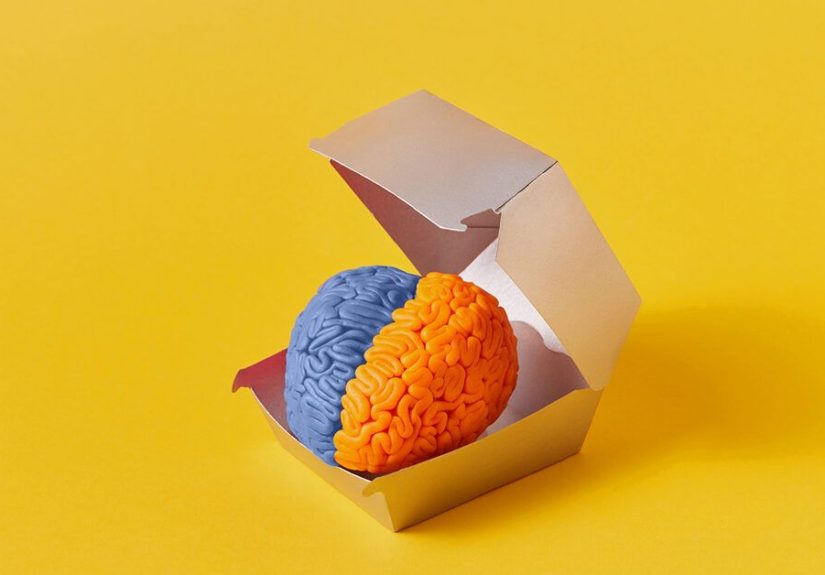
Ever taken a “left brain or right brain” quiz and felt personally called out because it said you were analytical, creative, emotional, logical, imaginative, detail-obsessed, or all of the above before your second cup of coffee? You are not alone. The idea of being a “left brain thinker” or “right brain thinker” has become one of the internet’s favorite personality shortcuts. It sounds simple: left brain equals logic, numbers, language, and planning; right brain equals creativity, intuition, art, and big-picture thinking. Neat, tidy, clickable. The brain, however, is not a filing cabinet with “taxes” on the left and “watercolor sunsets” on the right.
The title “Am I a Left or Right Brain Thinker? Test I Psych Central” points to a common question many people ask when they want to understand their thinking style. Psych Central’s left or right brain test is presented as a fun, time-saving questionnaire that helps people reflect on whether they lean more logical or creative. But it also clearly notes an important reality: the left brain versus right brain theory is not a proven scientific concept, and no quiz can diagnose your personality, intelligence, mental health, or future career as a spreadsheet wizard or poetry-writing wizard.
So, are you left-brained or right-brained? The most accurate answer is: probably both, beautifully and inconveniently. Your brain uses networks across both hemispheres for nearly everything you do, from solving math problems to choosing what to eat for dinner while pretending you are “just browsing” the fridge. Still, the left-brain/right-brain idea can be useful as a metaphor for understanding personal strengths, learning preferences, and growth areasas long as we do not treat it like a brain scan in quiz clothing.
What Does “Left Brain” and “Right Brain” Mean?
The human brain has two large halves called hemispheres: the left hemisphere and the right hemisphere. These hemispheres are connected by the corpus callosum, a thick bundle of nerve fibers that lets both sides communicate. Think of it as the brain’s high-speed bridge. Without that bridge, your logical planner and your imaginative storyteller would have a much harder time texting each other.
Some functions are more strongly associated with one side of the brain than the other. For many people, language processing is more active in the left hemisphere. The right hemisphere is often important for spatial attention, visual processing, emotional tone, and certain aspects of creativity. The left hemisphere generally controls movement on the right side of the body, while the right hemisphere controls movement on the left side. This is real neuroscience, not personality-test confetti.
The problem begins when a true ideasome brain functions are lateralizedturns into an exaggerated myth: that each person has one dominant hemisphere that determines their entire personality. That leap is where science politely takes off its glasses and says, “Let’s slow down.”
Where Did the Left Brain vs. Right Brain Theory Come From?
The left-brain/right-brain idea became popular partly because of split-brain research in the 20th century, especially studies involving people whose corpus callosum had been surgically severed to treat severe epilepsy. These studies showed that the two hemispheres can specialize in different tasks. For example, language often appeared more connected to the left hemisphere, while certain spatial and visual tasks involved the right hemisphere.
That research was important and fascinating. It helped scientists understand how the brain organizes information. But over time, pop culture simplified it into a personality formula: left-brained people are logical and organized; right-brained people are creative and emotional. Suddenly, everyone at a dinner party could diagnose themselves between appetizers.
The simplified version is catchy because it feels true. We all know someone who loves calendars, color-coded folders, and making lists so detailed they probably have a list called “lists.” We also know someone who says, “I’ll figure it out as I go,” and somehow creates a gorgeous painting, playlist, business idea, or lasagna. The categories feel relatable, but relatable is not the same as scientifically proven.
Is the Left Brain or Right Brain Test Accurate?
A left brain or right brain test can be entertaining and reflective, but it should not be treated as a medical, psychological, or neurological assessment. Psych Central’s own quiz disclaimer states that the test is for entertainment purposes and is not empirically validated. That matters. A quiz may help you notice patterns in how you approach problems, but it cannot tell you which half of your brain is “in charge.”
Modern brain-imaging research does not support the idea that people are generally left-brained or right-brained in personality. Studies of brain connectivity have found that people do not consistently use one hemisphere more than the other based on whether they are creative, logical, artistic, or analytical. In everyday life, both hemispheres are active and constantly communicating.
That does not mean the quiz is useless. It means the quiz is best used as a self-reflection tool. If your result says you are more “left brain,” you might prefer structure, facts, planning, and step-by-step thinking. If it says you are more “right brain,” you might identify with imagination, intuition, emotional awareness, or big-picture thinking. Just remember: those are preferences and tendencies, not neurological verdicts stamped in permanent ink.
Common Traits Linked to Left Brain Thinking
People described as left brain thinkers are usually associated with logic, language, order, and analysis. They may enjoy solving problems by breaking them into smaller pieces. They often like clear instructions, measurable goals, organized notes, and practical next steps.
Examples of Left Brain Style
A student using a left-brain style might create a study schedule, highlight key definitions, make flashcards, and track progress before an exam. A worker with this style might prefer spreadsheets, timelines, performance metrics, and meetings with agendas that do not wander off into philosophical fog. A left-brain approach asks, “What are the facts? What is the sequence? What is the most efficient solution?”
These strengths are valuable. Analytical thinking helps with budgeting, writing clear arguments, debugging code, reading contracts, organizing projects, and figuring out why the Wi-Fi stopped working right before an important video call. But an overly rigid left-brain style can sometimes become perfectionistic or resistant to ambiguity. Not everything in life comes with a numbered checklist, though many of us wish relationships did.
Common Traits Linked to Right Brain Thinking
People described as right brain thinkers are often associated with creativity, intuition, imagination, emotional expression, and holistic thinking. They may prefer to understand the overall picture before focusing on small details. They might enjoy music, design, storytelling, visual learning, brainstorming, or exploring ideas without immediately judging them.
Examples of Right Brain Style
A student using a right-brain style might draw mind maps, use metaphors, listen to music while studying, or remember concepts through stories and images. A professional with this style might excel at branding, design, counseling, teaching, innovation, or seeing connections that others miss. A right-brain approach asks, “What is the pattern? What does this feel like? What possibilities are we not seeing yet?”
These strengths are also powerful. Creative thinking helps people solve unusual problems, communicate emotionally, imagine better systems, and make ideas memorable. But an overly loose right-brain style can sometimes struggle with follow-through, deadlines, or details. Inspiration is wonderful, but unfortunately, most landlords still prefer rent over “vibes.”
The Real Science: Your Brain Works as a Team
The best way to understand the brain is not as a battle between left and right, but as a collaboration. Reading, for example, may involve language processing, vision, attention, memory, emotion, and meaning-making. Math can involve symbols, working memory, spatial reasoning, logic, and sometimes creative pattern recognition. Art can involve motor control, planning, visual perception, memory, emotional expression, and technical decision-making.
In other words, “logical” tasks can require creativity, and “creative” tasks can require logic. A musician uses rhythm and emotion, but also timing, structure, counting, and practice. An engineer uses formulas and measurements, but also imagination to design something that does not collapse, explode, or make users cry. A writer uses creativity, but also grammar, structure, research, and editing. The brain is less like a divided office and more like a busy group chat where everyone has opinions.
Why the Left Brain/Right Brain Myth Still Feels Useful
Even though the strict brain dominance theory is outdated, the metaphor survives because it gives people language for their differences. Some people really do prefer order and analysis. Others really do prefer exploration and intuition. Those differences can come from personality, education, culture, experience, motivation, environment, habits, and practicenot simply from one hemisphere being stronger.
The danger comes when people use the label as a cage. Someone might say, “I’m right-brained, so I’m bad at math,” or “I’m left-brained, so I’m not creative.” Those beliefs can quietly limit growth. The truth is kinder and more exciting: skills can be developed. You can become more organized. You can become more creative. You can improve problem-solving, emotional intelligence, writing, drawing, planning, or public speaking. Your brain is adaptable, and your identity is not trapped inside a quiz result.
How to Use a Left or Right Brain Test the Smart Way
If you take a left brain or right brain test, treat it like a mirror, not a microscope. A mirror can show you something useful about how you see yourself. A microscope claims a level of scientific detail the quiz does not have. Ask yourself what parts of the result feel accurate and what parts feel too narrow.
Questions to Ask After Taking the Test
Instead of asking, “Which side of my brain dominates me?” try asking better questions: Do I prefer structure or flexibility? Do I make decisions mainly through data, feelings, experience, or a mix? Do I learn better through words, visuals, practice, or discussion? Do I avoid creative tasks because I fear judgment? Do I avoid analytical tasks because I assume I am not good at them?
These questions are more useful than a label. They help you identify habits, strengths, and opportunities. For example, if you are highly analytical, you might benefit from brainstorming without editing yourself too early. If you are highly creative, you might benefit from systems that help turn ideas into finished projects. A good thinker is not only logical or only creative. A good thinker knows when to use each mode.
Left Brain vs. Right Brain in School and Work
In school, the left-brain/right-brain idea can help students talk about learning preferences, but it should not be used to sort students into fixed boxes. A child who loves drawing can still become strong in science. A child who loves math can still become a brilliant storyteller. Teachers and parents should avoid saying, “You are just not that kind of learner.” That sentence may sound harmless, but it can sit in a person’s mind for years like an unwanted app running in the background.
At work, teams need both analytical and creative strengths. A marketing campaign needs data and imagination. A product launch needs planning and storytelling. A healthcare team needs technical knowledge and human empathy. A business strategy needs spreadsheets and vision. The most effective teams do not ask everyone to think the same way. They build systems where different thinking styles sharpen each other.
Can You Train Your Brain to Think Differently?
Yes, you can build new skills through practice, feedback, and repetition. If you want to strengthen analytical thinking, practice breaking problems into steps, reading carefully, comparing evidence, learning basic statistics, or writing outlines before making decisions. If you want to strengthen creative thinking, practice brainstorming, drawing, journaling, storytelling, exploring new hobbies, or asking “what else could this mean?” before settling on the first answer.
Healthy brain habits also matter. Sleep, exercise, stress management, social connection, curiosity, and lifelong learning all support cognitive performance. No single trick will turn you into a genius overnight, despite what suspiciously shiny online ads may imply. But consistent practice can expand what feels natural to you.
So, Am I a Left or Right Brain Thinker?
You may lean more analytical, creative, verbal, visual, structured, intuitive, or flexible depending on the task and the situation. You might be left-brain-like when managing money, right-brain-like when decorating a room, and both-brain-like when trying to assemble furniture with instructions that appear to have been translated by a confused raccoon.
The better answer is this: you are a whole-brain thinker. You use logic and imagination. You use facts and feelings. You use language, memory, attention, emotion, movement, and creativity together. A left or right brain test can give you a fun snapshot of your self-perception, but your real abilities are broader than any quiz category.
Personal Experiences and Real-Life Reflections on Left and Right Brain Thinking
Many people first discover the left brain vs. right brain idea through a classroom activity, a magazine quiz, a personality website, or a friend who confidently announces, “I’m totally right-brained,” while forgetting where they put their keys. The concept feels fun because it gives quick language to everyday differences. One person may plan a vacation with a spreadsheet, daily schedule, restaurant backup list, and emergency snack map. Another may say, “Let’s just arrive and see what happens.” Both people can have a great trip, though only one of them knows the hotel confirmation number.
In real life, people often shift thinking styles based on context. Imagine someone who works as an accountant during the day and plays guitar at night. At work, they may use careful attention, rules, numbers, and precision. In music, they may rely on rhythm, emotion, experimentation, and improvisation. Are they left-brained or right-brained? They are both. More importantly, they are adaptable.
Students experience this too. A student may believe they are “bad at writing” because they see themselves as a math person. But when they learn that writing has structuretopic sentences, evidence, transitions, revisionthey may realize that analytical thinking can actually make them a stronger writer. Another student may believe they are “bad at science” because they see themselves as artistic. But science also involves curiosity, observation, pattern recognition, and imagination. The labels begin to crack, and something better appears: confidence built through practice.
Workplaces offer another useful example. In a team meeting, the detail-oriented person may ask, “What is the timeline, budget, and risk?” The creative person may ask, “What would make this memorable, useful, or emotionally compelling?” The practical person may ask, “Who is responsible for the next step?” The people-focused person may ask, “How will this affect users or customers?” A strong project needs all of these questions. When people respect different thinking styles, the final result is usually better than what one style could create alone.
Personal growth often begins when someone stops using “I’m left-brained” or “I’m right-brained” as a limit. A highly organized person might try painting, dancing, creative writing, or cooking without measuring every ingredient like a laboratory experiment. A highly creative person might try budgeting, planning, coding, or learning a structured skill without assuming structure will destroy inspiration. The surprise is that these skills often support each other. Creativity becomes stronger when it has a container. Logic becomes more powerful when it has imagination.
Taking a quiz like the Psych Central left or right brain test can be enjoyable because it invites reflection. The key is to read the result with curiosity, not obedience. If the quiz says you are more analytical, ask how that strength helps you and where you might want more flexibility. If it says you are more creative, ask how that strength helps you and where you might want more structure. The goal is not to pick a side. The goal is to become a more complete thinker.
The most useful experience related to this topic is realizing that your brain is not a stereotype. You are allowed to be logical and artistic, emotional and strategic, imaginative and practical. You can enjoy spreadsheets and poetry. You can love science and music. You can plan carefully and still leave room for surprise. Human thinking is wonderfully mixed, which is inconvenient for simple labels but excellent for living a full life.
Conclusion
The question “Am I a left or right brain thinker?” is fun, familiar, and surprisingly usefulas long as we understand what it can and cannot tell us. The strict idea that one hemisphere dominates your personality is not supported by modern neuroscience. Your brain uses both hemispheres in complex, connected ways. However, the left-brain/right-brain metaphor can still help you reflect on whether you prefer logic, structure, creativity, intuition, detail, or big-picture thinking.
A test like Psych Central’s left or right brain quiz should be viewed as entertainment and self-reflection, not a diagnosis or scientific measurement. Use it to learn about your habits, not to limit your future. Whether you lean analytical, creative, or somewhere in the beautifully messy middle, your brain is capable of growth. The best thinkers do not choose between logic and imagination. They learn how to invite both to the meetingand maybe bring snacks.
Note: This article is for educational and informational purposes only. A left brain or right brain quiz is not a medical, psychological, or neurological diagnosis. For concerns about cognition, learning, or mental health, consult a qualified professional.