Table of Contents >> Show >> Hide
- What Was Found Under the Waves
- Where the Statue Came From: Abu Qir Bay and Canopus
- How Does a City End Up on the Seafloor?
- Why the Statue Is Headless
- How Underwater Archaeology Raises a Statue Without Turning It Into Rubble
- What This Find Suggests About Life in Canopus
- Quick Questions People Ask After Seeing the Headless Statue
- What Happens Next
- Why a Headless Statue on the Seafloor Matters Today
- Conclusion
- Experience: What It Feels Like to Meet a Sunken City (Without Getting Your Hair Wet)
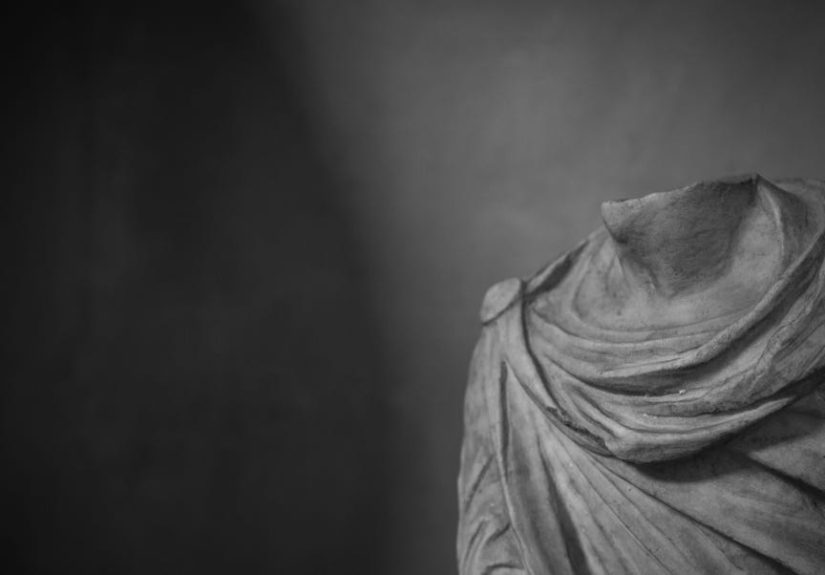
If you’ve ever dropped your phone between couch cushions, you understand the basic plot of underwater archaeology: panic, hope, and the slow realization that whatever you recover will be covered in a substance you can’t un-smell. Now scale that up to Abu Qir Bay off Alexandria, Egyptwhere divers and archaeologists recently raised a roughly 2,000-year-old statue from the seafloor… and it’s missing its head.
The headless figure is the attention-grabber, but it’s really a gateway into a bigger story: a drowned coastal landscape tied to the ancient city of Canopus, a Ptolemaic-and-Roman-era hub for religion, trade, and waterfront life.
What Was Found Under the Waves
Alongside the headless statue, archaeologists documented and raised a mix of objects that help date the site and explain what it once was.
- A headless human statue, likely part of a monumental public or religious display.
- Additional statuary and large carved stone pieces from Ptolemaic/Roman periods.
- A quartzite sphinx linked to Ramesses II (by inscription/cartouche), showing how older royal imagery could still circulate in later eras.
- A damaged late-Ptolemaic granite figure and a white marble Roman nobleman, hinting at shifting styles and power.
- Coins, pottery, and small finds that point to everyday activity and commerce.
- A figure interpreted as a priest or religious official, suggesting ritual spaces nearby.
One detail that fascinates historians: a Ramesses II–linked sphinx turning up in a largely Ptolemaic/Roman context is a reminder that coastal cities often contain “time layers.” Older royal monuments could be moved, reused, and reinterpreted by later communities. In other words, the past was already ancient to the ancientsand they still found ways to put it to work.
In archaeology, the “cool object” is rarely the whole story. The real value comes from the cluster: what was found together, where it sat, and what it suggests about the buildings and people around it.
Where the Statue Came From: Abu Qir Bay and Canopus
Abu Qir Bay is one of those places where the coastline has a longer memory than the land. Beneath the water are multiple ancient sitesports, temples, and city districts that sank over time. Officials and researchers have linked this recovery to ruins believed to be an extension of Canopus, a prominent city that flourished during the Ptolemaic dynasty and continued under Roman rule.
Canopus sat in a strategic Nile Delta zone where maritime traffic, pilgrimage routes, and politics overlapped. Ancient accounts describe it as both a religious destinationconnected to cults of deities like Osiris and Serapisand a place known for leisure. In modern terms: part sacred city, part commercial port, part resort town. The area is also discussed alongside nearby submerged sites like Heracleion (Thonis), a reminder that this bay wasn’t one settlement but an entire coastal neighborhood of activity.
The PtolemiesGreek rulers who inherited Egypt after Alexander the Greatbuilt a world where Greek and Egyptian traditions mixed in public life, religion, and art. In coastal towns, that blend could be especially visible: Egyptian sacred imagery alongside Greek-style portraiture, multilingual inscriptions, and visitors arriving from across the Mediterranean. Finds from Abu Qir Bay make that fusion feel less like a textbook chapter and more like a lived place.
One fun historical footnote: Canopus is associated with the Decree of Canopus, a trilingual Ptolemaic decree that helped later scholars compare languages and scriptsone more reason the city matters beyond its dramatic “now you see it, now you scuba” geography.
How Does a City End Up on the Seafloor?
Coastal Egypt, especially the Nile Delta, is geologically restless. Over centuries, earthquakes, subsidence (ground sinking), and changes in sea level can push low-lying neighborhoods underwater. The result isn’t usually a single cinematic plunge. It’s a slow negotiation with the seapunctuated by sudden eventsthat ends with the shoreline redrawing itself.
Once structures are submerged, sediment can both protect and hide them. A statue might survive under sand for centuries, then reappear when currents shift. Underwater archaeology often begins with that kind of surprise: the seafloor “moves,” and history peeks out.
Why the Statue Is Headless
A missing head sounds spooky. It’s usually just stress, gravity, and time. The most plausible explanations:
1) Breakage During Collapse
When monuments toppleespecially during earthquakesthe weakest join points fail first. Heads are heavy, necks are narrow, and falling stone doesn’t negotiate.
2) Human Removal (Ancient or Modern)
Statues were reused, re-carved, and sometimes vandalized. A head could be removed for repurposing, politics, or profit. In the Roman world, portrait damage can also tie to damnatio memoriae (erasing a disgraced figure)possible in general, even if unproven for this specific statue.
3) The Sea’s Slow Damage
Currents, shifting sand, impacts, and salt crystallization can detach already-cracked sections over long time spans.
So yes, it’s headless. No, it doesn’t automatically mean “curse.” The real wonder is that so much survived at all.
How Underwater Archaeology Raises a Statue Without Turning It Into Rubble
Pulling a statue from the seabed is controlled engineering disguised as a photo op. Teams survey and map first, documenting positions and context (often with detailed photography and 3D models). Then they clear sediment, assess cracks, and add supports where the object is weakest before any lift happens.
During the hoist, balance matters. A twist can fracture stone; a rushed lift can stress hidden cracks. Once ashore, conservation becomes urgent: saltwater saturates porous materials, and drying too fast can cause salts to crystallize and flake the surface. Conservators manage the transition with careful cleaning, controlled desalination, and stabilization so the artifact can survive in air after centuries underwater.
This is why you’ll often see newly recovered stone kept damp or even stored in temporary water tanks. Desalination is slow by design: it draws salts out gradually so the artifact doesn’t crack, powder, or shed its carved surface. It’s the least glamorous part of the storyand the part that keeps the story from ending badly.
There’s also a policy layer. Underwater heritage standards often favor leaving sites in place when possible. That’s why only select objects may be raised, while larger architectural remains can be documented and left underwater for preservation.
What This Find Suggests About Life in Canopus
The statue is a headline, but the associated material is what turns a headline into history. Coins and pottery point to a functioning waterfront economy. Monumental sculpture hints at public spacestemples, plazas, ceremonial routeswhere wealth and belief were displayed in stone.
Religion and Pilgrimage
Canopus was tied to major cult activity, including Osiris-related festivals. Objects interpreted as priestly figures hint at the people who organized ritesand the communities that supported them. Where festivals flourish, so do workshops, vendors, lodging, and the whole ecosystem of “religion meets economy.”
Trade and Cultural Mixing
A port city is a crossroads. In the Ptolemaic and Roman eras, Egypt sat at the center of Mediterranean commerce. The mix of Egyptian royal imagery (like a sphinx) and later Greek/Roman sculpture styles reflects a society comfortable borrowing, adapting, and remixing symbols of power.
Quick Questions People Ask After Seeing the Headless Statue
Is it really 2,000 years old?
That estimate fits the Ptolemaic-to-Roman window suggested by associated artifacts and the site’s history. Ongoing study can refine the date.
Could it be a famous person?
Maybebut without the head or an inscription, identification is tricky. Specialists will use carving details, stone type, and context to narrow options.
Will they find more statues (or the head)?
More finds are likely. The head could be buried nearbyor it may have been removed long ago.
What Happens Next
Recoveries like this often happen in bursts because they require specialized teams, equipment, and conservation capacity. That’s why officials described the operation as one of the first major lifts in decades, even though the underwater sites have been known and studied for years.
Recovered artifacts typically go through long conservation and analysis before public display. Researchers compare carving styles and materials, document damage patterns, and study nearby architectural remains to better understand what the statues once “belonged” to.
Why a Headless Statue on the Seafloor Matters Today
- It’s a reminder that “lost” doesn’t mean “gone.” Coastal cities can become underwater archives.
- It shows why context matters. Responsible recovery preserves information, not just objects.
- It echoes modern coastal risk. Ancient shorelines shiftedand today’s cities are still negotiating with a changing sea.
Conclusion
A 2,000-year-old headless statue surfacing from the seafloor is undeniably dramatic. But the lasting fascination is the bigger picture: a drowned city district, the cultural blend of Ptolemaic and Roman Egypt, and the careful science required to bring fragile history into the present without destroying it. The sea kept these artifacts quiet for centuries. Archaeology is how we ask them to talkpolitely, slowly, and with a crane.
Experience: What It Feels Like to Meet a Sunken City (Without Getting Your Hair Wet)
Most of us won’t join a dive team in Abu Qir Bay, but you can still get a vivid sense of what a “sunken city” discovery feels likeespecially when you treat it as an experience, not just a headline.
Start with the deck moment: picture a work boat rocking gently while divers surface and signal to the crane operator. The sea looks calm, almost ordinary, and that’s the strange partbecause you know there’s an ancient streetscape beneath you. When the rig tightens, people get quiet. You’re not watching a “treasure reveal.” You’re watching a fragile object transition between worlds. The statue rises inches at a time, shedding sand and sea life like it’s waking up from a nap it did not schedule.
Next comes the reality check. Saltwater doesn’t preserve things in a tidy, museum-ready way. It coats stone in algae and shells and leaves salts inside pores that can keep damaging the surface long after the artifact is out of the water. Conservators treat these objects like patients: keep them stable, control humidity and temperature, and don’t assume “dry” equals “safe.”
For most people, the closest version of that moment is the museum reveal. When an artifact like this finally goes on displayoften after careful cleaningyou get double vision: it looks like it belongs under a skylight, but your brain keeps replaying that it was underwater for centuries. The missing head becomes less of a gimmick and more of a story hook. You start asking better questions: What did this statue overlook? Who walked past it? And what happened on the day the ground shook?
If you want something even more immersive, look for virtual dives and 3D reconstructions, which many underwater projects use for documentation. Even when a specific site’s model isn’t public, the technique is common: hundreds of photos stitched into a navigable 3D seabed. It’s the closest thing to hovering over ruins like a friendly ghost with a GoPro. The experience is quiet, a little haunting, and strangely calminguntil you remember you’re “floating” over a city.
If you’ve ever visited a shipwreck dive park, snorkeled over submerged ruins, or even watched a remote-operated vehicle livestream from the deep sea, you’ll recognize the same odd sensation: you’re looking at history in its “wrong” habitat. That dislocation is part of the appeal. It makes the past feel both closer (because you can see it) and stranger (because it’s underwater).
Finally, the personal takeaway: discoveries like this change how you look at coastlines. After reading about Canopus, it’s hard to stand on any beach without wondering what used to be offshore, or what might be offshore a thousand years from now. A headless statue on the seafloor isn’t just a curiosity; it’s a reminder that human history doesn’t stay put. It moves with trade, with power, with earthquakes, with water. And sometimesif you’re careful and patientit moves back, just long enough for you to learn from it.