Table of Contents >> Show >> Hide
- The Short Answer: How Long Does Mayo Last?
- How Long Mayo Stays Good in Real Life
- How to Tell if Mayo Is Bad
- Why Mayo Gets Blamed for Everything
- Best-By Date vs. Actual Spoilage
- What Happens if Mayo Sits Out?
- How to Store Mayo the Right Way
- What if You Already Ate Questionable Mayo?
- When You Should Definitely Throw It Out
- Kitchen Experiences Everyone Recognizes When Mayo Is Involved
- Final Thoughts
- SEO Tags
Mayonnaise has a strange talent for turning perfectly confident adults into nervous refrigerator detectives. One glance at a half-used jar in the back of the fridge and suddenly everyone becomes a forensic scientist: Is that normal separation? Is that a weird smell? Is that a best-by date or a breakup letter?
If you’ve ever stood in the kitchen holding a jar of mayo at arm’s length like it might confess to crimes, you are not alone. Mayo is one of those foods people love to eat but do not fully trust. It’s creamy, eggy, mysterious, and somehow always involved in picnic drama.
The good news is that store-bought mayonnaise is usually more stable than people think. The bad news is that it still does not live forever, no matter how optimistic your sandwich plans may be. Knowing how long mayo lasts, how to store it, and what spoiled mayonnaise actually looks like can save you from both food waste and a deeply regrettable lunch.
Here’s how to tell whether your mayo is still good, when to toss it, and why the real troublemaker is sometimes not the mayo itself, but the potato salad it brought to the party.
The Short Answer: How Long Does Mayo Last?
If you want the fast version, here it is: unopened store-bought mayonnaise can usually stay in the pantry until the date on the jar, while opened mayo should be refrigerated and is best used within about two months. Homemade mayonnaise is a different story entirely and should be used much faster.
That difference matters. Commercial mayonnaise is made to be shelf stable before opening, thanks to its ingredients and manufacturing process. Homemade mayo is more delicate, often made with fewer stabilizers, and may involve raw or lightly handled ingredients. In other words, store-bought mayo is the office worker with a planner; homemade mayo is the friend who says, “Let’s just wing it,” and then misses the flight.
How Long Mayo Stays Good in Real Life
Unopened store-bought mayo
An unopened jar usually belongs in a cool, dry pantry. If the seal is intact and the jar has been stored properly, it will generally hold its quality until the best-by date on the label. In some cases, it may still be okay after that date, but quality can fade. That means the texture may dull, the flavor may flatten, or the color may change before the product becomes obviously bad.
This is why the date on the jar is helpful, but not magical. It is not a countdown timer that turns mayo into a science experiment at midnight.
Opened store-bought mayo
Once opened, mayonnaise belongs in the refrigerator. A good working rule is to use it within about two months for best quality. If you open a jar and then let it loiter in the fridge until it develops a backstory, you are taking your chances.
Even within that two-month window, storage habits matter. If you dip a used knife into the jar, leave it sitting out during lunch prep for long stretches, or store it in a fridge that runs too warm, the mayo may lose quality faster.
Homemade mayonnaise
Homemade mayo has a much shorter shelf life. If you make it from scratch, especially with eggs, keep it cold and use it quickly. A smart rule is to use homemade mayonnaise within four days. That is not the kind of condiment you “forget for later” and rediscover during a fridge clean-out three weekends from now.
If you make homemade mayo, it is also worth using pasteurized eggs for added safety. Homemade versions can be delicious, but they are not built for a long, lazy retirement in the fridge.
How to Tell if Mayo Is Bad
If you are wondering how to know if mayo is good, start with the basics: look, smell, and think about how long it has been open. The answer is often not hidden in mystery. Spoiled mayonnaise usually waves several red flags before it ruins your sandwich.
1. The smell is off
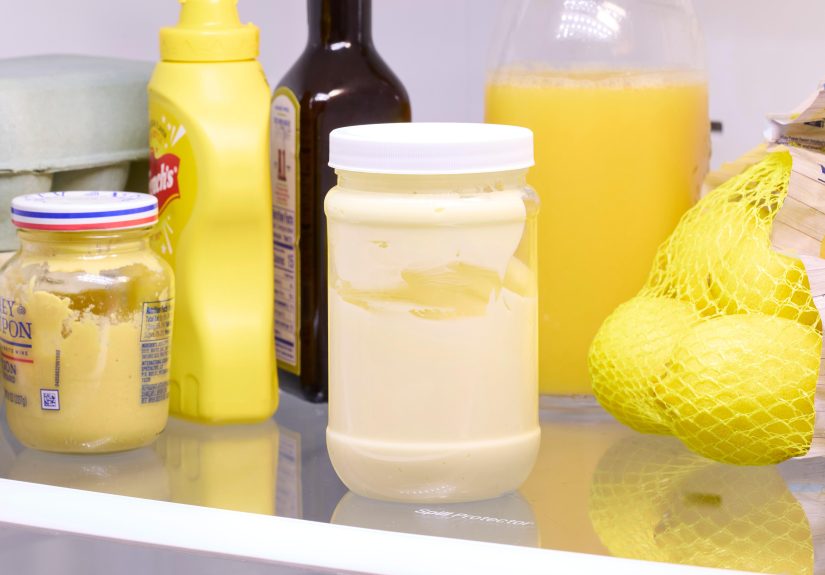
Fresh mayo has a mild, tangy smell. Bad mayo tends to smell sour, sharply acidic in a strange way, stale, or just plain wrong. You do not need a culinary degree for this one. If it smells like it has opinions, skip it.
2. The color has changed
Good mayonnaise is generally creamy white or pale yellow, depending on the brand. If it turns darker, more yellow than usual, brownish around the edges, or looks uneven in color, that is a warning sign. A color change can mean age, oxidation, or spoilage.
3. There is mold
This one is easy: if you see mold, throw the jar away. Do not scrape it off. Do not give the rest “one more chance.” Mold is not a garnish.
4. The texture looks wrong
Mayonnaise should be smooth and creamy. If it becomes watery, curdled, lumpy, or oily, it is no longer in great shape. Some minor separation may happen if mayo gets too cold or is mishandled, but obvious separation paired with an odd smell or color is a strong sign it is time to let it go.
5. The jar has been open forever
Sometimes the biggest clue is not what the mayo looks like but what you honestly know. If you cannot remember whether you opened it before or after the holidays, before or after summer, or before or after your entire personality changed, it may be time to toss it.
Why Mayo Gets Blamed for Everything
Mayonnaise has a long history of being treated like the villain at cookouts. Someone gets sick after a picnic and mayo gets the side-eye immediately. But commercial mayonnaise is fairly acidic, and that acidity can make it less friendly to harmful bacteria than people assume.
Very often, the real problem is not the mayo in the jar. It is the food mixed with it and then left out too long. Think chicken salad, tuna salad, egg salad, pasta salad, potato salad, or sandwiches sitting in the sun like they booked a beach vacation without telling anyone.
Once mayo is mixed with protein-rich or moisture-heavy foods, the risk picture changes. That bowl of potato salad may be delicious, but it is also a group project involving potatoes, eggs, onions, celery, and maybe meat. The mayonnaise did not create all the risk by itself. It just got cast in the lead role.
Best-By Date vs. Actual Spoilage
One of the biggest sources of confusion is the date label. Many people assume the printed date is a hard safety deadline. Usually, it is more about quality. That means your mayo may not instantly become unsafe the day after the date, but it may not be at peak flavor, texture, or freshness either.
This is why smart food judgment uses both the label and the condition of the product. If a jar is unopened, stored properly, and still looks and smells normal, it may still be usable past the date. But if it is open, old, suspicious-looking, or handled poorly, the date becomes less useful than common sense.
Think of the date as a clue, not a dictator.
What Happens if Mayo Sits Out?
If mayo is left out for a short stretch while you make sandwiches, that is usually not the end of civilization. But foods that need refrigeration should not sit out too long. The common rule is two hours at room temperature, or just one hour if the temperature is above 90°F.
That matters more than ever for mayo-based dishes. A jar of mayonnaise briefly on the counter is one thing. A bowl of chicken salad sitting outside at a hot barbecue is another. The warm-weather danger zone is where bacteria multiply fast, and picnic tables are not known for their commitment to food safety.
If your mayo was in a power outage situation, be even more careful. Opened mayonnaise that has been above safe temperatures too long should be discarded. And if you are not sure whether it stayed cold enough, this is not the time for bravery.
How to Store Mayo the Right Way
Good storage is the easiest way to make mayo last longer and stay safe. Fortunately, this is not complicated.
- Refrigerate store-bought mayo after opening.
- Keep your fridge at 40°F or below.
- Use a clean utensil every time.
- Close the lid tightly after each use.
- Do not leave the jar out during long meal prep sessions.
- Do not freeze it unless you are willing to accept texture changes that feel like a personal insult.
One smart habit is to write the opening date on the lid with a marker. It looks a little intense, but it works. Future you will be grateful, especially on the day you find three jars of condiments and none of them have a clear timeline.
What if You Already Ate Questionable Mayo?
First, do not panic. Eating a bite of old mayo does not guarantee you will get sick. But if the mayonnaise was truly spoiled or part of a food left out too long, food poisoning is possible.
Common symptoms can include nausea, vomiting, diarrhea, stomach cramps, and dehydration. Mild cases often pass on their own, but severe symptoms deserve medical attention, especially if there is a high fever, signs of dehydration, bloody diarrhea, or symptoms that do not ease up.
If you are ever unsure whether a food made you sick, pay attention to the timeline and what else you ate. And next time, trust your instincts before the sandwich stage, not after.
When You Should Definitely Throw It Out
Still on the fence? Here are the moments when keeping mayo is just not worth it:
- You see mold.
- It smells sour, stale, or unpleasant.
- The texture is watery, curdled, or oily.
- The color looks noticeably darker or odd.
- It has been open for a very long time and you cannot verify when.
- It sat out too long in hot conditions.
- The jar was contaminated by dirty utensils or food crumbs.
Mayonnaise is cheaper than a miserable night with stomach cramps. Frugality is admirable. Reckless condiment loyalty is not.
Kitchen Experiences Everyone Recognizes When Mayo Is Involved
There is something oddly universal about the mayo moment. Nearly everyone has had one. Maybe it happens when you are making a quick turkey sandwich before work. Maybe it happens during a holiday weekend while prepping potato salad for twelve people and pretending not to be stressed. Maybe it happens during a late-night fridge raid when you are too hungry to make good decisions and just alert enough to notice the mayo jar has been in there since a previous version of your life.
One of the most common experiences is the “sniff test standoff.” You open the jar, lean in cautiously, pull back, then lean in again like the mayo might offer a clearer statement the second time. It does not. Now you are standing there debating whether tangy means normal or dangerous. That is usually the point when the date label finally gets involved, and suddenly you are doing math in your head with the seriousness of a tax audit.
Then there is the picnic problem. The potato salad looked great going out the door. It was cold, creamy, and beautifully seasoned. But three hours later, after a hot afternoon in the sun, it is still sitting proudly on the table as if nothing has happened. Everyone is eyeing it. No one wants to be rude. No one wants to be sick. This is often where people learn the difference between “the mayo is bad” and “the whole dish has been hanging out in unsafe temperatures too long.” It is a tough lesson, but an effective one.
Another familiar experience is finding the backup jar. You know the one. You bought a new jar because you were not sure about the old one, then pushed the original farther back in the fridge where it entered a witness protection program behind the pickles. Weeks later, both jars are open, one is nearly full, and neither has a clear origin story. This is how condiment clutter turns into kitchen philosophy. Which jar is newer? Which one smells fresher? Why do we live like this?
Homemade mayo creates a different kind of confidence trap. It tastes incredible when it is fresh, and that success makes it tempting to treat it like store-bought mayo. But homemade mayo plays by stricter rules. Many home cooks learn this after proudly making aioli or mayo for sandwiches, then trying to stretch the leftovers a little too far. Fresh, delicious, and short-lived is still short-lived.
And of course, there is the quiet triumph of getting it right. You label the jar when you open it. You use clean utensils. You keep the fridge cold. You toss mayo-based salads before they spend half the afternoon at room temperature pretending everything is fine. These habits are not glamorous, but they save money, reduce waste, and protect your stomach. That is real kitchen wisdom.
The best experience, honestly, is the one where you do not have a story at all. No suspicious sandwich. No regrettable barbecue side dish. No dramatic text message asking, “Do you think mayo can go bad?” Just a normal meal, a safe fridge, and one less tiny household mystery to solve.
Final Thoughts
If you are asking, “Am I keeping mayo too long?” the answer might be yes if the jar has been open for months, smells strange, looks discolored, or has the texture of a broken salad dressing. Store-bought mayo can last longer than people think, but it is not immortal. Homemade mayo is even less forgiving.
The safest strategy is simple: refrigerate it after opening, keep it cold, use clean utensils, watch for spoilage signs, and do not treat suspicious mayo like a loyalty test. When in doubt, throw it out. Your sandwich deserves better, and so does your stomach.