Table of Contents >> Show >> Hide
- What Attic Venting Actually Does (and Why Your Roof Cares)
- The Attic Ventilation “Golden Rule”: Intake + Exhaust (Balanced)
- Types of Attic Vents (and When They Make Sense)
- How Much Attic Venting Do You Need? (The Math Without Tears)
- Signs Your Attic Venting Needs Help
- Diagnose First: A Smart Attic Venting Checkup
- How to Improve Attic Venting (Without Creating New Problems)
- 1) Air seal firstbecause ventilation can’t fix a leaky ceiling
- 2) Unblock and upgrade soffit intake
- 3) Install baffles (aka insulation’s traffic cones)
- 4) Improve exhaust in a unified way
- 5) Be cautious with powered attic fans
- 6) Don’t forget the “venting to nowhere” trap
- 7) Consider an unvented attic only if you’re redesigning the whole system
- Climate-Specific Tips (Because the U.S. Is Basically Several Planets)
- Common Attic Venting Myths (Let’s Retire These Gently)
- Conclusion: A Well-Vented Attic Is Quietly Awesome
- Real-World Experiences: What Attic Venting Problems Look Like in Actual Homes
Your attic has one job: not to become a swamp in winter or a toaster oven in summer. And yet, every year, attics across America insist on auditioning for “Extreme Weather: Indoor Edition.” The good news? Attic venting (aka attic ventilation) is one of the most practical, high-impact upgrades you can make for comfort, durability, and fewer “why does it smell like a wet dog up here?” moments.
This guide breaks down how attic venting works, what types of vents actually matter, how to calculate how much ventilation you need, andmost importantlyhow to improve attic airflow without accidentally creating a new problem. We’ll keep it technical, but not joyless.
What Attic Venting Actually Does (and Why Your Roof Cares)
It helps control moisturethe sneaky kind
Moisture problems in attics rarely announce themselves with a trumpet. They show up as condensation on nails, damp insulation, rusty fasteners, roof sheathing that looks “spotted,” or that persistent musty smell. In cold weather, warm indoor air can leak into the attic, hit cold surfaces, and condense. In some climates, that moisture can even freeze as frostthen melt later and soak materials like a slow-motion disaster.
Proper attic venting helps remove moisture-laden air and reduce the conditions that allow mold to grow. But here’s the twist: ventilation is not a substitute for stopping the moisture source. If indoor air is leaking upward like a chimney, your attic is basically being humidified on purpose. (Your attic did not request this spa service.)
It reduces heat buildupespecially in summer
Sun beats down on your roof all day, and the attic takes it personally. Without decent roof ventilation, attic temperatures can spike well above outdoor temps, making upstairs rooms hotter and forcing your HVAC system to work harder. Venting helps flush out hot air and can improve comfortparticularly in homes where the ductwork runs through the attic.
It supports roof longevity and performance
Heat and moisture are the classic villains of building durability. Excess attic heat can stress roofing materials, and moisture can degrade wood and insulation performance. Balanced attic ventilation supports a healthier roof assembly and helps reduce common cold-climate issues like ice dams (though the real superhero move is air sealing and insulationmore on that soon).
The Attic Ventilation “Golden Rule”: Intake + Exhaust (Balanced)
Attic venting is not “poke some holes and hope.” A good system is a controlled pathway: cooler outside air enters low (intake), travels through the attic, then warmer air exits high (exhaust). Wind and natural buoyancy help move air along.
Why “balanced” matters
Most ventilation guidance aims for a roughly even split between intake and exhaust (often close to 50/50). If you have lots of exhaust but weak intake, the attic can’t “feed” the exhaust vents. Air will take the easiest pathsometimes pulling from places you do not want, like your conditioned living space through leaks.
The short-circuit problem (aka “air takes the lazy route”)
Mixing vent types can sometimes cause air to enter and exit too close together, leaving dead zones where air barely moves. This is why many pros like a consistent strategysuch as soffit-to-ridgerather than an attic that looks like it was designed by a committee arguing in a parking lot.
Types of Attic Vents (and When They Make Sense)
Soffit vents (intake)
Soffit vents live under the eaves and are the workhorse intake for many homes. They bring air in at the lowest practical point, which supports a full-height airflow path up the roof deck. They’re especially effective when paired with baffles that keep insulation from blocking the air channel.
Ridge vents (exhaust)
Ridge vents run along the peak of the roof and let hot air exit at the highest pointright where hot air naturally wants to go. They’re popular because they’re continuous, low-profile, and effective when paired with good soffit intake.
Box vents / static roof vents (exhaust)
These are the familiar “turtle” vents on the roof. They can work well, especially on simpler roof shapes, but placement and quantity matter. A couple of lonely box vents on a big attic is like cracking one window in a crowded gym and calling it “air conditioning.”
Gable vents (intake and/or exhaust)
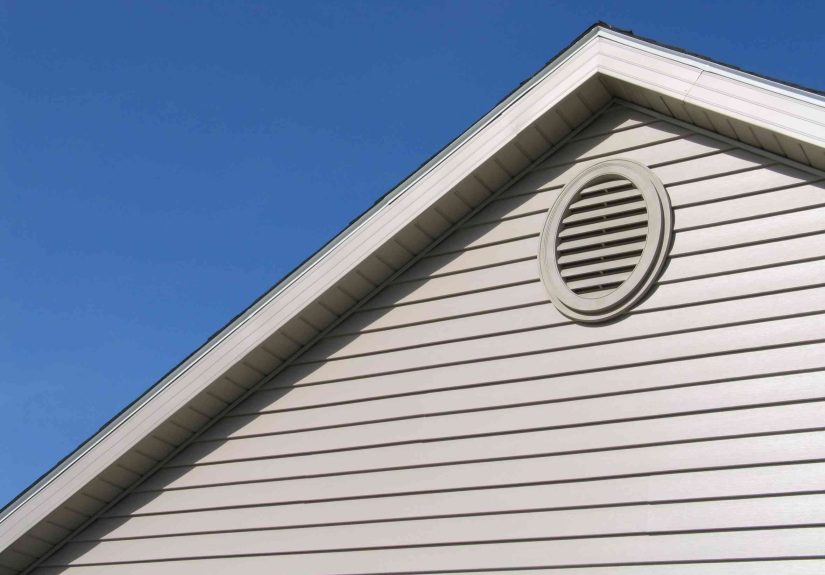
Gable vents sit on the exterior walls at the attic ends. They can help, particularly on older homes, but their effectiveness depends on wind direction, attic layout, and what other vents are in play. In some setups, gable vents can compete with ridge vents rather than complement them.
Turbine (“whirlybird”) vents (wind-driven exhaust)
Turbines use wind to spin and draw air out. They can move a lot of air in breezy conditions, but performance varies with wind, and they still need adequate intake.
Powered attic fans (electric or solar)
Powered fans can exhaust hot air aggressively, which sounds greatuntil they start pulling that air from your house through ceiling leaks (and your HVAC system starts paying for the privilege). These fans can be helpful in certain situations, but only when intake is sufficient and the attic floor is well air-sealed. Otherwise, you may increase energy use instead of reducing it.
How Much Attic Venting Do You Need? (The Math Without Tears)
Know your key term: Net Free Vent Area (NFVA)
Vents are not 100% open spacescreens and louvers reduce airflow. That’s why manufacturers list Net Free Vent Area, usually in square inches. It’s the effective open area air can actually pass through.
The common ratios you’ll hear: 1/150 and 1/300
Many residential guidelines reference a minimum ventilation area equal to 1/150 of the attic floor area. In some cases (often when certain conditions are met), the requirement can be reduced to 1/300. Local building codes and climate considerations matter hereso treat this as a planning tool, not a universal promise.
A practical rule of thumb for balanced systems
- At 1/150: total NFVA = attic floor area ÷ 150
- At 1/300: total NFVA = attic floor area ÷ 300
- Then split intake/exhaust roughly evenly (for example, half intake at soffits, half exhaust at ridge/roof).
Example: a 1,200 sq ft attic
Let’s say your attic floor is 1,200 square feet.
- Using 1/300: 1,200 ÷ 300 = 4.0 sq ft total NFVA
- Split roughly 50/50: 2.0 sq ft intake + 2.0 sq ft exhaust
- Convert sq ft to sq in (multiply by 144): 2.0 × 144 = 288 sq in intake and 288 sq in exhaust
Now you can compare those targets to the NFVA ratings on your vent products. This is how you avoid the classic mistake of “I added a ridge vent so I’m done” when your soffits are basically sealed shut.
Don’t ignore intake (seriously)
If there’s one takeaway to tattoo on your toolbox (metaphorically, please): exhaust does not work without intake. Many attic problems come from blocked soffitsoften buried under insulation like they’re in witness protection.
Signs Your Attic Venting Needs Help
- Condensation or frost on nails, rafters, or roof sheathing in winter
- Musty odor or visible mold-like spotting on wood
- Insulation blocking soffits (very common in older or DIY-insulated attics)
- Ice dams or heavy icicles forming regularly in cold climates
- Upstairs rooms that roast in summer, especially with attic ductwork
- Bathroom/kitchen fan ducts that dump moist air into the attic instead of outside
Diagnose First: A Smart Attic Venting Checkup
Step 1: Start with safety (and a good flashlight)
Attics can be hot, dusty, and full of “surprises.” Wear a respirator or dust mask, watch your footing, and step only on framing members. If you suspect knob-and-tube wiring, vermiculite insulation, or heavy mold, consider professional help.
Step 2: Identify your current intake and exhaust
Walk the perimeter: do you have soffit vents? Are they continuous or individual? Can you actually see light or feel airflow paths? Then look up: ridge vent, box vents, gables, turbines, powered fanswhat’s your exhaust plan?
Step 3: Check for blocked airflow at the eaves
This is the #1 facepalm moment. If insulation is jammed into the eaves, air can’t enter. You want a clear channel from soffit area up along the underside of the roof deck. Baffles (also called rafter vents or chutes) are the usual fix.
Step 4: Hunt down moisture sources
- Roof leaks (stains, wet decking, rusty nails)
- Bath fans venting into the attic
- Disconnected or crushed ductwork
- Big air leaks from the house (around light fixtures, chases, attic hatches, plumbing stacks)
Step 5: Compare your venting to a calculated target
Estimate attic area, choose a ratio (often 1/150 or 1/300 depending on code and conditions), convert to intake/exhaust NFVA, then compare to what you have. This turns “I think it’s fine” into “I know what’s missing.”
How to Improve Attic Venting (Without Creating New Problems)
1) Air seal firstbecause ventilation can’t fix a leaky ceiling
Air sealing the attic floor (the ceiling of your living space) is often the highest-value move. It reduces warm, moist air leaking upward in winter and can cut unwanted heat gain/loss year-round. Seal around plumbing penetrations, wiring holes, recessed lights (rated for insulation contact if applicable), duct chases, and the attic hatch.
If you do one “unsexy” upgrade that quietly pays you back, this is it.
2) Unblock and upgrade soffit intake
Clear insulation away from soffits and install baffles to maintain a continuous air channel. If your soffits aren’t vented, you may be able to add individual vents or install continuous vented soffit panelsdepending on your soffit construction and exterior detailing.
3) Install baffles (aka insulation’s traffic cones)
Baffles keep insulation from clogging the intake area and guide airflow up the roof deck. They’re especially important if you’re adding more attic insulation (which is usually a good idea). Aim for a clear ventilation space above insulation at the eaves; more space is often better when you can manage it.
4) Improve exhaust in a unified way
If your roof is due for replacement, adding a ridge vent can be an excellent upgradeif you have adequate soffit intake. If ridge venting isn’t practical (hip roofs, complex peaks, or design constraints), well-placed box vents or other roof exhaust options can work. The key is to avoid random mixing that causes air to short-circuit instead of washing the whole attic.
5) Be cautious with powered attic fans
Powered fans can help reduce extreme attic heat, but they must have enough intake and an air-sealed attic floor. Otherwise, the fan may pull conditioned air from the house, increasing cooling costs. If you’re considering a fan, treat it as the final stepnot the first.
6) Don’t forget the “venting to nowhere” trap
Bathroom fans should vent outdoors, not into the attic. A perfectly vented attic can still grow mold if it’s being blasted daily with shower steam. Fix the duct termination, seal connections, and insulate the duct in cold climates to reduce condensation inside the duct.
7) Consider an unvented attic only if you’re redesigning the whole system
Some homes use unvented attic assemblies (often with spray foam at the roof deck). That can workbut it’s a different approach with different requirements. Converting a vented attic to unvented is not a casual weekend project; it’s a building-science decision that should be designed for your climate and moisture control strategy.
Climate-Specific Tips (Because the U.S. Is Basically Several Planets)
Cold and snowy climates: ice dams are usually an air-leak/insulation problem
Ventilation helps keep the roof deck colder, but the biggest drivers of ice dams are heat escaping from the home and uneven roof temperatures. Prioritize air sealing, consistent insulation coverage (especially at the eaves), and baffles that keep soffit intake open.
Hot-humid climates: keep indoor humidity where it belongs
In humid regions, your attic air will often be humid toobecause it’s connected to the outdoors. That’s normal. The goal is to prevent indoor-conditioned air from leaking into the attic and to avoid moisture dumping from ducts, bath fans, or roof leaks. A sealed, well-insulated attic floor reduces humidity migration and helps your HVAC system operate more efficiently.
Wildfire, pests, and wind-driven rain: details matter
Screens, baffled vent designs, and proper flashing help reduce pest entry and wind-driven water intrusion. If you’re in a high-wind or wildfire-prone region, talk to a qualified local roofer about vent products designed for those conditions.
Common Attic Venting Myths (Let’s Retire These Gently)
Myth: “More vents always means better ventilation.”
More vents can mean more problems if they’re unbalanced. A bunch of exhaust vents without intake can depressurize the attic and pull air from the house. A bunch of intake vents without exhaust can trap heat and moisture. A system works when the pathway works.
Myth: “If my attic is hot, I need a fan.”
Sometimes you need better intake/exhaust balance, better air sealing, and better insulationbefore adding mechanical exhaust. A fan is not a magic wand. It’s a motorized decision.
Myth: “Mold in the attic means I need more venting.”
Mold means you have moisture. More venting might help, but if the moisture source is an air leak, a roof leak, or a bathroom fan exhausting into the attic, you’re treating symptoms instead of the cause.
Conclusion: A Well-Vented Attic Is Quietly Awesome
Attic venting is one of those home systems you never want to think aboutbecause when it’s right, it’s boring. Boring is beautiful. The best approach is simple: stop indoor air leaks, keep soffit intake open with baffles, choose a coherent exhaust strategy (often ridge or properly placed roof vents), and size ventilation using NFVA instead of guesswork.
If you do it well, your attic stops acting like a science experiment. Your roof assembly stays drier. Your upstairs rooms feel more comfortable. And you get to spend your weekends doing literally anything else besides scraping mystery frost off roof nails.
Real-World Experiences: What Attic Venting Problems Look Like in Actual Homes
In the real world, attic venting issues rarely show up as a single dramatic failure. They show up as patternslittle clues that, once you know what to look for, read like a mystery novel where the villain is always “air leakage plus physics.”
One common scenario is the “new insulation, new problem” story. A homeowner adds a thick blanket of insulation to cut heating and cooling bills (a great goal), but the insulation gets pushed tight into the eaves. The soffit ventspreviously doing at least somethingget buried. By winter, the attic has cold roof sheathing and warm indoor air leaking up through gaps. The result can be condensation or frost on nails. Come spring, the frost melts, dampening the wood and creating that unmistakable musty odor. The fix isn’t “remove insulation” (no thanks). The fix is install baffles, clear the soffits, and air seal the attic floor so the insulation can stay and the venting can finally do its job.
Another frequent plot twist is the “bath fan to nowhere” problem. The bathroom fan runs, the mirror clears, everyone celebrates… and the fan duct dumps warm, moist air into the attic like it’s delivering a care package to mold spores. The attic might even be “well vented” on paper, but repeated moisture loads can overwhelm what passive airflow can remove, especially during cold snaps when condensation happens fast. The solution is usually straightforward: run the duct to a proper exterior termination, seal the joints, and insulate the duct if it passes through cold attic space to reduce condensation inside the duct.
Then there’s the “everything vented, nothing flowing” atticoften the result of mixing strategies without a plan. You’ll see soffit vents, a ridge vent, and big gable vents, plus a couple of box vents for good measure (and maybe a turbine because why not). Air, like most of us, chooses the easiest route. Instead of sweeping from soffit to ridge, it may move from gable to ridge, or from the nearest opening to the next nearest opening, leaving sections of the attic stagnant. Homeowners in these homes often report that one bedroom is always hotter, or that only certain areas show moisture staining. The improvement path here is about simplifyingdeciding which vents are intake, which are exhaust, and reducing competing pathways so airflow covers the whole attic rather than a small “shortcut loop.”
A final story that shows up a lot in hotter regions is the “solar fan saved my attic… or did it?” scenario. A solar attic fan gets installed, and the attic feels cooler on a sunny day. But later, energy bills don’t improve muchor they risebecause the fan is pulling makeup air from the house through recessed lights, attic hatches, and leaky duct boots. The attic gets cooler, but the living space gets depressurized, and your air conditioner ends up cooling the attic indirectly. When homeowners address air sealing and ensure the soffit intake is adequate, that same fan (or even a passive setup) tends to perform far better. The lesson is consistent: mechanical exhaust only works as intended when the boundary between the house and attic is tight and the intake pathway is real.
The encouraging part of all these experiences is that attic venting improvements are usually very achievable. They’re not always glamorous, but they’re measurable. You can calculate NFVA, verify intake clearance, confirm exhaust continuity, and seal major leaks. And when you get it right, the attic stops trying to become its own climate zoneleaving your home calmer, drier, and more comfortable.