Table of Contents >> Show >> Hide
- Quick reality check: leaves aren’t “just leaves”
- Mistake #1: Treating the street (or your neighbor’s yard) like your personal leaf landfill
- Mistake #2: Making a 7 a.m. leaf-blower soundtrack (and pretending it’s “white noise”)
- Mistake #3: Piling leaves in the worst possible places (sidewalks, stairs, or against the house)
- Mistake #4: “Curbside roulette” (wrong bags, wrong day, wrong pile)
- Leaf-raking peace treaty: a neighbor-friendly game plan
- FAQs your neighbors secretly want you to ask
- 500-Word “Been There, Raked That” Experiences
- Conclusion
- SEO Tags
Fall leaves are charminguntil they become a neighborhood-wide group project you never signed up for.
One minute you’re enjoying pumpkin season; the next, you’re watching a tornado of maple leaves
migrate from your yard to your neighbor’s driveway like they just got a better offer.
Here’s the good news: you don’t have to be the “leaf villain” on the block. With a few smarter moves,
you can keep your yard tidy, protect your lawn, and avoid sparking the kind of passive-aggressive
driveway standoffs that end with someone “accidentally” returning your leaves with interest.
Below are four leaf-raking mistakes that commonly trigger neighbor complaintsplus what to do instead.
(And yes, we’re going to talk about the street. The street is not your compost pile.)
Quick reality check: leaves aren’t “just leaves”
Leaves feel harmless because they’re basically nature’s confetti. But when they’re piled in the wrong
place or pushed into the wrong system, they can create real problems:
- Stormwater trouble: Leaves and yard debris can clog storm drains and contribute to localized flooding.
- Street safety: Wet leaves can be slick, especially in gutters and on pavementbad news for drivers, cyclists, and anyone taking a corner like it’s the Indy 500.
- Lawn damage: A thick, wet layer can smother grass, encourage disease, and leave you with sad spring patches that scream “I tried.”
- Neighborhood harmony: When your cleanup becomes someone else’s cleanup, the vibes go downhill fast.
The goal is simple: keep leaves where they belong, handle them in a way your city (and your neighbors) can live with,
and avoid turning yard work into a community drama series.
Mistake #1: Treating the street (or your neighbor’s yard) like your personal leaf landfill
Let’s start with the classic: raking or blowing leaves into the street, the gutter, the storm drain,
or “kind of” into your neighbor’s yard with the confidence of someone who believes wind is a legally binding waiver.
Why it drives neighbors crazy
It’s messy, it spreads, and it often violates local rules. Even when it “works” for a minute, the next rain can
wash that debris toward drains. And when the drain clogs, your neighbor doesn’t care that the leaf pile was
technically “more over there” when you left it.
Also: streets are shared spaces. If your leaves end up in the roadway, you’re effectively outsourcing your yard work
to every passing tire, stroller, and dog paw.
Do this instead
- Keep debris on your property. Aim leaves toward your lawn, beds, tarp, or collection areanot the curb line.
- Use a tarp for transport. Rake onto a tarp, drag it to your compost/yard-waste area, and dump. It’s oddly satisfying.
- Clean the “edge zone.” When you finish, do a quick sweep along the sidewalk/curb so stragglers don’t escape during the first gust.
- Protect drains. If you notice a storm drain nearby collecting leaf gunk, clear it safely from the curb/sidewalk side (not by pushing leaves in).
A specific example
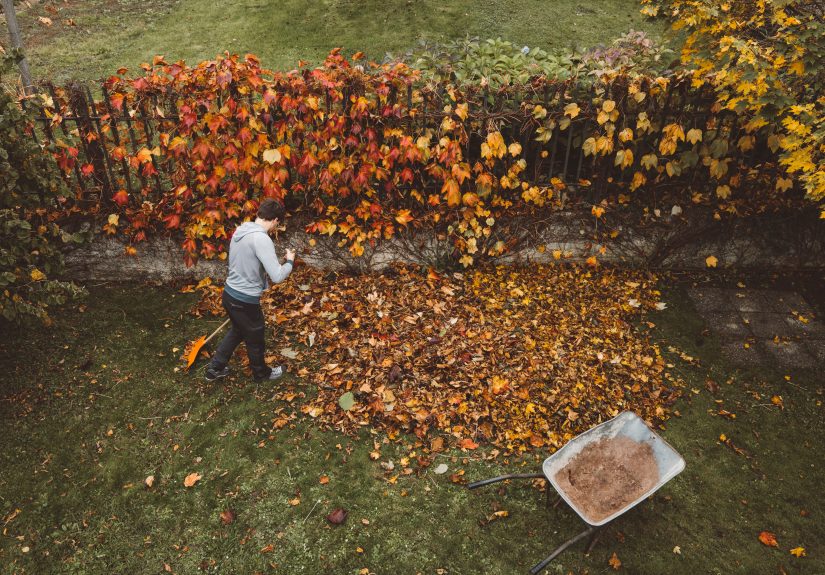
You rake a mountain of leaves to the gutter on Friday. On Saturday night, it rains. On Sunday morning,
the water pools, the curb turns into a leaf stew, and your neighborwhose driveway now resembles a swampy salad bar
is suddenly very invested in municipal code.
Leaf-raking etiquette rule of thumb: if the leaves can leave your property without permission, you’re not done yet.
Mistake #2: Making a 7 a.m. leaf-blower soundtrack (and pretending it’s “white noise”)
Leaf blowers are efficient. They are also, in many neighborhoods, the fastest way to become the main character
in a Nextdoor thread titled: “Does Anyone Else Hear That??”
Why it drives neighbors crazy
Noise complaints are rarely about one use. They’re about timing, duration, and repetition.
Early mornings, late evenings, and marathon sessions on a weekend are prime conflict territory.
Add a gas-powered engine sound that travels like it’s auditioning for a stadium tour, and you’ve got trouble.
Many cities and HOAs also restrict hours or equipment types. Even if your town doesn’t, your neighbors still have
sleep schedules, remote meetings, and toddlers who treat naps like a hostage negotiation.
Do this instead
- Check local rules. Look up your city’s noise ordinance and any HOA policies before you fire up loud equipment.
- Choose neighbor-friendly timing. Late morning to late afternoon is generally the safest window.
- Short sessions win. Do 10–20 minutes, then stop. Quiet breaks lower the annoyance factor dramatically.
- Consider quieter tools. A rake, broom, or battery-powered blower can reduce noise and still get the job done.
- Communicate if needed. If you share a fence line with someone who works nights, a quick “Hey, I’m doing leaves at noon” can prevent resentment.
A specific example
If you use a blower at 7:05 a.m. on Saturday, you may finish your yard in 12 minutesyet remain famous for 12 months.
Meanwhile, if you do the same work at 11:30 a.m., it’s just “someone doing yard stuff,” which is the level of fame
you want.
Courtesy is not complicated. It’s mostly about not waking up the whole block to move something the wind will try to move back.
Mistake #3: Piling leaves in the worst possible places (sidewalks, stairs, or against the house)
Piles happen. The mistake is where they happen. Leaves dumped on sidewalks, steps, or curb ramps are both annoying and hazardous.
Leaves piled against foundations or exterior walls can trap moisture and create conditions your home definitely didn’t request.
Why it drives neighbors crazy
- Blocked walkways: People walking dogs, pushing strollers, or using mobility devices don’t want to wade through your crunchy obstacle course.
- Slip hazards: Wet leaves on pavement can be slick, and that’s a risk you don’t want to “gift” the mail carrier.
- Mess migration: Sidewalk piles scatter fast. Wind and foot traffic turn them into a neighborhood confetti cannon.
Do this instead
- Keep sidewalks and steps clear. Rake/sweep hard surfaces first, then move leaves to a contained area.
- Use leaves where they help. Light layers can be used as mulch in garden beds or under shrubs (kept neat and away from the foundation).
- Mulch some leaves into your lawn. When leaves are dry, mowing over them can chop them fine so they break down faster.
- Avoid “wall-to-leaf contact.” Don’t bank leaves against the house. Give your foundation breathing room.
A specific example
You build a leaf mountain on the sidewalk “temporarily.” Then a wind gust spreads it across three lawns, two driveways,
and one person’s open garage. Suddenly, your “temporary” pile becomes a neighborhood scavenger hunt.
If you’re going to pile leaves, pile them like an adult with a plan: contained, intentional, and not in a shared pathway.
Mistake #4: “Curbside roulette” (wrong bags, wrong day, wrong pile)
You did the work. You gathered the leaves. And then you lost the plot at the finish line by setting out yard waste
in a way that gets rejected, ripped open, or redistributed by raccoons with strong opinions about your bag choice.
Why it drives neighbors crazy
When yard waste isn’t collected (because it’s bundled wrong, bagged wrong, or put out on the wrong day),
it sits there. It gets soggy. It breaks. It blows around. And since it’s now at the curb, everyone gets to enjoy it.
Do this instead: a neighbor-proof curbside checklist
- Follow local set-out rules. Some areas require paper lawn bags, labeled bins, or specific container sizes.
- Avoid plastic-bag surprises. Many municipalities and haulers discourage or prohibit yard waste in typical plastic trash bags.
- Don’t overload bags. A bag that weighs as much as a small refrigerator is going to rip, spill, or get left behind.
- Separate yard waste from trash. Mixing it can trigger rejection, and nobody wants to guess what’s in the mystery bag.
- Keep piles tidy and out of the way. Don’t block sidewalks, storm drains, or visibility near driveways and intersections.
- Bundle branches correctly. If you include twigs/branches, tie them neatly and keep sizes within local limits.
- Time it right. Put it out close to pickuptoo early invites weather damage and “bag failure.”
A specific example
You bag leaves in black plastic trash bags, set them out five days early, and a storm turns them into
shredded leaf soup. On pickup day, the hauler passes them by. Now your curb looks like a compost-themed
art installation titled: “Consequences.”
The fix is usually simple: use approved yard-waste bags or bins, don’t overload them, and set them out at the right time.
Your future selfand your neighborswill thank you.
Leaf-raking peace treaty: a neighbor-friendly game plan
Want a simple approach that keeps the peace and still gets your yard under control? Try this:
- Start with hard surfaces. Clear sidewalks, steps, and driveways first so nothing gets tracked or blown around.
- Contain the leaves. Rake onto a tarp or into a designated pile on your propertynot the curb or street.
- Decide “mulch vs. move.” Mulch dry leaves into the lawn in thin layers; move excess to compost or yard-waste collection.
- Mind the noise. If you use a blower, choose a reasonable time and keep the session short.
- Finish with the border check. Walk the curb line, drains, and shared edges to catch escapees.
This plan takes a little more intention than “blow everything until it’s not my problem,” but it’s also how you avoid
becoming a seasonal villain.
FAQs your neighbors secretly want you to ask
Should I bag every leaf?
Not necessarily. Many yard experts recommend mulching a reasonable amount into your lawn when conditions are right
(especially when leaves are dry and chopped fine). For heavy leaf fall, combining mulching with composting or curbside
yard-waste collection usually works best.
Is it okay to “leave the leaves” for wildlife?
It can bestrategically. Leaving some leaves in garden beds or under shrubs can provide habitat and act as mulch.
The key is to avoid thick layers on lawns and to keep walkways and drains clear.
What if my neighbor’s leaves blow into my yard first?
Welcome to Earth, where wind exists. If it’s minor, handle it like a civilized person and move on.
If it’s constant and clearly due to careless habits (like blowing directly onto your property),
a calm conversation works better than an escalating leaf arms race.
500-Word “Been There, Raked That” Experiences
If you’ve ever wondered why leaf season feels like a social experiment, you’re not alone. Across neighborhoods,
the same patterns play out every falldifferent houses, same drama. Here are a few real-world-style scenarios
(the kind you’ll recognize instantly) and what they teach.
Experience #1: The Sunrise Solo Concert. There’s always one household that treats 7 a.m. like “prime leaf-blowing time,”
as if everyone else is awake, hydrated, and emotionally prepared to hear an engine scream in Dolby Surround.
The funniest part is the logic: “I’m just getting it done early.” Translation: “I’m borrowing everyone’s morning peace
without asking.” The fix is boringbut effective. Midday yard work is less memorable, and in neighbor relations,
“forgettable” is a premium feature.
Experience #2: The Great Leaf Migration. You watch a person blow leaves in neat lines…straight into the street.
For a brief moment, their lawn looks spotless. Then a passing car turns the pile into airborne confetti and redecorates
four yards down. Nobody wins. The street doesn’t become cleaner; it just becomes the delivery system.
The easiest upgrade is containment: tarp, bins, paper bags, compost areaanything that doesn’t rely on “hope and traffic patterns.”
Experience #3: The Curbside Bag Catastrophe. Someone uses flimsy bags, overfills them, sets them out too early,
and a rainstorm turns the curb into a wet leaf buffet. Bags split. Leaves drift. The neighborhood gets a front-row seat
to the consequences of poor container selection. The lesson: yard waste rules exist for a reason. Containers that hold up
(paper lawn bags made for yard waste, approved bins, sensible weights) prevent the mess that makes neighbors feel like your cleanup crew.
Experience #4: The Sidewalk Wall of Leaves. A “temporary” pile on the sidewalk becomes a three-day situation.
Dog walkers step into the street to avoid it. The mail carrier does a little sigh that says, “Not again.”
Kids kick through it (because of course they do), and suddenly the pile is everywhere except the place it started.
The fix is simple: shared paths stay clear. If you need a staging area, keep it on your property and keep it contained.
The best part? When you avoid these mistakes, neighbors noticebut in a good way. Not with applause (this isn’t a parade),
but with that quiet, powerful outcome: nobody talks about you. Your yard looks good, the street stays clean,
and your weekends don’t feature surprise tension with people who also know where you live.
Conclusion
Leaf season doesn’t have to be a neighborhood stress test. Avoid the four biggest leaf-raking mistakes
street dumping, rude timing with loud tools, bad pile placement, and
sloppy curbside setupand you’ll keep your yard tidy without driving the people around you nuts.
The real secret is simple: contain leaves, respect shared spaces, follow local yard-waste rules, and do your loudest work
at reasonable hours. You’ll get a cleaner yard, a healthier lawn, and neighbors who don’t flinch when they hear your garage door open.





I want to plan a tree a day