Table of Contents >> Show >> Hide
- What people mean by “biracial hair” (and why it varies so much)
- Hair typing 101 (useful, but not your entire personality)
- Common biracial hair characteristics (and what they usually need)
- How to figure out your hair’s needs (quick checks that actually help)
- A simple biracial hair routine that works for most textures
- Step 1: Cleanse (protect your moisture while keeping the scalp happy)
- Step 2: Condition (this is not optional, it’s the peace treaty)
- Step 3: Detangle (gentle, wet, and sectioned)
- Step 4: Moisturize + seal (choose your texture of products)
- Step 5: Dry and set (less friction, better shape)
- Step 6: Protect at night (your pillowcase is either a friend or a menace)
- Product “weights” by curl family (a practical cheat sheet)
- Moisture vs. protein: the balance that keeps hair from acting up
- Protective styles: helpful, but only if they’re truly protective
- Kids with biracial hair: keep it gentle and keep it simple
- Common mistakes (and what to do instead)
- When to see a dermatologist or hair professional
- Final thoughts: treat your hair like a recipe, not a rulebook
- Experiences people often have with biracial hair (and what they learn along the way)
Biracial (or multiracial) hair is less a single “type” and more a glorious grab bag of textures, curl patterns, strand sizes,
and porosity levelssometimes all on the same head. If your hair has ever made you think, “Why is the front acting like beach waves
while the back is auditioning for a spring-shaped slinky?”congrats. You’re not alone.
This guide breaks down the basics in plain American English: how hair typing works (and why it’s not the final boss),
what mixed-texture hair commonly needs, and how to build a routine that keeps curls, coils, and waves healthy without turning wash day
into a three-act drama.
What people mean by “biracial hair” (and why it varies so much)
“Biracial hair” usually refers to hair that grows in with characteristics influenced by more than one ancestral background.
In real life, that can mean:
- Multiple curl patterns on one head (wavy at the crown, curly around the face, coily underneath).
- Different strand thickness (fine pieces that tangle easily mixed with thicker, stronger strands).
- Mixed density (hair that looks full but has fragile areas along the hairline or nape).
- Different porosity zones (ends that absorb everything, roots that resist water like they’re wearing a raincoat).
Genetics don’t “average out” into one predictable texture. They can stack, mix, and show up differently over timeespecially with
puberty, hormones, heat styling, coloring, swimming, and even seasonal humidity. So the best mindset is not “What type am I?”
but “What does my hair do, and what does it need?”
Hair typing 101 (useful, but not your entire personality)
The curl pattern chart: Types 1–4
A popular way to describe hair is by curl pattern. You’ll often see:
Type 1 (straight), Type 2 (wavy),
Type 3 (curly), and Type 4 (coily/kinky),
with A–C subtypes describing how loose or tight the pattern is.
Here’s the plot twist: many people with textured hair have more than one pattern at once. That’s especially common for mixed-texture
hair, so you might be a “2C/3B/3C situation” depending on the section. Hair typing can help you compare routines and product weights,
but it’s not a diagnosis and it won’t predict everything (like frizz, shrinkage, or how your hair behaves after you sleep on it funny).
Why typing isn’t enough: the “other four” that matter
Curl pattern is just one part of the puzzle. These factors often matter more for biracial hair care:
- Porosity: how easily hair absorbs and holds moisture.
- Strand thickness: fine vs. medium vs. coarse (affects breakage and product heaviness).
- Density: how many hairs per square inch (affects how you section and how long it takes to dry).
- Elasticity: how well hair stretches and returns (a clue about moisture/protein balance).
Common biracial hair characteristics (and what they usually need)
1) Dryness that shows up fast
Curly and coily textures often feel drier because scalp oils have a harder time traveling down bends and coils. Mixed hair that leans
wavy-to-coily may still have dry mid-lengths and ends even if the scalp isn’t dry. Translation: your ends are probably asking for
consistent conditioning, not a motivational speech.
2) Tangles and knots (a.k.a. “Why is my hair Velcro?”)
Curves and coils can wrap around each other, and mixed textures can tangle where patterns meet (like wavy roots + curly ends).
Gentle detangling methods mattera lotbecause rough detangling is basically speedrunning breakage.
3) Shrinkage and shape-shifting
Many biracial hair routines fail because people style for length instead of shape. Coils may shrink significantly when dry, and that’s normal.
If you plan styles around the hair’s dry shape (not its wet length), you’ll get less frustration and fewer “Why did my hair disappear?” moments.
4) Product buildup (especially in low-porosity zones)
If parts of your hair are low porosity, heavy butters and oils can sit on top, making hair feel coated, dull, or “gunky” instead of moisturized.
That’s not your hair being dramatic. That’s product physics.
How to figure out your hair’s needs (quick checks that actually help)
Check porosity (without turning your bathroom into a science fair)
Porosity is about the hair cuticle and how it interacts with water and products. You’ll hear about “float tests” or “spray tests.”
They can be a starting point, but don’t treat them like a prophecy. Instead, watch real-life behavior:
- Low porosity clues: water beads up, products sit on top, buildup happens quickly, hair takes longer to get fully wet.
- High porosity clues: hair absorbs water fast but dries quickly, frizz shows up easily, ends feel rough, color/chemical services “take” quickly.
- Medium/normal porosity clues: hair wets and dries at a moderate pace, holds styles fairly well, responds predictably to conditioning.
Identify your “most fragile zones”
For many people, the hairline, crown, and nape are the first to breakespecially with tight styles, frequent brushing, or heat.
If you treat those areas gently (less tension, more moisture, more protection), your overall hair health improves faster.
A simple biracial hair routine that works for most textures
Think of this as a flexible blueprint, not a strict schedule. Your exact frequency depends on your scalp, activity level, styling,
and whether your hair is chemically treated.
Step 1: Cleanse (protect your moisture while keeping the scalp happy)
-
Wash as needed, not “because it’s Tuesday.” Many curly/coily heads do better washing less often than straight hair,
but the scalp still needs regular cleansing to prevent buildup. -
Use a moisturizing shampoo if your hair feels dry, and consider an occasional clarifying wash if products stop working.
If you use lots of gels, creams, or heavy oils, clarifying can help reset. - Focus shampoo on the scalp; let suds rinse through the lengths.
Step 2: Condition (this is not optional, it’s the peace treaty)
- Condition every wash, concentrating on mid-lengths and ends.
- Deep condition when hair feels rough, tangly, or frizzyespecially after swimming, heat, or color.
- Use heat thoughtfully (like a warm towel or steamy shower) if your hair is low porosity and struggles to absorb conditioner.
Step 3: Detangle (gentle, wet, and sectioned)
Detangle when hair is wet and slippery with conditioner or leave-in. Use fingers first, then a wide-tooth comb or detangling brush.
Work in sections. Start at the ends and move upward. Detangling dry curls is a shortcut to frizz and snapping.
Step 4: Moisturize + seal (choose your texture of products)
“Moisture” usually comes from water + conditioning ingredients. Oils and butters help slow water loss (sealing), but they don’t replace water.
A good layering approach is:
- Leave-in conditioner (lightweight for waves/loose curls; richer for tighter curls/coils).
- Curl cream or styling lotion for softness and definition (optional depending on your pattern).
- Gel or mousse for hold (lighter mousse for waves, stronger gel for frizz-prone curls/coils).
- Seal the ends with a small amount of oil or butter if they dry out fast (especially in winter).
Step 5: Dry and set (less friction, better shape)
- Blotdon’t rub with a microfiber towel or cotton T-shirt to reduce frizz.
- Air dry when possible, or use a diffuser on low heat if you need speed and volume.
- Hands off while drying to keep curl clumps intact and reduce halo frizz.
Step 6: Protect at night (your pillowcase is either a friend or a menace)
Friction is a major cause of frizz and breakage. Protect styles with a satin/silk bonnet, scarf, or pillowcase. Loosely gather hair
(a “pineapple” for curls, loose braids/twists for coils) so you wake up with definition instead of a fuzzy mystery.
Product “weights” by curl family (a practical cheat sheet)
Wavy (mostly Type 2)
- Best friends: light leave-ins, foams, mousses, lightweight gels.
- Watch out for: heavy butters and thick creams that flatten waves and cause buildup.
Curly (mostly Type 3)
- Best friends: leave-in + curl cream + gel combos, regular deep conditioning, careful detangling.
- Watch out for: brushing dry hair, skipping hold products if frizz is an issue.
Coily/kinky (mostly Type 4)
- Best friends: richer conditioners, creams/butters (if porosity supports it), protective styling, consistent moisture.
- Watch out for: tight styles that stress edges, heat without protection, long stretches without cleansing (buildup can irritate the scalp).
Many biracial heads live in the “combo zone,” so you may need a lighter product at the crown and a richer one underneath.
Yes, it’s annoying. Yes, it also works.
Moisture vs. protein: the balance that keeps hair from acting up
Hair needs moisture for softness and flexibility, and protein for strength and structure. Too much of either can make hair feel “off.”
Signs people commonly notice:
- Too much protein: hair feels stiff, rough, and snaps easily.
- Too much moisture: hair feels overly soft, stretchy, limp, and struggles to hold definition.
The fix is usually simple: if hair feels stiff and brittle, prioritize moisturizing conditioners and reduce protein-heavy products for a bit.
If hair feels mushy and weak, add a gentle protein treatment occasionally and make sure you’re not over-conditioning without enough structure.
Protective styles: helpful, but only if they’re truly protective
Protective styles (braids, twists, buns, updos, wigs) can reduce daily manipulation and help retain length.
But the style must not create constant tension. If your scalp hurts, edges feel sore, or you see bumps around the hairline, that’s a sign to
loosen upliterally.
Protective style tips that save edges
- Keep tension low at the hairline and crown.
- Moisturize the hair underneath (especially the ends) and keep the scalp clean.
- Take breaks between long-wear styles so the hairline can recover.
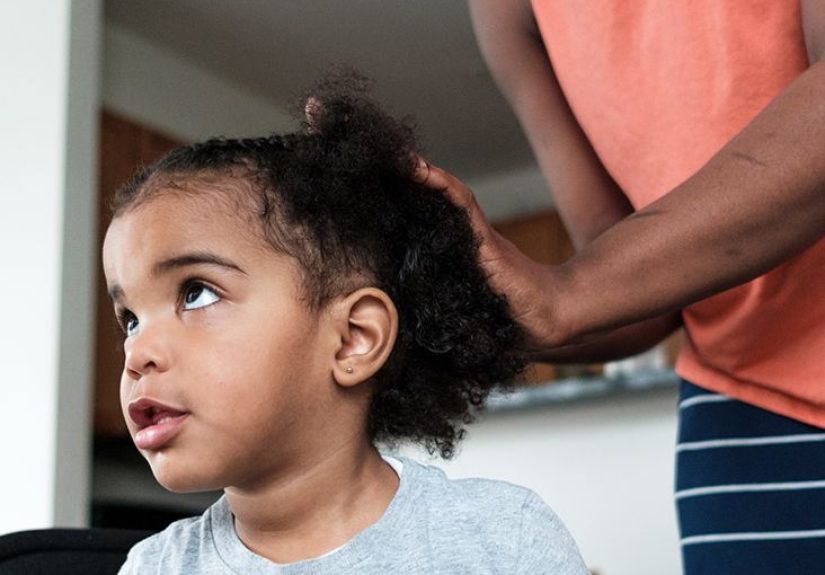
Kids with biracial hair: keep it gentle and keep it simple
For children, the goal is healthy hair and a calm routinenot perfect definition. A kid-friendly approach usually includes:
- Detangling on wet, conditioned hair in sections.
- Simple styles that reduce knots (two-strand twists, loose braids, ponytails with soft ties).
- Night protection with satin bonnets or pillowcases (especially for tight curls and coils).
- Avoiding harsh chemicals and excessive heat on developing hair.
Common mistakes (and what to do instead)
Mistake: “Moisturizing” with only oil
Oil can seal, but it doesn’t hydrate. If hair still feels dry, add water-based leave-in conditioner first, then seal lightly.
Mistake: Brushing dry curls to “make it neat”
Dry brushing can cause frizz and breakage. Detangle wet with conditioner, then style. For next-day hair, refresh with water/leave-in
and finger-detangle trouble spots.
Mistake: Using the same product everywhere
Mixed textures often need zone styling: lighter products where hair is fine or wavy; richer products where hair is tighter or drier.
It’s not extrait’s targeted.
Mistake: Ignoring the scalp
Healthy hair starts at the scalp. If you have persistent flakes, itching, or irritation, adjust cleansing and consider professional advice.
When to see a dermatologist or hair professional
If you notice sudden shedding, bald patches, painful scalp bumps, severe itching, or breakage that doesn’t improve with gentler care,
it’s worth getting help. Sometimes the issue isn’t “bad hair”it’s an underlying scalp condition, traction from tight styles,
or damage from chemicals and heat.
Final thoughts: treat your hair like a recipe, not a rulebook
Biracial hair doesn’t need a one-size-fits-all routine. It needs observation and small adjustments:
more slip for detangling, smarter product weight, consistent conditioning, less friction, and less tension.
Your routine should fit your real lifeschool, work, workouts, humidity, and the fact that you are not trying to spend your whole weekend
negotiating with a shower.
Experiences people often have with biracial hair (and what they learn along the way)
If you ask a room full of people with biracial hair about their “hair journey,” you’ll hear stories that sound differentbut rhyme.
A common early experience is realizing that the usual advice doesn’t always apply. Someone might try a “basic shampoo and conditioner”
routine meant for straight hair and wonder why their ends feel like crunchy straw. Another person tries a super-heavy butter routine
meant for tight coils and ends up with limp, greasy waves at the crown. The lesson they learn is that mixed-texture hair often needs
different approaches in different zones.
Many describe the moment they notice multiple patterns: the top dries into loose waves, the sides curl into ringlets, and the underneath
forms tighter coils. At first it can feel like hair is being “inconsistent,” but later they see it as a map. The wavy sections usually
like lighter products and more frequent cleansing. The coily sections often want richer conditioning, more slip for detangling,
and extra protection at night. Once people start styling by sectionstwo to six depending on thicknesswash day becomes less chaotic
and more predictable.
Another frequent experience: detangling is the make-or-break step. People remember the phase of “ripping through knots” and then noticing
more frizz, more breakage, and shorter-looking curls over time. The shift happens when they learn to detangle only when hair is wet,
saturated with conditioner or leave-in, and separated into sections. They start at the ends, move upward slowly, and pause to add more slip
instead of fighting tangles like it’s a competitive sport. Suddenly the brush isn’t the enemy; the method was.
There’s also the experience of learning what “moisture” really means. A lot of people first try to fix dryness by piling on oils.
They get shine for a day, then the hair feels dry againsometimes even drierbecause oil sealed the hair without adding water-based hydration.
Over time they learn to use water + conditioner/leave-in as the main hydrators, and oils as a light seal (especially on ends).
That single change can make hair feel softer, detangle faster, and hold definition longer.
Porosity is another “aha” moment. People with low-porosity sections talk about products that seem to sit on top and never soak in,
causing buildup and dullness. They often find success with lighter, water-based products and periodic clarifying, plus warm water or gentle heat
during deep conditioning. People with high-porosity ends often describe the opposite: hair drinks everything up, then feels dry again quickly.
They learn to layer leave-in + cream + gel, seal ends carefully, and keep trims consistent so the most porous, weathered parts don’t take over.
Finally, a lot of people talk about the social side: well-meaning advice from friends or family that doesn’t match their texture,
awkward salon experiences when a stylist isn’t trained in curls/coils, and the emotional relief of finding routines that actually work.
The best “experience-based” takeaway is simple: biracial hair thrives with curiosity, not criticism. Track what your hair responds to,
change one thing at a time, and treat the process like learning your favorite recipe. When you do, your hair stops feeling like a mystery
and starts feeling like yours.