Table of Contents >> Show >> Hide
- What Is the Birth Control Patch?
- How the Patch Prevents Pregnancy
- How Effective Is the Birth Control Patch?
- Common Side Effects (Usually Mild and Often Temporary)
- Serious Risks: What Matters Most (And Who Should Be Extra Careful)
- Who Should NOT Use the Patch (Common Contraindications)
- Weight, BMI, and Patch Effectiveness: The Detail People Miss
- Postpartum and Breastfeeding Considerations
- Medication and Supplement Interactions (Yes, Even “Natural” Ones)
- How to Use the Patch Correctly (Without Turning It Into a Weekly Mystery)
- What If the Patch Falls Off or You Forget to Change It?
- Things to Consider Before Choosing the Patch
- When Side Effects Aren’t “Normal Adjustment” and It’s Time to Switch
- Conclusion
- Experiences: What People Commonly Notice With the Patch (Real-World, Not Just the Pamphlet)
The birth control patch is basically the “set it and (mostly) forget it” cousin of the pill: you slap on a small patch once a week, and it quietly
releases hormones through your skin. It’s convenient, effective when used correctly, andlike most things that work wellcomes with a list of potential
side effects and risks that deserve a real, non-scary explanation.
This guide breaks down what the patch does, what side effects are common (and usually temporary), what risks matter most, and the practical “life stuff”
people don’t always tell youlike skin irritation, missed patch chaos, and which medications can make the patch less reliable.
What Is the Birth Control Patch?
The birth control patch is a prescription combined hormonal contraceptive (CHC). That means it contains an estrogen plus a progestin. In the U.S., patch
options include:
- Xulane (norelgestromin/ethinyl estradiol)
- Zafemy (norelgestromin/ethinyl estradiol)
- Twirla (levonorgestrel/ethinyl estradiol)
Most people wear one patch for 7 days, change it on the same day each week for three weeks, then take a patch-free week (week 4) when bleeding often
happens. Some clinicians may recommend continuous use (skipping the patch-free week) for certain goals like avoiding a periodmore on that later.
How the Patch Prevents Pregnancy
The patch works like other combined hormonal methods (pill and ring). It primarily:
- Stops ovulation (no egg released).
- Thickens cervical mucus (makes it harder for sperm to reach an egg).
- Thins the uterine lining (less supportive of implantation).
Important reminder: the patch does not protect against sexually transmitted infections (STIs). If STI protection matters in your situation,
condoms are your MVP.
How Effective Is the Birth Control Patch?
With typical use (real life, real schedules, real “wait… was that my patch-change day?” moments), the patch is about 93% effectivemeaning
around 7 out of 100 users may get pregnant in a year. With perfect use, effectiveness is higher (less than 1 pregnancy per 100 users per year).
Effectiveness depends heavily on consistency. The patch is forgiving compared to a daily pill, but it’s not psychicit can’t work if it’s off your body for
too long or if patch changes drift.
Common Side Effects (Usually Mild and Often Temporary)
Many people have no major side effects. When side effects do show up, they’re most common in the first 2–3 months while your body adjusts. Typical side
effects can include:
1) Skin irritation where the patch sits
This is the “my skin has opinions” side effect. You might notice itching, redness, dryness, a rash, or mild soreness. Rotating sites and applying to clean,
dry skin (no lotion, oil, or powder) can help.
2) Headache or nausea
Mild headaches or nausea can happen early onespecially during the first few weeks. If headaches become severe, sudden, or unusual for you, that’s a “call a
clinician” moment, not a “drink water and hope” moment.
3) Breast tenderness
Soreness or swelling can happenannoying, but often temporary.
4) Breakthrough bleeding (spotting)
Light bleeding between periods is common at first. It usually improves over time. Spotting can also happen if patch changes are late or if you’re on
interacting medications.
5) Mood changes
Hormones can affect mood differently for different people. If you notice mood swings, irritability, or worsening anxiety/depression, it’s worth discussing
with a healthcare provider. Sometimes switching formulationsor switching to a non-estrogen methodmakes a big difference.
6) Other possible side effects
Some people report changes in appetite, slight weight changes (often from fluid retention), acne changes (better or worse), or changes in period flow and
cramps.
Serious Risks: What Matters Most (And Who Should Be Extra Careful)
The biggest serious risk with combined hormonal methodspatch includedis an increased risk of blood clots (venous thromboembolism, or VTE). While the
absolute risk is still low for many healthy people, it becomes more important if you have other risk factors.
Blood clots, stroke, and heart attack risk
Estrogen-containing contraception can raise the risk of clots, and this risk is higher in certain situationsespecially for people who smoke and are older
than 35, those with a history of clots, and those with certain medical conditions. The risk is also higher when first starting or restarting after a break.
One extra patch-specific nuance: compared with some birth control pills, overall estrogen exposure can be higher with certain patch formulations. That doesn’t
mean “the patch is dangerous for everyone,” but it does explain why clinicians screen carefully for clot risk factors.
High blood pressure and other cardiovascular concerns
Combined hormonal contraception can increase blood pressure in some users. If you already have high blood pressure (especially if it’s not controlled), the
patch may not be the safest choice.
Liver and gallbladder issues (rare but real)
Serious liver problems are uncommon, but estrogen-containing methods can be a poor fit for people with certain liver diseases or liver tumors. Gallbladder
disease is also listed as a potential risk.
When to seek urgent medical care
Get urgent care right away if you have symptoms that could signal a clot or stroke, such as:
- Sudden shortness of breath or chest pain
- Severe leg pain or swelling (especially one-sided)
- Sudden severe headache unlike your usual headaches
- Weakness/numbness on one side, trouble speaking, or sudden vision changes
Who Should NOT Use the Patch (Common Contraindications)
The patch isn’t a one-size-fits-all method. In general, clinicians avoid prescribing combined hormonal contraception (pill/patch/ring) for people who have:
- Smoking plus age over 35 (especially heavier smoking)
- History of blood clots, stroke, or heart attack
- Known clotting disorders (thrombophilia)
- Uncontrolled high blood pressure
- Certain migraine patterns (especially migraine with aura)
- Current breast cancer or hormone-sensitive cancers
- Serious liver disease
Your personal risk depends on your medical history and overall risk profile, not just a single checkboxso it’s worth having a real conversation with a
clinician rather than relying on internet vibes.
Weight, BMI, and Patch Effectiveness: The Detail People Miss
This is important and sometimes surprising: some patches may be less effective at higher body weights, and certain products are not recommended above a BMI
threshold.
-
Xulane and Zafemy may be less effective in people who weigh 198 pounds (90 kg) or more, and labeling
includes restrictions related to BMI ≥ 30. -
Twirla is indicated for users with BMI < 30, is contraindicated at BMI ≥ 30, and may have reduced
effectiveness in the BMI 25 to < 30 range.
This doesn’t mean “the patch never works for higher-weight people.” It means the best patch choice (or a different method entirely) should be individualized.
Long-acting reversible contraception (like an IUD or implant) may be a more reliable option for some people if pregnancy prevention is the top priority.
Postpartum and Breastfeeding Considerations
The postpartum period comes with a naturally higher blood clot riskespecially in the first weeks after delivery. Because the patch contains estrogen, medical
guidance generally avoids combined hormonal methods very soon after childbirth, particularly for breastfeeding individuals and/or those with additional clot
risk factors.
Translation: if someone is recently postpartum, a clinician may recommend progestin-only options or non-hormonal methods for a while, then consider combined
methods later depending on timing and risk factors.
Medication and Supplement Interactions (Yes, Even “Natural” Ones)
Some medications and supplements can make the patch less effective by speeding up how the body processes hormones. The greatest concern is unintended
pregnancy if you rely on the patch alone while taking an interacting drug.
Examples commonly listed include certain seizure medications, rifampin-like antibiotics, certain HIV medications, and the herbal supplement
St. John’s wort. If you take any long-term medication, bring a list to your appointmenteven if it’s “just supplements.”
If you need an interacting medication, a clinician may recommend using a backup method (like condoms) during the interaction window, or switching to a method
that isn’t affected (such as an IUD).
How to Use the Patch Correctly (Without Turning It Into a Weekly Mystery)
Most patch schedules follow a 28-day cycle:
- Week 1: Apply a new patch (pick a “Patch Change Day,” like every Monday).
- Week 2: Replace with a new patch on the same day.
- Week 3: Replace with a new patch on the same day.
- Week 4: Remove the patch and go patch-free for the week (bleeding often occurs).
Where to place it
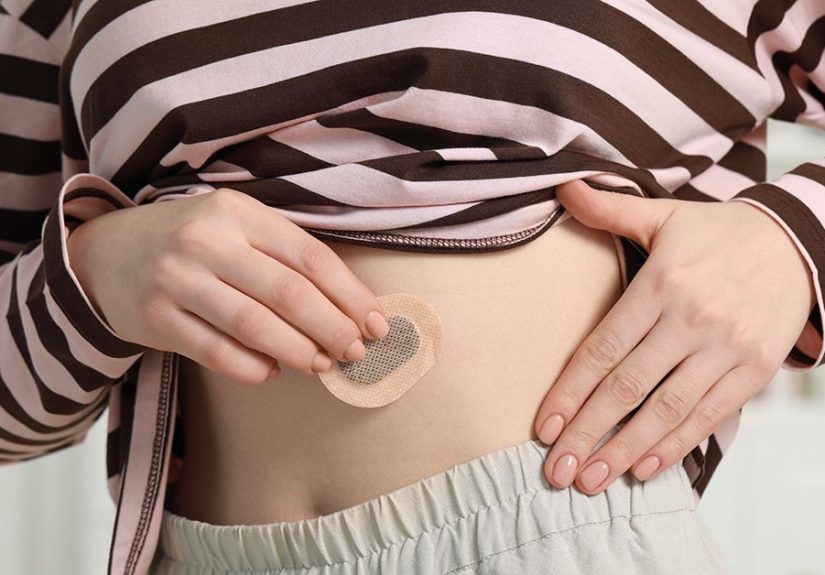
Common placement areas include the upper outer arm, abdomen, buttocks, or upper torso (but not on the breasts). Choose a spot that won’t get rubbed raw by
tight waistbands, sports gear, or the world’s most determined backpack strap.
Pro tips for patch success
- Apply to clean, dry skin (skip lotions, oils, and powders under the patch).
- Press firmly for about 10 seconds and smooth edges well.
- Check daily that edges are still stuckquick glance, big payoff.
- Rotate sites to reduce irritation.
What If the Patch Falls Off or You Forget to Change It?
This happens. The patch is sticky, but life is stickier. What to do depends on how long it’s been off or how late you are.
If it’s been off (or you’re late) for less than 48 hours
- Put a new patch on as soon as possible.
- Keep the same Patch Change Day.
- Backup contraception is often not required in this scenario (but follow your product instructions).
If it’s been off (or you’re late) for more than 48 hours
- Apply a new patch and treat it like a “new start.”
- Use backup contraception for 7 days.
- Consider emergency contraception if you had unprotected sex during the risk window (a clinician can guide this).
If you’re ever unsure, don’t guesscheck your product instructions or call a pharmacist/clinic. The goal is to avoid the “I hope the patch magically covered
that” stress spiral.
Things to Consider Before Choosing the Patch
1) Convenience vs. visibility
Some people love that the patch is weeklynot daily. Others hate that it can be visible in certain clothes or activities. Your preferences matter because a
method you enjoy using is the method you’ll actually use correctly.
2) Your skin’s sensitivity
If you have eczema, adhesive allergies, or very reactive skin, irritation may be a bigger issue. Rotating sites helps, but some people ultimately prefer a
non-adhesive option.
3) Your migraine history
Migraine without aura is often handled differently than migraine with aura. Aura symptoms can include visual changes or neurologic symptoms before headache.
If you’re unsure which type you have, that’s a great question for a clinicianbecause it can change what’s considered safe.
4) Smoking, vaping, and nicotine exposure
Smoking plus estrogen can significantly increase clot and cardiovascular risk, especially after age 35. If nicotine is in the picture, bring it up honestly.
Clinicians aren’t there to scold; they’re there to keep you safe.
5) Cost and access
The patch requires a prescription. Costs vary by insurance and pharmacy. Many plans cover contraception, and many clinics can help with low-cost options.
6) Period control goals
Some people want lighter, more predictable bleeding. Others want fewer periods. The patch can sometimes help with cycle control, but irregular bleeding can
happen early on. If skipping periods is a goal, ask a clinician about a continuous schedule and what to expect.
When Side Effects Aren’t “Normal Adjustment” and It’s Time to Switch
A little nausea or spotting in month one can be normal. But you deserve better than suffering through something that isn’t working for you. Consider checking
in with a clinician if:
- Side effects are severe or worsening after 2–3 months
- You have frequent patch detachment or skin reactions
- Mood symptoms are significant or feel unsafe
- You develop new migraine aura symptoms
- You start a medication that interacts with the patch
Switching methods is not “failing.” It’s optimizinglike realizing a backpack is great until it destroys your shoulders, and then buying one with better
straps.
Conclusion
The birth control patch can be a smart option if you want a weekly routine instead of a daily pill and you’re a good candidate for estrogen-containing
contraception. The tradeoff is that, like other combined hormonal methods, it comes with clot-related risks that matter most for certain groupsespecially
smokers over 35, people with clot history, some migraine patterns, and those with specific health conditions.
If you’re considering the patch, the best next step is simple: review your personal risk factors with a clinician, double-check medication interactions, and
pick the patch schedule you can actually stick to. Consistency is what turns the patch from a sticker into a strategy.
Experiences: What People Commonly Notice With the Patch (Real-World, Not Just the Pamphlet)
If you ask people what it’s like to use the patch, you’ll hear a surprisingly consistent theme: the first month is often a “getting to know you” phase.
Many users describe the patch as convenientespecially if they’ve struggled with daily pill timingbut they also mention a few practical realities that don’t
always show up in a quick doctor’s-office summary.
One of the most common early experiences is spotting. People often report a few days of unexpected light bleeding in the first couple of
cycles, especially if they started mid-cycle or changed the patch a little late. For some, it’s barely noticeable; for others, it’s annoying enough that
panty liners become a temporary subscription. The encouraging part: many users say it improves by the second or third month once patch changes become steady
and the body adapts.
Skin irritation is another frequent real-life comment. Some people find a perfect placement spot on day one and never think about it again.
Others go through a mini “patch placement audition” on their own body: abdomen was itchy, upper arm rubbed on sleeves, buttocks worked greatuntil summer
heat. Users who rotate sites and avoid lotion under the patch often report fewer issues. A common tip people share is applying it somewhere that doesn’t fold
or stretch constantly (like right on a waistband line), because friction can make edges lift.
Many users say the patch makes them feel more routine-based in a good way. Picking a Patch Change Day can turn into a weekly ritual: Sunday
night shower, new patch, done. Some even set a recurring phone reminder titled “PATCH: because pregnancy isn’t a hobby.” The weekly schedule feels easier
than a daily pill to a lot of peopleuntil a holiday, travel day, or exam week scrambles time. In those moments, people say having a backup plan (extra
patches packed, alarms set) reduces stress.
When it comes to how they feel physically, experiences vary. Some users report mild nausea or headaches early on that fade. Others notice
breast tenderness around the first cycle. A smaller group says mood changes were the deciding factoreither feeling more irritable or more emotional. Those
users often describe feeling relieved after switching to a different formulation or a progestin-only method. The pattern you see in shared experiences is
that switching is common and normal; people frequently try a method for a few months, evaluate how they feel, and adjust.
People also talk about confidence vs. anxiety. For many, the patch provides peace of mind because it’s less “oops, I forgot” than pills.
For others, anxiety pops up around adhesion: “Is it still stuck?” Most settle into a habit of checking once a day (often during a morning routine). Users
who swim, sweat, or work physically active jobs sometimes mention that the patch holds up well, but they still prefer placing it where clothing won’t rub it.
Finally, one of the most helpful “experience-based” takeaways is this: people who are happiest with the patch tend to be the ones who treat it like a
system, not a vibe. They pick a consistent patch day, set reminders, keep an extra patch available, and understand what to do if it’s late or falls off.
That combinationgood fit + good routineturns the patch into a low-effort method that quietly does its job.