Table of Contents >> Show >> Hide
- Quick Verdict
- What Makes the Joule Turbo Different?
- Design and Build Quality
- Setup, Specs, and Everyday Practicality
- Performance: Does It Actually Cook Better or Faster?
- The App Experience: Brilliant for Some, Annoying for Others
- Price and Value
- Who Should Buy the Breville Joule Turbo?
- Breville Joule Turbo Sous Vide Review: Final Thoughts
- Extended Section: Real-World Experiences With the Breville Joule Turbo Sous Vide (500+ Words)
If you’ve ever wanted steakhouse-level doneness without hovering over a pan like a nervous game show contestant, the Breville Joule Turbo Sous Vide is exactly the kind of gadget that grabs your attention. It promises precision, app-guided cooking, and a headline feature called Turbo Mode that claims to cut cook times dramatically for selected foods. That’s a bold pitch in sous vide land, where “slow and steady” is basically the official motto.
This review pulls together hands-on testing insights, retailer specs, and expert comparisons to answer the question that actually matters: Is the Joule Turbo worth the premium price, or is it just a very pretty stick with a marketing department?
Quick Verdict
Short answer: The Breville Joule Turbo is one of the best-designed and smartest sous vide machines you can buy, especially if you like app-based cooking and want faster results on weeknights. It is compact, powerful, and loaded with useful software features. But it also has a very specific personality: it expects you to use your phone, and it does not care if you miss having onboard buttons.
If you want a sleek, high-tech, guided cooking experience, this machine is excellent. If you want a backup plan when your phone dies at 8% battery, you may prefer a model with physical controls.
What Makes the Joule Turbo Different?
It’s Built Around the App (and That’s the Point)
The Joule Turbo is not trying to be a generic immersion circulator. Breville leans hard into a guided software experience through the Breville+ app, and the product ecosystem reflects that. On the official feature set and retail listings, Breville emphasizes Autopilot, Turbo Mode, Primetime, Visual Doneness, Cook Guides, and guided recipes.
In plain English: the app helps you pick what you’re cooking, choose doneness visually, and then manage time and temperature for you. It’s very beginner-friendly, and for experienced cooks, it’s still convenient when you want dinner to be predictable without mental math.
Turbo Mode Is the Headliner
The most interesting feature is Turbo Mode, and it is not just a timer trick. Testing coverage explains that Turbo recipes raise the water temperature above the final desired doneness temperature, then adjust cooking time based on thickness and weight. That’s why it can cook selected proteins faster than traditional sous vide without completely wrecking the results.
That said, Turbo Mode is not universal. Multiple reviews point out that it is limited to specific foods (mainly tender proteins) and preset cooking paths. So yes, it can be a weeknight hero for chicken breasts, steaks, and some fishbut it won’t replace traditional long sous vide cooks for ribs, chuck roast, or other “give it 12 to 24 hours and trust the process” projects.
Design and Build Quality
Small, Sleek, and Easy to Store
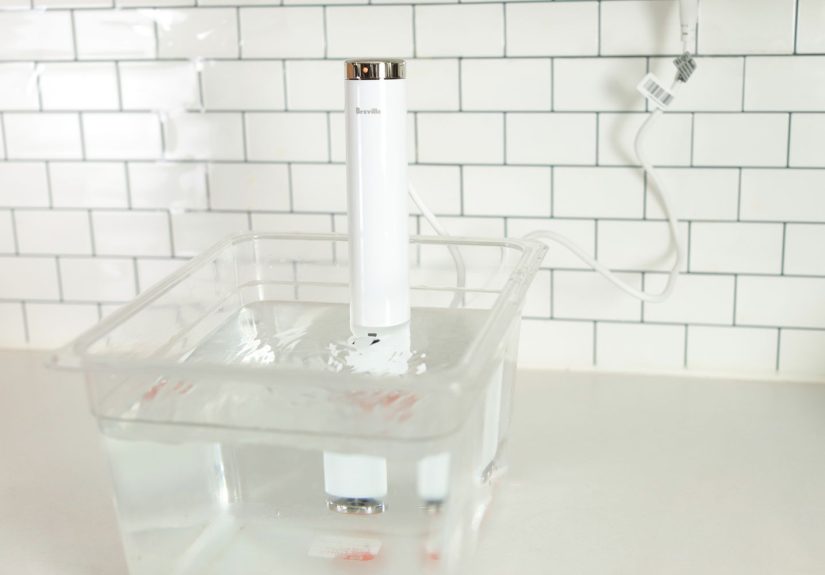
One reason the Joule line has a fan club is size, and the Turbo version keeps that advantage. The body is slim and compact, which is a bigger deal than it sounds. In real cooking use, a smaller circulator takes up less space in your pot or container, which leaves more room for food. More room for food means fewer weird Tetris moves with vacuum bags. Everyone wins.
The design also looks polished on a countertop. It doesn’t scream “lab equipment,” which is a compliment in this category.
Magnetic Base Is Genuinely Useful
The magnetic base is one of the Joule Turbo’s smartest physical features. It can stand in compatible metal pots without needing a clamp, which makes setup faster and less fussy. Serious Eats specifically praised how easy it was to secure in different vessels, and reviewers consistently call out the magnetic foot as a major convenience.
There is a catch, though: the standard clip can feel narrow on thicker-walled cookware. If you mostly cook in heavy Dutch ovens or chunky containers, this can be mildly annoying. Breville does offer a bigger clamp accessory, but it’s an extra purchase.
Setup, Specs, and Everyday Practicality
Key Specs That Matter
Across official and retailer listings, the Joule Turbo is consistently described as a compact 1,100-watt immersion circulator with app control and Bluetooth/Wi-Fi connectivity. The dimensions commonly listed are about 12.28 x 1.85 x 1.85 inches, which helps explain why it fits in drawers more easily than many rivals.
Breville also markets it as suitable for containers up to 10 gallons, which is plenty for most home cooks. In other words, it can handle a dinner-for-two steak night or a bigger batch cook without breaking a sweat.
The included ecosystem is also thoughtful. Some reviews note a small ruler in the box, which sounds oddly specific until you realize Turbo cooking depends on thickness measurements. Suddenly the tiny ruler starts making a lot of sense.
Water Levels and Safety Basics
Breville’s manual calls out practical setup details like minimum water requirements and safe countertop use, and those details matter more than most people think. A sous vide machine can be incredibly low-maintenance, but only if the water level is correct and the unit has proper ventilation around it.
As with any sous vide workflow, food safety still matters. Precision cooking is awesome, but the usual kitchen rules don’t disappear just because your dinner is floating in a bag. Keep an eye on safe handling, chilling, and storage practicesespecially for longer cooks or batch prep.
Performance: Does It Actually Cook Better or Faster?
Heating Speed and Accuracy
The Joule Turbo performs very well in expert testing. Serious Eats reported that it heated cold water quickly and described it as fast and highly accurate, crediting an updated PID temperature-control system. That’s a big reason this machine gets recommended so often: it isn’t just stylish, it’s technically competent.
TechGearLab also rated it as a strong overall performer and specifically highlighted its circulation performance. In their testing, the Joule Turbo mixed water quickly and consistently, which is exactly what you want for even doneness. Sous vide lives and dies by temperature stability and circulation, and the Joule Turbo checks both boxes.
Turbo Mode in Real Cooking
Turbo Mode is the feature most people will either love or ignore. The Spruce Eats tested it and found the concept works: the machine heats above the final target and uses app-based calculations to shorten the cook. For steaks and uniformly thick cuts, this can be a genuinely useful time saver.
But Turbo Mode has limits. It shines with selected proteins and controlled conditions (including thickness measurements), while traditional sous vide remains the better approach for long, tenderizing cooks. The good news is that the Joule Turbo still performs very well in standard mode, so you are not buying a one-trick pony.
The App Experience: Brilliant for Some, Annoying for Others
Why People Love It
The Breville+ app is a major strength. Reviewers repeatedly mention guided recipes, step-by-step instructions, visual doneness cues, and a polished interface. For beginners, this is huge. It lowers the barrier to entry and helps you avoid classic mistakes like choosing the wrong temperature, guessing cook times, or overcomplicating everything because a Reddit thread told you to.
Even experienced users benefit from features like Primetime, which is designed to keep food in a “ready to eat” window instead of forcing a perfect one-minute serving moment. That is very practical for real homes, where dinner is often delayed by life, children, or a side dish that suddenly takes 20 extra minutes.
The Biggest Downside: No Onboard Controls
Here’s the deal-breaker for some buyers: there are no manual controls on the device. If your phone is dead, your app glitches, or you simply hate using an app for everything, the Joule Turbo will test your patience.
This is not a hidden flawit’s part of the design philosophy. Still, several reviews call it out clearly, and they’re right to do so. One expert review also noted that the unit doesn’t automatically restart after a power outage, which matters for long cooks. If your area gets frequent brownouts, that’s worth considering before you hit “Buy Now.”
Price and Value
Premium Price, Premium Experience
The Joule Turbo usually sits in the premium sous vide price tier. Depending on the retailer and timing, listings have shown it around the low-$200s to about $250. That is more expensive than many entry-level circulators, including several models that can still produce excellent food.
So what are you paying for?
- Excellent industrial design and compact size
- Very good heating and circulation performance
- Strong app experience with guided cooking
- Turbo Mode for faster selected cooks
- Convenience features like magnetic base and Primetime
If those features fit how you cook, the price makes sense. If you only want a basic stick to hold water at temperature, there are cheaper options that will still cook a very good steak.
Warranty Note (Worth Double-Checking)
One thing to verify before buying: warranty info can vary across listings. Some editorial and retailer pages list a 1-year warranty, while Breville’s official product page has listed a 2-year limited product warranty. That kind of mismatch is not unusual in retail listings, but it is worth confirming at checkout.
Who Should Buy the Breville Joule Turbo?
Buy It If…
- You want one of the best app-based sous vide experiences available
- You care about design, compact storage, and a clean setup
- You like guided cooking and visual doneness tools
- You want faster weeknight sous vide for selected proteins
- You’re comfortable running the device from your phone
Skip It If…
- You insist on onboard buttons and a built-in display
- You want the cheapest possible sous vide machine
- Your kitchen Wi-Fi/Bluetooth setup is chaotic and unreliable
- You mainly do long cooks and won’t use Turbo Mode much
Breville Joule Turbo Sous Vide Review: Final Thoughts
The Breville Joule Turbo Sous Vide is one of the smartest sous vide machines on the market, and not just because it connects to your phone. It combines excellent hardware, strong temperature control, and a genuinely helpful app experience into a package that feels modern without being gimmicky.
Turbo Mode is the real differentiator. It won’t replace traditional sous vide for every recipe, but it does make the Joule Turbo more practical for weeknight cooking, especially when you want great results without committing your entire evening to a water bath.
The tradeoff is simple: this machine is fantastic if you like software-driven cooking, and frustrating if you don’t. If you can live with app-only control, the Joule Turbo is easy to recommend. If you can’t, choose a model with physical controls and save yourself future arguments with your phone.
Extended Section: Real-World Experiences With the Breville Joule Turbo Sous Vide (500+ Words)
Let’s talk about what it actually feels like to live with the Joule Turbo, because kitchen gear is rarely judged by specs alone. Most people do not wake up thinking, “I need an updated PID algorithm.” They wake up thinking, “Can I make dinner without creating a sink full of dishes and ruining a $20 steak?” On that front, the Joule Turbo is very good.
A common first experience is surprise at how small it is. People expect a chunky immersion circulator, then open the box and realize the Joule Turbo is more like a sleek kitchen baton. That smaller footprint makes setup less intimidating. You fill a pot or container, drop in the unit, pair it with the app, and suddenly you feel like a calm, organized person who labels pantry jars. It’s a nice feeling.
The app is where the personality of this product really shows. If you are new to sous vide, the guided flow can feel like training wheels in the best possible way. You choose a protein, look at doneness visuals, and follow the steps. For a beginner making steak for the first time, this can be the difference between “I nailed it” and “Why is this gray and emotional?” The visual doneness feature is especially helpful when you know what “medium-rare” should look like but not what exact number to set.
Turbo Mode tends to get the biggest reaction on busy nights. Imagine you get home late, you have chicken breasts in the fridge, and you don’t want another sad skillet dinner. Turbo Mode is the feature that makes the Joule Turbo feel worth the premium for some households. It helps cut the timeline for selected foods, and that changes how often people actually use sous vide. Traditional sous vide is amazing, but many home cooks treat it like a weekend hobby. The Joule Turbo pushes it closer to weeknight reality.
There is also a nice “confidence effect” with this machine. Once users have a few successful cooks, they tend to get bolderthicker steaks, salmon portions, pork chops, meal prep batches, and timing side dishes more intentionally. The machine doesn’t magically make someone a chef, but it removes enough uncertainty that people try things they might otherwise avoid.
Now for the less glamorous experiences. The app-only design is either smooth or annoying depending on your habits. If your phone is always nearby and charged, it feels natural. If you are the kind of person who loses your phone in your own home while holding it, this can become a tiny comedy routine. No onboard controls means no backup path. If the app is acting up, you are waiting, restarting, or muttering in the kitchen. Probably all three.
Another real-world issue is cookware compatibility and setup style. The magnetic base is excellent with the right pot, and many users love how clean it feelsno clamp wrestling, no awkward positioning. But if your favorite vessel has thick sides, the standard clip can be less flexible than some competitors. It’s not a deal-breaker for most people, but it is one of those little friction points that shows up after the honeymoon phase.
For long cooks, people also learn to think more about practical stuff: water level, evaporation, and power stability. That is true for all sous vide machines, not just this one, but the Joule Turbo’s lack of auto-restart after power loss makes it more important. It rewards a little planning, especially for overnight recipes.
Overall, the day-to-day experience of the Joule Turbo is best described as high-convenience, high-confidence cooking with one major condition: you have to be okay with the phone-first workflow. If that fits your style, the machine feels polished, fast, and genuinely helpful. If it doesn’t, the same features can feel like a locked door. For the right cook, though, it’s a very impressive piece of kitchen techand yes, it can make a weeknight steak feel suspiciously like a restaurant flex.