Table of Contents >> Show >> Hide
- Why a Fold Out Craft Desk Makes So Much Sense
- Choose the Right Type of Fold Out Desk
- Planning the Build Before You Touch a Saw
- Best Materials for a Fold Out Craft Desk
- Tools and Hardware You Will Likely Need
- How to Build a Fold Out Craft Desk Step by Step
- Smart Design Features That Make the Desk Better
- Common Mistakes to Avoid
- How to Style It So It Still Looks Good Closed
- Real-Life Experience: What Building and Using One Actually Feels Like
- Conclusion
If your crafting habit has reached the charming stage where glitter shows up in places glitter should never be, a fold out craft desk might be your smartest home upgrade. It gives you a real workspace when you need one and quietly disappears when you do not. No more balancing a cutting mat on the dining table. No more moving thread, paper, glue guns, brushes, and mystery clips every time someone says, “Are we eating here?”
A well-built fold out craft desk is part furniture, part storage solution, and part peace treaty with the rest of your home. The best versions are sturdy enough for real work, shallow enough to fit tight spaces, and organized enough to keep your supplies from breeding after midnight. Whether you want a wall-mounted desk that folds flat, a cabinet-style craft station with cubbies, or a hybrid design with a drop-down work surface, the goal is the same: maximize function without sacrificing floor space.
This guide walks through how to plan, build, finish, and actually enjoy a fold out craft desk that works in the real world. Not the fantasy world where every crafter owns a giant studio, but the real one where a hallway nook, spare bedroom wall, or closet corner has to do some heavy lifting.
Why a Fold Out Craft Desk Makes So Much Sense
A fold out craft desk solves three problems at once. First, it creates a usable work surface in a small footprint. Second, it reduces visible clutter because supplies can live inside the cabinet or in nearby wall storage. Third, it makes a room more flexible. Your guest room can still be a guest room. Your bedroom can still look like a bedroom. Your living room can stop looking like a scrapbook store exploded.
For many households, the biggest advantage is that the desk can close up when the project is half done. That matters because craft projects rarely end in one tidy sitting. Sometimes paint needs to dry. Sometimes glue needs to set. Sometimes you just need to walk away before you hot-glue your sleeve to a ribbon spool out of pure frustration.
A fold out design also encourages better organization. Because the space is limited, every tool needs a home. That usually leads to smarter storage choices like shallow shelves, labeled bins, peg rails, cork boards, magnetic strips, and interior cubbies sized for the supplies you actually use.
Choose the Right Type of Fold Out Desk
Wall-Mounted Drop-Down Desk
This is the classic space-saving option. The desk is mounted to the wall, and the front panel folds down into the work surface. When closed, it resembles a slim cabinet or shallow wall box. This type works especially well in apartments, craft nooks, hallways, or home offices that need to stay visually calm.
Closet Craft Desk
If you have an underused closet, converting it into a fold out workstation is a brilliant move. You already have an alcove, and the closet doors can hide the entire setup when not in use. Add a fold-down top, side shelving, and overhead lighting, and suddenly the closet becomes the most productive square footage in the room.
Cabinet-Style Fold Out Desk
This version looks like a wall cabinet when closed. Inside, it can hold paper, thread, vinyl, fabric tools, paint, cutting supplies, and charging stations. When open, the front becomes the desktop. It is a great choice if storage matters as much as the work surface.
Expandable Craft Station
If your projects involve sewing, die cutting, sketching, or wrapping gifts, an expandable surface may be worth the extra effort. Some builds include side leaves, slide-out trays, or a second support wing. This style is excellent for serious crafters who need elbow room and do not believe “small project” is a real category.
Planning the Build Before You Touch a Saw
The smartest part of building a fold out craft desk happens before the first cut. Measure your wall space carefully. Then measure it again because walls have a dark sense of humor. Check height, width, and depth when the desk is both open and closed. Make sure you have room for a chair, knee space, and walking clearance.
Think about your real workflow. Do you mainly scrapbook, sew, paint miniatures, wrap gifts, or use a cutting machine? The answer changes the ideal layout. Paper crafters need vertical storage and shallow trays. Sewists may want deeper shelving for fabric and a wider work surface. Anyone using a Cricut or similar machine should plan for power access, cord management, and enough depth so the machine does not hang off the edge like it is making a dramatic escape.
Sketch your design. It does not need to look like a professional blueprint. It just needs dimensions, shelf locations, hinge placement, and notes on where the supports go. Decide early whether your desk will be painted, stained, or left natural, because material choices and prep work can change based on the finish.
Best Materials for a Fold Out Craft Desk
Plywood Is Usually the Best Bet
For most DIYers, plywood is the sweet spot. It is strong, widely available, easier to keep flat than many solid-wood boards, and works beautifully for cabinets, doors, and desktop surfaces. Cabinet-grade plywood is especially useful because it has a smoother face and gives a cleaner, more furniture-like result.
Birch and oak plywood are popular when you want a nicer finish. Pine plywood is more budget-friendly, though it can dent and split more easily. For many fold out desks, 3/4-inch plywood works well for the main structure and work surface, while 1/4-inch material can be used for back panels or lightweight dividers.
Solid Wood Has Its Place
Solid wood is a good option for trim, face frames, edge banding, and decorative details. It gives the desk a more finished look and helps soften the “box made of plywood” vibe. Use it where it matters visually, not necessarily for every structural part unless you enjoy spending more money for the privilege of sanding longer.
Hardware Matters More Than People Think
The hardware does the quiet heroic work. You will likely need hinges for the fold-out front, supports to hold the desk level, mounting screws, and possibly a French cleat or ledger system for wall attachment. Do not cheap out on the parts that stop the desk from sagging, wobbling, or introducing your craft supplies to gravity.
Tools and Hardware You Will Likely Need
A typical build uses a circular saw or table saw, drill/driver, measuring tape, level, stud finder, clamps, sander, and a square. A jigsaw can help with custom notches or shaped details. Pocket-hole joinery is popular for this kind of project because it allows strong, tidy assembly without making the piece look like it lost a fight with a box of screws.
For hardware, common choices include piano hinges, cabinet hinges, drop-leaf supports, folding shelf brackets, magnetic catches, knobs or pulls, and wall anchors rated for the load if you cannot mount directly into studs. Many builders also use French cleats or cleat-like wall mounting for added stability.
How to Build a Fold Out Craft Desk Step by Step
1. Locate the Installation Area
Use a stud finder and mark the studs. This is not the glamorous part, but it is the part that keeps the desk on the wall. If your desk is wall-mounted, the strongest installation will usually tie into studs wherever possible. If your wall uses steel studs or the layout does not line up nicely, use fasteners and anchors appropriate for that wall type and load.
2. Build the Cabinet or Main Box
Cut the top, bottom, sides, interior shelves, and back panel. Dry-fit everything before assembly. Assemble the cabinet square using glue and screws or pocket-hole joinery. If the box is out of square now, the fold-down front will remind you of that mistake forever.
3. Add Interior Storage
Install cubbies, shelves, and dividers based on your supplies. Keep heavier items lower and lighter items higher. Include a few flexible storage areas rather than making every compartment hyper-specific. The glue bottle you buy next year will somehow be taller than the one you designed for today. That is just how crafting works.
4. Build the Fold-Out Front
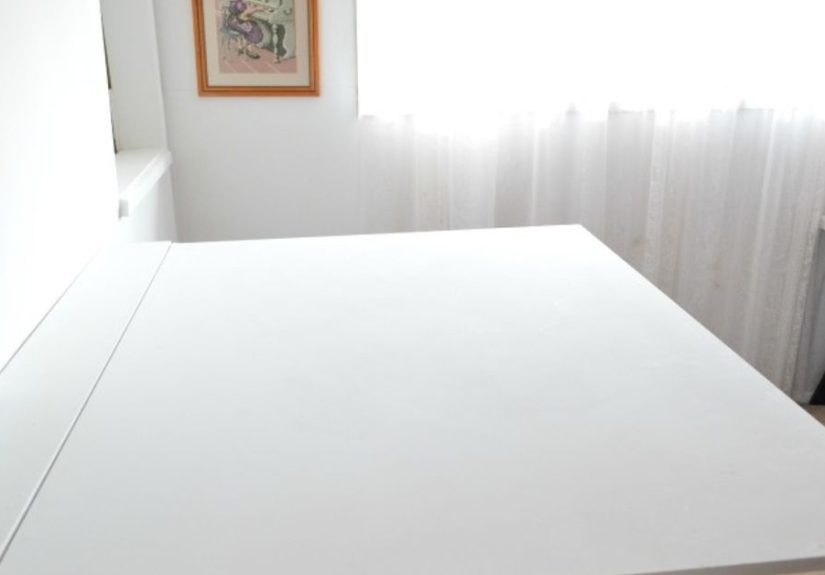
The front panel becomes the desk surface, so it needs to be flat and sturdy. A clean plywood panel reinforced with trim or a shallow frame works well. If you want a more polished look, add edge banding or solid wood trim to hide plywood edges.
5. Install the Hinges
Attach the fold-out front carefully and test the movement. The panel should open smoothly and sit level when supported. A piano hinge can distribute weight nicely across the width, while other hinge styles may suit more decorative builds.
6. Add Desk Supports
This is where you decide whether your desk feels dependable or mildly suspicious. Folding brackets, chains, or drop-leaf supports can hold the desktop level. For wider tops, use two supports to reduce sagging and improve stability. Follow the hardware sizing guidance carefully so the desk opens fully and sits correctly.
7. Mount the Desk Securely
Attach the cabinet to the wall with the right screws and anchors for the structure behind the drywall. Use a level, predrill holes, and check alignment before tightening everything down. If your build uses a French cleat or mounting cleat, make sure it is fully secured and seated before loading the desk.
8. Sand, Finish, and Protect
Sand thoroughly, usually starting with a medium grit and moving to a finer grit. Always sand with the grain on exposed wood surfaces. Remove dust carefully before painting, staining, or applying a protective topcoat. For a craft desk, a durable clear finish on the work surface is especially helpful because this piece will see glue, paint, tape, markers, and all the other little aggressions of creative life.
Smart Design Features That Make the Desk Better
Add Good Lighting
Task lighting can make the difference between “beautifully handmade” and “why does this seam look haunted?” A wall-mounted lamp, under-cabinet light, or adjustable task light above the desk helps immensely, especially for detailed work.
Plan for Cord Management
If you use a sewing machine, cutting machine, tablet, glue gun, or lamp, add a discreet path for cords. A small grommet hole, notch, or pass-through at the rear of the cabinet keeps the setup from turning into a spaghetti pile.
Use Vertical Storage
Shallow upper cubbies, pegboards, clip rails, and small bins keep tools visible and accessible. This is far more helpful than stacking everything into one deep shelf and pretending you will remember where the bone folder went. You will not.
Protect the Work Surface
If you cut fabric, paper, or vinyl regularly, consider adding a removable cutting mat. If you paint or glue, keep a washable protective layer nearby. This preserves the finish and saves you from that moment where you realize your “temporary paint smear” has become part of the desk’s long-term personality.
Common Mistakes to Avoid
The first mistake is building the desk too shallow or too narrow for the crafts you actually do. The second is ignoring storage until the end. The third is underestimating wall mounting. A fold out desk is not just a pretty panel on hinges. It is a functional piece that must support downward force, repeated opening and closing, and the occasional enthusiastic lean.
Another common mistake is skipping finish prep. Rushed sanding and dusty surfaces lead to a disappointing final look. Bad hardware placement can also create a desktop that sits unevenly or will not close properly. Dry-fit, test, and adjust before final installation.
How to Style It So It Still Looks Good Closed
When the desk is shut, it becomes part of the room. Paint it to match the wall for a subtle look, or use a contrasting color to make it feel like an intentional accent piece. Add trim for a cabinet appearance, or keep the front slab simple and modern. A small knob, leather pull, or sleek handle can make a big difference.
If you want the desk to look less like office furniture and more like decor, frame the front panel, hang art nearby, or build matching shelves around it. The goal is for the closed desk to say, “I belong here,” not, “I was assembled at midnight during a hardware store crisis.”
Real-Life Experience: What Building and Using One Actually Feels Like
The first thing most people notice after building a fold out craft desk is not just the extra workspace. It is the mental relief. There is something deeply satisfying about having a dedicated place for your projects, even if that place folds up into the wall like it is protecting state secrets. Instead of dragging supplies from room to room, you open one panel, sit down, and get to work. That tiny ritual changes how often you create.
In practice, the build usually teaches a few lessons fast. One is that measuring storage around real supplies is smarter than guessing. A bin of ribbon, a sewing machine, jars of brushes, sticker books, and cutting mats all have their own opinions about space. Another lesson is that a fold out desk tends to become a family magnet. Even if you build it for your own crafting, someone else will immediately ask if they can use it for homework, sketching, gift wrapping, or “just setting this here for a second,” which is how clutter begins its career.
There is also a noticeable difference between a fold out desk that is merely cute and one that is genuinely comfortable. The comfortable version opens easily, feels solid under your hands, has light exactly where you need it, and keeps the most-used tools within reach. The cute-but-annoying version looks great in photos but makes you crouch, stretch, or hunt for scissors every five minutes. That is why practical choices matter more than fancy ones.
Many DIYers also find that the finishing stage has an outsized effect on how proud they feel when the project is done. Once the sanding is smooth, the edges are clean, and the finish goes on evenly, the desk stops looking like “a thing I built” and starts looking like furniture. That is a rewarding shift. It turns the piece into something you want to show off instead of something you explain apologetically to visitors.
And finally, using a fold out craft desk over time tends to reveal its biggest strength: it supports imperfect creativity. You do not need a giant studio or a magazine-worthy craft room. You just need a setup that opens when inspiration appears and closes when life gets busy. That is why this kind of project is so appealing. It is practical, personal, and surprisingly empowering. Also, it gives your dining table a chance to retire from its unpaid second job as a glue station.
Conclusion
Building a fold out craft desk is one of those rare DIY projects that feels clever before you even finish it. It saves space, adds storage, and creates a dedicated zone for creativity without demanding an entire room. With thoughtful planning, sturdy materials, reliable mounting, and a finish that can handle real use, you can build a desk that works hard, looks polished, and folds away neatly when the project is done.
The best version is not necessarily the fanciest one. It is the one that fits your space, supports your favorite hobbies, and makes it easier to start creating. Build it well, organize it honestly, and give it a finish that can survive your most ambitious weekend ideas. Your craft supplies will finally have a home, and your house will stop wondering why washi tape keeps appearing in random drawers.