Table of Contents >> Show >> Hide
- 30 Architects Who Created Something Amazing
- 1. Frank Lloyd Wright
- 2. Zaha Hadid
- 3. Le Corbusier
- 4. Louis Sullivan
- 5. Eero Saarinen
- 6. Frank Gehry
- 7. Renzo Piano
- 8. Jeanne Gang
- 9. Tadao Ando
- 10. Maya Lin
- 11. Philip Johnson
- 12. Peter Zumthor
- 13. Balkrishna Doshi
- 14. Antoni Gaudí
- 15. Ludwig Mies van der Rohe
- 16. Oscar Niemeyer
- 17. Norman Foster
- 18. Richard Rogers
- 19. Rem Koolhaas
- 20. Bjarke Ingels
- 21. Santiago Calatrava
- 22. Shigeru Ban
- 23. Daniel Libeskind
- 24. Moshe Safdie
- 25. I. M. Pei
- 26. Lina Bo Bardi
- 27. Alvar Aalto
- 28. Mario Botta
- 29. Snøhetta
- 30. Julia Morgan
- Why These Architects Still Matter
- What Makes a Building Feel “Built By Humans”?
- Personal Experiences With Amazing Architecture
- Conclusion
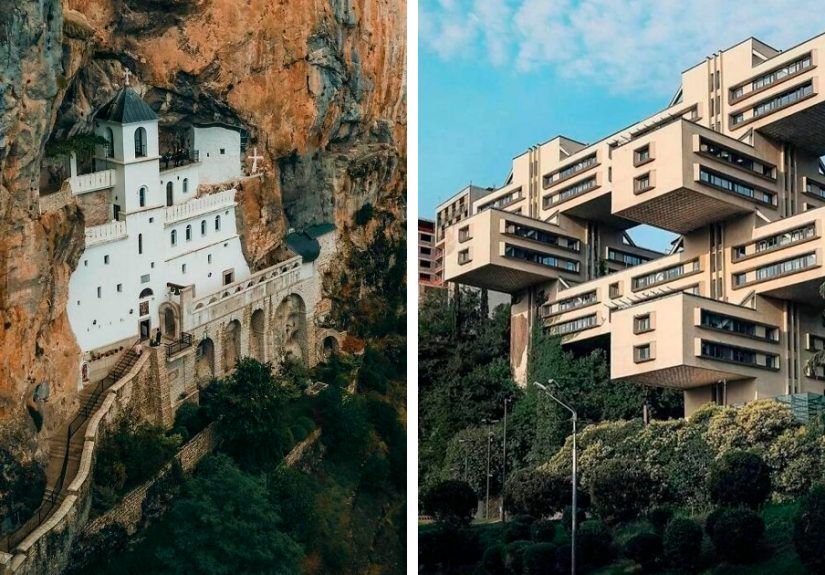
Some buildings are useful. Some buildings are beautiful. And then there are buildings that make you stop mid-walk, forget why you opened your phone, and whisper, “Human beings did that?” That is the energy behind “Built By Humans”: 30 Architects That Ate And Left No Crumbs When It Came To Creating Something Amazinga celebration of architects who turned concrete, glass, steel, stone, wood, brick, and pure nerve into unforgettable places.
Architecture is often treated like background scenery, but the best architecture refuses to stay quiet. It frames cities, changes skylines, shapes public memory, and occasionally makes a museum look like a spaceship that took a wrong turn and decided to become cultured. From Frank Lloyd Wright’s nature-hugging houses to Zaha Hadid’s futuristic curves, these architects did not simply design buildings. They designed moments.
This article explores 30 visionary architects whose work proves that the built environment can be emotional, theatrical, practical, strange, peaceful, rebellious, and deeply humansometimes all before lunch.
30 Architects Who Created Something Amazing
1. Frank Lloyd Wright
Frank Lloyd Wright made architecture feel rooted instead of dropped from the sky. His masterpiece, Fallingwater, was designed in 1935 as a weekend home for the Kaufmann family and became a legendary example of organic architecture. Instead of placing the house beside a waterfall like a normal person with respect for dry socks, Wright placed it directly over the falls. The result is a home that feels grown from rock, water, forest, and confidence.
2. Zaha Hadid
Zaha Hadid made buildings move without actually moving. Born in Baghdad and trained in London, she became the first woman to win the Pritzker Architecture Prize. Her work often looks fluid, angular, and unapologetically futuristic. The Heydar Aliyev Center in Baku and the MAXXI Museum in Rome show her talent for turning geometry into drama. Hadid did not ask buildings to behave. She gave them permission to dance.
3. Le Corbusier
Le Corbusier helped define modern architecture with ideas that still echo through apartments, offices, museums, and design schools. Villa Savoye, created with Pierre Jeanneret, is one of the clearest expressions of his “five points of architecture”: pilotis, free plan, free facade, ribbon windows, and roof garden. Translation: he looked at heavy old houses and said, “What if we gave this thing legs and better lighting?”
4. Louis Sullivan
Louis Sullivan helped give the skyscraper its voice. Often associated with the phrase “form follows function,” Sullivan believed buildings should express their purpose honestly. The Sullivan Center in Chicago, formerly the Carson Pirie Scott Building, shows his genius: practical steel-frame commercial architecture wrapped in lush ornament. It is business with eyelashes.
5. Eero Saarinen
Eero Saarinen designed with the confidence of someone who thought furniture, airports, and monuments all deserved main-character energy. His Gateway Arch in St. Louis rises 630 feet in stainless steel, a bold inverted catenary curve that became one of America’s most recognizable monuments. Saarinen made a national symbol out of one clean, sweeping gesture.
6. Frank Gehry
Frank Gehry turned architectural wrinkles into high art. His Guggenheim Museum Bilbao helped redefine what a museum could do for a city. Its titanium curves, sculptural forms, and computer-aided complexity made the building feel alive. Gehry’s work says, “Yes, this wall bends. No, we are not apologizing.”
7. Renzo Piano
Renzo Piano has a gift for making buildings feel intelligent without acting smug about it. The Whitney Museum’s Meatpacking District home in New York balances galleries, terraces, city views, and public space. Piano’s architecture often feels light, precise, and humanelike engineering learned manners.
8. Jeanne Gang
Jeanne Gang brings social thinking into bold architectural form. Aqua Tower in Chicago is famous for its rippling balconies, but its beauty is not just decorative. The facade creates shade, views, and a sense of vertical community. Gang proves that sustainability and spectacle do not have to sit at different lunch tables.
9. Tadao Ando
Tadao Ando is the poet of concrete. Self-taught and deeply disciplined, he uses simple materials to create spiritual calm. The Church of the Light in Osaka is a perfect example: a concrete room split by a glowing cross of daylight. It is minimalism with goosebumps.
10. Maya Lin
Maya Lin changed memorial architecture while still a Yale student. Her Vietnam Veterans Memorial in Washington, D.C., uses two polished black granite walls set into the earth, with names listed chronologically. It does not shout. It reflects. It asks visitors to confront loss, memory, and themselves.
11. Philip Johnson
Philip Johnson’s Glass House in New Canaan, Connecticut, is both simple and provocative. Built in 1949, it helped bring International Style ideas into American residential architecture. A house made mostly of glass sounds peaceful until you remember curtains exist for a reason. Still, as a composition of landscape, transparency, and modernist nerve, it remains iconic.
12. Peter Zumthor
Peter Zumthor designs buildings that feel like they have a heartbeat, but a very quiet one. Trained first as a cabinetmaker, he brings intense attention to material, texture, atmosphere, and silence. His Therme Vals spa in Switzerland feels less like a building and more like stone remembering water.
13. Balkrishna Doshi
Balkrishna Doshi brought modern architecture into deep conversation with Indian climate, culture, and community. His work includes educational institutions, housing, and urban planning. Doshi’s architecture is serious without being stiff, humane without being sentimental, and proof that design can serve ordinary life beautifully.
14. Antoni Gaudí
Antoni Gaudí designed as if straight lines had personally offended him. His work in Barcelona, especially the Sagrada Família and Casa Batlló, fuses structure, craft, religion, color, and organic form. Gaudí’s buildings look grown, carved, melted, and blessedsometimes all at once.
15. Ludwig Mies van der Rohe
Mies van der Rohe mastered the art of doing less so powerfully that everyone noticed. His glass-and-steel language shaped modern corporate architecture around the world. The Seagram Building in New York, designed with Philip Johnson, remains a classic example of disciplined elegance. Mies proved that minimalism is not emptiness; it is pressure.
16. Oscar Niemeyer
Oscar Niemeyer gave modernism curves, swagger, and a Brazilian accent. His buildings in Brasília turned a national capital into a futuristic composition of concrete forms. Where some modernists loved boxes, Niemeyer loved swoops, bowls, ramps, and silhouettes that looked drawn in one joyful motion.
17. Norman Foster
Norman Foster helped define high-tech architecture with buildings that celebrate structure, transparency, and performance. His work often makes engineering visible and elegant. From airports to towers, Foster’s projects show that technology can be graceful instead of cold.
18. Richard Rogers
Richard Rogers made exposed systems exciting. With Renzo Piano, he co-designed the Centre Pompidou in Paris, famously turning building services into exterior spectacle. Pipes, ducts, escalators, and structure became part of the visual language. It was architecture saying, “Yes, I have organs. Look at them.”
19. Rem Koolhaas
Rem Koolhaas is part architect, part theorist, part urban detective. His buildings and writings explore congestion, culture, capitalism, and the weird theater of modern cities. Projects like the Seattle Central Library show his interest in rethinking public institutions for contemporary life.
20. Bjarke Ingels
Bjarke Ingels specializes in architecture that feels playful but is often built on sharp logic. His firm’s projects mix sustainability, density, public space, and visual surprise. Ingels is the architect most likely to turn a power plant into a ski slope and somehow make the meeting notes sound reasonable.
21. Santiago Calatrava
Santiago Calatrava blends architecture, engineering, and sculpture. His bridges, stations, and cultural buildings often resemble wings, ribs, shells, or bones. The result can be dramatic, controversial, expensive, and unforgettablewhich is basically architecture’s version of opera.
22. Shigeru Ban
Shigeru Ban is known for elegant structures and humanitarian design, including innovative uses of paper tubes, timber, and recyclable materials. His disaster-relief shelters show that architecture is not only about prestige projects; it can also offer dignity when people need it most.
23. Daniel Libeskind
Daniel Libeskind designs buildings with emotional sharp edges. His Jewish Museum Berlin is famous for its fractured geometry, voids, and symbolic spatial experience. Libeskind’s work often asks architecture to carry history, trauma, and memory without smoothing them into decoration.
24. Moshe Safdie
Moshe Safdie became widely known for Habitat 67 in Montreal, a housing complex that stacked modular units into a new vision of urban living. It looked like someone played with blocks and accidentally invented a landmark. Safdie’s career has continued to explore density, public life, and dramatic form.
25. I. M. Pei
I. M. Pei balanced geometry, monumentality, and restraint. His glass pyramid at the Louvre was controversial at first, because Paris does not accept new accessories without judging them harshly. Over time, it became beloved, proving that a bold modern intervention can renew a historic place.
26. Lina Bo Bardi
Lina Bo Bardi created architecture full of public generosity. Her São Paulo Museum of Art, raised on bold red supports, leaves a vast open plaza beneath it for civic life. She understood that sometimes the most important part of a building is the space it gives back.
27. Alvar Aalto
Alvar Aalto softened modernism with warmth, wood, curves, and human scale. His buildings, furniture, and interiors show a deep sensitivity to daily life. Aalto proved that modern architecture did not need to feel like a dentist’s waiting room on the moon.
28. Mario Botta
Mario Botta’s 1995 SFMOMA building gave San Francisco a bold brick-and-stone museum presence, complete with a striped cylindrical turret. His work often uses geometry, symmetry, and strong material expression. Botta reminds us that museums can have a face you remember.
29. Snøhetta
Snøhetta, the international design firm behind major cultural projects, is known for connecting architecture with landscape and public movement. Its expansion of SFMOMA integrated the older Mario Botta building while opening the museum more fully to the city. The result is architecture as urban invitation.
30. Julia Morgan
Julia Morgan was the first woman admitted to the architecture program at the École des Beaux-Arts in Paris and became one of America’s most prolific architects. Best known for Hearst Castle, she combined engineering skill, stylistic range, and remarkable persistence in a profession that rarely rolled out a welcome mat for women.
Why These Architects Still Matter
The architects on this list did not all share a single style. Some loved concrete. Some loved glass. Some loved curves. Some loved restraint so much that one more decorative detail might have made them file a formal complaint. What unites them is the ability to make architecture more than shelter.
Great architecture solves problems while creating meaning. Wright solved the relationship between home and nature. Lin solved the problem of remembrance without patriotic noise. Gang questions how tall buildings can feel social. Ban asks how design can help after disaster. Doshi shows how architecture can belong to climate, culture, and everyday people.
That is why iconic architecture remains powerful long after the ribbon-cutting ceremony, the press photos, and the first wave of confused online comments. A great building keeps working on us. It changes how we move, gather, remember, shop, pray, learn, and look at the sky.
What Makes a Building Feel “Built By Humans”?
The phrase “built by humans” matters because the best architecture carries evidence of imagination. Even when software, engineering, and huge teams are involved, a great building still feels touched by human risk. Someone had to propose the impossible curve. Someone had to fight for the quiet memorial. Someone had to say, “Let’s put the house over the waterfall,” and somehow not be escorted out of the meeting.
Human architecture contains contradiction. It is practical and emotional. Heavy and delicate. Public and personal. It can age gracefully or become a cautionary tale with a very expensive maintenance budget. But when it works, it reminds us that people are capable of turning materials into meaning.
Personal Experiences With Amazing Architecture
There is a particular feeling that happens when you stand in front of a building that refuses to be ordinary. You may not know the architect’s biography. You may not know the structural system, the design theory, or whether the facade is technically curtain wall, rainscreen, or “very shiny expensive skin.” But your body knows something is happening. Your pace slows. Your head tilts. You become, briefly, a tourist in your own attention.
That experience is why architecture matters beyond professional circles. Most people will never read a technical drawing, argue about parametricism, or casually use the phrase “tectonic expression” at brunch. But everyone understands the feeling of entering a space that changes the mood. A small chapel can make a loud person whisper. A museum lobby can make strangers look up together. A memorial can turn a crowd into a community of silence. That is not decoration. That is design operating at full power.
One of the best ways to appreciate architecture is to walk slowly around it before going inside. Buildings reveal themselves in layers. From far away, you see the silhouette. Up close, you notice materials, joints, shadows, steps, doors, and the tiny decisions that separate thoughtful design from a box with ambition issues. Great architects understand arrival. They know that the path to a building is part of the building’s emotional script.
Inside, the experience becomes more personal. Light can make a plain wall feel sacred. A low ceiling can create intimacy before a tall room releases you into openness. A window can frame a tree so perfectly that nature suddenly looks curated. This is where architects quietly manipulate us, and honestly, when they do it well, thank you. A beautiful staircase can make climbing feel ceremonial. A good public plaza can make doing nothing feel civic. A well-designed library can make you believe you are about to become a better version of yourself, even if you are only there for the Wi-Fi.
The most amazing buildings also teach patience. Some look strange at first. The Louvre Pyramid was once controversial. Many modern landmarks were mocked before they were loved. Architecture often arrives before public taste catches up. That does not mean every weird building is secretly genius; some are just expensive chaos wearing a confident hat. But it does mean the best buildings deserve time. They need weather, people, footsteps, criticism, repair, and memory.
Experiencing architecture is not about worshiping famous names. It is about noticing how built spaces shape human life. The next time you pass a bold tower, a quiet courtyard, a clever school, a beloved old theater, or a small house that seems perfectly placed, pause for a second. Someone imagined that. Someone drew it, argued for it, revised it, engineered it, funded it, built it, and hoped it would matter. That is the real miracle behind “Built By Humans.” We keep making places that hold our routines, our grief, our celebrations, our coffee runs, and our ridiculous need to take photos of pretty staircases.
Conclusion
The greatest architects do not simply leave buildings behind. They leave new ways of seeing. They teach us that a home can belong to a waterfall, a museum can reshape a city, a memorial can speak through silence, and a tower can ripple like water in the sky. These 30 architects ate and left no crumbs because they pushed architecture beyond utility and into imagination.
In the end, amazing architecture is not just about famous landmarks. It is about the human urge to make places meaningful. Bricks, glass, steel, and concrete are ordinary materials. In the right hands, they become memory, identity, shelter, performance, and wonder. Built by humans, yesbut at their best, built for the parts of us that want to look up and feel something.