Table of Contents >> Show >> Hide
- What Happened at Casa Bonita?
- The Tiny Smell Story That Turned Into a Big Brand Story
- A Very Colorado Plumbing Whodunit
- Why Restaurants Take Sewage Smells Seriously
- Casa Bonita’s Comeback Has Always Been Bigger Than Food
- Did This Incident Change the Big Picture?
- What This Says About Restaurants, Nostalgia, and Reality
- The Experience Side of the Story: What a Night Like This Feels Like
- Final Take
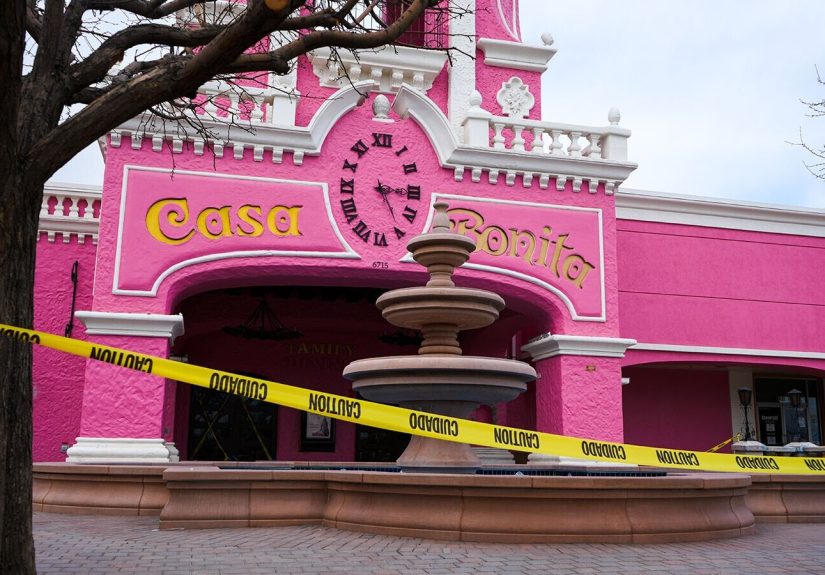
Casa Bonita has spent the last few years pulling off one of the most dramatic glow-ups in American restaurant history. It went from faded Colorado icon to heavily renovated nostalgia palace, complete with cliff divers, caves, sopapillas, and the kind of reservation demand that makes concert tickets look emotionally stable. So when headlines popped up saying Casa Bonita was evacuated over the weekend for sewage smells, the story spread fast for one simple reason: when a restaurant built on spectacle suddenly becomes a plumbing mystery, people pay attention.
And honestly, how could they not? Casa Bonita is not just a place to eat. It is a place to experience. It is dinner theater, childhood memory, roadside attraction, internet legend, and South Park lore all rolled into one bright pink building. That means even a short closure becomes bigger than a routine operational hiccup. A broken lightbulb at an ordinary restaurant is just maintenance. A foul odor at Casa Bonita becomes a national conversation with sopapillas on the side.
What Happened at Casa Bonita?
According to local reporting, Casa Bonita closed early on Friday night, November 15, 2024, after a strong sewage-like odor intensified inside the restaurant. Guests were reportedly asked to leave, and at least one person was said to feel sick while exiting. The closure happened about 15 minutes before the restaurant was already scheduled to shut down, which matters because it suggests management did not try to power through the situation once the smell became impossible to ignore.
That part is worth underlining. In restaurant terms, closing early is not nothing. Service businesses hate losing a Friday night. They hate refunds, disappointed guests, social media complaints, and staff confusion even more. So if a place decides to stop service and get people out, it usually means the issue has crossed the line from annoying to operationally unacceptable.
By the next day, Casa Bonita had reportedly reopened without further problems. That quick turnaround kept the incident from becoming a full-blown shutdown saga, but it did not stop the bigger question from hanging in the air longer than the smell itself: what exactly caused it?
The Tiny Smell Story That Turned Into a Big Brand Story
On paper, this was a short-lived closure. In practice, it was the kind of story that punches above its weight because Casa Bonita is not a normal restaurant and has never wanted to be. The place has always sold atmosphere first and food second, which is part of the joke, part of the charm, and part of the business model. For decades, people went there for the cliff divers, the faux village, the weird caves, the over-the-top décor, and the chaotic joy of being somewhere that felt like a child’s fever dream with a margarita license.
That unusual identity is also why a sewage smell lands differently here. Casa Bonita’s revival has been marketed as a rescue mission, not just a reopening. Trey Parker and Matt Stone bought the restaurant in 2021 after it fell into bankruptcy trouble, then poured more than $40 million into restoring it. The project became so elaborate, so costly, and so emotionally loaded that it eventually became the subject of a documentary. This was not a simple remodel. It was a full cultural restoration job on a place that Coloradans treat like a myth with table service.
So when foul odors force an evacuation at a freshly revived institution, the public reaction is predictable: people do not just ask, “Did something break?” They ask, “Wait, after all that money and effort, how is this still happening?”
A Very Colorado Plumbing Whodunit
The public explanations around the incident made the story even more interesting. One account said a representative for Casa Bonita blamed an issue connected to the city’s system. But Lakewood publicly pushed back, saying the city does not provide sanitary sewer service to the restaurant. Instead, the area’s sanitary sewer provider is the East Jefferson County Sanitation District. The city also said its own main lines in the street were checked and appeared to be functioning normally, which raised the possibility that the issue may have involved the restaurant’s service line or something internal.
In other words, this briefly became a plumbing detective story with local government footnotes. And while that may sound deeply unglamorous, it is actually the most restaurant thing imaginable. Hospitality can look magical out front while running on pipes, drains, grease traps, vents, valves, schedules, and maintenance logs in the back. Diners see waterfalls and puppet shows. Operators see systems. If one of those systems goes sideways, the fantasy ends fast.
It is also a reminder that “the city” is not always the right villain in these stories. Sewer infrastructure is often split among cities, special districts, private service lines, and property-level plumbing. To guests, that distinction is meaningless. To the people trying to fix the problem at 10 p.m. on a Friday, it is everything.
Why Restaurants Take Sewage Smells Seriously
This is the part where the article stops making jokes for a moment and puts on sensible shoes.
A sewage-related odor in a restaurant is not just gross. It can signal a sanitation risk, a ventilation problem, or the possible presence of sewer gas. That matters because restaurant operators are not supposed to treat sewage hazards like a quirky inconvenience, the same way they might treat a broken soda machine or a stubborn blender. Under food-safety rules, sewage backup or similar imminent health hazards can require operations to stop until the issue is addressed and the business is cleared to resume.
Even when the precise cause is not immediately confirmed, a strong sewer smell is the kind of problem that deserves immediate caution. Hydrogen sulfide, one of the gases associated with sewer environments, is known for its rotten-egg smell and can cause eye irritation, headaches, nausea, and respiratory symptoms depending on concentration and exposure. That does not mean every bad odor in a building equals dangerous gas exposure, and it would be irresponsible to assume that from headlines alone. But it does explain why a responsible operator would clear the room rather than tell everyone to keep eating enchiladas and think positive thoughts.
In that sense, the evacuation was not the scandalous part. The evacuation was the correct instinct. The smell was the problem; the decision to stop service was the adult move.
Casa Bonita’s Comeback Has Always Been Bigger Than Food
To understand why this story traveled so far, you have to understand what Casa Bonita represents. The restaurant has lived multiple lives: family destination, local punchline, bankruptcy cautionary tale, pop-culture shrine, and now nostalgia-fueled comeback project. It was made nationally famous by a 2003 episode of South Park, but long before that it was already deeply wired into Colorado memory.
The modern version of Casa Bonita was supposed to preserve the weirdness while upgrading everything else. Cleaner interiors. Better food. Stronger operations. A sharper experience. The goal was not to turn Casa Bonita into a sleek, minimalist tasting room where the guacamole is described as “playful.” The goal was to keep the madness and remove the decay.
That is why stories like this sting more than they normally would. They seem to tug at the old reputation the new owners were trying so hard to outrun. For years, Casa Bonita’s image was attached to atmosphere, nostalgia, and a reputation for being more iconic than polished. The renovation tried to flip that formula into something like this: iconic and polished. So when a foul odor forces an evacuation, the internet immediately starts writing its own punchlines. The building may be updated, but the public memory is still waiting to see if the old chaos is truly gone.
Did This Incident Change the Big Picture?
Probably not in any lasting way, unless repeat problems followed. One rough night does not cancel a successful comeback. It does not erase the renovation. It does not wipe out the huge demand for reservations. It does not suddenly make the restaurant irrelevant. If anything, the speed of the reopening suggests this was treated as a contained operational problem rather than a prolonged systems failure.
But it did reveal something important: the margin for error at a place like Casa Bonita is much smaller than it looks. The restaurant runs on emotion as much as infrastructure. People go there expecting a story. If the story is “the cliff diver was amazing,” that is a win. If the story is “the dining room smelled like a sewer and we got evacuated,” that becomes the whole brand conversation for the weekend.
That is the blessing and curse of a beloved institution. Fame makes everything louder. A normal venue has customers. Casa Bonita has witnesses.
What This Says About Restaurants, Nostalgia, and Reality
There is also a broader lesson here for legacy brands. Renovation can restore a building, upgrade a menu, improve labor systems, and polish a reputation, but it cannot erase the fact that restaurants are physical machines. Pipes age. Drains clog. service lines fail. Odors appear. Even a beloved landmark with a giant cultural halo still has to survive Friday night in the real world.
That is why the Casa Bonita story feels so oddly human. Beneath the cliff divers and pop-culture mythology, this is still a service business trying to keep hundreds of moving parts working at once. The fantasy is elaborate, but the vulnerabilities are surprisingly ordinary. The same place that serves nostalgia by the plateful can still get ambushed by the timeless power of terrible plumbing.
And maybe that is part of what keeps Casa Bonita fascinating. It is not a polished corporate concept built in a lab. It is a giant, weird, beloved institution that keeps colliding with real life. Sometimes that collision creates charm. Sometimes it creates headlines. On one smelly Friday night, it created both.
The Experience Side of the Story: What a Night Like This Feels Like
For guests, an incident like this probably began in the most ordinary way possible: one table notices a weird smell, another assumes it is temporary, and someone else jokes that maybe the haunted cave has become a little too immersive. In a place like Casa Bonita, where sensory overload is part of the package, people may not immediately realize they are witnessing the beginning of a closure. The music is going, kids are looking toward the divers, drinks are arriving, and then suddenly the smell keeps building instead of fading.
That shift matters because restaurant experiences are built on trust. Guests do not know the condition of the service line, the ventilation path, or the maintenance call that may or may not have already happened. What they know is whether the room feels safe, clean, and under control. Once a sewage-like odor becomes impossible to ignore, the whole atmosphere changes. Dinner is no longer dinner. It becomes a group realization. Forks slow down. Eyes meet across tables. Staff start moving with more urgency. People check their kids’ faces. The room stops feeling fun and starts feeling uncertain.
For employees, the experience is even more intense. Front-of-house staff are usually the first translators of chaos. They have to answer questions before they have perfect information. They have to stay calm when guests are frustrated, uncomfortable, or worried. They have to help people exit, explain what they can, and still keep the interaction from turning into panic. None of that is glamorous, and all of it is part of hospitality. A night like this asks workers to be part customer-service expert, part traffic manager, part emotional shock absorber.
Management, meanwhile, has to make a call nobody enjoys making: do we wait and hope, or do we end the night? At a popular restaurant, especially on a weekend, shutting down means lost revenue, operational disruption, and a high chance of going viral for all the wrong reasons. But delaying the decision is worse if the odor keeps spreading. That is why the choice to evacuate matters so much. It tells guests that comfort, sanitation, and caution beat squeezing a few more minutes out of the shift.
Then there is the aftertaste, and not the sopaipilla kind. Guests leave with a story that is almost guaranteed to travel. Some will laugh about it. Some will be annoyed. Some will post about it before they even reach the parking lot. In the age of social media, a strange restaurant moment does not end when the doors close. It expands. What used to be a local anecdote now becomes a headline, a meme, a thread, and a debate about what the incident “really means.”
For Casa Bonita specifically, the experience hits an emotional nerve because people are so invested in the comeback. Many diners arrive wanting the place to succeed. They want the revived version to justify the hype, the money, and the mythology. So when something goes wrong, the reaction is not just disgust. It is disappointment mixed with protective concern. People are not only asking, “Why did this happen?” They are also asking, “Please tell me this is a one-off and not the return of old Casa Bonita problems in a new paint job.”
That is why this episode resonated beyond one bad-smelling night. It put everyone, guests and staff alike, inside the tension that defines Casa Bonita’s modern era: a beloved legend trying very hard to stay magical while still living in the wonderfully inconvenient world of real pipes, real buildings, and real consequences.
Final Take
Casa Bonita’s weekend evacuation over sewage smells was the kind of story that sounds funny until you remember that sanitation problems inside a restaurant are serious business. The good news for fans is that the closure appears to have been brief, the restaurant reportedly reopened the next day, and the incident did not become a prolonged shutdown. The more interesting takeaway is not that Casa Bonita had one terrible-smelling Friday night. It is that even one of the country’s most famous nostalgia restaurants is still vulnerable to deeply unglamorous real-world failures.
In a strange way, that makes Casa Bonita feel even more like Casa Bonita. It is still spectacular, still beloved, still bizarre, and apparently still capable of producing a story nobody could have workshop-tested into existence. One minute you are heading out for dinner and cliff divers. The next minute the whole building is a cautionary tale with a whiff of municipal intrigue.
That is not the comeback script anyone wanted. But it is certainly on brand for America’s most legendary pink fever dream.