Table of Contents >> Show >> Hide
- The Setup: When a TV Soundstage Worked Like a 1970s Dating App
- Meet the Players (Because This Is Not a Normal “My Friend Set Me Up” Story)
- The Date: A Classic Hollywood Dinner With a Not-So-Classic Vibe
- So Why Was It “Lousy”?
- The Hidden Lesson: Celebrity Doesn’t Immunize You From Bad Timing
- Why This Anecdote Became Hollywood Lore
- What to Take Away (Besides “Never Let Chevy Chase Run Your Love Life”)
- Conclusion: The Funniest Part Is How Unfunny It Felt
- Bonus: of Relatable “Set-Up” Experiences (Because We’ve All Been There)
Hollywood loves a good “what if?” story. What if the audition went differently? What if the script got tossed?
What if your friendwho is definitely the kind of person who would prank-call your mom for laughssets you up
on a date that becomes legend for all the wrong reasons?
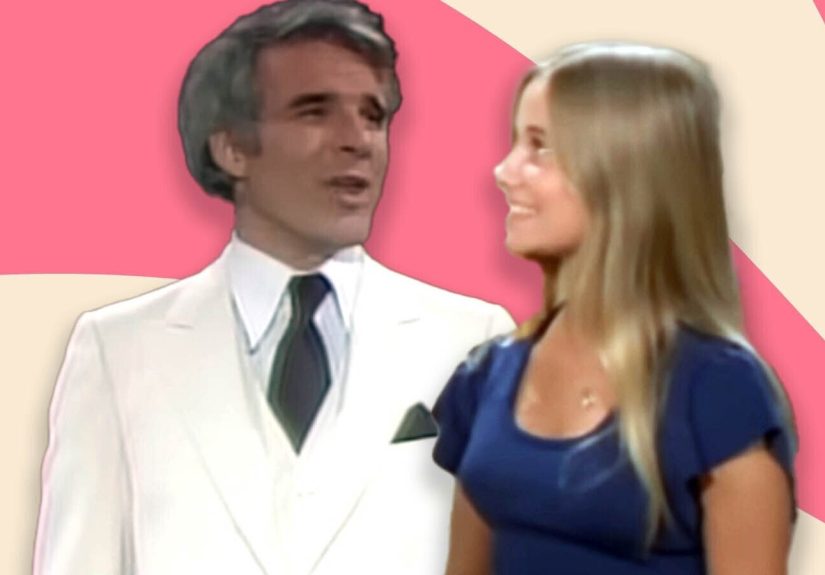
That’s the short version of the time Chevy Chase helped Steve Martin get a date with “Marcia Brady”
(meaning actress Maureen McCormick, the iconic eldest Brady kid), and it… did not turn into a romantic
montage backed by soft-focus sunshine and a very polite tambourine. Instead, it turned into a surprisingly
human story about timing, fame, nerves, and the awkward truth that even “perfect” people can have
deeply imperfect nights.
The Setup: When a TV Soundstage Worked Like a 1970s Dating App
The connective tissue here is pure old-school show business: people talking to people, on lots, in hallways,
through friends of friends. In the late 1970s, Chevy Chase and Steve Martin were both ascending comedy rockets,
and Maureen McCormick was navigating the tricky afterlife of being America’s squeaky-clean TV crush.
The “matchmaking” didn’t happen through an algorithmit happened because Chase had access, charm, and the kind
of confidence that makes a whisper request feel like a casual errand.
As the story has been told and retold, Chase was on an NBC production in proximity to the Brady universe,
which led to him relaying that Martin wanted McCormick’s numbervia Florence Henderson (TV’s Carol Brady,
the mom who could make a blended family look like a reliable business model). The detail that makes this
feel especially Hollywood is the sheer improbability: a comedian passing a message through America’s TV mom
to reach the most famous teen sister in primetime.
Meet the Players (Because This Is Not a Normal “My Friend Set Me Up” Story)
Chevy Chase: The Connector With a Smirk
Chase’s public persona has always leaned into the “I’m joking… unless it works” vibe. He became a household name
by combining deadpan confidence with physical comedy, and by being the first face many viewers associated with
Saturday Night Live’s early eraespecially through the news-parody format that became Weekend Update.
Whether you love or loathe the chaos he sometimes brought to projects, he’s undeniably the type of guy who could
treat celebrity matchmaking like ordering coffee.
Steve Martin: The Comedian Who Was Everywhere
In the 1970s, Steve Martin wasn’t just “a funny guy.” He was the funny guystand-up superstar, writer,
performer, and the kind of cultural force who could make a silly arrow-through-the-head prop feel like a philosophy
of joy. He also carried a reputation for being smart, ambitious, and relentlessly curious, which made him
appealing beyond punchlines. In other words: if you were a young actor in Hollywood and Steve Martin asked you
out, it didn’t feel like a random invite. It felt like an event.
“Marcia Brady”: Maureen McCormick and the Problem of Being Everyone’s Ideal
If you played the “perfect” teen on TV, you didn’t get to simply be a messy young adult in private.
McCormick has been candidespecially in her memoir and interviewsabout how hard it was to reconcile the
Marcia Brady image with real-life insecurity and substance abuse. That context matters, because it reframes
the “lousy date” as something more sobering than celebrity gossip: it becomes a snapshot of someone trying
to hold herself together while her public image insisted she was already flawless.
The Date: A Classic Hollywood Dinner With a Not-So-Classic Vibe
According to McCormick’s own account, Martin asked her out to Musso & Frankan old Hollywood institution
that has been serving industry power lunches and late-night martinis since 1919. It’s the kind of place where the
booths feel like they’ve overheard a hundred screen tests and a thousand breakups, and where a first date can feel
like you’re auditioning for the role of “Person Who Has Their Life Together.”
In one of those telling details that screams “this is a real date and not a movie,” they each brought a friend
to make it more casual. (Translation: nobody wanted the pressure of a hard-launch romantic situationespecially
when everyone involved had a spotlight following them around like a clingy puppy.) At some point, the friends were
ditched, the date became more one-on-one, and later the evening ended with time at Martin’s place and a make-out
session that McCormick has described as, well… successful.
So Why Was It “Lousy”?
Here’s where the story stops being a punchline and starts being oddly relatable: the kiss was good, but the
connection didn’t hold. McCormick has said she was insecure and not fully presenthigh or spaced outand that she
didn’t laugh at Martin’s jokes. If you’re Steve Martin, that’s like a chef serving a signature dish and watching
the diner politely chew with the expression of someone reading a cable bill.
By her own telling, Martin was politeconfident enough in his talent to not get weird about itbut the chemistry
for a second date wasn’t there. And that’s the dagger: not a dramatic blowout, not a tabloid scandal, just that
quiet realization that the moment didn’t bloom. McCormick has said they never spoke again after that date and that
she regretted how she came across.
The Hidden Lesson: Celebrity Doesn’t Immunize You From Bad Timing
The most interesting part of this story isn’t “famous people went on a date.” It’s what the date reveals about
timing and identity. Martin, at that moment, was a high-energy creative force who thrived on connection,
curiosity, and laughter. McCormick, at that moment, was struggling with pressure, image, and substance use.
Put two people like that together and you don’t necessarily get fireworksyou might get a candle that keeps
going out because someone left the window open.
And if you’ve ever thought, “If I could just redo one night, I’d nail it,” you get why this story sticks.
It’s not about scoring a second date with a celebrity. It’s about seeing how fragile the best opportunities can be
when you’re not in a good place to receive them.
Why This Anecdote Became Hollywood Lore
Stories become lore when they hit multiple emotional notes at once. This one has:
- The absurdity: Chevy Chase acting as Cupid for Steve Martin and “Marcia Brady.”
- The glamour: a classic Hollywood restaurant and a larger-than-life comedian.
- The twist: the kiss works… and everything else doesn’t.
- The honesty: the “perfect girl” admits she was struggling, and that it mattered.
It’s also a neat micro-history of a weird transitional era: the 1970s entertainment machine where sitcom fame,
variety-show experiments, stand-up superstardom, and SNL’s emerging cultural power all overlapped. In that stew,
of course a bizarre blind date could happen. And of course it would be remembered.
What to Take Away (Besides “Never Let Chevy Chase Run Your Love Life”)
1) “Bring a friend” is a protective moveand sometimes a warning sign
Doubling a date can lower the pressure, but it can also signal that nobody feels safe being fully present.
In celebrity circles, it can be about privacy. In normal life, it can be about nerves. Either way, it changes the
emotional temperature of the room.
2) If you’re not well, even the “dream date” can feel like homework
When someone is dealing with substance use, anxiety, depression, or just plain burnout, social performance becomes
exhausting. Laughter becomes effort. Connection becomes risk. That doesn’t make anyone “bad.” It makes them human.
3) Regret isn’t always about the other personit’s often about the version of you that didn’t show up
McCormick’s regret isn’t framed as “Steve Martin rejected me.” It’s framed as “I wasn’t myself, and I wish I had
been.” That’s a different kind of acheand a more universal one.
Conclusion: The Funniest Part Is How Unfunny It Felt
The legend of Chevy Chase setting Steve Martin up with “Marcia Brady” endures because it’s a celebrity story that
behaves like a normal-person story. There’s the hype, the setting, the famous namesand then there’s the familiar
collapse into awkwardness, insecurity, and mismatch. The date wasn’t a disaster because someone spilled a drink
or insulted the waiter. It was “lousy” because the timing was lousy, and the people were complicated, and life
doesn’t care that you’re famous.
If anything, the story is a reminder that behind every glossy image is a real person, and behind every “perfect”
moment is a fragile set of circumstances that can wobble. Also, yes: if you ever get set up by a comedian,
maybe ask for references first.
Bonus: of Relatable “Set-Up” Experiences (Because We’ve All Been There)
Even if your friend isn’t Chevy Chase and your date isn’t Steve Martin, the emotional mechanics of a “set-up”
are basically timeless. If you’ve ever been introduced with a sentence like, “You two would be PERFECT together,”
you already know the first problem: now you’re not meeting a personyou’re meeting a prophecy. You’re walking into
the room carrying someone else’s confidence, and it’s heavy. You want to be grateful. You want to be charming.
You want to prove your friend right. Congratulations, you’re now performing in a one-night show called
Please Validate My Social Network.
Then comes the “buffer friend” maneuver. Sometimes it’s practical: safety, comfort, a softer landing.
Sometimes it’s social: nobody wants to look too eager. And sometimes it’s emotional: you’re not ready to be fully
seen by a stranger, so you bring a witness like it’s a court hearing for your personality. The funny part is,
the buffer friend can accidentally become the most relaxed person at the table, because they’re not trying to be
desirablethey’re just trying to finish their fries.
Set-ups also have a special talent for forcing the weirdest small talk. You can be perfectly normal on a date you
chose yourself, but a set-up makes you suddenly speak in résumé bullet points. “I like travel.”
“I’m really into comedy.” “I have a job.” You’re not flirtingyou’re doing a LinkedIn interview while holding a
napkin. And if your date is genuinely funny, there’s an extra pressure: you feel like you’re supposed to laugh
at the correct frequency, like there’s a laugh track audition happening in your ribcage.
The most painful set-up experiences, though, aren’t about boredomthey’re about timing. You might meet someone
wonderful while you’re stressed, grieving, burnt out, or simply not ready. And later, you replay the night and
think, “If I’d met them three months earlier, I would’ve been lighter. I would’ve listened better. I would’ve
laughed more.” That’s the quiet heartbreak underneath the Steve Martin–Maureen McCormick story: not a scandal,
just a moment where one person wasn’t in a place to receive what the other person was offering.
The good news is that set-ups teach fast lessons: don’t overpromise, don’t overperform, and don’t confuse
“famous” with “fated.” If you’re not feeling it, you’re not broken. If you are feeling it, greatbut let it be
yours, not your friend’s fantasy. And if your matchmaker is the type who’d deliver your phone number via a TV mom
on a soundstage… maybe keep your expectations flexible.