Table of Contents >> Show >> Hide
- Why a Slim-Line Desk Works So Well in Children's Rooms
- High vs. Low: How to Choose the Right Desk Approach
- Desk Height: The Comfort Test Parents Should Use
- Best Places to Put a Slim-Line Desk
- Storage: The Secret Ingredient That Keeps the Desk Alive
- Lighting for a Child's Slim Desk
- Safety First: Stability, Anchoring, and Kid-Proof Details
- Style Ideas for a High/Low Slim-Line Desk
- What to Put on the Deskand What to Remove
- Digital Learning Setup for a Slim Desk
- Buying Checklist for a Children's High/Low Slim-Line Desk
- High/Low Design Examples for Real Rooms
- Common Mistakes to Avoid
- Personal Experience: What Actually Works in Everyday Family Life
- Conclusion
A child’s room is asked to do a lot. It must be a bedroom, library, art studio, Lego engineering lab, sock-storage mystery zone, and occasionally a peaceful homework corner. That is a tall order for one small room, especially when the available floor space looks as if it was measured by someone holding a ruler in a hurry. This is exactly why the high/low slim-line desk has become such a smart idea for children’s rooms.
The phrase “high/low” can mean two useful things. First, it can describe a design comparison: a high-end desk versus a budget-friendly alternative with a similar slim profile. Second, it can refer to how the desk works in a room: a higher surface for older kids, a lower height for younger children, or an adjustable setup that grows along with them. Either way, the main idea is simple: choose a desk that is shallow, practical, safe, attractive, and not so bulky that it turns the bedroom into a tiny office park.
A slim-line desk is usually narrower in depth than a standard desk, often around 18 to 22 inches deep. That smaller footprint makes it perfect for children’s bedrooms, shared rooms, loft-bed layouts, alcoves, window walls, or awkward corners that have been silently judging your decorating choices for years. Done well, a slim desk gives children a dedicated place to draw, read, write, build, type, and organize school supplies without swallowing the whole room.
Why a Slim-Line Desk Works So Well in Children’s Rooms
Children do not always need a giant executive desk. They are not negotiating mergers between stuffed animals and action figures. What they usually need is a clear, comfortable surface for homework, crafts, reading, and digital learning. A slim-line desk provides enough room for a notebook, tablet or laptop, pencil cup, small lamp, and a few essentials. It keeps the work zone defined without encouraging clutter to spread like pancake batter.
In small bedrooms, every inch matters. A deep desk can block walkways, crowd a bed, or make drawers impossible to open. A shallow desk, by contrast, can slide against a wall, under a window, beside a wardrobe, or beneath shelves. It creates function where there used to be dead space. This is especially valuable in urban apartments, older homes, dorm-style bedrooms, and shared sibling rooms where “personal space” is sometimes represented by a single labeled drawer.
A slim desk also helps visually lighten the room. Children’s furniture often has to compete with books, toys, bedding, baskets, sports gear, art supplies, and the occasional glitter incident. A narrow writing surface with clean lines keeps the room feeling calm. That matters because children focus better when their work area feels intentional rather than chaotic.
High vs. Low: How to Choose the Right Desk Approach
The high/low idea is not just about price. It is about choosing the right level of investment, the right height, and the right long-term value for your child’s room.
The High-End Slim-Line Desk
A higher-end children’s desk usually offers stronger materials, smoother drawers, better finishes, and a design that can survive more than one growth spurt. Solid wood, rounded edges, non-toxic finishes, sturdy joinery, and thoughtful storage are all big advantages. These desks may cost more upfront, but they can last for years and sometimes move from a child’s room into a teen space or guest room.
A premium slim-line desk makes sense if the desk will be used daily, if the room design is more permanent, or if younger siblings may inherit it later. It is also worth considering when safety and durability are top priorities. Children are not gentle product testers. They lean, climb, drop markers, press too hard with pencils, and sometimes treat furniture like a jungle gym despite every adult in the house saying, “Please do not do that.”
The Low-Cost Slim-Line Desk
A budget-friendly desk can still be a fantastic choice. Many affordable writing desks, wall-mounted desks, folding desks, and compact tables offer clean style and practical surfaces. A simple low-cost desk is often best for younger children, temporary rooms, renters, or families who want flexibility before investing in a long-term piece.
The key is to avoid confusing “budget” with “wobbly.” A lower price should not mean sharp corners, weak hardware, unstable legs, or finishes that peel faster than a banana at lunchtime. Look for a desk that feels solid, has a smooth surface, and can be anchored if needed. Simple is fine. Flimsy is not invited.
The Adjustable High/Low Option
An adjustable-height desk can be the most practical solution for growing children. It allows the surface to move higher as the child gets taller. Some models also support sitting and standing, which can be helpful for kids who concentrate better when they can shift positions. A height-adjustable desk is not required for every room, but it is useful when one desk needs to serve several age groups or siblings.
If an adjustable desk is outside the budget, use a smart workaround: choose a standard-height slim desk and pair it with an adjustable chair and footrest. The chair often matters more than parents expect. A child sitting with dangling feet, raised shoulders, or a hunched back will not magically become comfortable because the desk is cute. Cute helps morale, not spinal alignment.
Desk Height: The Comfort Test Parents Should Use
The best children’s desk is not chosen by age alone. Children grow at wildly different speeds, like houseplants with homework. Instead of relying only on age charts, use a simple fit test.
When your child sits at the desk, their feet should rest flat on the floor or on a stable footrest. Their knees should bend comfortably, and their shoulders should stay relaxed. Their elbows should bend at about a right angle when writing or typing. If the child has to lift their shoulders to reach the desktop, the desk is too high. If they fold forward like a tired accordion, the desk is too low.
For computer work, the screen should be positioned so the child is not constantly looking down or craning upward. The keyboard and mouse should be close enough that the arms stay relaxed. For younger children using tablets, a stand can help raise the screen while leaving room for writing or drawing.
Best Places to Put a Slim-Line Desk
Placement can make or break the room. A good desk location should feel inviting, quiet enough for focus, and practical for daily use.
Against a Wall
The classic wall placement is popular for a reason. It saves space, creates a defined study zone, and makes it easy to add shelves, pinboards, or wall organizers above the desk. This setup works well with both high-end and budget slim-line desks. It also keeps cords easier to manage if the child uses a lamp, laptop, or charger.
Under a Window
A desk under a window can be beautiful and motivating. Natural light makes the area feel cheerful, and a view can help children rest their eyes between tasks. However, direct glare on screens can cause discomfort, so consider curtains, shades, or an angled screen setup. Also make sure the desk does not block window safety features or create a tempting climbing platform for younger children.
Beside a Bed
In very small rooms, a slim desk can double as a bedside table. This works best when the desk has a tidy surface and a lamp that serves both reading and homework. Keep nighttime items in a small tray so the desk does not become a museum of water cups, hair ties, mystery rocks, and half-finished bookmarks.
Inside a Closet Nook
If the room has a shallow closet or alcove, consider turning part of it into a mini study station. A slim desk, wall shelves, and a comfortable chair can create a surprisingly polished workspace. This is especially useful in shared rooms where each child needs a small personal zone.
Under a Loft Bed
A loft bed can free up floor space for a desk below. This arrangement works best for older children who can safely use elevated beds. The desk underneath should have proper lighting, enough headroom, and cable management. Otherwise, the space can feel more like a homework cave than a study corner.
Storage: The Secret Ingredient That Keeps the Desk Alive
A slim-line desk does not have much surface area, so storage must work harder. Without storage, even the most stylish desk becomes a landing strip for worksheets, crayons, chargers, library books, stickers, and one very important acorn.
Wall shelves are the easiest upgrade. Install shallow shelves above the desk for books, baskets, and display items. Use labeled bins for art supplies, homework tools, and tech accessories. A pegboard can hold scissors, rulers, headphones, tape, and small containers. A rolling drawer unit can slide under or beside the desk and move when needed.
For younger children, open storage works better than hidden storage. If they can see where things go, they are more likely to put items back. For older children, a mix of drawers, folders, trays, and vertical file holders helps control school papers. The goal is not perfection. The goal is a desk that can be cleaned in five minutes without anyone needing a shovel.
Lighting for a Child’s Slim Desk
Lighting should be layered. A ceiling light alone is rarely enough, especially for reading, drawing, or detailed homework. Add a task lamp with an adjustable arm or shade so the light can be directed onto the work surface. For right-handed children, placing the lamp on the left can reduce hand shadows. For left-handed children, placing it on the right often works better.
Warm light feels cozy for bedtime reading, while brighter neutral light can help with focused tasks. Avoid harsh glare, exposed bulbs, or lamps that get too hot. Clip-on lamps can work well for small desks, but make sure they are secure. Cordless rechargeable lamps are useful where outlets are inconvenient, though they do require regular charging. Because apparently even lamps now need a personal maintenance schedule.
Safety First: Stability, Anchoring, and Kid-Proof Details
Safety matters more than style. A children’s desk should be stable, balanced, and appropriate for the child’s age. Avoid tall, top-heavy storage units unless they are properly secured to the wall. If shelves, hutches, or wall-mounted desks are part of the setup, follow installation instructions carefully and use the right anchors for the wall type.
Furniture tip-overs are a serious home safety concern, especially for young children. Any bookcase, tall storage unit, or wall-mounted desk should be installed with care. Do not rely on hope, vibes, or “it feels sturdy enough.” That is not a safety plan; that is furniture optimism.
Choose rounded corners when possible, especially for younger children. If the desk has sharp edges, add corner protectors. Keep cords bundled and out of walkways. Make sure chairs do not tip easily. If the desk has drawers, check that they slide smoothly and cannot be pulled out completely by a curious child unless designed to do so safely.
Style Ideas for a High/Low Slim-Line Desk
A slim desk can fit almost any children’s room style. The trick is to keep the base simple and let accessories bring personality.
Minimal and Modern
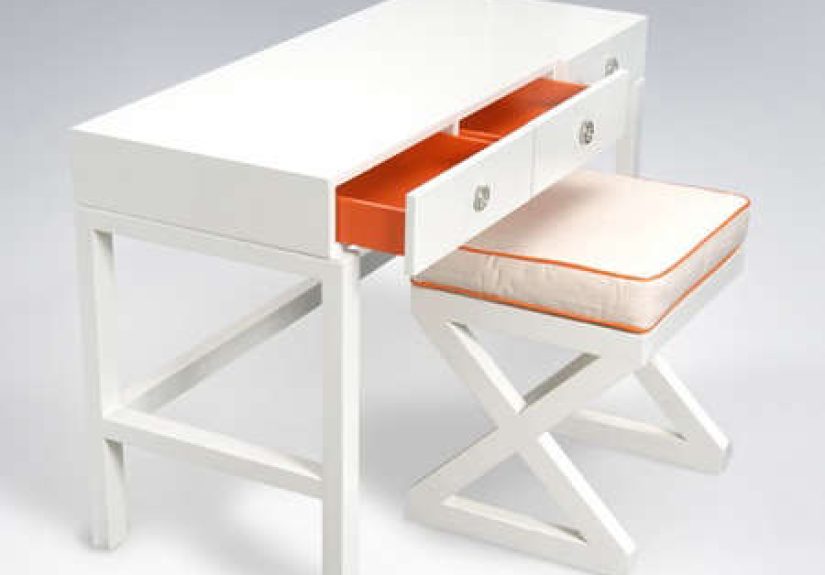
Choose a white, pale wood, or matte neutral desk with simple legs. Add a small lamp, one shelf, and a corkboard. This style is great for small rooms because it keeps the visual clutter low. A modern slim-line desk can also transition easily from child to teen years.
Playful and Colorful
For younger children, pair a simple desk with a colorful chair, patterned rug, bright art, or painted wall shelf. This keeps the expensive piece neutral while still making the room fun. Color can come from accessories that are easy to change later.
Classic Wood
A wood desk adds warmth and works beautifully in traditional, farmhouse, vintage, or nature-inspired rooms. Look for smooth finishes and simple shapes. Wood also hides minor wear better than some glossy surfaces, which is helpful when the desk becomes a drawing studio, science lab, and snack platform.
Built-In Look Without the Built-In Price
To fake a built-in desk, place a slim writing desk between two narrow bookcases or under wall shelves painted the same color as the wall. This creates a custom look without hiring a carpenter. Add matching baskets or bins for a tidy finish.
What to Put on the Deskand What to Remove
A child’s desk should be useful, not overcrowded. Keep the essentials: a lamp, pencil cup, notebook tray, small clock or timer, and one personal item. That is enough. Too many decorations can make the desk harder to use. A desk covered in collectibles may look cute in photos, but it gives a child about six square inches to write a paragraph. That is not a workspace; that is a negotiation.
Remove toys that distract during homework time, old papers, broken crayons, dried markers, and random objects that migrate from pockets. Keep school supplies close but contained. Use a small caddy for items that move between the desk, kitchen table, and backpack. Children are more likely to use a workspace when the setup feels easy rather than fussy.
Digital Learning Setup for a Slim Desk
Many children use laptops, tablets, or Chromebooks for schoolwork. A slim desk can support digital learning if the layout is planned carefully. Use a laptop stand or tablet stand to raise the screen. Add an external keyboard and mouse for longer work sessions when possible. This allows the screen to sit higher while the child’s arms stay relaxed.
Glare control is important. Place screens away from direct sunlight and bright reflections. Encourage short visual breaks during screen work. The well-known 20-20-20 habit is simple: every 20 minutes, look at something about 20 feet away for 20 seconds. It sounds almost too easy, but easy habits are the ones children may actually follow.
Movement breaks are also valuable. A slim desk should not trap a child in one position for hours. Let them stand, stretch, refill water, or switch to reading on a floor cushion for a few minutes. The goal is a healthy rhythm, not a miniature corporate cubicle.
Buying Checklist for a Children’s High/Low Slim-Line Desk
- Depth: Choose a shallow profile, usually around 18 to 22 inches, for small rooms.
- Width: Look for enough surface area for writing, reading, and a small device if needed.
- Height: Match the child’s seated elbow height or use an adjustable chair and footrest.
- Stability: Avoid wobbling, tipping, weak legs, or top-heavy storage.
- Materials: Prioritize durable surfaces, smooth edges, and safe finishes.
- Storage: Add shelves, bins, drawers, or wall organizers to protect the desktop.
- Lighting: Include a task lamp that can be adjusted for reading and writing.
- Growth: Pick a design that can mature with the child instead of looking babyish too quickly.
High/Low Design Examples for Real Rooms
For a high-end look, imagine a solid wood slim-line desk in oak or maple, paired with a supportive adjustable chair, a wall-mounted shelf, a woven storage basket, and a soft task lamp. The room feels calm, warm, and grown-up enough to last into middle school. This setup is ideal for families who want durability and a polished design.
For a low-cost version, choose a simple narrow writing desk, add a comfortable chair, mount two affordable shelves above it, and use labeled bins for supplies. A peel-and-stick cork panel or small magnetic board can create the same organized feeling at a lower price. The savings can go toward a better chair or lamp, which often makes more difference than a fancy drawer handle.
For a shared room, place two slim desks side by side or use one long narrow tabletop with two chairs. Give each child a separate drawer, shelf, or labeled bin. This prevents the classic sibling debate known as “That pencil is mine,” which has been running successfully for generations.
Common Mistakes to Avoid
The first mistake is buying a desk that is too deep. It may look generous online, but in a small room it can block movement and make the room feel crowded. The second mistake is ignoring the chair. A beautiful desk with a poorly fitted chair will still be uncomfortable. The third mistake is skipping storage. A slim desk needs nearby organization or it will drown in paper.
Another mistake is choosing a desk that is too themed. A race-car desk or princess-style desk may delight a six-year-old, but children’s tastes change quickly. A simpler desk with playful accessories usually lasts longer. Finally, do not place the desk in the noisiest, busiest, most chaotic part of the room if homework focus is the goal. Even the best desk cannot compete with a sibling practicing recorder three feet away.
Personal Experience: What Actually Works in Everyday Family Life
After looking at many children’s room setups, the most successful slim-line desk spaces have one thing in common: they are realistic. They do not pretend that children will maintain a magazine-perfect desktop every day. They make cleanup easy, supplies visible, and the work surface clear enough to use without a dramatic pre-homework cleaning ceremony.
One practical experience is that children enjoy a desk more when they help choose part of it. That does not mean handing over the entire design plan to someone who may request neon walls, a spinning chair, and a snack drawer labeled “Emergency Cookies.” But letting a child pick the chair color, pencil cup, wall art, or desk mat can build ownership. When children feel the space is theirs, they are more likely to sit there willingly.
Another real-life lesson: the desk should not be too far from where adults naturally spend time, especially for younger children. A desk tucked away in a bedroom may look perfect, but some kids focus better when a parent is nearby in the hallway, kitchen, or home office. For this reason, a slim-line desk can be useful outside the bedroom too. A small wall desk in a family room corner or hallway landing can become a homework station without taking over the house.
Storage must match the child’s habits. Some kids love drawers. Others treat drawers like black holes where permission slips go to retire. If your child forgets items when they are hidden, use open cups, trays, baskets, and wall pockets. If your child is easily distracted by visible supplies, use closed bins and a simple desktop. The best system is not the prettiest one; it is the one your child can actually maintain on a Tuesday afternoon when everyone is tired.
Lighting is another area where small changes make a big difference. A desk lamp with an adjustable neck can turn a forgotten corner into a real study area. Children who draw, read, or write in dim lighting often shift their posture without realizing it. They lean closer, twist sideways, or hunch over the page. Better lighting helps the whole setup feel more comfortable.
Parents also discover quickly that a slim desk should have a “reset routine.” At the end of homework time, the child returns pencils to the cup, papers to the tray, books to the shelf, and devices to the charging spot. This takes two or three minutes when done daily. If ignored for two weeks, it becomes an archaeological dig featuring worksheets, stickers, crumbs, and something that may once have been an eraser.
One of the best experiences with a high/low desk setup is its flexibility. A high-end desk can become a long-term anchor piece, while low-cost accessories change as the child grows. In early elementary years, the desk may hold crayons, picture books, and craft paper. Later, it may support a laptop, planner, headphones, and textbooks. The same slim surface can evolve without needing a full room makeover.
The final lesson is that comfort beats perfection. A child’s room should support learning, creativity, rest, and play. A slim-line desk is not there to make the room look like a catalog. It is there to give the child a dependable place to think, create, and build habits. If the desk fits the room, fits the child, and survives daily use with dignity, it is doing its job beautifully.
Conclusion
A high/low slim-line desk is one of the smartest additions to a child’s room because it solves several problems at once. It saves floor space, creates a dedicated study zone, supports organization, and can be styled for almost any age. Whether you choose a premium desk, a budget-friendly find, or an adjustable setup, the winning formula is the same: proper fit, stable construction, good lighting, practical storage, and enough personality to make the child want to use it.
The best children’s desk is not necessarily the biggest or most expensive. It is the one that fits the room without crowding it, fits the child without straining posture, and fits real family life without demanding daily perfection. In other words, the ideal slim-line desk is small in footprint, big in usefulness, and charming enough to make homework feel slightly less like a national emergency.