Table of Contents >> Show >> Hide
- Who Are Copenhagen Suborbitals, and Why Do They Keep Doing This?
- The Launch That Turned Heads: Nexø I and the “Wait, That’s Liquid-Fueled?” Moment
- So… How “Impressive” Are We Talking?
- Why Amateur Liquid-Fueled Rockets Are Rare (And Why That’s a Good Thing)
- What Happened Next: Nexø II and the Road Toward Spica
- Why This Story Matters Beyond One Rocket Launch
- How to Be a Fan of DIY Space Without Doing Anything Reckless
- Experiences: What It Feels Like to Follow Copenhagen Suborbitals (and Why It Hooks People)
If you’ve ever looked at a rocket launch and thought, “Sure, but what if it were built by a bunch of determined volunteers with day jobs, a stubborn love of checklists, and the kind of optimism usually reserved for people assembling IKEA furniture without the instructions,” then you’re already emotionally prepared for Copenhagen Suborbitals.
Back in the era when “private space” mostly meant “someone bought a telescope,” this Danish, crowdfunded, all-volunteer group started putting real hardware in the skyout on the water, away from crowds, with mission control vibes that are equal parts serious engineering and “please let the valve behave today.” Their liquid-fueled rocket launch (notably the Nexø I technology demonstrator) became the kind of moment that maker-tech outlets and space publications love: a small team doing something that’s supposed to be hard… and making it look (briefly) like it’s just another Saturday project. (It’s not. It’s extremely not.)
Who Are Copenhagen Suborbitals, and Why Do They Keep Doing This?
Copenhagen Suborbitals is a nonprofit, open, volunteer-led space engineering group based in Copenhagen, Denmark. Their long-term goal is bold: develop the technology and operations to launch a human on a suborbital flightmeaning up and back down, not orbiting Earth. They fund the work primarily through donations and do much of the design, fabrication, and testing themselves.
That mission statement matters because it explains two things at once: (1) why their progress can look slow (turns out rockets don’t care about your weekend availability), and (2) why every successful launch is a big deal. They’re not just flying a rocket; they’re building a repeatable systemhardware, operations, recovery, telemetry, and a safety culture strong enough to survive both physics and human enthusiasm.
Over the years, mainstream outlets have framed the group as everything from inspiring “open-source space” to a high-stakes question about how society should think about risk in private human spaceflight. That range is fairbecause rocket development is always a mix of romance (“space!”) and reality (“propellants!”).
The Launch That Turned Heads: Nexø I and the “Wait, That’s Liquid-Fueled?” Moment
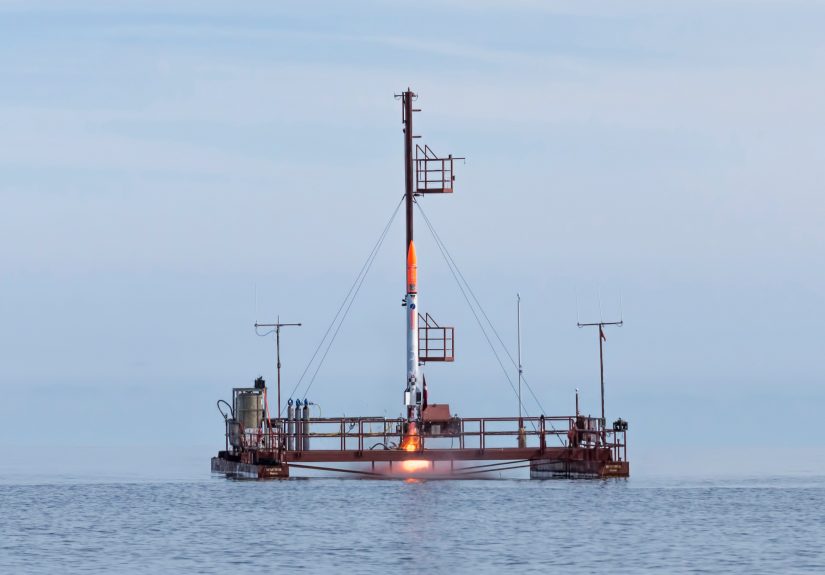
The headline-grabbing launch tied to this story is the Nexø I missionCopenhagen Suborbitals’ first flight of a liquid bi-propellant rocket after earlier work with hybrid-powered vehicles. It lifted off on July 23, 2016 from their sea-based launch platform, Sputnik, operating in the Baltic Sea off the coast of Bornholm.
Why did people get excited? Because liquid-fueled rocketry, even at a relatively small scale, is a jump in complexity. You’re not just lighting a motor; you’re managing multiple subsystems that must behave in a specific order at exactly the wrong time to be wrong. And Nexø I wasn’t just liquid-fueledit was actively guided, which introduces another layer of “this is either brilliant or a very expensive interpretive dance.”
Why Launch From the Sea?
Copenhagen Suborbitals often operates from the water for practical reasons: it helps keep people at a safe distance, provides a clear downrange area for flight and recovery, and can simplify certain logistical constraints compared with launching from a populated area. In maker-world terms, it’s like choosing a huge empty parking lot to practice… except the parking lot is international water and your “practice” is controlled combustion.
One outlet famously joked that the rocket “went only away from the ground; no other directions”which, in rocketry, is not faint praise. “Up” is the whole brand promise.
A Liquid-Fueled Rocket Is Not a “Bigger Bottle Rocket”
Nexø I marked Copenhagen Suborbitals’ move into bi-propellant liquid propulsion for flight. Their later materials describe engines in this family as running on liquid oxygen (LOX) and ethanol. Even stating that out loud comes with a reminder: this is professional-grade hazard territory. LOX handling, cryogenic procedures, and fueling operations demand expertise and strict discipline. Copenhagen Suborbitals treats it that way, emphasizing structured pre-launch operations and checklists.
It’s easy to underestimate how much work hides behind the word “fueled.” The rocket isn’t the only machine involved; the ground (or sea) support equipmenttanks, transfer systems, instrumentation, communicationsbecomes part of the mission. The team has even highlighted that transferring cryogenic liquid at sea is among the most critical parts of pre-launch operations.
Guidance: The Difference Between “It Flew” and “It Flew Where We Wanted”
Plenty of rockets can go up. The impressive part is going up predictably, with a vehicle that remains stable and follows a planned path. Nexø-class rockets (including Nexø I and Nexø II) are described as actively guided using a custom-built guidance and navigation computer. Later mission documentation for Nexø II notes a thrust vector control approach using jet vanes commanded by the guidance system.
The point isn’t the specific mechanismit’s what it signals: Copenhagen Suborbitals wasn’t treating the rocket as a one-off stunt. Guidance, telemetry, and controlled operations are stepping stones toward larger ambitions.
So… How “Impressive” Are We Talking?
In aerospace, “impressive” isn’t just altitude. It’s repeatability, data quality, recovery, and how much of the flight is intentional. For Copenhagen Suborbitals, each launch is a stress test of the full stack: manufacturing, integration, fueling procedures, remote operations, communications links, and recovery.
That’s why coverage from engineering-minded publications tends to focus less on hype and more on the hard parts: a volunteer team building and testing real hardware, learning from partial successes, and continuously iterating. In other words, the process looks a lot like engineering everywherejust with fewer corporate acronyms and more sea spray.
What the Launch Proved (Even If It Didn’t Do Everything Perfectly)
Even when a flight doesn’t hit every target, it can still be a success if it validates systems and produces usable data. In fact, several write-ups about Copenhagen Suborbitals emphasize this engineering mindset: tests exist to discover what breaks, what holds, and what needs to change.
In that frame, Nexø I’s significance is that it demonstrated a guided, liquid-fueled rocket flight from a sea platforman operational challenge as much as a propulsion challenge. It showed that the team could coordinate offshore launch logistics, propellant loading, and flight control, then bring lessons back into design and procedure updates.
Why Amateur Liquid-Fueled Rockets Are Rare (And Why That’s a Good Thing)
Let’s be very clear: “amateur” here means “non-governmental and volunteer-led,” not “casual” or “recommended for your weekend plans.” Liquid rocketry is difficult for reasons that are not negotiable. The physics doesn’t care that you’re excited.
1) Cryogenics and Complex Operations
Liquid oxygen is cryogenic and requires specialized handling. Operations need careful sequencing, reliable instrumentation, and the ability to stop safely if something looks wrong. Add the unpredictability of offshore conditions and you start to understand why the team talks about strict checklists and critical pre-launch steps.
2) Guidance, Telemetry, and Range Safety
A rocket that can’t be tracked and controlled is a risk to people and property. Even suborbital hobby projects must prioritize controlled launch areas, remote operations, and reliable communications. This is one reason sea launches can make sense: a wide buffer zone reduces risk to bystanders.
3) Recovery Is Part of the Mission, Not a Bonus Level
If you want to learn from flight hardware, recovery matters. Parachutes, separation systems, and water recovery procedures aren’t glamorous, but they’re how you turn a single launch into a development program.
IEEE Spectrum’s reporting captures the spirit of this well, describing how volunteers took on highly specific responsibilities even down to parachute design and sewinglearning skills over time and integrating them into real flight systems.
What Happened Next: Nexø II and the Road Toward Spica
The Nexø program didn’t stop at one launch. Copenhagen Suborbitals later flew Nexø II on August 4, 2018. Reporting and mission materials describe it as their most advanced rocket to date at the time, reaching an apogee of roughly 6.5 km and being recovered by parachute after splashdown.
Nexø II is often presented as a technology demonstrator for something bigger: Spica, the group’s next-generation rocket concept intended to eventually carry a person on a suborbital flight. If Nexø is about proving subsystems, Spica is about integrating them into a human-rated direction of travelwhile also acknowledging that “human-rated” is a bar measured in stress, redundancy, and hard-earned humility.
Spica: The Dream That Forces the Engineering to Grow Up
Publications that take the project seriously tend to emphasize the same point: the hardware is only part of the challenge. Crew training, abort scenarios, reliability, and regulatory frameworks become central if you’re talking about putting a person on top of a rocket. Popular Science, for example, frames Copenhagen Suborbitals as a case study in how private human spaceflight tests the edges of policy and safety norms, precisely because it’s not a billionaire-backed company with layers of institutional oversight.
Meanwhile, the group continues to iterate on propulsion, structures, avionics, and operations. Even snapshots from broader summaries note ongoing development work tied to Spica, including new engine classes and structural hardware development in recent years.
Why This Story Matters Beyond One Rocket Launch
The “impressive amateur liquid-fueled rocket” headline is fun, but the deeper story is about how innovation can emerge from communities that combine openness with rigor. Copenhagen Suborbitals shows what happens when you apply serious engineering habitsdocumentation, testing, measurement, iterationto a mission that’s fundamentally inspirational.
Open Engineering Is a Force Multiplier
When a project shares knowledge and attracts contributors, it can build momentum in a way that purely closed programs can’t. Maker communities love this because it turns spectators into participantsengineers, fabricators, software people, students, and curious minds who learn by doing (and by reading the postmortem when something breaks).
It Also Raises Hard Questions About Risk
There’s a reason major space programs invest heavily in safety processes. Human spaceflight has a history written in both triumphs and tragedies, and even suborbital flights carry serious risk. Coverage that looks at Copenhagen Suborbitals through a policy lens isn’t trying to be a buzzkill; it’s pointing out that “can we?” and “should we?” are different questions, and the gap between them is filled with safety culture.
If Copenhagen Suborbitals ultimately succeeds, their legacy won’t just be a rocket that flew. It will be a demonstration that disciplined, transparent engineeringsupported by a communitycan push boundaries in a way that inspires without pretending the risks are small.
How to Be a Fan of DIY Space Without Doing Anything Reckless
Watching this kind of project should make you curious, not careless. If you’re inspired by Copenhagen Suborbitals, the safest next steps are educational: follow credible space engineering coverage, learn about systems engineering and safety practices, and explore rocketry through regulated, well-established hobby channels (like certified model rocketry programs) that use commercially manufactured motors and comply with local rules.
The real takeaway is not “try this at home.” The takeaway is: serious outcomes come from serious processespecially when the work is volunteer-led.
Experiences: What It Feels Like to Follow Copenhagen Suborbitals (and Why It Hooks People)
There’s a special kind of thrill in following a volunteer space program because it doesn’t feel like watching a distant corporation execute a polished script. It feels like watching real humans wrestle with hard problems in real timecelebrating small wins, admitting setbacks, and showing their work. Fans often describe the experience as half science documentary, half maker show, and half suspense movie. Yes, that’s three halves. That’s what rockets do to your math.
One experience many people share is the “first-time sea-launch realization.” In a typical rocket video, you see a pad, a countdown, and a clean rise. With Copenhagen Suborbitals, you also see the environment: water, weather, boats, and the choreography of offshore operations. It’s oddly grounding. Spaceflight starts looking less like magic and more like logisticscontainers, cranes, procedures, and teams doing quiet, careful work long before anything dramatic happens.
Another common experience is falling in love with the un-glamorous parts. Viewers who come for flame and noise often stay for the nerdy details: how a checklist is structured, how a team divides responsibilities, how they talk about telemetry and recovery as mission-critical. It’s the same reason people watch restorations and engineering channels: the craft is the story. The launch is just the season finale.
If you ever get the chance to visit Copenhagen, there’s a distinctly human moment in seeing real hardware up closebecause it shrinks the mental distance between “space program” and “workshop.” Copenhagen Suborbitals has shared that they host public visits and tours at their facility, and that openness changes the experience from passive fandom to hands-on inspiration. It’s one thing to watch a video of a rocket on a platform; it’s another to stand near the artifacts of testing, iteration, and recovery and realize that progress is built from thousands of small decisions.
For students and young engineers, following the program can feel like a living syllabus. You see how teams learn: not by being perfect, but by being honest about what happened and then improving. That’s a powerful lesson because it fights the myth that engineering breakthroughs come from lone geniuses. Here, progress comes from communitiespeople who weld, code, test, document, sew parachutes, and keep showing up.
And then there’s the emotional experience of hope-with-guardrails. The best coverage of Copenhagen Suborbitals captures both sides: the genuine excitement of a “citizen space” dream, and the sober reality that human spaceflight is unforgiving. When you’re watching a volunteer team push toward something as ambitious as a future Spica flight, you’re also watching them build the kind of safety mindset that makes the dream worth pursuing. The fans who stick around tend to appreciate that balance.
Finally, there’s the simplest experience of all: watching a rocket lift cleanly, even briefly, and feeling your brain do the ancient human thing: look up and imagine what’s possible. The practical voice in your head might say, “That took years of work.” The other voice says, “Yesand they did it anyway.” That combination is why the Nexø-era launches still get shared, discussed, and replayed. They’re not just flights. They’re proof that disciplined curiosity can move from an idea to a countdownand from a countdown to a plume in the sky.