Table of Contents >> Show >> Hide
- What Is Dead Butt Syndrome?
- Why Your Glutes Matter (More Than Most People Realize)
- Symptoms: Signs Your Butt Has Gone On Strike
- Causes: How Dead Butt Syndrome Happens
- Is It Really Dead Butt Syndrome… or Something Else?
- How It’s Diagnosed (and What Clinicians Look For)
- Treatment: How to Wake Up Your Glutes
- A Simple 10-Minute “Anti-Dead-Butt” Routine
- Prevention: Keep Your Glutes Awake Without Living at the Gym
- When to See a Healthcare Professional
- Real-Life Experiences: 4 “Dead Butt” Stories (and What Helped)
- Conclusion
If you’ve ever stood up after a long Netflix session (or a marathon homework/desk day) and thought,
“Why does my butt feel like it’s buffering?”congrats, you’ve met the internet’s favorite not-so-official
condition: dead butt syndrome.
The name is funny. The ripple effects? Less funny. When your glute muscles stop doing their job well,
your hips, lower back, knees, and even ankles can end up working overtime. The good news: in most cases,
you can “wake up” your glutes with smart movement, targeted strengthening, and a few habit upgrades.
What Is Dead Butt Syndrome?
Dead butt syndrome is a popular nickname for issues that can happen when your glute musclesespecially
the gluteus medius (a key hip stabilizer)get weak, underactive, or poorly coordinated.
You might also hear it called gluteal amnesia. It’s not a single formal medical diagnosis;
it’s more like a “symptom umbrella” people use when the buttocks and hips aren’t cooperating after lots of sitting
or repetitive movement patterns. In some cases, symptoms overlap with tendon problems around the hip (like gluteal tendinopathy).
Translation: your glutes didn’t literally forget your namethey just stopped showing up to work consistently.
And when the biggest muscles in your backside go quiet, smaller muscles and joints start picking up the slack,
often in ways your body doesn’t love.
Why Your Glutes Matter (More Than Most People Realize)
Your glutes aren’t just “there” to fill out your jeans. They help:
- Stabilize your pelvis when you walk, run, climb stairs, or stand on one leg
- Support your lower back by sharing the workload with your core
- Control hip and knee alignment so your legs track smoothly
- Generate power for athletic movements like sprinting, jumping, and lifting
When glutes are weak or “offline,” your body improvisesoften by overusing hip flexors, hamstrings, and lower-back muscles.
That can change your movement mechanics and increase strain in places that were not designed to be the star of the show.
Symptoms: Signs Your Butt Has Gone On Strike
Symptoms can be subtle at firstmore “meh” than “medical drama.” Common signs include:
Butt and hip symptoms
- Numbness, tingling, or a “sleepy” feeling in the buttocks after sitting
- A dull ache in the butt or outer hip
- Tightness in the hips, especially the front (hip flexors)
- Pain that flares with stairs, hills, or long walks
Lower body “chain reaction” symptoms
- Lower back discomfort, especially after sitting or standing for long periods
- Knee pain that shows up during running, squats, or going downstairs
- Feeling wobbly balancing on one leg
- Fatigue in the legs faster than you’d expect
Some people describe it as a deep butt ache that shows up after sitting, while others notice pain during workouts
because the glutes aren’t contributing the way they should. Either way, the pattern is often the same:
less glute function → more stress elsewhere.
Causes: How Dead Butt Syndrome Happens
1) Prolonged sitting (the classic culprit)
Long hours in a chair put hips in a flexed position and keep the glutes relatively inactive. Over time,
your body gets better at… sitting. Meanwhile, your glutes get worse at doing glute things.
Regular movement breaks and posture adjustments are often enough to start reversing the trend.
2) Tight hip flexors + lengthened glutes (a common imbalance)
A sedentary routine can create a tug-of-war where hip flexors get tight and glutes become lengthened and under-recruited.
The muscles still existyour body just stops activating them efficiently. That’s why “stretch + strengthen” usually works better than
only one or the other.
3) Repetitive workouts that don’t train glutes directly
You can be active and still have dead butt syndrome. Runners, cyclists, and rowers sometimes overuse the same movement patterns
without enough glute-specific strength workespecially side-to-side (hip abductor) strength.
Your cardio may be strong, but your glute activation can be… emotionally unavailable.
4) Poor movement mechanics and posture
If your knees cave in when you squat, your pelvis drops when you run, or your lower back takes over in bridges,
your glutes may not be contributing effectively. Over time, those mechanics can irritate tendons and joints.
5) Gluteal tendinopathy or related hip conditions
Sometimes “dead butt syndrome” is used casually to describe hip pain that’s actually from irritated or degenerative tendon tissue
around the glute muscles (often felt on the outer hip). These cases may need a more structured rehab plan and guidance from a clinician.
Is It Really Dead Butt Syndrome… or Something Else?
Not all butt or hip pain comes from sleepy glutes. A few common look-alikes include:
- Sciatica or lumbar nerve irritation: pain, tingling, or numbness that travels down the leg
- Piriformis-related irritation: deep butt pain, sometimes with leg symptoms
- Hip bursitis/greater trochanteric pain syndrome: outer-hip pain, often worse lying on that side
- Hamstring strain: pain closer to the sitting bone, often linked to sprinting or sudden loading
If pain is intense, persistent, worsening, or associated with significant numbness/weakness, it’s worth getting evaluated so you’re treating the right problem.
How It’s Diagnosed (and What Clinicians Look For)
Because “dead butt syndrome” is a nickname, diagnosis is usually based on history and movement assessment.
A clinician (or physical therapist) may evaluate:
- Your posture and hip mobility (especially hip flexor tightness)
- Glute strength and endurance (can you hold a bridge without cramping your hamstrings?)
- Single-leg stability and pelvic control
One common screen is the Trendelenburg sign/test, which checks how well your hip abductors (including gluteus medius)
stabilize your pelvis when standing on one leg. A noticeable pelvic drop can suggest weakness or poor neuromuscular control.
Treatment: How to Wake Up Your Glutes
Think of treatment as a three-part reboot: move more, restore mobility, and build strength.
If symptoms are mild, this often works well at home. If pain is significant or persistent, a physical therapist can individualize the plan.
Step 1: Reduce “glute coma” triggers
- Break up sitting: stand, walk, or stretch briefly every 30–60 minutes
- Change positions: alternate sitting, standing, and walking tasks when possible
- Adjust your setup: chair height, feet flat, hips not jammed into a deep bend all day
Step 2: Mobility work (loosen what’s tight)
Tight hip flexors and stiff hips can make it harder for glutes to activate. Helpful stretches include:
- Hip flexor stretch (half-kneeling lunge stretch)
- Figure-4 stretch (seated or lying)
- Gentle spinal rotation if your low back feels locked up
Pro tip: stretches tend to work better when you hold them long enough to matter. Instead of a quick “two-second drive-by,”
aim for a steady hold with calm breathing.
Step 3: Glute activation (teach the muscle to “show up”)
Start with exercises that make it easy to feel the glutes workingwithout your lower back stealing the spotlight:
- Glute squeezes: squeeze both glutes for 5 seconds, relax, repeat 10 times
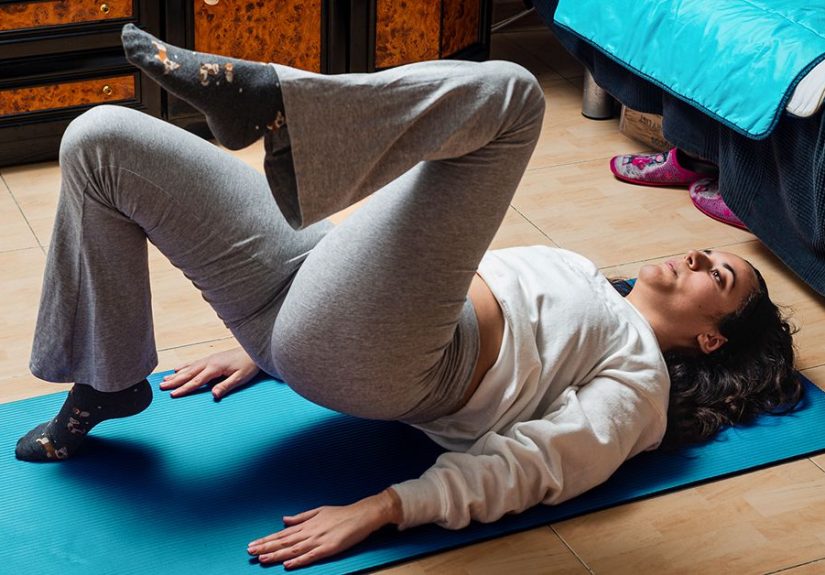
- Glute bridge: keep ribs down, press through heels, lift hips without arching lower back
- Clamshells: focus on hip rotation from the glute, not a full-body roll
- Side-lying leg raises: slow and controlled; don’t hike the hip
- Banded lateral walks: small steps, knees soft, hips level
Step 4: Strength + real-life integration
Once you can reliably “find” your glutes, strengthen them with bigger moves:
- Step-ups (control the descentyour glutes love a slow lower)
- Split squats (great for hip stability)
- Hip thrusts (a glute classic)
- Lateral lunges (targets side-to-side strength)
- Single-leg deadlifts (balance + posterior chain control)
If your symptoms overlap with tendon irritation (like outer-hip pain that lingers),
you may need a more gradual loading plan. Many people see significant improvement with a structured physical therapy program.
A Simple 10-Minute “Anti-Dead-Butt” Routine
Do this 3–5 days per week, especially on heavy sitting days:
- Hip flexor stretch: 45–60 seconds per side
- Figure-4 stretch: 45–60 seconds per side
- Glute bridge: 2 sets of 10 slow reps
- Clamshells: 2 sets of 12 per side
- Banded lateral walk: 2 sets of 10 steps each direction
- Single-leg balance: 30 seconds per side (try to keep hips level)
If you want to level up: add step-ups (2 sets of 8 per side) on days you feel good and your form stays clean.
Prevention: Keep Your Glutes Awake Without Living at the Gym
Preventing dead butt syndrome is less about heroic workouts and more about consistent, boring wins (the kind that actually stick).
Here’s what helps most:
1) Make sitting less continuous
- Set a timer to stand up regularly
- Take calls standing, or walk while reviewing notes
- Use “micro-movement”: a short walk, a stretch, a few squatsanything
2) Train your glutes 2–3 times per week
You don’t need a complicated plan. A mix of bridges/hip thrusts, step-ups, and lateral band work covers a lot of bases.
The goal is to keep the glutes strong enough that they don’t “clock out” the moment you sit down.
3) Don’t skip the side-to-side stuff
Gluteus medius strength matters for pelvic control and knee tracking. Lateral walks, side planks, and lateral lunges can be game-changers.
4) Progress activity gradually
If you suddenly ramp up running mileage, hiking, or sports intensity, your hips may protestespecially if glutes are underprepared.
Build volume and intensity over time, and keep strength work in the mix.
5) Watch for “compensation tells”
- Hamstrings cramp every time you bridge
- Lower back feels tight after glute work
- Knees cave inward during squats or stairs
- Hips drop when you stand on one leg
These are hints that form, mobility, or muscle activation needs attentionnot reasons to quit.
When to See a Healthcare Professional
Get evaluated if you have:
- Pain that persists beyond a few weeks despite movement and strengthening
- Significant numbness, weakness, or symptoms traveling down the leg
- Night pain that doesn’t improve with position changes
- A sudden injury, fall, or inability to bear weight comfortably
A clinician can help rule out nerve or hip joint issues and tailor a planespecially if tendons are involved.
Real-Life Experiences: 4 “Dead Butt” Stories (and What Helped)
The weird thing about dead butt syndrome is how often people brush it offuntil it starts affecting everything else. Here are a few
common experiences (based on patterns clinicians and health educators frequently describe), plus what typically helps.
1) The Desk-Job Slump: “My lower back is doing overtime.”
A typical story: you sit most of the day, stand up feeling stiff, and notice your lower back getting cranky even though you didn’t lift
anything heavy. You try stretching your back, which helps for about 11 minutesthen the tightness returns like it pays rent.
What often turns the corner is treating the problem upstream: short walking breaks, opening up hip flexors, and adding glute bridges
and banded lateral walks. Within a couple of weeks, many people report that standing feels less “rusty,” and back discomfort becomes
less frequent because the hips start sharing the workload again.
2) The Active Person Paradox: “I run all the timehow are my glutes weak?”
This one surprises people: you’re consistent with cardio, but your training is mostly forward-and-back movement. If your gluteus medius
is undertrained, your pelvis and knees may lose a bit of control when fatigue hitsespecially on hills or long runs. The result can be
nagging hip or knee discomfort that feels mysterious because your lungs are fine and your motivation is strong.
What helps is adding just 10 minutes of targeted glute work after runs (or on off days): clamshells, side-lying leg raises, and lateral
band walks. A lot of runners notice better stability and less “knee wobble” once they train the side-to-side support system.
3) The Student/Gamer Marathon: “My butt goes numb, then my hips feel weird.”
Long study sessions and gaming marathons can create the perfect storm: hours of hip flexion, minimal movement, and a posture that slowly
drifts into “shrimp mode.” The first sign is often numbness or that dull butt ache that fades after you walk arounduntil it doesn’t.
A realistic fix isn’t “never sit again” (nice dream, though). It’s a simple rule: every hour, stand up and move for a couple of minutes,
plus a quick routine before bedhip flexor stretch, figure-4 stretch, and 1–2 sets of bridges. People often say the numbness improves first,
then the stiffness, and finally the random aches.
4) The “I Tried One Exercise and Quit” Phase: “My hamstrings cramp!”
Many people try bridges and immediately feel hamstring cramps, then assume bridges are “not for them.”
Usually it’s not a personality conflictit’s a form and activation issue. Small tweaks can help: keep feet closer to your butt,
think “ribs down,” and press through your heels while lightly tucking the pelvis. Start with short sets (like 6–8 reps), rest, repeat.
As glutes begin to contribute, hamstring cramping often decreases. The win here is consistency: little, repeated signals teach the glutes
to rejoin the group project.
The common thread in these experiences is that dead butt syndrome is rarely solved by a single magic exercise. It improves when you combine:
(1) less continuous sitting, (2) enough mobility to let hips move well, and (3) progressive glute strengthening that carries over into daily life.
Conclusion
Dead butt syndrome may sound like a joke, but it’s really a reminder: your body adapts to whatever you do most. If you sit a lot,
your glutes may get quieter. If you move regularly and train them a little each week, they tend to stay “online,” helping your hips,
back, and knees feel better.
Start simple: stand up more often, stretch what gets tight, and strengthen what gets sleepy. Your butt will forgive you.
Probably. Eventually. (Offer it a glute bridge as a peace treaty.)