Table of Contents >> Show >> Hide
- What a DEXA Scan Measures (and What It Doesn’t)
- Why Doctors Order a DEXA Scan
- Who Should Get a Bone Density Test (DEXA Screening Guidelines, Simplified)
- How the DEXA Scan Works (No, It’s Not the Same as a Regular X-ray)
- How to Prepare for a DEXA Scan
- Understanding DEXA Results: T-scores, Z-scores, and What They Mean
- DEXA and Fracture Risk: Why Your Clinician Might Mention FRAX
- What Can Make a DEXA Scan Less Accurate?
- How Often Should You Repeat a DEXA Scan?
- What If Your DEXA Shows Osteopenia or Osteoporosis?
- DEXA for Body Composition: A Different (and Optional) Use
- Frequently Asked Questions
- A Quick Safety Note
- Real Experiences With DEXA Scans: What It Feels Like and What People Learn
If bones could talk, they’d probably say something like: “Please stop assuming we’re fine just because we’re quiet.”
Bone loss is famously sneakyno flashing warning lights, no dramatic soundtrack, just a slow fade in strength that
can end with a fracture from a fall that used to be no big deal.
That’s where the DEXA scan (also written DXA, short for dual-energy X-ray absorptiometry)
comes in. It’s the go-to bone density test used to measure bone mineral density (BMD), help diagnose
osteopenia or osteoporosis, estimate fracture risk, and track how well treatment is working.
It’s quick, painless, andbest of alldoesn’t require you to “tough it out” like some medical tests that feel designed
by a villain with a clipboard.
What a DEXA Scan Measures (and What It Doesn’t)
A DEXA scan measures how much mineral (mostly calcium and phosphorus) is packed into certain bones. More mineral generally
means denser, stronger bones. Less mineral can mean bones are thinning and more likely to fracture.
Most medical DEXA scans focus on the places that matter most for life-altering fractures:
the hip and lumbar spine. Sometimes the forearm (radius) is scanned tooespecially if the hip/spine
can’t be measured accurately (for example, if you have hardware in your hip or certain spine changes).
Bone density vs. bone quality
Here’s the important nuance: DEXA measures density, not the full “quality” of your bone structure.
Bone strength involves density and architecture (how the internal scaffolding looks), plus factors like fall risk
and muscle strength. So DEXA is a powerful piece of the puzzlebut not the whole puzzle.
Why Doctors Order a DEXA Scan
A DEXA scan can be used for:
- Screening for low bone density before a fracture happens
- Diagnosis of osteopenia or osteoporosis
- Fracture risk assessment (often combined with clinical risk factors)
- Monitoring bone density over time, especially if you’re on osteoporosis medication
Common reasons you might need one
Your clinician may recommend a DEXA scan if you:
- Are a woman age 65+ (routine screening is commonly recommended)
- Are a man age 70+ (routine screening is commonly recommended)
- Are postmenopausal (or age 50+) with risk factors (more on these below)
- Had a fracture after a minor fall (a “fragility fracture”), especially after age 50
- Take medications that can weaken bones (classic example: long-term corticosteroids like prednisone)
- Have medical conditions linked with bone loss (some endocrine, inflammatory, GI, kidney, or hormonal conditions)
- Have notable height loss, a stooped posture, or suspected vertebral compression fractures
Who Should Get a Bone Density Test (DEXA Screening Guidelines, Simplified)
Guidelines vary slightly across organizations, but they tend to agree on the big picture: screen the groups most likely
to have clinically meaningful bone loss, and selectively screen younger people with significant risk factors.
People commonly recommended for screening
- Women 65 and older
- Men 70 and older
- Postmenopausal women under 65 with elevated risk (based on clinical risk factors or a risk tool)
- Adults 50+ with a history of fragility fracture
- Adults on long-term glucocorticoids or other therapies known to affect bone
Risk factors that can justify earlier testing
Earlier DEXA screening is often considered if you have combinations of:
- Low body weight or significant unintentional weight loss
- Family history of osteoporosis or hip fracture
- Smoking
- Heavy alcohol use
- Early menopause or low estrogen/testosterone states
- Long-term steroid use (or certain other medications)
- Conditions associated with secondary osteoporosis
How the DEXA Scan Works (No, It’s Not the Same as a Regular X-ray)
DEXA uses two low-dose X-ray beams at different energy levels. Because bone and soft tissue absorb these beams differently,
a computer can estimate the mineral content of your bone and calculate bone density.
In plain English: the scanner does some physics magic, your bones keep their dignity, and you get numbers your clinician can use.
What happens during the test
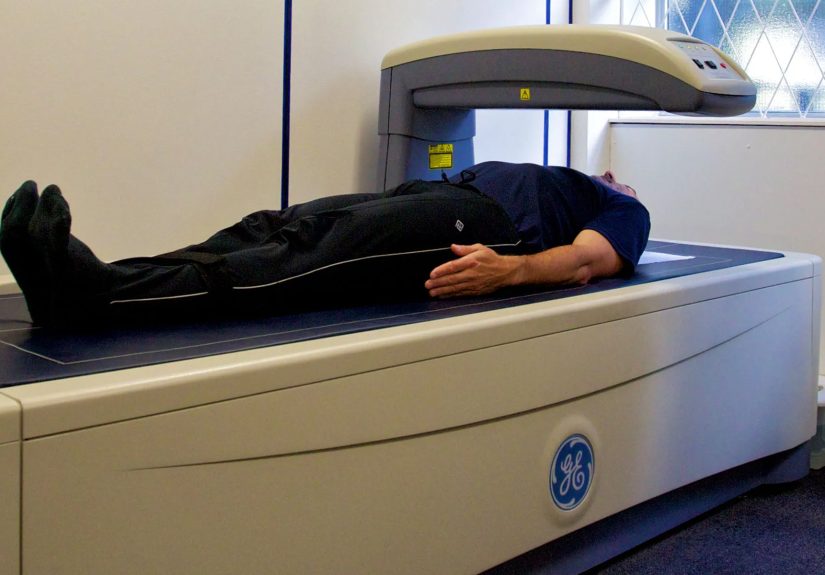
- You lie on a padded table (usually on your back).
- The scanner arm passes over the targeted areasmost commonly the hip and lower spine.
- You’ll be asked to stay still. No needles. No tunnel. No dramatic “hold your breath” Olympics.
- The test typically takes around 10–20 minutes (some facilities quote up to ~30 minutes depending on protocol).
How much radiation is involved?
The radiation dose for DEXA is considered very lowoften described as far less than a standard chest X-ray
and roughly comparable to a small slice of everyday background exposure. If you’re pregnant or might be, tell your provider
so they can decide the safest plan.
How to Prepare for a DEXA Scan
Preparation is refreshingly simple, but small details matter because DEXA is a measurement testand measurement tests
don’t appreciate surprise variables.
The day before and day of your scan
-
Skip calcium supplements for about 24 hours before your exam (your provider may also ask you to pause
certain vitamins or antacids that contain calcium). - Avoid clothing with metal (zippers, snaps, underwire bras). Metal can interfere with the images.
- Tell the facility about recent imaging that used contrast (like certain CT/barium studies). You may need to space tests apart.
-
Bring a list of your medications and supplementsbecause bone health is basically a group project between your hormones,
nutrients, activity level, and pharmacy receipt.
Understanding DEXA Results: T-scores, Z-scores, and What They Mean
Your results will typically include a T-score and sometimes a Z-score, reported for each site measured
(for example: lumbar spine, total hip, femoral neck).
T-score: the headline number for most adults over 50
The T-score compares your bone density to the average peak bone density of a healthy young adult (same sex reference data).
It’s expressed in standard deviations (SD). The more negative the number, the lower your bone density.
- -1.0 or above: generally considered normal
- Between -1.0 and -2.5: osteopenia (low bone mass)
- -2.5 or below: osteoporosis
Z-score: the “people like you” comparison
The Z-score compares you to people closer to your age and body profile. It’s often more useful in
premenopausal women, men under 50, and children, where clinicians may want to investigate causes of unexpectedly low bone density.
A real-world example (numbers included, panic excluded)
Let’s say Maria, 67, gets a DEXA scan:
- Lumbar spine T-score: -1.8 (osteopenia)
- Femoral neck T-score: -2.6 (osteoporosis)
Even though one site is “only” osteopenia, the femoral neck meets the osteoporosis threshold.
Clinicians typically diagnose based on the lowest qualifying site and then consider overall fracture risk, history of fractures,
and other factors to decide on a prevention or treatment plan.
DEXA and Fracture Risk: Why Your Clinician Might Mention FRAX
Bone density is criticalbut fracture risk isn’t just a bone story. Age, prior fractures, smoking, steroid use, alcohol intake,
rheumatoid arthritis, and more can change the risk calculation.
Many clinicians use tools like FRAX (a fracture risk algorithm) that can incorporate femoral neck BMD
plus clinical risk factors to estimate a 10-year probability of major osteoporotic fracture and hip fracture.
This helps guide decisions such as whether lifestyle changes are enough or whether medication is advisable.
What Can Make a DEXA Scan Less Accurate?
DEXA is highly standardized, but like any measurement, it can be fooledmostly by things that don’t behave like normal bone.
Common “measurement gremlins”
- Arthritis or degenerative spine changes (can artificially raise spine BMD)
- Spinal fractures or vertebral deformities
- Metal hardware (hip replacements, spinal instrumentation)
- Recent contrast studies (can interfere depending on timing)
- Positioning differences from one scan to the next (important for tracking change over time)
Tracking change over time: why “same machine” can matter
If you’re monitoring bone density, doing follow-up scans at the same facility (or at least with comparable equipment and technique)
can make trends easier to interpret. Bone density doesn’t usually skyrocket overnightso consistency matters when you’re looking
for true change versus measurement noise.
How Often Should You Repeat a DEXA Scan?
The right interval depends on your baseline bone density, overall risk, and whether you’re on treatment.
Some people may not need frequent testing; others benefit from closer monitoring.
A practical way to think about it
- Normal bone density + low risk: repeat might be spaced out more
- Osteopenia: repeat interval may be shorter, depending on severity and risk factors
- Osteoporosis or medication monitoring: clinicians often re-check to evaluate response and guide next steps
Insurance/Medicare notes (because adulthood is paperwork)
In the U.S., Medicare commonly covers bone mass measurements at set intervals (often every 24 months) for people who meet certain criteria,
and sometimes more often if medically necessary. Coverage specifics can depend on eligibility factors and documentation.
What If Your DEXA Shows Osteopenia or Osteoporosis?
First: breathe. A DEXA result is information, not a prophecy.
Many people with osteopenia never suffer a fracture, and many people with osteoporosis can significantly reduce fracture risk with
the right strategy.
Next steps typically include
- Reviewing risk factors (family history, falls, medications, medical conditions)
- Lab work when secondary causes are possible (vitamin D levels, thyroid, calcium metabolism, etc.)
- Nutrition strategy (adequate calcium and vitamin D, plus protein)
- Exercise plan (weight-bearing + resistance training, and balance work to prevent falls)
- Fall prevention (vision check, home safety tweaks, footwear, strength/balance training)
- Medication discussion if fracture risk is high (options vary by individual risk profile)
Exercise isn’t just “nice”it’s biomechanics
Weight-bearing activity and resistance training can help maintain (and sometimes modestly improve) bone density, while also improving
muscle strength and balancetwo huge factors in preventing falls. Even if the bone-density change is small, reducing fall risk can be
a major win.
DEXA for Body Composition: A Different (and Optional) Use
Some facilities offer full-body DEXA scans that estimate lean mass, fat mass, and fat distribution. This is more common
in sports performance, research, and certain metabolic clinics than routine osteoporosis screening.
If you’re doing body composition DEXA, keep the goal honest: it’s a tool for trends, not a moral report card.
(Your bones do not care about your beach plans.)
Frequently Asked Questions
Does a DEXA scan hurt?
No. You’re lying still while the scanner passes over you. The hardest part is resisting the urge to ask the technologist,
“So… how are my bones doing?” halfway through.
How fast do you get results?
Many centers can process results quickly, but timing varies. Your clinician usually reviews the report with you, especially if treatment
decisions are on the table.
Can you “cheat” a DEXA scan?
Not in any meaningful way. Taking extra calcium right before the test isn’t a bone glow-upit’s just a possible source of artifact.
The best “hack” is consistency: follow prep instructions, use the scan as a baseline, and focus on long-term bone health habits.
What if my spine score and hip score don’t match?
That happens. Degenerative changes can make spine results look better than reality, and bone loss patterns can vary by site.
Clinicians interpret the full report in context.
A Quick Safety Note
This article is for education, not medical advice. If you have concerns about osteoporosis screening, fracture risk, pregnancy,
or medications, talk with a licensed healthcare professional who can personalize guidance to your history and risks.
Real Experiences With DEXA Scans: What It Feels Like and What People Learn
DEXA scans are medically straightforward, but emotionally? People often bring a whole suitcase of feelings: curiosity,
worry, skepticism (“Do I really need this?”), or the classic “I feel fine, so surely my bones are thriving.”
Here are common experiences people reportplus what tends to help.
1) The appointment is surprisingly… uneventful.
Many first-timers show up expecting something more intense because the word “X-ray” sounds dramatic.
Then they realize the scan is basically: lie down, stay still, reposition a leg, repeat.
Some people say the loudest part is their inner monologue wondering if they should’ve worn socks with fewer holes.
If you’re anxious, ask the technologist to explain what’s happening in real timeknowing the steps reduces the “mystery factor.”
2) People are often shocked by how “normal” osteopenia is.
A common story: someone gets screened at 65, expecting a gold-star report, and walks out with a T-score in osteopenia territory.
That result can feel like a pop quiz you didn’t study for. But osteopenia is common, and it’s often a call to actionnot a crisis.
Many people find it motivating because it’s early enough to focus on habits: strength training, better protein intake,
more vitamin D consistency, fewer cigarettes (or quitting), and fall-prevention basics.
3) The “numbers” can trigger worryuntil they’re explained.
Seeing a negative T-score can feel ominous (“Is my skeleton failing?”). People often feel calmer once a clinician explains:
the score is a statistical comparison, not a personal judgment. Two people can have the same T-score and very different fracture risks
depending on age, prior fractures, medications, and fall risk. That’s why some clinicians discuss FRAX or other risk assessments.
4) Follow-up scans can be emotional in a different way.
If you’ve made lifestyle changes or started medication, the next scan can feel like “report card day.”
Some people feel validated when bone density stabilizes (which can be a win), while others feel discouraged if results don’t improve quickly.
Bone changes can be gradual, and measurement variation is real. Patients often do best when they treat DEXA like trend data:
one point doesn’t define you; the trajectory matters.
5) The experience can spark practical home changes.
After learning they have osteopenia or osteoporosis, many people become surprisingly passionate about fall prevention:
removing throw rugs, adding grab bars, improving lighting, wearing stable shoes, doing balance training, and getting vision checked.
These steps can feel “boring”until you realize preventing one fall can matter more than chasing tiny changes in a number.
6) People often wish they’d started earlierespecially with strength training.
A frequent reflection is, “I walked a lot, but I didn’t lift weights.” Walking is great for health, but resistance training helps preserve
muscle and can support bone health. Many patients say the DEXA result finally made strength training feel non-optional, like brushing teeth
not a trend, just maintenance.
Bottom line: Most people leave a DEXA scan thinking, “That was easier than I expected,” and the real value comes afterward
when the results help you and your clinician make a plan that fits your risk level and your life.