Table of Contents >> Show >> Hide
- First: What endometriosis is (in plain English)
- How do I know if I might have it? Symptoms that matter
- The reality check: symptoms overlap with other conditions
- Step 1: The medical history (yes, it counts as a “test”)
- Step 2: Pelvic exam (what it can and can’t show)
- Step 3: Imaging (ultrasound and MRI)helpful, but not a lie detector
- Are there blood tests for endometriosis?
- Step 4: Laparoscopy (the most definitive way to diagnose)
- What happens at a typical endometriosis workup? A realistic timeline
- When to call a doctor (and what to say so you’re taken seriously)
- When to seek urgent care or emergency help
- FAQ: Quick answers to common “Is this endo?” questions
- Real-World Experiences: What it can feel like (and what people wish they knew sooner)
- Conclusion
If your period pain has started acting like it pays rentshowing up early, staying late, and ruining your plansendometriosis might be on the guest list.
Endometriosis (often shortened to “endo”) can be sneaky: symptoms overlap with everyday “ugh, cramps” discomfort, and standard tests can look totally normal.
The good news? There’s a smart, step-by-step way to figure out what’s going onwithout you having to become a full-time detective (but we will
hand you the magnifying glass).
This guide covers: what symptoms should raise an eyebrow, what your clinician can (and can’t) learn from exams and imaging, why laparoscopy is still
the most definitive test, and exactly when you should call a doctortoday, not “sometime after you’ve Googled yourself into a panic.”
First: What endometriosis is (in plain English)
Endometriosis happens when tissue similar to the lining inside the uterus grows outside the uterusoften on the ovaries, fallopian tubes,
pelvic lining, bladder, or bowel. Because this tissue responds to hormones, it can swell and bleed around your cycle, leading to inflammation,
scarring, and adhesions (think: tissues sticking where they shouldn’t).
Here’s the frustrating part: the amount of endometriosis doesn’t always match how much pain you feel. Some people have severe pain with minimal visible
disease; others have extensive endometriosis and mild symptoms. In other words, your pain is not a “drama level” meter.
How do I know if I might have it? Symptoms that matter
Everyone’s body is different, but endometriosis often has a pattern: symptoms tend to cluster around your period or change across your cycle.
A few common clues:
Pelvic pain that’s more than “normal cramps”
- Severe period pain that keeps you from school/work or requires stronger meds than typical NSAIDs.
- Chronic pelvic pain (pain that lingers beyond your period).
- Pain during or after sex (especially deep penetration pain).
Bathroom symptoms that follow your cycle
- Pain with bowel movements (often worse during periods).
- Urinary urgency/pain that flares around menstruation.
- Bloating, nausea, constipation, or diarrhea that predictably worsen with your cycle.
Fertility and “quiet” endometriosis
Some people learn they may have endometriosis during an infertility evaluationsometimes without classic pain. If you’re trying to conceive and it’s
taking longer than expected, it’s a valid reason to ask about endometriosis (and other causes) even if your periods are “fine.”
Other symptoms that can ride along
- Fatigue that spikes around your period
- Heavy bleeding or spotting (not always endo, but worth evaluating)
- Back or hip pain that seems tied to your cycle
The reality check: symptoms overlap with other conditions
Endometriosis shares symptoms with IBS, pelvic floor dysfunction, interstitial cystitis/bladder pain syndrome, fibroids, ovarian cysts, adenomyosis,
pelvic inflammatory disease, and more. That’s why diagnosis isn’t a single magic testit’s a process of pattern recognition, targeted exams, and
ruling out other causes.
Step 1: The medical history (yes, it counts as a “test”)
A good evaluation starts with your story. Expect questions like:
- When did the pain start? Has it changed over time?
- Where is the pain (one-sided, deep pelvis, back)?
- Is it cyclical (worse before/during your period)?
- Do you have pain with sex, bowel movements, or urination?
- Any fertility concerns or history of ovarian cysts?
- What have you tried (NSAIDs, birth control, heat, PT), and what actually helped?
Tip that can speed things up: track symptoms for 1–2 cycles. A simple note on your phone works. Include pain level, timing, triggers (sex, bathroom),
bleeding, and what you took. Patterns are diagnostic gold.
Step 2: Pelvic exam (what it can and can’t show)
A pelvic exam doesn’t “prove” endometriosis, but it can reveal clues or point to other causes. Your clinician may check for:
- Tenderness in specific areas of the pelvis
- Adnexal masses (like an ovarian cyst/endometrioma)
- Nodularity or thickening behind the uterus
- Limited mobility of the uterus (sometimes associated with adhesions)
Important: a normal pelvic exam does not rule out endometriosis, especially superficial disease.
Step 3: Imaging (ultrasound and MRI)helpful, but not a lie detector
Imaging is often used early because it can identify ovarian cysts, large lesions, or other conditions that mimic endometriosis. But imaging has limits:
small implants and adhesions can be invisible.
Transvaginal ultrasound (TVUS)
TVUS is commonly the first imaging test. It can be especially useful for:
- Endometriomas (ovarian “chocolate cysts” filled with old blood)
- Some deep infiltrating endometriosis (depending on technique and expertise)
- Ruling in/out other causes (fibroids, other ovarian cysts)
If your ultrasound is “normal,” don’t assume you’re imagining things. Many people with endometriosis have normal imagingparticularly with superficial
disease. Imaging is a tool, not a verdict.
MRI
MRI can provide more detailed mapping for deeper disease and can be useful when ultrasound is unclear, when symptoms suggest involvement of bowel or
bladder, or for surgical planning. Like ultrasound, MRI may miss small lesions or adhesionsso a normal MRI does not automatically equal “no endo.”
Are there blood tests for endometriosis?
Not a reliable one that can diagnose endometriosis on its own. You might see blood tests used to evaluate other conditions or complicationslike anemia
from heavy bleeding, infection concerns, or other causes of pelvic pain. Research into noninvasive tests is ongoing, but today, bloodwork is mainly
supportive rather than diagnostic.
Step 4: Laparoscopy (the most definitive way to diagnose)
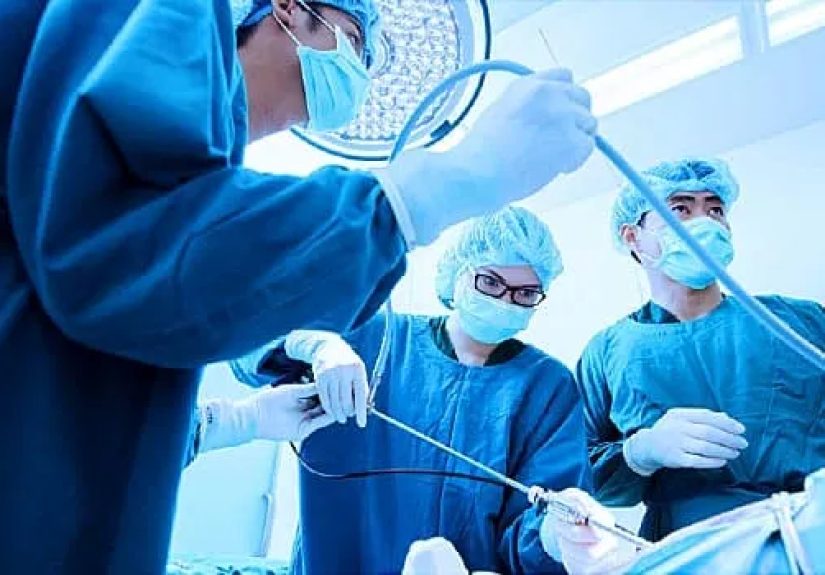
Laparoscopy is a minimally invasive surgery where a surgeon inserts a small camera through tiny incisions (often near the belly button) to look for
endometriosis. If suspicious lesions are found, a tissue sample (biopsy) may be taken to confirm the diagnosis under a microscope.
Why laparoscopy matters: it can directly visualize disease that imaging can miss. It can also sometimes treat endometriosis during the same procedure
(for example, removing lesions), depending on the surgical plan and the surgeon’s expertise.
So… does everyone need surgery to be “officially” diagnosed?
Not always. Many guidelines acknowledge a shift toward clinical diagnosis (based on symptoms, exam findings, and imaging) and starting
treatment without immediate surgeryespecially to reduce delays in care. But laparoscopy remains the most definitive method if confirmation is needed,
symptoms are severe, fertility is a concern, or the diagnosis is uncertain.
What happens at a typical endometriosis workup? A realistic timeline
- Visit 1: history + pelvic exam, consider STI testing if relevant, start symptom tracking.
- Early testing: ultrasound (often transvaginal); labs if heavy bleeding, anemia, or other concerns.
- Initial management: pain control strategies and often hormonal options; referral to gynecology if needed.
- If symptoms persist or red flags exist: MRI, specialist referral, discussion of laparoscopy.
- If laparoscopy is chosen: pre-op planning + possible biopsy and/or treatment during surgery.
When to call a doctor (and what to say so you’re taken seriously)
Call your primary care clinician or OB-GYN if you have:
- Period pain that interferes with daily life or is worsening over time
- Pelvic pain between periods lasting more than a few months
- Pain during sex, bowel movements, or urinationespecially if cyclical
- Difficulty getting pregnant or concerns about fertility
- Symptoms that don’t improve with standard measures (NSAIDs, heat, rest)
How to describe your symptoms (a script that helps)
- “My pain is cyclicalit flares before/during my period and affects my ability to work/sleep.”
- “I miss ____ days a month and need ____ medication to function.”
- “I have pain with sex/bowel movements/urination, especially during my period.”
- “I’ve tried ____ for ____ months. It helped/didn’t help.”
When to seek urgent care or emergency help
Endometriosis itself is rarely an immediate emergency, but pelvic pain can signal urgent problems. Seek urgent evaluation if you have:
- Sudden, severe pelvic/abdominal pain (especially one-sided), fainting, or shoulder pain
- Fever with pelvic pain
- Heavy bleeding (soaking through pads/tampons quickly, dizziness, or signs of anemia)
- Positive pregnancy test with pelvic pain or bleeding (rule out ectopic pregnancy)
- Persistent vomiting, inability to keep fluids down, or severe dehydration
FAQ: Quick answers to common “Is this endo?” questions
Can I have endometriosis if my ultrasound is normal?
Yes. Ultrasound can identify endometriomas and sometimes deep disease, but it can miss superficial lesions and adhesions. A normal ultrasound doesn’t
automatically mean “no endometriosis.”
What kind of doctor should I see?
Start with an OB-GYN or a primary care clinician who can evaluate pelvic pain. If symptoms are persistent, complex, or you’re considering surgery,
ask about referral to a gynecologist with experience in endometriosis and chronic pelvic pain.
Does endometriosis always show up on a pelvic exam?
No. The pelvic exam can reveal tenderness or masses, but many people have normal examsespecially early or superficial disease.
Is laparoscopy “worth it”?
It depends on your goals and situationseverity of symptoms, response to treatment, fertility plans, and whether confirmation changes management.
A thoughtful conversation about benefits, risks, and alternatives is the best next step.
Real-World Experiences: What it can feel like (and what people wish they knew sooner)
People’s experiences with endometriosis diagnosis often share a few themesmostly because endometriosis doesn’t always play by the rules. One person
might describe cramps that feel like “a tiny gremlin with a pitchfork,” while another says their periods were tolerable but they had years of
unpredictable bowel pain that magically appeared every month like an annoying subscription they never signed up for.
A common story starts with dismissals: “Periods are supposed to hurt,” or “Your tests are normal.” The tricky truth is that “normal” imaging can be
normal even when endometriosis is present. Some people spend months (or longer) bouncing between gastroenterology, urology, and gynecology because their
symptoms don’t stay neatly in one lane. Many wish they’d tracked their cycle earlierbecause once you can say, “My bladder pain flares two days before
my period and eases after day three,” the conversation changes from vague suffering to a recognizable pattern.
Others talk about the emotional side: the exhausting math of planning life around pain. You start scheduling social events in “safe windows,” packing
heating pads like they’re a fashion accessory, and knowing exactly which aisle the ibuprofen lives in. Humor becomes survival: “My uterus has a flair for
the dramatic,” or “I’m not canceling plans, I’m rescheduling my pelvis.” It’s funny until it’s notespecially when pain disrupts sleep, intimacy, work,
exercise, and mental health.
Appointments can be a mixed bag. Some people leave feeling validatedfinally hearing, “This could be endometriosis; let’s take it seriously.” Others
wish they’d gone in with a short, clear script and a symptom summary. A practical takeaway many share: bring specifics (timing, severity, functional
impact) and ask direct questions: “If the ultrasound is normal, what’s our next step?” “What conditions are we ruling out?” “When would you recommend
allowing a clinical diagnosis vs. considering laparoscopy?” That keeps the visit from turning into a shrug emoji.
Then there’s the decision point: treat symptoms first, or pursue surgical confirmation. People who choose medical management often describe relief when
a plan finally existstrying anti-inflammatory strategies, hormonal options, pelvic floor physical therapy, and targeted pain management. People who choose
laparoscopy sometimes describe it as the first time their pain had a name you could point to. Some feel validated by biopsy confirmation; others feel
frustrated when surgeons find less visible disease despite severe symptoms. Either way, many report that a clinician who believes themand explains the
“why” behind each stepmatters as much as the step itself.
If you recognize yourself in these experiences, the most useful mindset shift is this: you don’t have to “prove” your pain to deserve care. Your goal
isn’t to win a debate with your body; it’s to get a clear plan that reduces suffering and protects your long-term health. Start with pattern tracking,
bring your best facts, and keep escalating appropriatelybecause the right evaluation can turn years of confusion into a map forward.
Conclusion
Endometriosis can be hard to spot because symptoms vary and imaging can miss smaller lesions. But you’re not stuck guessing. A thorough history,
pelvic exam, and targeted imaging can build a strong working diagnosis, while laparoscopy with biopsy remains the most definitive confirmation when
needed. If your pain is cyclical, disruptive, worsening, or tied to sex/bathroom symptomsor if fertility is a concerncall a clinician and bring
a symptom timeline. You deserve answers that are based on evidence, not vibes.