Table of Contents >> Show >> Hide
- What “Scirocco” Means in Downdraft Land
- Quick Overview: What the Scirocco Plus Is Built to Do
- Blower Choices: The “Engine” Is a Separate Decision
- Venting Options: Ducted vs Ductless
- Capture Performance: What a Downdraft Does Well (and Where It Struggles)
- Installation Reality Check: What to Think About Before You Buy
- Maintenance and Care: Keep It Working (Without Making It a New Hobby)
- Noise: What to Expect (and How to Keep It Reasonable)
- Who Should Buy a Faber Scirocco Downdraft Vent?
- FAQ: Fast Answers to Common Scirocco Questions
- Real-World Experiences: What Owners and Installers Tend to Notice (Plus Tips You’ll Be Glad You Read)
- 1) The “14-inch rise” feels like a small upgradeuntil you cook
- 2) The best performance “hack” is… burner placement
- 3) “It’s loud” is often a duct problem wearing a blower costume
- 4) Ductless worksbut you have to be honest about what “works” means
- 5) Maintenance is easyuntil you ignore it
- 6) Plan the cabinet and electrical details early
- Conclusion
If you’ve ever stood in a gorgeous open-concept kitchen and thought, “Wow, I love the viewplease don’t ruin it with a giant metal spaceship hanging over the island,”
you already understand why downdraft vents exist. A downdraft vent pulls smoke, steam, and cooking odors downward (instead of up into a canopy hood), then sends the air
out through ductingor, with the right kit, filters it and returns it to the room.
The Faber Scirocco line (especially the newer Scirocco Plus models) is built for homeowners who want a cleaner visual line over
an island cooktop, or who can’t (or don’t want to) run an overhead hood because of cabinetry, windows, sightlines, or design goals.
It’s a “ventilation solution that hides in plain sight”until you hit the button and it rises up like it has somewhere important to be.
What “Scirocco” Means in Downdraft Land
“Faber Scirocco downdraft vent” is often used as a catch-all phrase for a few related configurations:
some older Scirocco versions are shorter-rise downdrafts with different blower setups, while
Scirocco Plus is the better-known tall-rise series that’s designed to improve capture performance behind the cooktop.
The practical takeaway: always confirm the exact model/series and blower choice before you plan your cabinet cutouts or duct route.
Quick Overview: What the Scirocco Plus Is Built to Do
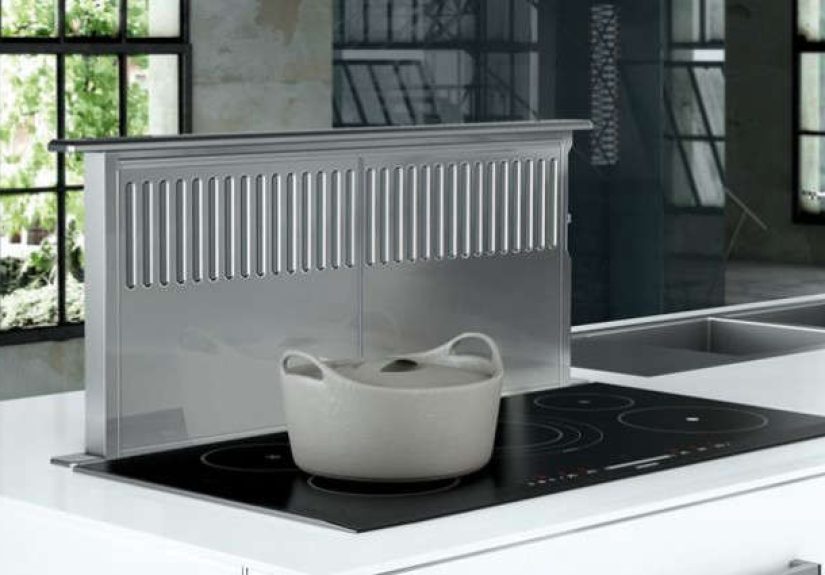
The hallmark feature of the Scirocco Plus is the tall, pop-up intake: it can rise up to 14 inches above the counter,
then retract back down when you’re done for a nearly flush look.
That extra height matters because downdrafts fight physics: smoke and heat naturally want to rise, and a downdraft is basically politely asking them to do the opposite.
A taller intake gives the vent a better chance to “meet the plume” before it spreads into the kitchen.
Core features people actually care about
- 14″ rise height for improved capture behind the cooking surface.
- Variable speed control so you can run low for simmering and crank it for high-heat moments.
- Safety microswitch behavior designed to prevent operation when filters aren’t properly installed and to reduce mishaps during cleaning.
- Stainless mesh grease filters designed for regular removal and cleaning.
- Multiple ducting orientations to help you work around cabinet constraints.
Blower Choices: The “Engine” Is a Separate Decision
With many Scirocco Plus setups, the downdraft body is the “shell,” and the blower is a separate choice. This is not a scam.
It’s actually useful: the right blower depends on your duct run, your cabinet layout, and how much you hate loud kitchen appliances.
Option 1: Internal blower (common choice)
A popular pairing is the IBDD600-B internal blower, rated at 600 CFM. In published performance tables for the Scirocco Plus with this
blower, you’ll often see measured airflow by speed (for example, roughly 190 / 330 / 480 CFM across three speed points) and corresponding sound levels
listed in sones. In real kitchens, airflow and noise depend heavily on duct length, elbows, and transitionsso treat published numbers as a baseline, not destiny.
Option 2: Remote blower (for power and/or noise control)
Remote blower options can push higher airflow (some configurations are commonly cited in the 900–1200 CFM class).
The advantage is twofold: you can move the loudest component farther from the cooktop area, and you may get stronger extractionespecially helpful if you do
high-heat searing, wok cooking, or frequent frying.
Important duct detail: 6″ vs 10″ connections
The installation guidance commonly distinguishes duct size by blower type:
6″ round ducting for the internal blower and 10″ round ducting for remote blowers.
That’s not just a random preferenceduct sizing affects static pressure, performance, and noise.
Undersized ducting is how you turn a premium vent into an expensive air whisperer.
Venting Options: Ducted vs Ductless
Most people assume downdrafts are always ducted out of the home. That’s the best-case scenario for odor and moisture removal.
But if exterior venting is hard (condos, slab foundations, strict building constraints), the Scirocco Plus can be configured for
ductless recirculation using a dedicated conversion kit.
Ducted (best for serious cooking)
- Moves smoke, steam, grease particles, and odors outside.
- Helps with indoor humidity management during heavy cooking.
- Usually the best option if you cook often with high heat or strong aromatics.
Ductless recirculating (when exterior venting isn’t realistic)
With a ductless conversion kit (commonly referenced as a Scirocco Plus ductless kit), air is filtered and returned into the kitchen.
This helps with odors, but it does not remove humidity the way exterior venting can.
Plan to replace charcoal filters on schedulemany product documents recommend about every 6 months depending on use.
Capture Performance: What a Downdraft Does Well (and Where It Struggles)
A downdraft can be great for day-to-day cookingespecially if your cooktop habits match the vent’s strengths.
But it’s also fair to say: a downdraft is not a magic tractor beam. Here’s how to get the best results.
What it does well
- Low-to-medium smoke cooking: sautéing, simmering, light pan-frying, steaming vegetables.
- Open kitchens: helps reduce “my whole house smells like dinner” scenarioswithout a canopy hood blocking sightlines.
- Minimalist design: the vent disappears when you want visual calm.
Where you’ll notice limitations
- Front burners: smoke can drift away before it gets pulled back toward the intake.
- Tall pots and big stockpots: they can block airflow paths and let steam escape upward.
- High-heat plume events (like hard searing): heat rises fast; you may need higher speed and better cookware placement.
Practical guidance in typical use-and-care materials often recommends running the vent before cooking starts (so airflow is already established),
and placing large/tall cookware toward the rear elements for better capture.
It may also note that higher heat settings can be needed when the downdraft is operating, because you’re moving air across the cooking surface.
Installation Reality Check: What to Think About Before You Buy
1) Space behind the cooktop and the overlap detail
A downdraft installs directly behind the cooktop. Many installation instructions specify that the rear of the cooktop should overlap the edge of the retractable vent
by a small amount (often cited around 3/8 inch) to optimize capture and fit. This is why “I’ll just pick a downdraft later” can become a cabinetry
plot twist.
2) Duct path: short, smooth, and sensible
If you want strong performance, treat the duct like a highway: fewer exits, fewer detours.
Long runs, multiple elbows, and tight transitions increase resistance (static pressure), which can reduce effective airflow and increase noise.
If your duct route has to make several turns, consider whether a remote blower setup makes more sense.
3) Multi-direction ducting flexibility
One reason the Scirocco Plus line is popular is its flexible ducting approach:
internal configurations are commonly listed with options such as venting to the left, right, down, forward, or back,
while some remote configurations limit directions (often forward/back).
That flexibility can save a project when you discover a joist, plumbing, or a cabinet support exactly where you wanted your duct to go.
4) Make-up air: the “code” part of the conversation
In many jurisdictions, higher-CFM kitchen ventilation triggers make-up air requirements.
Translation: if your vent moves a lot of air out, your home may need a controlled way to bring fresh air back in.
Some documentation highlights make-up air damper accessories and reducer kits intended for environments where an under-400-CFM configuration is required.
This is the part where you want your installer (or HVAC pro) to be your friend.
Maintenance and Care: Keep It Working (Without Making It a New Hobby)
Grease filters: your first line of defense
The mesh grease filters should be cleaned regularly. Many care instructions emphasize that removing and cleaning the filters improves efficiency.
The process is typically simple: remove the filters, soak in hot water with dish detergent, rinse, dry, and reinstall securely.
One important operational note often mentioned: the system may not operate if filters aren’t correctly seated, because a safety switch can prevent operation.
Surface cleaning: stainless steel, not stainless feelings
Clean the visible stainless parts with soap and water or a stainless cleaner, and skip abrasive powders that can scratch.
(Your vent wants to look classy, not “distressed farmhouse but make it accidental.”)
Ductless setups: don’t forget the charcoal filters
If you run ductless recirculation, your charcoal filters are doing the odor work.
Replace them on schedulecommonly recommended around every 6 months depending on cooking frequency.
If you forget, the vent will still move air… it just won’t move better-smelling air.
Noise: What to Expect (and How to Keep It Reasonable)
Downdrafts can be pleasantly quiet at low speeds and noticeably assertive at high speedslike a friend who starts a story softly and ends it with jazz hands.
Published sound ranges vary by blower and speed, and your duct path changes the experience dramatically.
Tips to reduce perceived noise
- Use the largest recommended duct size and avoid unnecessary reducers.
- Minimize sharp elbows; use smooth transitions and proper sealing.
- Consider a remote blower if sound is a top priority in an open-concept space.
- Run it early and steady instead of waiting for smoke to build and then blasting it on max.
Who Should Buy a Faber Scirocco Downdraft Vent?
This is a strong fit if you…
- Have an island cooktop and don’t want a ceiling hood blocking the view.
- Cook frequently but mostly in the low-to-medium smoke range.
- Value design integration and a clean countertop look when the vent is down.
- Can plan ducting intelligently (or choose ductless with realistic expectations).
You might want to consider alternatives if you…
- Do lots of high-heat wok cooking, heavy frying, or frequent indoor grilling.
- Need maximum capture over front burners all the time.
- Can install a properly sized overhead hood without design compromises.
FAQ: Fast Answers to Common Scirocco Questions
Does it work with gas cooktops?
Downdrafts can be used with gas cooktops, but some guidance notes that ventilation can affect flame stability and cooking performance.
If you notice flame behavior changes, try reducing blower speed or adjusting burner settings and cookware placement.
Always follow your cooktop manufacturer’s clearance and ventilation recommendations.
What should I do if liquid spills into the vent?
Some use-and-care instructions warn that liquid intrusion can damage the unit if it runs while wet.
The general safety approach is to turn the unit off and allow it to dry naturally (and consult the manual/installer for next steps).
In other words: this is not the moment for “let’s see if it’ll just power through.”
Is ductless worth it?
Ductless can be worth it when exterior venting isn’t feasible, especially for odor reduction in moderate cooking.
Just remember it doesn’t remove humidity like ducted ventilationand charcoal filters are a maintenance commitment, not a suggestion.
Real-World Experiences: What Owners and Installers Tend to Notice (Plus Tips You’ll Be Glad You Read)
Because I can’t claim personal hands-on experience, this section is based on common patterns seen in homeowner feedback, installer notes,
and typical downdraft “lessons learned.” Think of it as the kitchen-vent version of a friend texting you: “Here’s what I wish I’d known.”
1) The “14-inch rise” feels like a small upgradeuntil you cook
People often underestimate how much the intake height changes the day-to-day experience. With shorter downdrafts, you can feel like you’re chasing smoke:
you turn it on, then you angle pans, then you open a window, then you wonder if your eyebrows now smell like garlic. A taller intake behind the cooktop tends to
catch more of the moving plumeespecially when you start it before cooking and keep it running steadily.
Several owners also mention that the added height helps capture without “sucking the heat away” as aggressively as older, shorter setups, which can make cooking feel
more consistent.
2) The best performance “hack” is… burner placement
Downdrafts reward a simple habit: put the messiest, smokiest cooking toward the rear burners when possible.
It’s not a rulemore like a cheat code. If you’re searing steaks on the front burner with a cast-iron pan, the smoke column is already drifting upward and outward,
and the vent is trying to pull it back like a bouncer calling, “Sir, please return to the line.” Move that same pan to the rear and you’ll usually see noticeably
better capture.
3) “It’s loud” is often a duct problem wearing a blower costume
When someone says their downdraft is loud, the follow-up questions matter: How long is the duct run? How many elbows? Any hard reducers?
If the duct path is long or kinked with multiple turns, the blower has to work harder, which can increase noise and reduce effective airflow.
Installers frequently emphasize smoother ducting, proper sealing, and correct sizing as the difference between “quiet helper” and “jet engine that hates onions.”
In open-concept kitchens, buyers who are noise-sensitive sometimes prefer a remote blower option because it moves the sound source farther away.
4) Ductless worksbut you have to be honest about what “works” means
In apartments, condos, and slab homes, ductless can be the practical answer.
Owners often report that ductless improves everyday odors (think: sautéed aromatics, light frying), but it’s not the same as ducting outdoors for heavy smoke or
moisture. The biggest satisfaction factor is expectations: if you view ductless as “odor-control plus airflow,” you’ll likely be happy.
If you expect it to erase the aftermath of deep-frying fish on a rainy day, you might be disappointed.
Also: people who love ductless setups tend to be the ones who actually replace the charcoal filters on schedule.
5) Maintenance is easyuntil you ignore it
Most users find the filters and surface cleaning straightforward. Where things get annoying is when filters are left greasy for too long.
Performance drops, odors linger, and the system may behave differently if filters aren’t seated properly after cleaning.
A small routine (quick wipe-down weekly, filter clean every few weeks depending on cooking) keeps the vent feeling “invisible” in the best way:
it does its job and stays out of your mental budget.
6) Plan the cabinet and electrical details early
The most satisfied buyers are usually the ones who planned for the downdraft from the beginningespecially on custom or semi-custom cabinetry.
When the design team accounts for the vent’s footprint, blower placement, and duct route early, the install looks clean and feels intentional.
When it’s an afterthought, you’re more likely to face compromises like awkward ducting, less storage behind the cooktop, or more noise than expected.
Bottom line: a Faber Scirocco (especially Scirocco Plus) downdraft can be an excellent “design-first” ventilation choice that still performs well in real cooking
as long as you pair it with the right blower, route the ducting intelligently (or set ductless expectations correctly), and use it the way downdrafts like to be used:
early, steady, and with smoky cookware toward the back when you can.
Conclusion
The Faber Scirocco downdraft vent family is all about making ventilation compatible with modern kitchen design.
If your priority is keeping an island open and visually clean, the Scirocco Plus’s tall rise, flexible venting options, and blower choices offer a thoughtful
way to balance aesthetics and performance. The “secret” isn’t secret at all: plan the duct path, pick the right blower, and cook in a way that helps the downdraft
win the physics fight. Do that, and you get a kitchen that looks like a magazine spread and smells like a reasonable human lives there.