Table of Contents >> Show >> Hide
- The Senior First Aid Mindset: Calm, Clear, and a Little Bit Nosy
- Falls: The #1 “How Did That Even Happen?” Emergency
- Head Injuries: When a Bump Is Not Just a Bump
- Cuts, Scrapes, and Skin Tears: Gentle Is the New Strong
- Sprains, Strains, and Suspected Fractures
- Heat Illness in Seniors: When Summer Stops Being Cute
- Dehydration: The Quiet Trouble-Maker
- Choking: Act Fast, Keep It Simple
- Stroke Signs: The FAST Check Every Caregiver Should Know
- CPR for Seniors: Hands-Only Saves Lives
- Diabetes Lows: When “A Little Shaky” Matters
- Build a Senior-Smart Emergency Plan (Before You Need It)
- A Practical First Aid Kit for Seniors
- Experience Notes: What Caregivers Learn the Hard Way (So You Don’t Have To)
If you’ve ever tried to convince a senior to “just sit down for a second,” you already know: older adults can be
tough, independent, and occasionally powered by pure stubbornness. That independence is wonderfuluntil it meets
a loose rug, a slippery bathroom floor, or a heat wave that turns the living room into a slow cooker.
First aid for seniors isn’t “regular first aid, but louder.” It’s first aid with extra context: thinner skin that
bruises easily, bones that may fracture more readily, medications that can increase bleeding risk, and medical
conditions that make heat and dehydration hit harder. The goal is simple: keep the person safe, spot red flags
early, and get the right help fastwithout turning the situation into a chaotic “everyone talk at once” conference
call.
This guide covers senior first aid for the big hittersfalls, cuts, fractures, head bumps, heat illness,
dehydration, choking, and stroke signsplus practical prevention tips so you’re not living in fear of “The Next
Great Rug Incident of 2026.”
The Senior First Aid Mindset: Calm, Clear, and a Little Bit Nosy
1) Make the scene safe (before you become Patient #2)
Look for hazards: spilled water, clutter, pets underfoot, cords, hot pavement, or a bathroom floor slick enough to
qualify as an ice rink. If it’s unsafe, fix the hazard or move yourself to safety and call for help.
2) Do a quick “ABC” check
- A Airway: Can they talk or cough? Good sign.
- B Breathing: Is breathing normal? Any gasping or struggling?
- C Circulation: Any serious bleeding? Skin unusually pale, gray, or clammy?
3) When in doubt, call for emergency help
Seniors can look “fine” right after an injury and feel worse later. If you’re seeing warning signsconfusion,
chest pain, one-sided weakness, trouble speaking, severe headache, repeated vomiting, fainting, suspected broken
bone, or uncontrolled bleedingcall 911 (or your local emergency number) immediately.
4) Gather “silent clues” while you help
Quietly note: what happened, the time it happened, any medications (especially blood thinners), allergies, and
medical conditions (diabetes, heart disease, kidney issues, dementia). These details matter a lot to medical
professionals and can speed up care.
Falls: The #1 “How Did That Even Happen?” Emergency
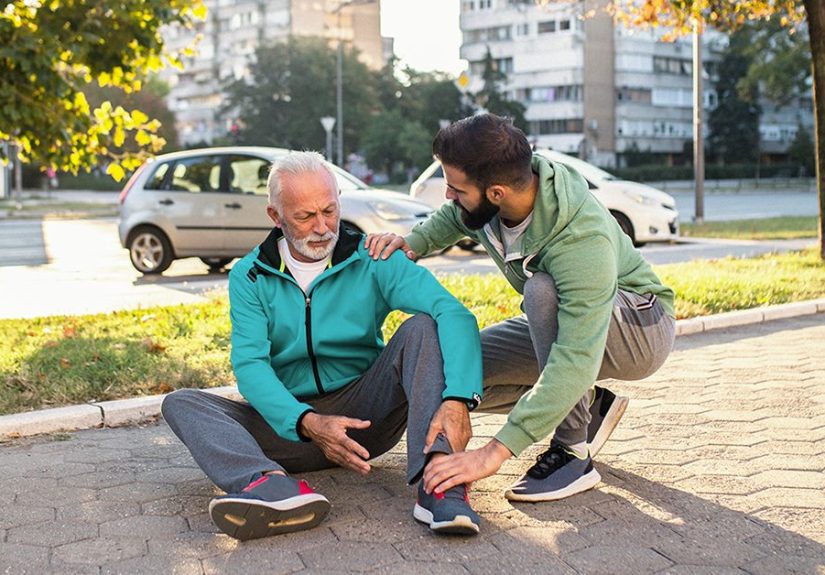
Falls are common among older adults and can be seriousespecially when they involve the head, hip, or spine. The
big first-aid mistake is rushing to “get them up” before you know what’s injured. Your job is to assess first,
move second (and sometimes not at all).
What to do immediately after a fall
- Pause and reassure. Calm reduces panic and helps you assess clearly.
- Ask them not to move until you check for pain, dizziness, or obvious injury.
- Check for head/neck/back pain and any deformity, swelling, or bleeding.
- Look at their face and speech. Slurred words or confusion can signal a serious problem.
-
Decide: call emergency help vs. monitor. If you suspect a serious injury, don’t attempt to lift
them alone.
Call emergency help right away if any of these are true
- They lost consciousness (even briefly) or seem increasingly confused.
- They hit their head and are on blood thinners, or they have concerning symptoms.
- They can’t bear weight, have severe hip/groin pain, or the leg looks shortened/rotated.
- There’s neck/back pain, numbness, tingling, or weakness.
- Bleeding won’t stop with steady pressure.
- They have chest pain, trouble breathing, or fainting.
If they seem okay and want to get up
If there’s no head injury concern, no severe pain, and they can move arms/legs normally, you can help them rise
slowly. Bring a sturdy chair, have them roll to their side, get onto hands and knees, and use the chair
to support a gradual stand. If they get dizzy, stop and sit them down. “Slow” is not a personality flaw hereit’s
a safety feature.
After any fall: watch for delayed symptoms
Even a “minor” fall can lead to pain or symptoms hours later. Monitor for worsening headache, new confusion,
repeated nausea/vomiting, unusual sleepiness, or trouble walking. When in doubt, a medical evaluation is the
smarter moveespecially if the person is older, frail, or has multiple health conditions.
Head Injuries: When a Bump Is Not Just a Bump
Head injuries deserve respect in seniors. Some warning signs may show up later, and certain medications can raise
the risk of internal bleeding. Treat head trauma like a “serious until proven otherwise” situation.
Do this first
- Keep them still if you suspect neck/spine injury.
- Control bleeding with gentle, steady pressure using clean gauze or cloth.
- Apply a cold pack (wrapped in cloth) to reduce swelling.
- Monitor for changes in alertness, balance, or speech.
Red flags after a head impact
- Worsening headache, repeated vomiting, or increasing confusion.
- Slurred speech, weakness, numbness, trouble walking, or seizures.
- Unequal pupils, fluid/blood from the nose/ears, or significant drowsiness.
- Any head hit with blood thinners plus symptomsor even “something feels off.”
Cuts, Scrapes, and Skin Tears: Gentle Is the New Strong
Older skin can tear more easily, and bruising can look dramatic (like a special-effects team moved in). The goals
are: stop bleeding, clean the wound, protect it, and watch for infection.
First aid steps for minor wounds
- Wash your hands (or sanitize) before helping.
- Stop the bleeding: press firmly with clean gauze. Add layersdon’t keep lifting to peek.
- Rinse with clean running water to remove dirt.
- Cover with a sterile dressing and secure it comfortably (not tourniquet-tight).
- Check daily for redness, warmth, swelling, drainage, or worsening pain.
Get medical care if
- The cut is deep, gaping, or on the face.
- Bleeding won’t stop, or the person is on blood thinners.
- There are signs of infection: spreading redness, fever, pus, or increasing tenderness.
- The wound was caused by an animal bite or dirty object.
Sprains, Strains, and Suspected Fractures
Sprain/strain basics
Twisted ankles and “I just stepped weird” moments can happen at any age, but recovery can be slower in seniors.
For mild injuries, think rest + reduce swelling + protect movement.
- Rest: stop activity and avoid painful weight-bearing.
- Cold pack: 10–20 minutes at a time, wrapped in cloth, several times daily.
- Compression: a snug (not tight) wrap can reduce swelling.
- Elevation: raise the limb above heart level when possible.
Suspect a fracture when
- Pain is severe, swelling is rapid, or there’s deformity.
- The person can’t bear weight or use the limb normally.
- There’s numbness, tingling, or the limb looks pale/cool.
If you suspect a fracture, don’t try to “test it.” Immobilize the area as best you can, keep the
person comfortable, and seek urgent medical care.
Heat Illness in Seniors: When Summer Stops Being Cute
Older adults are at higher risk during hot weather. The body’s ability to cool itself can be less efficient with
age, and chronic conditions or medications may add to the risk. Heat illness can sneak upespecially in homes
without air conditioning or during power outages.
Heat cramps / heat syncope (fainting)
Warning signs: muscle cramps, light-headedness, dizziness, or fainting after heat exposure.
First aid: move to a cool place, sit or lie down, loosen clothing, and sip water slowly.
Heat exhaustion
Warning signs: heavy sweating, weakness, headache, nausea, cool/clammy skin, fast pulse, or feeling “wiped out.”
First aid:
- Move to shade or air conditioning.
- Loosen or remove excess clothing.
- Use cool wet cloths, a cool shower, or a fan to help cooling.
- Sip water if the person is alert and not nauseated.
If symptoms worsen, the person vomits repeatedly, or they don’t improve, get medical help. Heat exhaustion can
progress to heat stroke.
Heat stroke (medical emergency)
Warning signs: confusion, agitation, fainting, very hot skin, or a sudden change in mental status. This is a
“call emergency help now” scenario.
First aid while waiting for help:
- Move to the coolest place available.
- Cool the body: wet cloths, cool shower, fan, or ice packs to neck/armpits/groin (wrapped in cloth).
- Do not force fluids if the person is confused, very drowsy, or vomiting.
Dehydration: The Quiet Trouble-Maker
Dehydration in seniors can happen faster than people expectduring heat, illness, or simply from not feeling
thirsty. It can affect energy, balance, and thinking, increasing fall risk. It also tends to show up as “weird
little symptoms” rather than a dramatic announcement.
Common signs of dehydration
- Dark urine or peeing less often
- Dry mouth, fatigue, dizziness
- Headache, weakness, or muscle cramps
- Confusion or unusual irritability
First aid for mild dehydration
- Offer small, frequent sips of water.
- Use broth or an oral rehydration drink if tolerated.
- Move to a cooler environment and rest.
Get urgent medical help if
- The person is confused, very weak, fainting, or hard to wake.
- They can’t keep fluids down due to vomiting.
- There are signs of heat stroke or severe illness.
Choking: Act Fast, Keep It Simple
Choking risk can increase with swallowing difficulties, poorly fitting dentures, certain neurologic conditions, or
simply eating too quickly (because the casserole is “too good to wait”). Knowing what to do matters.
If they’re coughing and can speak
Encourage them to keep coughing. Don’t smack their back while they’re still moving air welleffective coughing is
their best tool.
If they can’t breathe, talk, or cough effectively
- Call 911 (or your local emergency number) immediately.
- Give abdominal thrusts if trained (or follow dispatcher instructions).
- If the person becomes unresponsive, begin CPR and follow emergency guidance.
If you’re not trained, don’t wait to become “confident”call emergency services and follow instructions. A short
first aid class can turn panic into action.
Stroke Signs: The FAST Check Every Caregiver Should Know
Strokes are time-sensitive emergencies. If you suspect a stroke, don’t drive the person around looking for
“the best place.” Call emergency services.
Use FAST
- F Face: drooping or uneven smile
- A Arms: one arm weak or drifting down
- S Speech: slurred or strange speech
- T Time: call 911 immediately
CPR for Seniors: Hands-Only Saves Lives
If a senior collapses and isn’t responding, call 911 immediately. If they’re not breathing normally, start
hands-only CPR: push hard and fast in the center of the chest until help arrives, and follow dispatcher
instructions. If an AED is available, use itit talks you through every step like a calm robot coach.
Diabetes Lows: When “A Little Shaky” Matters
Low blood sugar can look like dizziness, sweating, shakiness, confusion, or sudden irritability. If the person is
awake and can swallow safely, a quick source of sugar (like juice) may help while you monitor them. If they’re
not fully alert, are unable to swallow, or symptoms are severe, call emergency services.
Build a Senior-Smart Emergency Plan (Before You Need It)
First aid goes better with preparation. Make the “right thing” the easy thing.
Do these now, not in the middle of a crisis
-
Create a one-page medical sheet: diagnoses, medications (including blood thinners), allergies,
primary doctor, emergency contacts. - Post emergency numbers near phones and save them in contacts.
- Set up a check-in system during heat waves or after a fall.
- Improve lighting and remove trip hazards (rugs, cords, clutter).
- Consider safety supports like grab bars, non-slip mats, and stable footwear.
- Encourage balance and strength activities appropriate for their abilities.
A Practical First Aid Kit for Seniors
You don’t need a suitcase of supplies. You need the right basics, stored where you can reach them quickly.
- Gauze pads, adhesive bandages, medical tape
- Elastic wrap bandage
- Antiseptic wipes
- Cold packs (instant or reusable)
- Gloves (non-latex if allergies are a concern)
- Thermometer
- Flashlight with fresh batteries
- Emergency contact/medication list
Experience Notes: What Caregivers Learn the Hard Way (So You Don’t Have To)
People don’t usually “start caregiving” because it sounds like a relaxing hobby. It tends to begin with a phone
call, a neighbor’s knock, or a moment when you realize the hallway rug has been quietly plotting treason for
years. The good news is that experience builds a kind of practical wisdompart medical, part detective, part
professional calm-person-in-the-room.
One of the most common lessons caregivers share is this: seniors often downplay symptoms. After a fall, you may
hear, “I’m fine,” said through gritted teeth while they cling to the countertop like it’s a life raft. Experienced
helpers learn to ask better questions: “Where does it hurt?” “Did you hit your head?” “Are you dizzy?” “Can you
wiggle your toes?” It’s not being dramaticit’s gathering clues. The body sometimes delays the full pain report,
especially after adrenaline shows up like an uninvited party guest.
Another real-world pattern: people try to stand up too quickly after sitting or lying down, especially in hot
weather or after not drinking enough fluids. A caregiver who’s been around the block learns to make “slow” sound
like a smart choice, not a scolding. “Let’s sit for a minuteyour heart deserves a loading screen.” It’s a small
moment of humor that can prevent a second fall caused by dizziness.
Heat waves bring their own set of stories. Caregivers often describe how a senior can feel “a little off” long
before anything looks like an emergencyslightly confused, unusually tired, or complaining of a headache. The
experienced move is to treat those early hints like smoke before a fire: cool environment, light clothing, a fan,
and steady sips of fluids if they’re alert. Andthis part matterschecking in on seniors who live alone becomes a
priority, not a “nice idea.” A quick call can be the difference between “I’m fine” and “I forgot to drink water
and also forgot what day it is.”
Cuts and skin tears create another learning curve. A small scrape on a younger person can look like “no big
deal,” but on older skin it can bleed more than expected and heal more slowly. Veteran caregivers keep supplies
simple and accessiblegauze, tape, and a calm approach. They also learn the art of steady pressure without
repeatedly lifting the gauze to check (because curiosity is powerful and also unhelpful when you’re trying to stop
bleeding).
There’s also the emotional side: seniors may feel embarrassed after a fall or scared of losing independence. The
most effective caregivers don’t argue; they collaborate. “Let’s get checked out so we can keep you doing your
thing.” That framing keeps dignity intact while still taking safety seriously.
Finally, many caregivers say the best “first aid upgrade” wasn’t a fancy gadgetit was preparation. A printed
medication list. A nightlight in the hallway. A non-slip mat. A plan for hot days. A shared agreement that head
impacts and sudden confusion are never “just nothing.” Over time, you realize first aid for seniors is less about
heroic moments and more about consistent, practical choicesplus the occasional victorious removal of a wobbly
throw rug that has caused enough drama for one lifetime.