Table of Contents >> Show >> Hide
- What the 1148L actually is (and why people notice it)
- The Fresnel lens effect: lighthouse science, now in your hallway
- Key specs and what they mean in real life
- Design notes: why it feels “expensive” even when it’s tiny
- Where the Fresnel LED Lamp 1148L works best
- Installation and planning tips (so it looks intentional, not accidental)
- How it compares to other wall/ceiling lighting styles
- Care and maintenance (keep it crisp, not cloudy)
- FAQ: quick answers for common shopper questions
- Final thoughts: why this little lens earns a spot on the shortlist
- Real-World Experiences With the Fresnel LED Lamp 1148L (What People Tend to Notice)
The Fresnel LED Lamp 1148L is one of those rare fixtures that manages to be two things at once: quietly minimal
(almost shy) and unmistakably “designed.” It’s small enough to feel like it should come with a warning label that says,
“Do not underestimate me; I’m brighter than I look.” The secret is right in the name: a Fresnel lens.
Instead of relying on a big shade or a bulky diffuser, the 1148L uses a lens-inspired glass element to shape and soften light
in a surprisingly rich waymore lighthouse logic than living-room fluff.
If you’re shopping for a wall/ceiling light that reads clean, modern, and slightly industrialwithout screaming “hardware store”
the 1148L sits in a sweet spot: sculptural but practical, iconic but still easy to live with.
What the 1148L actually is (and why people notice it)
The 1148L is a wall-and-ceiling mounted fixture designed for the brand Oluce and credited to designer
Joe Colombo (the design dates back to the 1960s, which is wild considering how current it still looks). In everyday terms,
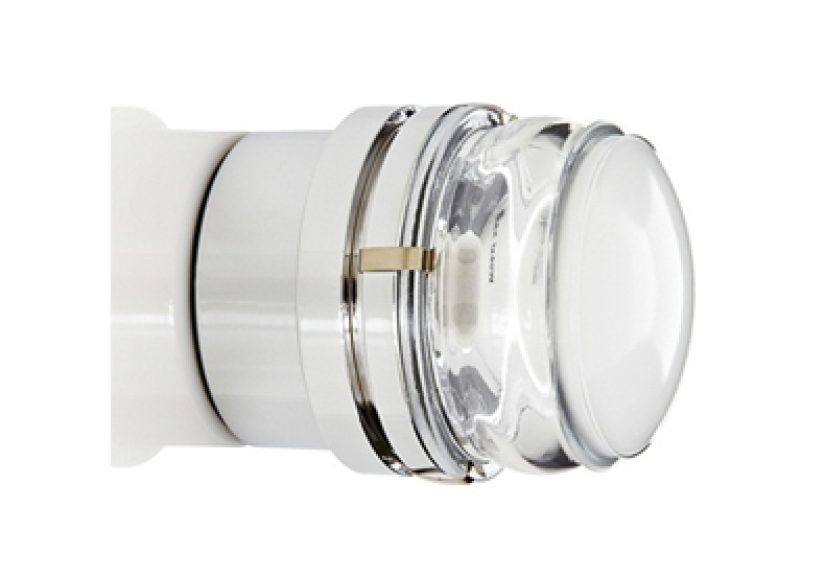
it’s a compact cylinder with a glass Fresnel-style diffuser that throws a direct-yet-diffused lightmeaning you get usable
illumination, but the glow is softened and visually “finished,” not harsh or bare-bulb.
People tend to love it for the same reason they love well-made kitchen tools: it feels engineered. No unnecessary flourishes.
Just solid materials, a clear purpose, and that satisfying sense that every millimeter is doing something.
The Fresnel lens effect: lighthouse science, now in your hallway
The Fresnel lens was developed to make light travel farther and waste lessfamously used in lighthouse optics. Instead of a thick,
heavy lens, Fresnel optics use rings (think concentric steps) that bend and concentrate light efficiently. In lighthouse history,
this meant brighter beams visible at greater distances and improved safety for navigation.
In home lighting, you’re not trying to guide ships away from rocks (unless your open-concept kitchen is especially treacherous),
but the same concept helps in two big ways:
- Controlled brightness: The light feels purposeful and directed rather than messy and glaring.
- Soft diffusion: You get a gentle glow that’s more flattering on walls, textures, and faces.
That’s why the 1148L can be small and still feel “complete.” The lens is doing work that many fixtures outsource to oversized shades.
Key specs and what they mean in real life
Spec sheets can feel like alphabet soup, so here’s the practical translation of the 1148L’s commonly listed characteristics.
(Always confirm details with the exact finish/version you’re buying, since listings can vary by configuration.)
Light output and color
- Wattage: The LED version is commonly listed around 4W for the integrated LED module.
- Color temperature: Typically 2700Kthat warm, cozy “evening at home” tone (not hospital-white).
- Lumens: Often shown around 500 lumens, which is meaningful for accents, corridors, and layered lighting.
- CRI: Commonly listed around 85 CRI, which is solid for residential use (colors look natural, not dull).
Translation: this isn’t a “light the whole basement” fixture by itself. It’s best used where you want a strong accent, a clean wash,
or repeated units that create rhythmtwo in a hallway, a pair flanking a mirror, or a row along a covered outdoor wall.
Size and presence
The 1148L is notably compactoften listed around 3.9 inches wide with roughly 4.7 inches of extension.
In person, it reads as a tight, architectural detail rather than a big decorative statement.
Dimming and control
Many listings describe the LED version as not dimmable. That doesn’t mean it’s “too bright,” but it does mean you should
plan its placement like you would any fixed-output fixture: put it where you want consistent illumination, not where you need
mood-slider flexibility.
Ratings (dry, damp, wet) and why you should care
One reason this fixture gets recommended for practical homes is that certain configurations are described as
damp-rated (and some retailers list wet/IP-related notes depending on finish and version). For you, that matters in:
- Covered patios and protected outdoor walls
- Bathrooms (especially away from direct shower spray unless explicitly rated for it)
- Entryways that see humidity and temperature swings
Pro tip: don’t guess. If you’re installing it outside or in a bathroom zone, match the fixture’s rating to your location’s code
requirements and real exposure conditions.
Design notes: why it feels “expensive” even when it’s tiny
The 1148L’s aesthetic lives in that satisfying overlap between industrial and nautical:
a compact metal body, a lens-forward face, and a vibe that says “I might belong on a ship, but I also look great next to your
very civilian towel hooks.”
A big part of its charm is restraint. You’re not paying for ornamentyou’re paying for a clean object where the materials,
proportions, and optics do the talking. It works equally well in:
- Modern minimal spaces (where it becomes a crisp punctuation mark on the wall)
- Mid-century interiors (where it feels historically aligned without looking retro-cartoonish)
- Industrial schemes (where it supports the architecture rather than competing with it)
- Coastal homes (because “lighthouse lens energy” is basically on theme)
Where the Fresnel LED Lamp 1148L works best
1) Hallways and transitional spaces
Hallways are where lighting often gets treated like an afterthoughtuntil you’re walking through a dim corridor carrying laundry
like a cautionary tale. The 1148L shines here because it’s compact and can be repeated without visual clutter. Two to four units
spaced evenly can create a gallery-like rhythm and make the wall itself feel intentional.
2) Bathroom side lighting (especially for mirrors)
If you’re used to the classic “overhead light that makes everyone look like they haven’t slept since 2009,” consider side lighting.
A pair of 1148Ls flanking a mirror can create a more even facial light than a single overhead source. If you want true vanity-grade
brightness, pair them with additional overhead or mirror lightingthink layered, not single-solution.
3) Covered outdoor walls and entries
In sheltered outdoor applications, the 1148L’s controlled, diffused output can feel welcoming rather than glaring. It’s particularly
good near doors because the light reads clean and crisp on exterior materials like stucco, painted siding, or brick.
4) Accent lighting for art, texture, or architectural details
Got a textured wall finish, a niche, or a stairwell that deserves better than one sad ceiling can light? Fresnel-style diffusion tends
to reveal texture beautifully. The light feels shaped, and the lens helps avoid that “random bright spot” look.
Installation and planning tips (so it looks intentional, not accidental)
Mind the height
For a wall mount, many people place compact sconces around eye level or slightly above, depending on the goal:
lower for path guidance and mood; higher for broader wall wash. If you’re using it near a mirror,
align it with the mirror’s vertical center or slightly above, and keep both sides symmetrical.
Use pairs and multiples
This fixture is small. It loves company. In longer spaces, two is good, three is better, four is “wow, this looks designed.”
The trick is consistent spacing. If your layout is irregular, it’s usually better to deliberately cluster in pairs than to
scatter randomly.
Confirm electrical box compatibility
Many retail listings note that the fixture includes a backplate intended for standard junction box installation. Still, your actual
wall conditions (stud placement, old wiring, exterior penetrations) decide what’s easy and what’s “call the electrician before
this becomes a weekend villain arc.”
Plan for non-dimming (if applicable)
If the LED version you’re buying is listed as non-dimmable, treat it like a fixed-output tool. Put it where a steady warm glow is
always welcomeentries, corridors, or exterior approachesnot where you need candlelight one minute and task light the next.
How it compares to other wall/ceiling lighting styles
Versus a globe sconce
Globes are soft and friendly, but they can look generic fast. The 1148L gives you softness with structureit’s less “decor”
and more “design detail.”
Versus a bare cylinder uplight/downlight
Cylinders can create sharp beams and dramatic patterns, but they’re often harsher on the eye. Fresnel diffusion tends to feel less
aggressive while still delivering a deliberate, controlled look.
Versus “industrial cage” fixtures
Cage fixtures can lean trendy and visually noisy. The 1148L keeps the industrial vibe but edits out the costume jewelry.
Care and maintenance (keep it crisp, not cloudy)
- Clean gently: Use a microfiber cloth for the glass lens. Avoid abrasive pads that can haze glass over time.
- Skip harsh chemicals: Mild soap and water are usually enough for fingerprints and outdoor dust.
- Check seals outdoors: If used outside, periodically inspect mounting points and ensure water isn’t pooling around the fixture.
FAQ: quick answers for common shopper questions
Is the Fresnel LED Lamp 1148L bright enough for a main room?
Usually, it’s best as part of a layered plan: accents + ambient + task. On its own, it’s more “purposeful glow” than “single
sun replacement.” Use multiples if you’re relying on it for general illumination.
Will it look too small on a big wall?
One unit might. Two or more typically won’t. The 1148L is a “repeat me” fixture. If you want a single dramatic object,
consider a larger statement sconce instead.
Does the warm 2700K look yellow?
In a space full of cool white (4000K+) lighting, yes, it will feel warmer. In a normal residential setting with warm or neutral
lighting, 2700K usually reads as comfortable and flatteringespecially in evenings.
Is it good for outdoors?
Some configurations are marketed for outdoor or damp conditions, while others (often chrome/indoor variants) may be intended for
interior use only. Confirm the exact finish/version rating before you buy.
Final thoughts: why this little lens earns a spot on the shortlist
The Fresnel LED Lamp 1148L is a masterclass in “small but serious.” It’s not trying to be a chandelier. It’s trying to be
the kind of fixture you install once and then forgetbecause it just works, looks good doing it, and makes the wall around it feel
more intentional. The Fresnel lens isn’t a gimmick; it’s a functional optic with a long history, adapted into a clean, modern object
that behaves beautifully in real spaces.
If your taste runs toward design that’s practical, compact, and a little bit clever (without being cute about it), the 1148L is the
kind of light you’ll keep liking long after trendier fixtures have started to feel like a dated haircut.
Real-World Experiences With the Fresnel LED Lamp 1148L (What People Tend to Notice)
I don’t have personal hands-on experience, but here’s a realistic “what it’s like to live with it” synthesis based on how owners,
designers, and retailers typically describe this style of compact Fresnel-lens wall lightand the practical realities that show up
once it’s not just a pretty product photo.
The first surprise: it’s smaller than your brain expected
A lot of people mentally picture wall sconces as “hand-sized but roomy.” The 1148L is hand-sized in the literal sensecompact enough
that, when you unbox it, you may have a brief moment of, “Wait, is that it?” The good news is that this is exactly why it works in
tight spots: narrow hallways, stair landings, and those awkward in-between walls where a larger fixture would feel like it’s trying
to start an argument with the architecture.
The second surprise: the light looks richer than 4 watts has any right to
On paper, “4W LED” sounds like a nightlight. In practice, the lens and diffuser approach makes the output feel intentional and
well-shaped. People often describe the glow as “clean” and “soft,” not weak. In a hallway, one unit can be a nice accent; two units
spaced well can feel like a real lighting plan; three or four turns a transitional space into something that feels curated.
Placement stories that come up again and again
-
Entryways: Homeowners like it near the front door because it provides guidance without the harsh “spotlight”
vibe. The warm tone tends to feel welcoming after dark. -
Bathroom pairs: Designers often recommend using twoone on each side of a mirrorbecause it creates more balanced
facial lighting than a single overhead fixture. People who do this usually say the bathroom feels “more expensive” immediately. -
Outdoor covered walls: In sheltered areas, the fixture looks especially at home because the lens reads a little
nautical and practical. It becomes a detail that feels purposeful rather than decorative.
The “I wish I’d known” moments
The most common planning regret is assuming one fixture will do the job of three. Because it’s compact, it’s easy to underestimate
how much repetition helps. If the goal is general brightness, owners often end up happier when they plan multiples from the start
instead of installing one and hoping it will light an entire corridor like a stadium.
Another common note is about dimming expectations. Many LED-integrated designer fixtures prioritize consistency and optical quality,
and some versions are listed as non-dimmable. People who are happiest with the 1148L usually treat it as a “set it and enjoy it”
lightone that’s perfect at a steady outputrather than a mood lighting tool that needs a dimmer slider.
Everyday living: maintenance and durability vibes
In daily life, the lens is the star and also the part you’ll notice if it gets dusty. A quick microfiber wipe restores that crisp,
glassy look. In outdoor or entry applications, a seasonal wipe-down tends to keep it looking sharp. People who like “design objects
that don’t demand attention” often appreciate that it’s basically low-maintenance: it doesn’t have fabric to fade, a shade to warp,
or a giant globe to constantly show fingerprints (though yes, glass is still glasshandle it like you want it to stay pretty).
Overall, the lived-in experience is less “statement piece” and more “quiet upgrade.” It’s the kind of fixture that makes you notice
how much better a space feels when the lighting is controlled, warm, and thoughtfully placedwithout needing the fixture itself to
be loud about it.