Table of Contents >> Show >> Hide
- Why Tomato Fertilizing Feels Tricky (And How to Make It Easy)
- Step 1: Start With a Soil Test (Because Guessing Is Expensive)
- Step 2: Understand Fertilizer Labels Without Needing a Chemistry Degree
- Step 3: When to Fertilize Tomatoes (A Stage-by-Stage Timeline)
- Step 4: How to Fertilize Tomatoes (Methods That Actually Work)
- In-Ground vs. Raised Beds vs. Containers: Same Tomato, Different Rules
- Organic Fertilizers for Tomatoes: What Works (And What’s Mostly Vibes)
- Troubleshooting: What Your Tomato Plant Is Trying to Tell You
- Simple Tomato Fertilizer Schedules (Copy, Paste, Grow)
- Quick Fertilizer Math (So You Don’t Accidentally Overdo It)
- Frequently Asked Questions
- Gardeners’ Field Notes: Experiences That Make You Better at Fertilizing Tomatoes (500+ Words)
- Wrap-Up: A Tomato Fertilizing Plan You Can Actually Stick With
Tomatoes are the drama club of the vegetable garden: they’ll reward you with heavy, glossy fruit… and then
immediately faint if their nutrition plan is either too strict or way too “all-you-can-eat.”
The good news is that fertilizing tomatoes isn’t mysterious. It’s just timing, balance, and a little restraint.
(Yes, restraint. The lush jungle of leaves is not the goalunless you’re starting a tomato-themed rainforest exhibit.)
This guide walks you through what tomatoes need, when they need it, and how to feed them without accidentally
raising a gorgeous plant that produces exactly three tomatoes and a lot of attitude.
Why Tomato Fertilizing Feels Tricky (And How to Make It Easy)
Tomatoes are often called “heavy feeders,” but that doesn’t mean they want nonstop fertilizer. They want the
right nutrients at the right time. Early in the season, they need enough nitrogen to build stems and leaves.
Later, they need steady nutritionespecially potassium and other key nutrientsto support flowering and fruit development.
The classic mistake is overdoing nitrogen. Too much nitrogen can push leafy growth at the expense of flowers and fruit.
You end up with a plant that looks like it belongs on a seed packet cover… and performs like a no-show at harvest.
Step 1: Start With a Soil Test (Because Guessing Is Expensive)
If you take only one “serious gardener” step this season, make it a soil test. It tells you what your soil already has
and what it actually needs. That prevents two common problems:
- Over-fertilizing (wasted money + fewer tomatoes).
- Under-fertilizing (weak growth + small yields).
Soil tests can also flag imbalances in phosphorus and potassiumnutrients that matter a lot once tomatoes switch from
“growing” to “producing.”
What if you don’t have a soil test?
You can still fertilize successfullyyou’ll just lean on conservative, general home-garden rates and watch the plant’s
performance closely. When in doubt, feed lightly, then adjust. Tomatoes recover from “a little hungry” far better than
“overfed and confused.”
Step 2: Understand Fertilizer Labels Without Needing a Chemistry Degree
Most fertilizers list three numbers, like 10-10-10 or 5-10-10. Those are the percentages of:
- N = Nitrogen (leaf and stem growth)
- P = Phosphorus (roots, flowering, early plant development)
- K = Potassium (fruit development, overall plant function)
A “balanced” fertilizer has similar numbers (like 10-10-10). A tomato-friendly blend often has
moderate nitrogen with stronger P and/or K (like 5-10-10), especially later in the season.
Fast vs. slow feeding
- Granular/slow-release: Great for steady feeding; fewer applications.
- Water-soluble/liquid: Faster response; useful for containers and quick corrections.
Step 3: When to Fertilize Tomatoes (A Stage-by-Stage Timeline)
Before planting: build the “foundation meal”
Tomatoes perform best when the soil is fertile before they go in. Think of this as stocking the pantry.
If you amend soil only after plants struggle, you’re basically making nutrition decisions during a crisis.
- Work in compost to improve soil structure and long-term nutrient supply.
- If you’re using a general fertilizer without a soil test, incorporate a complete garden fertilizer into the bed at a
conservative home-garden rate.
If your soil is already rich (especially if you’ve amended heavily for years), you may not need much pre-plant fertilizer.
That’s another reason soil testing is such a power move.
At transplanting: a gentle start (not a “protein shake”)
Newly transplanted tomatoes need to establish roots first. This is a moment for moderation.
If you apply strong fertilizer directly against the roots or stem, you can burn tender tissue.
A common approach is using a starter solution (a diluted, water-soluble fertilizer) or lightly mixing fertilizer
into the planting areakeeping concentrated fertilizer away from direct root contact.
2–3 weeks after transplanting: begin planned feeding
Once the plant is settled and growing, you can begin a more consistent feeding plan. In many climates and soils, this is
the moment when the plant starts to shift from “survive the move” to “let’s build a body.”
If your soil is sandy or you’ve had heavy rains, nutrients may leach faster, and side-dressing can be especially helpful.
Fruit set: the most important “when” of the season
A classic trigger for fertilizing is when fruit begins to form and size upthink early fruit development rather than
waiting for the plant to look exhausted. Many home-garden recommendations suggest side-dressing when fruit is
forming and then repeating at regular intervals.
At this stage, avoid pushing heavy nitrogen. You want healthy foliage, yes, but you mainly want energy directed into
flowers and fruit.
Every 3–4 weeks during harvest: steady, light support
For many in-ground gardens, a light side-dress every few weeks during fruiting is enoughespecially if you started with
decent soil and compost. Overfeeding late in the season often shows up as excessive foliage, delayed ripening, and
bland fruit.
Step 4: How to Fertilize Tomatoes (Methods That Actually Work)
Method A: Incorporate fertilizer into the bed (pre-plant)
Mix granular fertilizer into the top few inches of soil before planting. This distributes nutrients and reduces the risk of
concentrated fertilizer burning roots later.
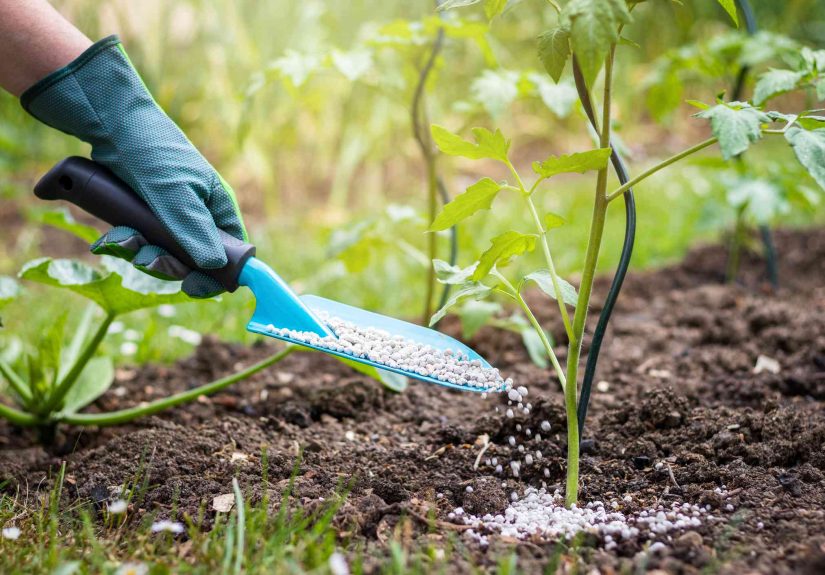
Method B: Side-dress (the tomato gardener’s best friend)
Side-dressing means applying fertilizer nearnot onthe plant after it’s established. It’s one of the most effective
ways to feed tomatoes without overloading the entire bed.
- Measure your fertilizer (don’t freestyle this part).
- Apply it a few inches away from the stem (imagine a “donut,” not a “volcano”).
- Scratch it lightly into the soil surface.
- Water deeply to move nutrients into the root zone.
Method C: Water-soluble feeding (especially for containers)
Containers are different. Water drains through quickly, taking nutrients with it. That’s why container tomatoes often do
best with a consistent, diluted feeding routine once they’re established.
A simple plan many gardeners follow: start feeding about two weeks after planting in a container, then continue on a
weekly schedule with a soluble fertilizeradjusting strength and frequency based on plant growth and weather.
In-Ground vs. Raised Beds vs. Containers: Same Tomato, Different Rules
In-ground tomatoes
In-ground plants usually have a larger “nutrient bank,” especially in soils with decent organic matter. You can often rely
on:
- Pre-plant compost + a modest base fertilizer (if needed)
- Side-dressing at fruit set
- A repeat side-dress every few weeks during heavy production
Raised bed tomatoes
Raised beds can be incredibly productive, but they drain faster than many native soils. That can mean more frequent
light feedingsor a slow-release base paired with occasional soluble feeding during peak fruiting.
Container tomatoes
Containers are the “high-performance athletes” of tomato growing: they can yield massively, but only if you stay on top
of water and nutrients.
- Use a high-quality potting mix (garden soil compacts in containers).
- Consider slow-release fertilizer at planting.
- Begin soluble feeding once established (often around two weeks after planting), then continue consistently.
- Watch for salt buildup and always water thoroughly so excess salts don’t accumulate.
Organic Fertilizers for Tomatoes: What Works (And What’s Mostly Vibes)
Organic feeding can be excellent for tomatoesespecially if your goal is long-term soil health. Common options include:
- Compost: foundational, slow, soil-building nutrition.
- Composted manure: richer than compost, but should be well-aged/composted for safety and stability.
- Fish emulsion: a quick organic boost that also supports soil biology (and alerts the neighborhood cats).
- Kelp/seaweed products: often used as supplemental micronutrients and gentle support.
One note on food safety: avoid side-dressing edible crops with raw manures. Use composted products and good hygiene
(wash produce, wash hands, and treat soil amendments with respect).
Troubleshooting: What Your Tomato Plant Is Trying to Tell You
Problem: “It’s huge, green, and gorgeous… but no tomatoes.”
This usually points to too much nitrogen (or sometimes too much shade). Back off nitrogen-heavy fertilizer,
avoid frequent high-N feeding, and let the plant shift into reproductive mode.
Problem: Yellowing lower leaves
This can be a sign of nitrogen shortageespecially in containers or after heavy rain. It can also be normal aging of the
oldest leaves. Look at the whole plant: if growth is weak and pale overall, a gentle soluble feeding may help.
Problem: Blossom-end rot panic
Blossom-end rot is often associated with calcium issues, but it’s frequently triggered by uneven watering that
prevents steady calcium movement within the plant. Consistent moisture (mulch helps) is usually the first line of defense.
Avoid extreme fertilizing swings, and don’t let containers go bone-dry between waterings.
Problem: Flowers drop or fruit stays small
Heat stress, inconsistent watering, and nutrient imbalance can all contribute. Make sure your fertilizing isn’t overly
nitrogen-heavy and that the plant is not cycling between drought and flood.
Simple Tomato Fertilizer Schedules (Copy, Paste, Grow)
Schedule 1: In-ground tomato bed (typical home garden)
- Pre-plant: compost + modest complete fertilizer if needed
- Fruit begins forming: side-dress with a tomato-appropriate fertilizer (moderate N)
- Every 3–4 weeks during harvest: repeat a light side-dress if plants are producing heavily
Schedule 2: Raised bed tomatoes (fast drainage)
- Pre-plant: compost + slow-release granular fertilizer mixed in
- Fruit set: side-dress lightly
- Midseason: optional soluble feeding every 2–3 weeks if growth stalls
Schedule 3: Container tomatoes (10–20 gallon pot)
- At planting: slow-release fertilizer in potting mix (optional but helpful)
- ~2 weeks after planting: begin weekly soluble feeding at label-recommended dilution
- During heavy fruiting: continue weekly (or every 7–10 days), adjusting if foliage explodes
Quick Fertilizer Math (So You Don’t Accidentally Overdo It)
Fertilizer labels are percentages by weight. If you apply 1 pound of 10-10-10, you’re applying:
- 0.10 lb nitrogen
- 0.10 lb phosphorus (as P value on the label)
- 0.10 lb potassium (as K value on the label)
This is why small amounts go a long wayespecially in a home garden bed. When you’re tempted to “add a little more,”
remember: fertilizer is not seasoning. You can’t fix an over-salted soup by hoping the tomatoes don’t notice.
Frequently Asked Questions
Do I need to fertilize tomatoes every week?
Not in most in-ground gardens. Weekly feeding is more common for container tomatoes because nutrients wash out faster.
For in-ground plants, start with good soil, then side-dress strategically.
Can I use lawn fertilizer on tomatoes?
It’s usually a bad idea. Lawn fertilizers often run high in nitrogen and may contain weed-control ingredients that don’t
belong anywhere near vegetables. Use a product labeled for gardens or vegetables.
Should I add Epsom salt?
Only if your soil truly needs magnesium. Many soils don’t. If you add it “just because,” you may create new imbalances.
When in doubt, soil testthen correct what the test actually shows.
Gardeners’ Field Notes: Experiences That Make You Better at Fertilizing Tomatoes (500+ Words)
The best tomato-fertilizing advice is half science and half “learned the hard way.” Below are common experiences many
gardeners describelittle moments that turn a confusing season into a smarter one. Consider these your friendly
warning signs (and occasional comedy sketches) from the tomato trenches.
1) The Year of the Leafy Monster
Plenty of gardeners have had that one plant: thick stems, jungle-level foliage, and a canopy so dense you could lose a
trowel in it. The problem? Hardly any fruit. The typical culprit is enthusiasm plus nitrogenespecially when using a
“general purpose” fertilizer too frequently, or when adding rich amendments and then feeding again as if the soil were
empty. The lesson most people take away: when tomatoes are already growing fast and dark green, feeding “just to be
safe” can backfire. In later seasons, many gardeners switch to lighter, timed side-dressing and focus on potassium-forward
feeding once flowering starts.
2) The Container Tomato That Looked Great… Until July
Container tomatoes can thrive early, then suddenly stall midseason. It’s not always diseaseit’s often nutrition getting
washed out. Hot weather increases watering frequency, and every deep watering can carry nutrients out the drainage
holes. Gardeners often report that once they add consistent, diluted soluble feeding (instead of occasional “big meals”),
plants rebound: foliage regains color, flowers persist, and fruit size improves. The experience tends to teach a simple rule:
containers prefer steady support over sporadic feasts.
3) “I Added More Fertilizer, So Why Are They Worse?”
This usually happens when fertilizer salts build upmost commonly in containers or raised beds with frequent feeding.
The plant may wilt despite moist soil, leaf edges can brown, and growth slows. Gardeners who run into this often learn a
practical fix: occasionally water deeply enough that excess drains freely (a gentle “flush”), and don’t exceed label rates.
Many also adopt a rhythm of “feed lightly, watch, adjust,” rather than “feed heavily, hope.”
4) Blossom-End Rot Panic (And the Calm After)
Blossom-end rot can make a gardener feel personally attacked. People often reach for calcium products immediately,
but the experience many growers report is that the biggest improvement comes from stabilizing moisture: mulching,
watering on a schedule, and avoiding extreme dry-downsespecially in pots. Some gardeners do add calcium sources if
their soil is known to be low, but the “aha” moment is realizing that nutrition and watering are linked. Tomatoes can have
calcium in the soil and still fail to move it into fruit when water availability swings wildly.
5) The Compost Confidence Trap
Compost is fantastic, but compost alone can be slow to meet the demands of heavy fruitingespecially in newer beds or
in mixes that are more “woody” than finished. A common experience is this: plants look fine early, then fruiting begins
and the plant seems to run out of steam. Gardeners often find that pairing compost (for soil health) with modest,
well-timed fertilizer (for available nutrients) is the sweet spot. The “compost + side-dress at fruit set” combo becomes a
go-to strategy after one season of watching promising plants fade right when production should peak.
6) The Rainstorm That Washed the Plan Away
In regions with heavy summer rain, gardeners sometimes notice a sudden pale look after a wet stretchespecially in sandy
soils. The experience teaches them that feeding isn’t just about a calendar date; it’s also about what the weather has
done to nutrient availability. Many learn to use side-dressing as a practical “reset” after prolonged rain, keeping the dose
light but timely.
Put all those experiences together and you get a surprisingly comforting takeaway: perfect fertilizing isn’t about never
making mistakes. It’s about noticing what the plant is doing, feeding with intention, and avoiding extremes. Tomatoes are
forgivingright up until they aren’tso the goal is steady, sensible care that keeps them producing rather than
performing.
Wrap-Up: A Tomato Fertilizing Plan You Can Actually Stick With
To fertilize tomatoes well, think like a coach, not a buffet manager. Build good soil first, feed lightly at the right growth
stages, and avoid the nitrogen trap. Side-dress strategically when fruit forms, keep container plants on a steady routine,
and let the plant’s growth guide small adjustments.
Do thatand you’ll spend less time chasing problems and more time picking tomatoes that actually taste like tomatoes.
Which is, honestly, the whole point of putting up with their theatrics.