Table of Contents >> Show >> Hide
- Why Choose Concrete Countertops?
- Planning Your DIY Concrete Countertop Project
- Tools and Materials You’ll Need
- Step-by-Step: Building Custom Concrete Countertops
- Design Ideas for Custom Concrete Countertops
- Care and Maintenance Tips
- Common Mistakes (and How to Avoid Them)
- Real-World Experiences With DIY Concrete Countertops
If you’ve ever watched a kitchen makeover on This Old House and thought, “Wait, they poured those countertops?” good news: you can, too. Custom concrete countertops are tough, modern, and surprisingly DIY-friendly if you’re willing to measure carefully, lift heavy things, and vacuum concrete dust out of your hair for a few days.
Concrete counters give you a fully customized surface: you choose the color, thickness, edge profile, and even fun details like inlays or an integrated drainboard. With the right mix, forms, and sealer, they can last for decades and rival stone countertops for durability.
This guide walks you through how to build custom concrete countertops for your home in the spirit of a classic This Old House project: practical, step-by-step, and honest about where the challenges are. We’ll cover planning, materials, forming, pouring, curing, finishing, and sealing plus real-world tips and “wish I’d known that sooner” experiences at the end.
Why Choose Concrete Countertops?
The pros
Concrete countertops are popular for several reasons:
- Completely custom: You can pour almost any shape, from simple galley counters to waterfall islands, with custom openings for sinks and cooktops.
- Durable and heat resistant: Properly mixed and reinforced, concrete is very strong and holds up well against hot pots (with trivets for safety).
- Design flexibility: Pigments, integral drainboards, inlays (glass, stone, metal), and different finishes let you go from rustic farmhouse to sleek modern.
- Unique character: No two concrete countertops cure exactly the same. Small color variations and a natural patina develop over time.
The cons (that you should know upfront)
Concrete isn’t a “set it and forget it” material:
- Porous by nature: If it isn’t sealed or resealed on schedule, concrete can absorb stains from oils, wine, coffee, and tomato sauce.
- Maintenance required: You’ll need a good sealer and occasional touch-ups to keep it looking fresh. Many pros recommend resealing every 1–3 years, depending on use.
- Heavy: Concrete is dense, so cabinets and floors must be structurally sound and level.
- Potential for hairline cracks: Small non-structural cracks can appear as the slab cures and moves slightly, even in well-built counters.
If you’re okay with a little maintenance and a material that develops character instead of staying showroom-perfect, concrete can be a fantastic upgrade.
Planning Your DIY Concrete Countertop Project
Scope and layout
Start by deciding where you’ll use concrete: just an island, a short run, or the entire kitchen. Many designers recommend starting with an island or a smaller section if it’s your first pour.
Make a simple overhead sketch with measurements of every run, overhang, corner, and cutout. Don’t forget:
- Sink and faucet locations
- Cooktop or range openings (if you’re doing a drop-in)
- Overhangs for seating areas (usually 10–12 inches)
- Backsplash or upstand details
Cast in place vs. precast
You can build concrete countertops in two ways:
- Cast in place: You build forms directly on the cabinets and pour the concrete right where it will live. This avoids moving heavy slabs but can be messier in the kitchen.
- Precast: You build a form on a separate, sturdy work surface (like in the garage), pour, cure, then move the finished slab onto the cabinets. This gives you more control but requires serious lifting and careful handling.
For many DIYers, precast is easier to finish and polish, while cast-in-place avoids moving a 200–400+ pound slab through doorways.
Check structure and cabinets
Before you buy a single bag of mix, confirm:
- Your cabinets are level and securely attached to the wall.
- The subfloor and framing are in good shape; extremely long spans or weak framing may need reinforcing.
- You can bring in helpers when it’s time to lift concrete is not a one-person show.
Tools and Materials You’ll Need
Here’s a typical shopping list for custom concrete countertops, based on common recommendations from pros and DIY guides.
Materials
- Concrete countertop mix (e.g., QUIKRETE Countertop Mix 1106) or a high-strength mix like QUIKRETE 5000 with fine aggregate and additives.
- Reinforcement: Rebar, welded wire mesh, or AR glass fibers designed for concrete counters.
- Melamine-coated particleboard for forms (the smooth surface helps produce a clean finish).
- Silicone caulk for form joints (creates a smooth, rounded edge).
- Concrete sealer that’s food-safe and designed for countertops (water-based urethane, hybrid coatings, or specialized countertop sealers).
- Optional: powdered pigments, decorative inlays (glass, shells, metal), and polishing pads.
Tools
- Circular saw and drill/driver
- Level, tape measure, and square
- Screws for form assembly
- Bucket or concrete mixer (rented or owned)
- Trowels, concrete float, and margin trowel
- Orbital sander or hammer/mallet (for vibrating forms)
- Diamond polishing pads (if you’re going for a honed or polished finish)
- Safety gear: eye protection, dust mask/respirator, hearing protection, and waterproof gloves
Step-by-Step: Building Custom Concrete Countertops
1. Template and measure
First, create a template of your existing countertop area using thin plywood (luan) or rigid cardboard. Hot glue pieces together so you can lift the template as one rigid unit. Mark sink cutouts, overhangs, and wall irregularities directly on the template.
This template becomes your guide for cutting your melamine base or building your cast-in-place forms. Double-check all dimensions a half-inch mistake is a big deal once you pour concrete.
2. Build the forms
Using melamine, cut a base that matches your template and strips for the sides (usually 2 inches high for a standard thick-looking edge).
- Attach the strips to the base with screws from underneath or the outside.
- Ensure the form is perfectly level in every direction.
- Seal every inside corner with a bead of silicone caulk, then smooth it with a caulk tool or your finger to create a small cove. Let it cure.
Remember: the form is the “mold” for your countertop. Any gap, chip, or errant screw will show up in the finished piece.
3. Place reinforcement
Cut rebar or wire mesh so it stays about 1 inch away from all edges. Raise it slightly off the form base using small plastic chairs or scraps of wire so it sits in the middle of the slab thickness once the concrete is poured.
If you’re using glass fibers, you’ll mix them into the concrete itself per the manufacturer’s instructions instead of using thicker steel reinforcement.
4. Mix the concrete
Follow the instructions on your chosen countertop mix. Many mixes aim for a consistency like thick oatmeal or pancake batter: flowable enough to fill corners, but not so wet that it weakens the slab.
- Measure water carefully; don’t just “eyeball” it.
- Use any recommended plasticizers instead of extra water to improve workability.
- Add pigment to the dry mix first for more even color, if you’re tinting the slab.
Mix in batches small enough to handle but large enough to avoid cold joints if possible and plan for continuous pouring until the form is full.
5. Pour and consolidate
- Pour a first layer to cover the base of the form.
- Use a trowel to push concrete into corners and edges.
- Lightly tap the sides of the form with a rubber mallet or run an orbital sander (without sandpaper) along the outside to vibrate the mix and release trapped air bubbles.
- Set your reinforcement (if not already in place) and continue pouring until the form is slightly overfilled.
- Screed the surface with a straight board, sawing it back and forth to level the slab.
Once it starts to set slightly, use a magnesium float or steel trowel to smooth the surface. Don’t overwork it a bit of texture can actually help with adhesion for later polishing or overlays.
6. Cure properly
Concrete gains strength over time, not the moment it looks dry. Cover the countertop with plastic sheeting to keep in moisture for at least 3–4 days; some DIYers keep it damp for up to a week for maximum strength.
Avoid big temperature swings during curing, and do not rush to demold that’s how corners get chipped.
7. Demold, flip, and finish
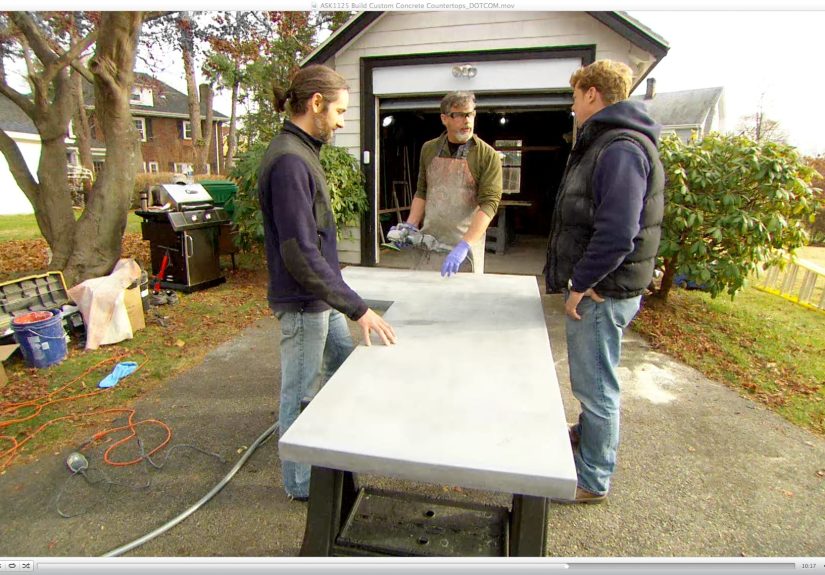
When the concrete has cured sufficiently (often 4–7 days for basic DIY mixes), carefully remove the screws and form sides. Get helpers before lifting the slab it’s heavier than it looks.
Now the fun part:
- Inspect edges and fill small pinholes with a slurry made of cement, pigment (if needed), and water.
- Use diamond polishing pads (starting around 50–100 grit and working up) to hone the surface to the sheen you want from matte to glossy.
- Vacuum dust thoroughly between grits.
8. Seal and protect
Sealing is the key to a countertop that survives everyday life. Choose a food-safe sealer designed specifically for concrete countertops many newer products are low-VOC, water-based, and resistant to heat, acids, and scratching.
Follow the manufacturer’s steps carefully, which often include:
- Thorough cleaning and drying
- Multiple thin coats with recommended drying times
- Optional topcoat of wax for extra sheen and protection
With the right sealer and routine maintenance, concrete countertops can last for decades and age gracefully.
Design Ideas for Custom Concrete Countertops
Once you understand the basic process, you can get creative:
- Color: Use integral pigments for subtle grays, warm taupes, or deep charcoal tones that mimic natural stone.
- Edges: Shape foam or routered wood as edge forms for bullnose, chamfered, or custom profiles.
- Inlays: Set glass, pebbles, or metal objects into the top layer; expose them slightly when polishing.
- Integrated features: Add a sloped drainboard next to the sink, or form a built-in trivet using metal rods.
- Finish: Leave it lightly honed for a soft, stone-like look or polish higher for a modern, reflective surface.
Care and Maintenance Tips
Concrete countertops reward a little regular care. To keep them looking great:
- Wipe spills quickly, especially acidic or oily foods.
- Use cutting boards don’t chop directly on the surface.
- Use trivets or hot pads under pans, even with heat-resistant sealers.
- Clean with mild, pH-neutral cleaners rather than harsh chemicals.
- Reapply sealer according to the product directions or when water stops beading on the surface.
If you’re the kind of homeowner who doesn’t mind a bit of patina and routine maintenance, concrete can be a long-lasting, high-style option that still feels very “hands on,” especially when you pour it yourself.
Common Mistakes (and How to Avoid Them)
- Using the wrong mix: Regular concrete with large aggregate can be harder to finish and more prone to voids. Countertop-specific mixes or carefully designed recipes with smaller aggregate and plasticizers give better results.
- Too much water: Soupy concrete is easy to pour but weak when cured; stick to the manufacturer’s water ratio and rely on plasticizers for workability.
- Rushing curing: Demolding or installing too early can cause cracks and chips; give it the full cure time recommended by the mix manufacturer.
- Skipping sealer or using the wrong one: Concrete is porous; the wrong sealer (or no sealer) almost guarantees stains and frustration. Choose products designed for food prep surfaces.
- Not planning for weight: Failing to check cabinet strength and support brackets for big overhangs can lead to sagging or damage over time.
Real-World Experiences With DIY Concrete Countertops
Advice from the pros is great, but what does this project feel like when you’re the one covered in concrete dust? Here are experience-based takeaways drawn from DIY tutorials, contractor stories, and homeowner feedback the things people tend to say after the sealers have dried and the kitchen is back in action.
Expect a serious workout (and call your friends)
Nearly every DIY account of concrete countertops includes some version of, “I underestimated how heavy this would be.” Even a modest island can weigh a few hundred pounds. People often end up calling neighbors mid-lift or improvising ramps and dollies they wish they’d planned earlier. Moral of the story: schedule helpers in advance, and clear a path from your pouring area to the kitchen if you’re precasting.
Dust, noise, and mess are part of the deal
When you picture new countertops, you might imagine a dramatic reveal and a sparkling kitchen. Before that, there’s a very real stage where your house looks like a small concrete factory. Cutting forms, mixing, vibrating, and especially polishing all create dust and noise. Many DIYers say they were happy they set up forms and polishing in a garage or outside area rather than in the kitchen itself. Blue tape over cabinet openings and plastic sheeting over appliances can save you hours of cleanup later.
You will obsess over pinholes and hairline cracks
Perfectionists, take a deep breath. Small pinholes and occasional hairline cracks are extremely common with concrete countertops, even in professional installations. Homeowners often report spending more time filling tiny voids with slurry than they did building the forms. Over time, though, most end up loving the subtle imperfections they read as “handcrafted” rather than flawed, especially if you go in expecting some character from day one.
The right sealer can save the relationship
One of the biggest “lessons learned” from both DIYers and pros is that not all sealers are created equal. Some early concrete countertops used simple topical sealers that scratched, peeled, or stained under normal kitchen use. Newer food-safe, water-based sealers can be more forgiving, but they still need careful application. Many homeowners who were initially frustrated with staining found that switching to a higher-performance sealer transformed how the counters behaved day to day. Taking the time to research and test a small sample piece before committing to a sealer system can save you a lot of regret.
Living with concrete: who actually loves it?
Concrete countertops tend to be most loved by people who appreciate materials that change slightly over time the same personality type that likes real wood, unlacquered brass, or natural stone. Homeowners who expect a flawless, low-maintenance, “wipe and forget it” surface sometimes end up frustrated with minor etches or water marks, even when those marks don’t affect performance. Designers and contractors note that the happiest concrete owners are those who see the patina as a story of their kitchen rather than a list of imperfections.
Was it worth it?
Despite the weight, dust, occasional imperfections, and a learning curve, many DIYers say pouring their own concrete countertops was one of the most satisfying projects they’ve tackled. The combination of custom design, tactile feel, and “we made this” bragging rights is hard to beat. For the cost of materials, some rental tools, and a handful of long weekends, you can end up with a fully custom surface that looks right at home in a This Old House reveal.
So if you’re patient, detail-oriented, and not afraid of a little heavy lifting, building custom concrete countertops can transform your kitchen and give you a daily reminder that you don’t always need a factory or a big-box showroom to get a high-end look.
SEO JSON