Table of Contents >> Show >> Hide
- First, a quick reality check (so your future self doesn’t side-eye you)
- The 13 Steps to Choosing the Right Unnatural Hair Color
- Step 1: Pick a “vibe,” not just a shade name
- Step 2: Decide how “unnatural” you want to go
- Step 3: Be honest about your commitment level (time + money + effort)
- Step 4: Identify your starting point (natural color + previous color history)
- Step 5: Understand the “base” rule (why pastels often need a lighter foundation)
- Step 6: Use color theory (without needing to major in art)
- Step 7: Choose your dye type (this is where “lasting power” really lives)
- Step 8: Factor in hair porosity (the “why did my ends turn neon instantly?” factor)
- Step 9: Decide on placement (full head vs. “I can hide this from my aunt”)
- Step 10: Plan your maintenance like it’s a mini lifestyle choice
- Step 11: Think about fading (because every fantasy color has an “era”)
- Step 12: Do the safety check (patch test, scalp sensitivity, and common-sense rules)
- Step 13: Test-drive your color idea before you commit
- Unnatural Color Ideas That Match Different Starting Points
- Maintenance Math: What You’re Signing Up For (so you don’t get blindsided)
- Common mistakes when choosing vivid hair color (and how to dodge them)
- Extra: Real-Life Experiences People Often Have with Unnatural Hair Color (About )
- Conclusion
Unnatural hair color (also called fantasy hair color) is basically wearable mood lighting. One day you’re “responsible citizen,”
the next you’re “electric-blue main character who definitely owns at least one dramatic playlist.”
But here’s the secret: the best vivid hair color isn’t just the prettiest shade on the boxit’s the one that makes sense for
your hair, your schedule, your budget, and how much you enjoy maintenance (or how much you enjoy not doing maintenance).
This guide is about choosing your color wiselybefore you commit to a neon dream that fades into a “washed-out highlighter” situation.
We’ll cover color theory in plain English, what your starting hair color means, how dye types behave, and the practical stuff nobody
wants to think about until their towel looks like it joined a tie-dye cult.
First, a quick reality check (so your future self doesn’t side-eye you)
- Unnatural color is a relationship. Some shades are low-commitment flings; others are “we need to talk about root touch-ups.”
- Your starting hair color matters. Pastels and neons usually need a lighter base to look true-to-tone.
- Hair health is part of the aesthetic. Vivid color looks best when hair feels decent, not crispy.
- Safety isn’t boring. Patch tests and following product directions are how you avoid turning “fun” into “why is my scalp mad?”
The 13 Steps to Choosing the Right Unnatural Hair Color
-
Step 1: Pick a “vibe,” not just a shade name
Start with the feeling you want: soft and dreamy (pastel lavender), bold and graphic (neon green),
mysterious (midnight blue), or chaotic good (rainbow peekaboo).
When you know the vibe, you can choose a shade that matches your wardrobe, your personality, and your tolerance for attention
from strangers who say, “Wow, that’s… fun!”Pro tip: Save 8–12 inspiration photos in similar lighting (not all filtered selfies). You’re looking for patternsdo you keep
gravitating toward warm pinks, cool blues, or jewel tones? -
Step 2: Decide how “unnatural” you want to go
Unnatural color isn’t one categoryit’s a spectrum:
- Subtle fantasy: rose gold, smoky lilac, dusty teal
- Clearly vivid: cobalt, hot pink, true purple
- Neon loud: glow-green, safety-orange, ultraviolet
If you’re nervous, start with “subtle fantasy” or choose placement that’s easier to hide (see Step 9).
-
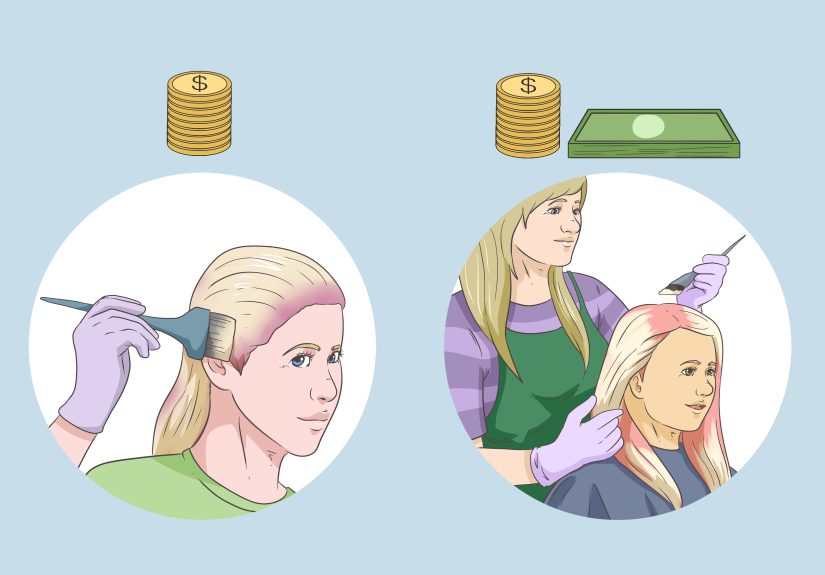
Step 3: Be honest about your commitment level (time + money + effort)
Some colors fade fast. Some stain. Some require frequent refreshing. Ask yourself:
“Am I the kind of person who will use color-safe shampoo… or am I the kind of person who uses whatever is on sale?”
There is no shame herejust planning.- Low commitment: temporary sprays, chalks, waxes, colored conditioners
- Medium: semi-permanent dye (gradual fade; refreshable)
- High: pre-lightening + vivid color + upkeep (often best with pro help)
-
Step 4: Identify your starting point (natural color + previous color history)
Your current hair color is the canvas. Dark brown hair won’t show pale pastel mint the same way light blonde does.
Also, old dye, highlights, sun-lightened ends, or pool/chlorine exposure can make color grab unevenly.If your hair has been colored before, assume it has “storylines” (aka invisible variables) that affect results.
That doesn’t mean you can’t go vividit means you should choose shades and techniques that are forgiving. -
Step 5: Understand the “base” rule (why pastels often need a lighter foundation)
Vivid color is like paint over a wall. If the wall is dark, light paint won’t look true unless you prime it.
In hair terms, many pastels and neons show best on hair that’s been lightened to a pale blonde.
If you’re not light enough, the color may look muted, darker, or shifted in tone.If you don’t want to pre-lighten, choose deeper jewel tones (like sapphire, plum, burgundy-purple, deep teal),
which can read “fantasy” even on darker hair. -
Step 6: Use color theory (without needing to major in art)
Here’s the cheat code: your hair has undertones, especially after lightening. Those undertones can “mix” with your dye.
The color wheel helps you predict what happens next.- Yellow undertone + blue dye = greenish results (sometimes cute, sometimes accidental swamp-mermaid)
- Orange undertone can make cool colors look warmer or “brassy”
- Complementary colors can neutralize unwanted tones (that’s why toning exists)
If you want a clean, cool fantasy shade (like icy blue), you generally need a clean, cool baseotherwise the undertone can hijack your plan.
-
Step 7: Choose your dye type (this is where “lasting power” really lives)
The same shade name can behave wildly differently depending on formula. In general:
- Temporary color: washes out fast; great for testing the vibe
- Semi-permanent: deposits color and fades gradually; common for fashion shades
- Demi-permanent: longer-lasting deposit with a more “natural” fade
- Permanent: longer commitment, root upkeep; not typically the go-to for bright fantasy shades
If this is your first unnatural color, semi-permanent is often the sweet spot: vivid, flexible, and less “forever-ish.”
-
Step 8: Factor in hair porosity (the “why did my ends turn neon instantly?” factor)
Porosity is basically how easily your hair absorbs and releases moistureand color. Higher-porosity hair can soak up dye quickly
(sometimes too quickly) and may fade faster. Lower-porosity hair may resist color and need more patience.If your hair tends to dry fast, feels rough, tangles easily, or has been bleached/heat-styled a lot, assume you may be dealing with higher porosity.
In that case, consider deeper shades, more forgiving placements, and a maintenance plan that includes moisture. -
Step 9: Decide on placement (full head vs. “I can hide this from my aunt”)
Placement can make the same color feel totally differentand it can reduce maintenance.
- All-over: boldest look, most upkeep
- Peekaboo / underlayer: vivid when hair moves, easy to conceal
- Face-framing pieces: high impact with less total dye
- Dip-dye ends: fun fade potential; ends may grab color strongly if porous
- Streaks: customizable, and grow-out can look intentional
If you’re unsure, choose a placement that lets you experiment without committing your whole head to the bit.
-
Step 10: Plan your maintenance like it’s a mini lifestyle choice
Vivid color stays brighter when you treat it gently. You don’t have to become a hair-care monk, but you do need a plan:
- Wash less often if you can (even spacing washes helps many people).
- Use color-safe, gentle products and conditioner like you mean it.
- Cooler water tends to be kinder to color than scorching-hot rinses.
- Heat styling and sun exposure can speed fadingprotect when possible.
Maintenance also includes your “refresh strategy”: will you re-dye every few weeks, use a color-depositing conditioner,
or do occasional salon gloss/toner appointments? -
Step 11: Think about fading (because every fantasy color has an “era”)
Here’s the part nobody puts on the inspiration board: vivid colors fade. Sometimes beautifully. Sometimes into a shade that looks like
“I tried to be green once.” Consider how your chosen color typically fades and whether you’re okay with the in-between stages.Examples:
- Blue can linger and shift toward teal/green on some bases.
- Red/pink can stay warm and stain longer.
- Purple often fades into soft lavender or pinkish tones (sometimes magical, sometimes not).
- Pastels can fade quickly into “barely there,” which is either perfect or disappointingdepending on your vibe.
-
Step 12: Do the safety check (patch test, scalp sensitivity, and common-sense rules)
Hair dye can irritate skin or cause allergic reactions in some people. Always follow product directions and do the recommended patch test
ahead of timeespecially if you’re using permanent dye or anything with stronger chemicals.- Don’t dye over broken, irritated skin.
- Don’t “invent chemistry” by mixing products unless the brand says it’s designed for that.
- Ventilation mattersuse hair color in a well-ventilated space.
- If you’ve had reactions before, consider a dermatologist or a professional colorist consult.
The goal is cute hair, not a surprise drama subplot.
-
Step 13: Test-drive your color idea before you commit
You can test your plan in low-stakes ways:
- Temporary color (sprays, waxes, chalk) to see if you like the vibe.
- Strand test on a small hidden section to see the true result on your hair.
- Try the color in your closet: hold swatches (or even a colored scarf) near your face in natural light.
- Start small: a peekaboo panel or a few streaks before going full unicorn.
If you still love it after a week of seeing it in different lighting, you’ve probably found your shade.
Unnatural Color Ideas That Match Different Starting Points
If your hair is dark and you don’t want to lighten
Aim for deeper, saturated shades that show up without needing a pale base:
deep teal, indigo, magenta, plum,
cherry cola red, or midnight purple. These can look rich and “fantasy” even when they’re not neon-bright.
If your hair is medium/light brown and you’re open to subtle bright
You can often get visible color with jewel tones or warmer brights:
burgundy, violet, emerald, coppery red,
or hot pink highlights. Placement tricks (like face-framing pieces) make these pop more.
If your hair is blonde (or already very light)
Congratulationsyou’re basically holding the VIP pass for pastels and true neons.
cotton-candy pink, pastel blue, mint, lavender,
highlighter yellow, and neon orange are all on the table, assuming your hair is healthy enough for the process.
Maintenance Math: What You’re Signing Up For (so you don’t get blindsided)
Before you choose a shade, answer these three questions:
- How often do I wash my hair? More washes usually = faster fade.
- Do I use heat tools? Heat can dull vibrancy over time unless you protect your hair.
- Do I swim a lot? Chlorine and sun can mess with colorespecially lighter fantasy tones.
If you want the “freshly dyed” look to last, build a simple routine: gentle shampoo, solid conditioner, occasional deep conditioning,
and a refresh product (like a color-depositing mask/conditioner) matched to your shade. If that sounds like too much,
pick a color that fades gracefully or choose a lower-commitment placement.
Common mistakes when choosing vivid hair color (and how to dodge them)
-
Mistake: Picking a pastel from a photo taken under perfect salon lighting.
Fix: Look for images in natural daylight and read shade descriptions that mention undertones. -
Mistake: Ignoring undertones and ending up with “surprise green.”
Fix: Use the color wheel logicif your base is warm, cool shades can shift unless the base is corrected. -
Mistake: Choosing a high-maintenance shade with a low-maintenance lifestyle.
Fix: Either pick a deeper shade/placement or plan a refresh schedule you’ll actually do. -
Mistake: Skipping patch/strand tests because “I’m sure it’ll be fine.”
Fix: Future-you will thank you for five minutes of caution.
Extra: Real-Life Experiences People Often Have with Unnatural Hair Color (About )
Choosing an unnatural hair color is rarely a single moment of decisionit’s usually a mini journey with plot twists.
A common experience is the “inspiration photo glow-up,” where someone falls in love with a perfect neon teal on social media,
then realizes real life includes different lighting, different hair textures, and the inconvenient fact that bathroom bulbs can make
any color look like it’s auditioning for a sci-fi movie. People often say the biggest surprise is how much lighting changes everything:
a lavender that looks soft and airy by a window can look deeper and moodier indoors, and a bright blue can look nearly black in low light.
Another classic experience is the maintenance “aha!” moment. Many first-timers assume the color will stay exactly like Day One, forever,
as long as they “don’t do anything weird.” Then they wash their hair a few times and discover fading is a normal part of the deal.
Some people end up loving the fadepastels can soften into a pretty, lived-in tone and feel more wearable over time.
Others learn quickly that certain shades (especially blues and greens) can hang around longer than expected, which is great if you love them
and mildly annoying if you were planning a quick switch to pink next month.
People also talk a lot about the “identity boost” effect. A vivid color can feel like a reset buttonlike you’re making an intentional choice
about how you show up in the world. That can be energizing, especially when the color matches the vibe you want (confident, playful, artsy, bold).
At the same time, it’s normal to feel oddly exposed the first few days. Even if you’ve wanted neon hair forever, the first compliment from a stranger
can make you realize, “Oh wow, this is noticeable.” That feeling usually settles into confidence once the color becomes familiar.
Practical surprises show up too. Some people become towel owners of regretlearning fast that fresh vivid color can transfer onto light fabrics,
pillowcases, hats, or hoodie collars. Others realize their routine matters: hot showers, frequent shampooing, and daily heat styling can make color
fade faster than expected. The most satisfied experiences tend to come from people who matched the shade to their lifestyle:
low-maintenance folks picking deeper jewel tones or peekaboo panels, and high-maintenance enthusiasts going full pastel rainbow with a refresh plan.
Finally, there’s the “next color” phenomenon. Once someone successfully chooses a fantasy shade that works for their hair and upkeep,
it often sparks curiosity: What about a different tone? A split-dye? A softer pastel version for spring? The best part is that choosing wisely
makes experimenting feel fun rather than stressful. When the color fits your base, your commitment level, and your maintenance reality,
unnatural hair color stops being intimidating and starts being exactly what it’s supposed to be: creative, expressive, and genuinely enjoyable.
Conclusion
Picking an unnatural hair color is part creativity, part strategy. Start with the vibe, match it to your hair’s starting point,
use basic color theory to avoid surprise undertones, and choose a dye type and placement that fit your real life.
Do a patch test, test-drive the shade if you can, and remember: the best fantasy color is the one you’ll still like on a random Tuesday
when you’re running late and your hair is doing whatever it wants.