Table of Contents >> Show >> Hide
- Cleaning vs. Disinfecting: Yes, There’s a Difference
- What You’ll Need
- Step-by-Step: How to Clean and Disinfect Your Toilet Properly
- 1. Ventilate the bathroom and gear up
- 2. Start with the bowl
- 3. Let the product sit
- 4. Clean the exterior from top to bottom
- 5. Don’t skip the seat, underside, and hinges
- 6. Scrub the bowl thoroughly
- 7. Disinfect or rinse the brush and holder
- 8. Wipe drips, clean the floor around the base, and wash your hands
- How to Disinfect Safely
- How Often Should You Clean and Disinfect a Toilet?
- How to Handle Stains, Rings, and Hard-Water Buildup
- Common Toilet Cleaning Mistakes Experts Want You to Stop Making
- Real-Life Experiences: What Toilet Cleaning Actually Looks Like in the Real World
- Final Thoughts
Let’s be honest: cleaning the toilet is nobody’s idea of a glamorous Saturday. No one has ever posted, “Just deep-cleaned the bowl and now I feel spiritually renewed,” although frankly, maybe they should. A sparkling toilet has a way of making the whole bathroom feel fresher, less chaotic, and far less like a crime scene lit by overhead LEDs.
The good news is that cleaning and disinfecting your toilet is not complicated. The bad news is that many people do it too fast, use the wrong products in the wrong places, or skip the one step experts keep repeating: clean first, then disinfect. That is the difference between “looks better” and “actually cleaner.” If dirt, grime, or mineral buildup is still sitting on the surface, your disinfectant has to fight through that mess before it can do its job. It is basically asking chemistry to mop up after procrastination.
This guide walks you through how to clean and disinfect your toilet the smart way, what supplies to use, which mistakes to avoid, how often to do each task, and how real households handle toilet cleaning when life gets busy. Whether you are tackling a lightly used guest bath or a family bathroom that sees way too much action before 8 a.m., these expert-backed steps will help you get the job done thoroughly and safely.
Cleaning vs. Disinfecting: Yes, There’s a Difference
Before we get into the scrub-and-spray portion of the program, it helps to know the difference between cleaning and disinfecting. Cleaning removes dirt, residue, and many germs from a surface. Disinfecting uses a product designed to kill most germs left behind after cleaning. In plain English, cleaning is the part where you remove the visible gunk, and disinfecting is the part where you deal with what you cannot see.
That means wiping a toilet seat with a random tissue and declaring victory is not quite the flex you think it is. Experts recommend washing away grime first with soap, detergent, or an appropriate cleaner, then applying an EPA-registered disinfectant or properly diluted bleach solution when disinfection is needed. And one more thing: the product has to stay wet on the surface for the time listed on the label. If you spray and immediately wipe, you may be deleting your own hard work.
What You’ll Need
- Rubber or reusable cleaning gloves
- Toilet bowl cleaner or disinfecting toilet bowl formula
- EPA-registered disinfecting spray or disinfecting wipes for the exterior
- Microfiber cloths or disposable paper towels
- Toilet brush
- Optional: bleach solution for disinfection, only if used exactly as directed
- Optional: vinegar and baking soda for mineral stains or hard-water rings
- Optional: pumice stone for stubborn hard-water deposits on porcelain
One important rule from cleaning pros: do not use toilet bowl cleaner on the outside of the toilet. Bowl cleaners are made for the inside of the bowl and can be too harsh for seats, lids, hinges, or exterior surfaces. Use a bathroom disinfectant or all-purpose disinfecting cleaner for those areas instead.
Step-by-Step: How to Clean and Disinfect Your Toilet Properly
1. Ventilate the bathroom and gear up
Open a window if you have one. Turn on the exhaust fan. Put on gloves. If your product label recommends eye protection, follow it. Experts also warn against mixing cleaners, especially bleach with ammonia, vinegar, or other products. That combination can create toxic fumes, which is a terrible reward for trying to be hygienic.
Move rugs, the trash can, or anything else crowding the base of the toilet. You want room to clean, not a bathroom obstacle course.
2. Start with the bowl
Flush first so you are not working with stale water and mystery residue from three uses ago. Then apply toilet bowl cleaner around the inside of the bowl, especially under the rim where grime likes to hide and throw tiny bacterial parties. Let the cleaner coat the sides as it runs down.
If you are using bleach instead of a bowl cleaner, only do so if the label directions say it is appropriate for that purpose. More is not better here. Better is better.
3. Let the product sit
This is where many people speed-run the process and undercut their results. Let the bowl cleaner sit for the recommended amount of time. Waiting helps loosen deposits, soften stains, and give the disinfecting ingredients time to work. Five minutes is common for bowl cleaning, though labels vary. Read yours, because the bottle is more qualified than optimism.
4. Clean the exterior from top to bottom
While the bowl cleaner is working, clean the outside of the toilet. Start at the top with the tank, then move to the flush handle, lid, seat, hinges, rim, sides, front, and finally the base where dust and hair mysteriously gather like they pay rent. Cleaning experts often recommend working top-down because drips and splashes make more sense that way.
Spray the exterior with a disinfecting bathroom cleaner or wipe it down with disinfecting wipes. Pay extra attention to high-touch surfaces like the flush handle and the front edge of the seat. If you use reusable cloths, keep one dedicated for the toilet area so you are not accidentally promoting your “one rag, many surfaces” strategy to the sink and counter.
5. Don’t skip the seat, underside, and hinges
The top of the seat gets all the attention, but the underside and hinge area are usually where the real unpleasantness hangs out. Raise the seat and clean both sides, plus the underside of the lid. If your toilet seat detaches easily, this is one of those rare household features that deserves applause. It makes getting around the hinges much easier.
After cleaning, apply disinfectant again if needed and make sure the surface remains wet for the full label contact time. This step matters. A disinfectant cannot do much if it is wiped away before it has a chance to work.
6. Scrub the bowl thoroughly
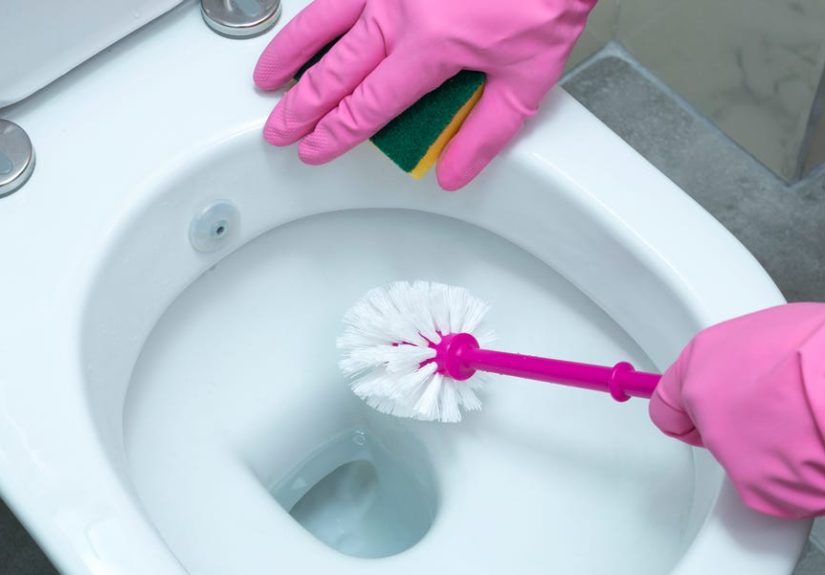
Now go back to the bowl with the toilet brush. Scrub the sides, the waterline, the trap opening, and especially under the rim. That hidden rim area is one of the classic missed spots. If stains or hard-water rings are clinging to the bowl like they signed a lease, a second pass may be needed.
Flush when you are finished. If your brush touched especially grimy areas, rinse it in the clean flush water before storing it.
7. Disinfect or rinse the brush and holder
A surprisingly common mistake is cleaning the toilet and then putting a wet, dirty brush back into its holder like the mission is complete. It is not. Spray the brush with disinfectant, or soak it according to product directions if that is recommended. Let it dry as much as possible before storing it. The holder should also be cleaned and dried regularly, because a damp plastic cup full of old toilet water is not exactly a wellness feature.
8. Wipe drips, clean the floor around the base, and wash your hands
Check for splashes on the floor, nearby wall, or toilet base. Wipe them up before they dry and become tomorrow’s “What is that?” moment. Then remove your gloves and wash your hands with soap and water for at least 20 seconds.
Even if you wore gloves, handwashing is still part of the deal. The entire point of this exercise is fewer germs, not a false sense of moral superiority.
How to Disinfect Safely
If you are using disinfectants, safety counts just as much as sparkle. Always read the product label. Follow directions for dilution, use, storage, and contact time. Keep the room ventilated. Never mix products together. And do not assume every cleaner disinfects just because it smells intense enough to clear a memory from your brain.
For households with someone who is sick, disinfection becomes more important, especially on high-touch areas. In that situation, cleaning the toilet seat, lid, handle, and surrounding bathroom surfaces more often makes sense. Experts also recommend increasing frequency when someone in the home is immunocompromised or when the bathroom is shared by multiple people.
How Often Should You Clean and Disinfect a Toilet?
For most households, a weekly toilet cleaning is a solid standard. In a busy bathroom, twice a week may feel more realistic. If someone in the house is sick, experts suggest disinfecting more often, including high-touch surfaces around the toilet every few days or as needed.
Here is a practical breakdown:
- Weekly: Clean and disinfect the bowl, seat, lid, handle, tank exterior, and base
- Every few days if someone is sick: Disinfect high-touch surfaces and shared bathroom areas
- As needed: Spot-clean drips, hair, or visible grime
- Twice a year: Clean the toilet tank if you notice buildup, odor, or mineral residue
If your toilet gets used by children, guests, or someone with enthusiastic but inaccurate aim, you may want to adjust that schedule accordingly. Bathrooms have a way of revealing who in the house lives with precision and who apparently operates by vibes.
How to Handle Stains, Rings, and Hard-Water Buildup
Sometimes the toilet is technically clean but still looks like it has seen things. That is often due to mineral stains, rust, or hard-water rings rather than everyday grime.
For hard-water rings
Vinegar can help loosen mineral deposits. Many cleaning experts recommend letting vinegar sit in the bowl before scrubbing. Baking soda can add gentle abrasion for extra help. This combo is useful for stain removal, but it is not a replacement for a true disinfectant when your goal is disinfection.
For stubborn deposits
A pumice stone can help remove hard-water buildup on porcelain when used gently and with water. Go slowly, keep the surface wet, and avoid aggressive scrubbing that could damage finishes.
For tank buildup
If the tank smells funky or you see mineral accumulation, emptying it and using vinegar can help break down residue. Just avoid throwing random cleaning tablets and harsh chemicals into the tank without checking compatibility. Toilet parts are surprisingly dramatic about corrosion.
Common Toilet Cleaning Mistakes Experts Want You to Stop Making
- Wiping too soon: Disinfectants need contact time.
- Using one product for everything: Bowl cleaner belongs in the bowl, not all over the toilet.
- Skipping the handle and hinges: These are high-touch grime magnets.
- Ignoring the brush holder: It gets dirty, too.
- Mixing cleaners: Especially bleach with ammonia, vinegar, or other chemicals.
- Only cleaning when company is coming: Your toilet deserves a better relationship than that.
Real-Life Experiences: What Toilet Cleaning Actually Looks Like in the Real World
In real homes, toilet cleaning rarely happens under ideal conditions. It happens while dinner is on the stove, while a toddler is banging on the door, while the dog is suspiciously quiet, or while you are trying to “just do a quick wipe-down” before guests arrive in 20 minutes. That is why so many people develop shortcuts. Some are harmless. Some are how a toilet ends up looking clean from six feet away but questionable up close.
One of the most common experiences people talk about is the moment they realize they have been cleaning too fast for years. They spray, wipe, and move on. Then they finally read the label and discover the product was supposed to stay wet for several minutes to disinfect properly. Suddenly, the whole process changes. The bathroom does not just smell clean. It actually is cleaner.
Another common experience is discovering that the worst area is not the bowl. It is the seat hinges, the flush handle, or the base where dust, hair, and invisible splash residue settle in like permanent residents. Many people start out focused on the dramatic blue water and dramatic scrubbing, only to realize that the real “before and after” moment comes from wiping the less glamorous zones they had ignored.
Families with kids often describe toilet cleaning as a battle against mystery messes and questionable aim. Shared bathrooms get dirty faster, which means frequency matters more than intensity. A quick midweek clean can be more effective than waiting for a once-a-month deep-cleaning marathon fueled by regret and lemon-scented rage.
People dealing with hard water have a different frustration. The toilet may be disinfected and still look stained, which can make the whole job feel pointless. That is where targeted stain removal helps. Once you understand the difference between mineral buildup and actual dirt, cleaning becomes less random and more strategic.
There is also the emotional side of it, which sounds silly until you have lived it. A freshly cleaned toilet can make the entire bathroom feel reset. In small apartments or busy family homes, that one task creates a ripple effect. You notice the mirror. You wipe the sink. You replace the hand towel. Suddenly the bathroom looks intentional instead of merely survived.
And yes, nearly everyone has learned at least one toilet-cleaning lesson the hard way: using the wrong cleaner on the wrong surface, forgetting gloves, splashing the floor, storing a wet brush, or discovering too late that “natural” does not always mean “disinfecting.” The upside is that once you clean a toilet properly a few times, it gets easier. You build a routine. You stop dreading it. You even get faster at it.
Well, maybe not excited. Let’s not get carried away. But confident? Definitely. And in the world of household chores, confident toilet cleaning is a surprisingly elite life skill.
Final Thoughts
If you want a toilet that is not just presentable but truly clean, the formula is simple: use the right products, clean first, let disinfectants sit for the required time, hit the high-touch areas, and do not forget the brush and the base. A weekly routine will prevent most horror stories before they form, and a few smart habits will make each cleaning session faster and less annoying.
In other words, you do not need a giant arsenal of products or a hazmat suit. You just need a plan, a little patience, and enough respect for chemistry to let it finish the job. Your toilet may never become your favorite thing to clean, but it can absolutely stop being the task you avoid until your bathroom starts judging you.