Table of Contents >> Show >> Hide
- Why Baking Sheets Get So Gross in the First Place
- Before You Scrub: Identify Your Baking Sheet Type
- The Best Way to Clean Greasy Baking Sheets
- Cleaning Mistakes That Can Ruin Your Baking Sheets
- How to Keep Baking Sheets Cleaner in the Future
- Do Baking Sheets Need to Look Brand-New to Work Well?
- The Real-Life Experience of Cleaning Greasy Baking Sheets
- Conclusion
If your baking sheets have crossed the line from “well-loved” to “looks like it survived a campfire,” you are not alone. Grease, baked-on oil, caramelized sugars, roasted veggie residue, and mystery splatters from that one sheet-pan dinner you swore you’d clean tomorrow can build up fast. Before long, your once-shiny pans start looking like a greasy crime scene.
The good news? You do not need superhero arms, industrial-strength tools, or a dramatic kitchen makeover to clean greasy baking sheets. What you do need is the right method for the right material. That part matters. A lot. Bare aluminum, nonstick-coated pans, and heavily seasoned sheet pans do not all play by the same rules, and scrubbing them like they do is how good bakeware gets ruined.
Below is a practical, deep-clean guide to help you remove grease, loosen stubborn grime, and restore your baking sheets without accidentally making them worse. We’ll cover gentle daily cleanup, deeper stain-busting options, mistakes to avoid, and smart habits that keep future messes from setting up permanent residence.
Why Baking Sheets Get So Gross in the First Place
Baking sheets do not usually get greasy because you are doing anything wrong. They get greasy because they are constantly exposed to fat, heat, and time. Oils from roasted vegetables, bacon, cookies, frozen foods, and even cooking spray can polymerize when heated. That means they transform into a sticky, stubborn film that regular soap sometimes struggles to cut through.
Then there is the second villain: baked-on food residue. Sugars brown, proteins cling, and sauces reduce into glue-like patches. Add a few rounds of high-heat roasting, and suddenly your pan has layers. Not glamorous layers, either. More like “archaeological dig” layers.
This buildup can be harmless in some cases, but thick, sticky grease is different from a normal patina. If the pan feels tacky, smells off when heated, leaves residue on paper towels, or has flaky black spots, it is time for a proper cleaning session.
Before You Scrub: Identify Your Baking Sheet Type
Not every pan should be cleaned the same way. If you skip this step, you may remove grime and the finish at the same time, which is not exactly a win.
Uncoated Aluminum Baking Sheets
These are the workhorses of many kitchens. They heat evenly, last a long time, and can handle more aggressive cleaning than coated pans. They are also more likely to discolor if they go through the dishwasher, so hand washing is usually the better move.
Nonstick or Coated Baking Sheets
These need a gentler touch. Harsh abrasives, metal scrubbers, and strong chemical cleaners can scratch or wear down the coating. Translation: your cleanup method should be more spa treatment, less demolition crew.
Darkened or “Seasoned” Sheet Pans
Some older pans develop brown discoloration over time. That is not always a disaster. A darkened surface can come from oils bonding to the metal through repeated use. If the pan is smooth, not sticky, and bakes well, it may not need to be stripped back to showroom silver. “Less ugly than before” is sometimes the real victory.
The Best Way to Clean Greasy Baking Sheets
The best cleaning method depends on how dirty the sheet is and what it is made of. Start with the mildest option. If the grease laughs in your face, move up a level.
Method 1: Hot Water, Dish Soap, and a Non-Scratch Scrubber
This is your first stop for fresh grease and everyday mess.
What you need: hot water, grease-cutting dish soap, a soft sponge or nylon scrubber, and a dish towel.
How to do it:
- Let the baking sheet cool slightly so it is warm, not blazing hot.
- Rinse away loose crumbs and food bits.
- Fill the pan with hot water and a squirt of dish soap.
- Let it soak for 15 to 30 minutes.
- Scrub gently with a non-scratch sponge or nylon pad.
- Rinse well and dry thoroughly.
This method works especially well if you catch the mess early. The longer grease sits, the more it bonds to the surface. In other words, “I’ll wash it tomorrow” is how a two-minute job becomes a full emotional event.
Method 2: Baking Soda and Hydrogen Peroxide Paste for Uncoated Metal
If soap and water are not enough, this is the popular next step for greasy, stained, uncoated baking sheets. It is especially useful for baked-on gunk that has become part grease, part science experiment.
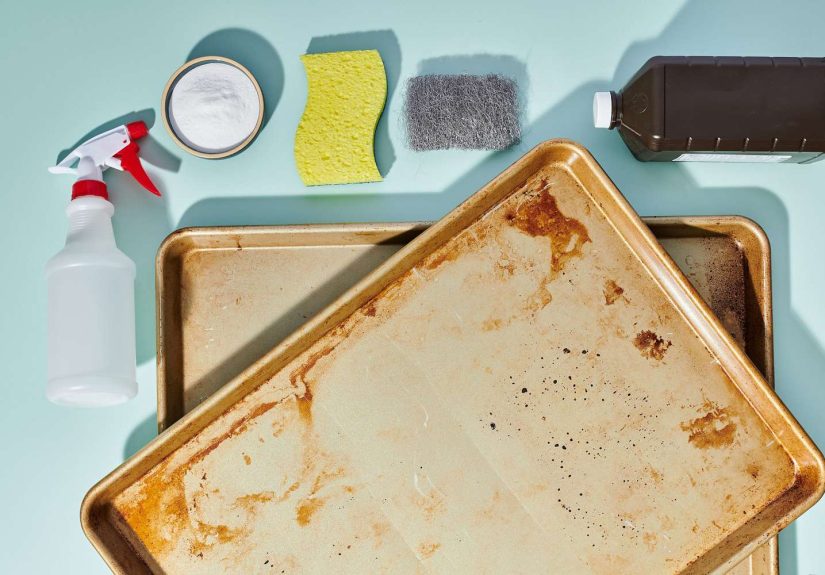
What you need: baking soda, 3% hydrogen peroxide, a bowl, gloves if you prefer, and a soft sponge or cloth.
How to do it:
- Sprinkle baking soda over the pan.
- Add enough hydrogen peroxide to create a spreadable paste.
- Apply the mixture evenly across greasy areas.
- Let it sit for 2 to 3 hours.
- Wipe or scrub gently with a non-abrasive sponge.
- Rinse thoroughly and dry right away.
This method is loved for a reason: it is simple, inexpensive, and often surprisingly effective. That said, it is better suited to uncoated aluminum or stainless-style surfaces than delicate nonstick finishes. Always spot test first if you are unsure.
Method 3: Baking Soda Paste for Nonstick Baking Sheets
For nonstick pans, skip the more aggressive experiments and keep things gentle.
What you need: baking soda, water, a soft cloth or sponge.
How to do it:
- Mix baking soda with a little water to make a thick paste.
- Spread it over greasy patches.
- Let it sit for 30 minutes to 1 hour.
- Wipe with a soft sponge.
- Wash with warm, soapy water, rinse, and dry.
This is slower than the stronger methods, but it is kinder to the surface. With coated bakeware, preserving the finish matters more than winning a speed-cleaning trophy.
Method 4: Bar Keepers Friend for Tough Stains on Uncoated Pans
When a pan is still stained after the paste treatments, a dedicated cleanser can help. For uncoated aluminum or other suitable metal sheet pans, a small amount of a cleanser like Bar Keepers Friend can lift stubborn discoloration and baked-on residue.
How to do it:
- Wet the pan.
- Apply a small amount of cleanser to the stained area.
- Add a little water to form a light paste.
- Rub gently with a soft cloth, not a harsh scouring pad.
- Rinse thoroughly and dry.
Use this method carefully and only on surfaces that the product and pan manufacturer allow. If your sheet pan has a nonstick coating, decorative finish, or mystery material from a discount bin three apartments ago, play it safe and skip the heavy-duty stuff.
Cleaning Mistakes That Can Ruin Your Baking Sheets
1. Tossing Bare Aluminum in the Dishwasher
It is tempting. It is easy. It is also one of the fastest ways to dull or discolor natural aluminum pans. If shiny matters to you, hand wash instead.
2. Scrubbing Nonstick Pans with Steel Wool
Yes, it will remove grime. It may also remove the coating, your patience, and your hope for easy cookie release. Stick to soft or nylon tools.
3. Using Oven Cleaner on Aluminum
Some heavy-duty oven cleaners are not recommended for aluminum. That means your sheet pan is not the place for freestyle chemistry.
4. Treating Baking Soda and Vinegar Like a Miracle Cure
The fizzy bubbles are satisfying, but the combination is not the grease-cutting powerhouse people imagine. It can help loosen debris while bubbling, but it is not the strongest route for greasy sheet pans. For baked-on grease, a baking soda paste or baking soda with hydrogen peroxide is usually the more effective play.
5. Letting Dirty Pans Sit for Days
Grease loves downtime. The longer it sits, the more stubborn it becomes. Even a quick rinse and soak after cooking can save you major scrubbing later.
How to Keep Baking Sheets Cleaner in the Future
Once your pans are finally clean, you will want to avoid repeating the whole saga next weekend.
Line the Pan
Parchment paper is the easiest cleanup trick in the book. It creates a barrier between the food and the metal, which means fewer stuck-on sugars, less oil residue, and much less regret. Silicone baking mats can also help, especially for cookies and roasted foods that are not too wet.
Wipe While the Pan Is Still Warm
Not scorching hot. Not lava. Just warm enough that grease has not fully set. A quick wipe or rinse while the pan is warm makes an absurd difference.
Avoid Excess Cooking Spray
Cooking spray can leave sticky residue over time, especially on nonstick surfaces. If possible, use a light brush of oil or line the pan instead.
Do Not Roast Sticky Sauces Bare
Maple glaze, barbecue sauce, honey, and sugary marinades are delicious. They are also basically tiny caramel factories. Use parchment, foil when appropriate, or a roasting rack to keep cleanup sane.
Do Baking Sheets Need to Look Brand-New to Work Well?
Not always. This is where expectations matter. A pan can be clean, safe, and functional without looking fresh from the store. Darkening, mild staining, and normal wear do not automatically mean the pan is ruined. What matters more is whether the surface is smooth, non-sticky, structurally sound, and free from peeling coatings or flaky residue.
If you have an old aluminum sheet pan that has turned brown but still bakes evenly and cleans up well, that may just be part of its life story. Every kitchen tool earns a few scars. If yours has become tacky, smoky, or impossible to clean, then yes, it is time for intervention. But cosmetic perfection is optional. Practical cleanliness is the real goal.
The Real-Life Experience of Cleaning Greasy Baking Sheets
In real kitchens, greasy baking sheets tend to become a running joke. You buy a beautiful new pan, admire how shiny it is, promise yourself you will take care of it, and then one tray of roasted potatoes later, the honeymoon is over. After that comes bacon, frozen fries, cookies, reheated pizza, sheet-pan chicken, and maybe one chaotic attempt at candied pecans. Suddenly the pan looks ten years older than it is, and everybody in the house starts pretending they do not see it.
The most common experience is not total neglect. It is partial effort. People rinse the pan, give it a quick swipe with dish soap, and move on because dinner is over and life is happening. The pan looks fine from six feet away, so it gets stacked back in the cabinet. Then the next time it goes into a hot oven, that leftover film bakes on a little more. Repeat this cycle enough times and your baking sheet develops that classic greasy sheen that somehow feels both sticky and dry at the same time, which is honestly rude.
Another very relatable moment is the deep-clean panic before guests come over, or before holiday baking season starts. That is when people suddenly look at their sheet pans with fresh horror. It is also when they discover that not every internet “miracle hack” works equally well. Some methods make satisfying bubbles and not much progress. Some require a level of scrubbing that feels like training for a sporting event. And some actually work, but only when you let the cleaner sit long enough and resist the urge to attack the pan immediately.
There is also a psychological part to this whole topic. A grimy baking sheet can make a clean kitchen feel slightly less clean. It is like having one greasy little secret living in your cabinet. Once you finally restore the pan, even partway, it feels disproportionately satisfying. You open the drawer, see a cleaner surface, and suddenly you are the kind of person who has it together. Maybe not completely. But enough to roast vegetables with confidence.
The best experience, though, usually comes after the cleaning: the moment you change your habits. You start lining pans more often. You soak them sooner. You stop blasting nonstick pans with random scrubbers. You realize that preventing buildup is far easier than staging a full rescue mission later. And that is the real upgrade. Not just shinier bakeware, but a kitchen routine that asks less of Future You.
So if your baking sheet currently looks like it has seen things, do not panic. Most greasy pans can be improved a lot with the right method, a little patience, and a reasonable amount of elbow grease. Maybe it will shine like new again. Maybe it will simply look dramatically less alarming. Either way, that is a win worth taking.
Conclusion
If you want to clean greasy baking sheets so they shine like new again, start simple, match the method to the material, and save the harsh stuff for only the toughest cases. Hot soapy water handles everyday grease, baking soda pastes tackle stubborn buildup, and stronger cleansers can help on uncoated pans when used carefully. Most importantly, line your pans and clean them sooner next time. Your future self, your cookies, and your kitchen dignity will all appreciate it.